25,542  PAGES BROWSED TODAY PAGES TODAY • 35 ANTIQUES UPLOADED TODAYNEW ARRIVALS
GIFTS
35 ITEMS ADDED TODAY
Sort Order
Items Per Page
Browse Categories
Sort order
Relevant Links
Items per page
ID #SA1245993
FOR SALE
£76,000
Email Phone
Save
A George III Period Carved Mahogany Bureau on Stand
For sale by Andreas de Jong Ltd.
for sale €88,920     $96,520
£76,000
Andreas de Jong Ltd.

Andreas de Jong Ltd.

Sellingantiques Verified Since Feb 2023
Browse dealers 20 items
  • About Us
    Specialising in 18th and early 19th century english and irish antique furniture
  • Trade Associations
    Andreas de Jong Ltd. is a registered member of BADA 
Id #SA1245993
PDF SHARE
SAVE

A George III Period Carved Mahogany Bureau on Stand

18th century
Description

Reference 1052

English, Circa. 1760

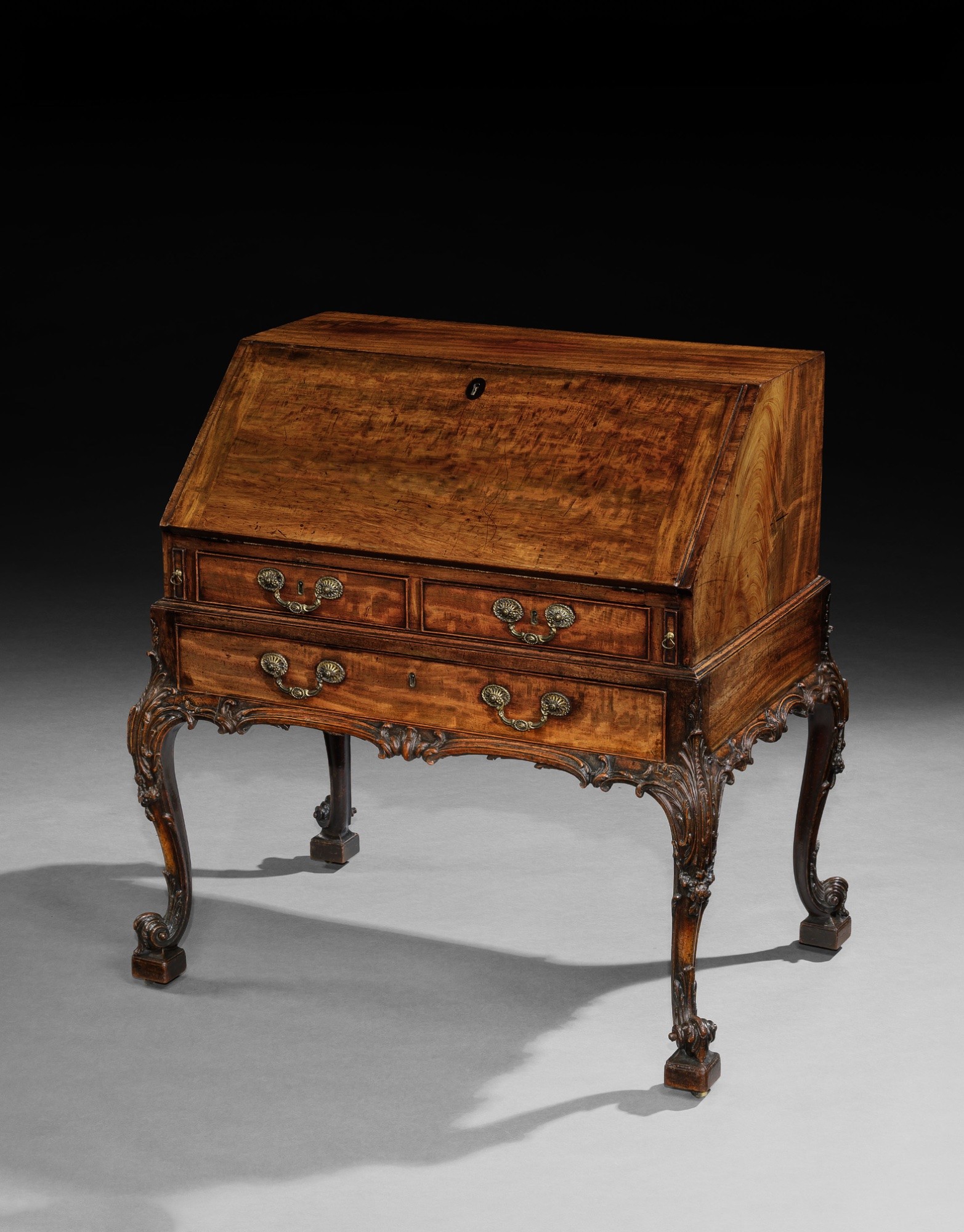
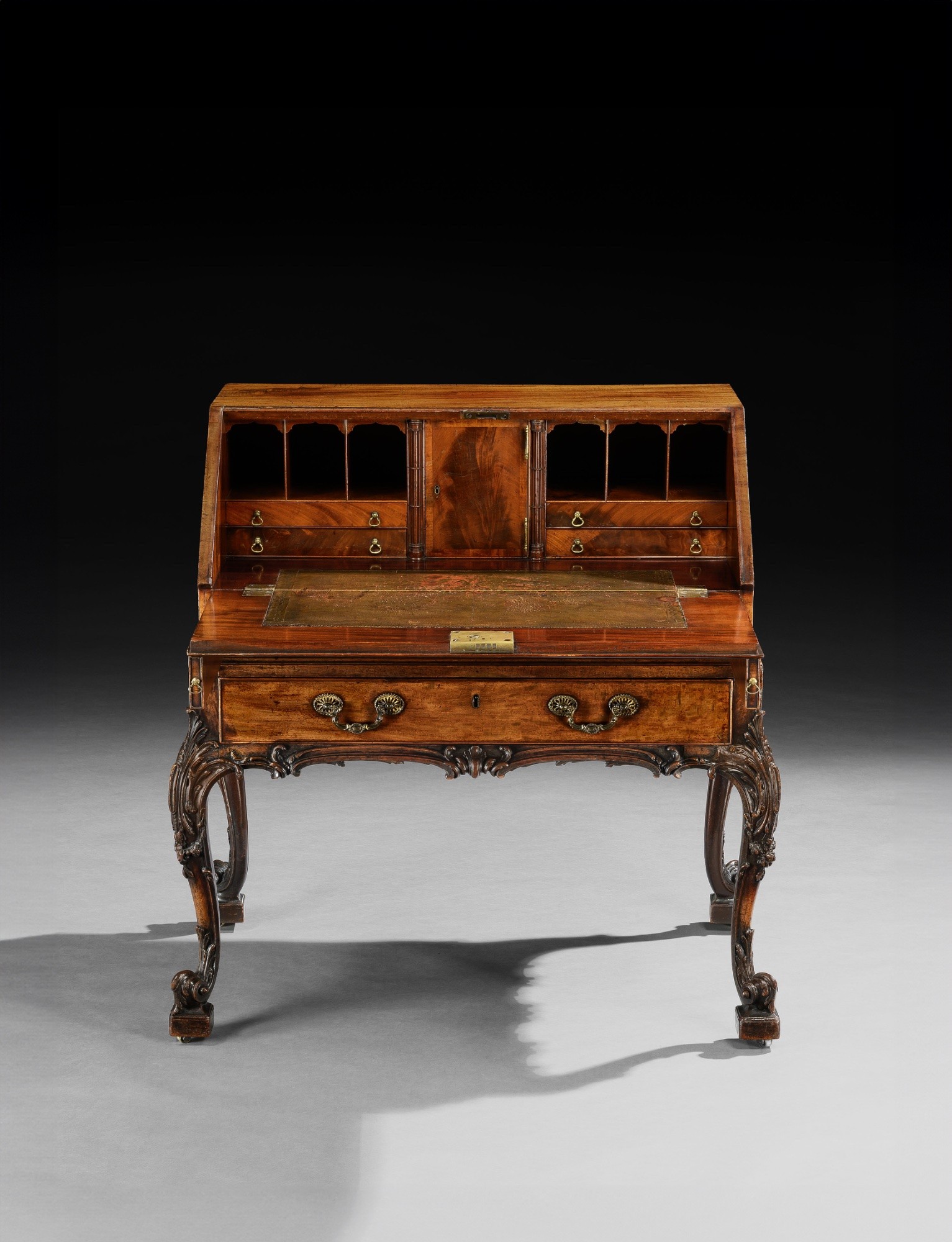
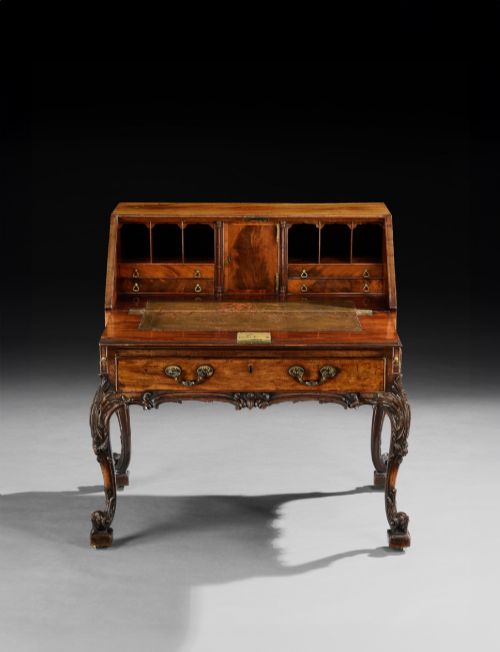
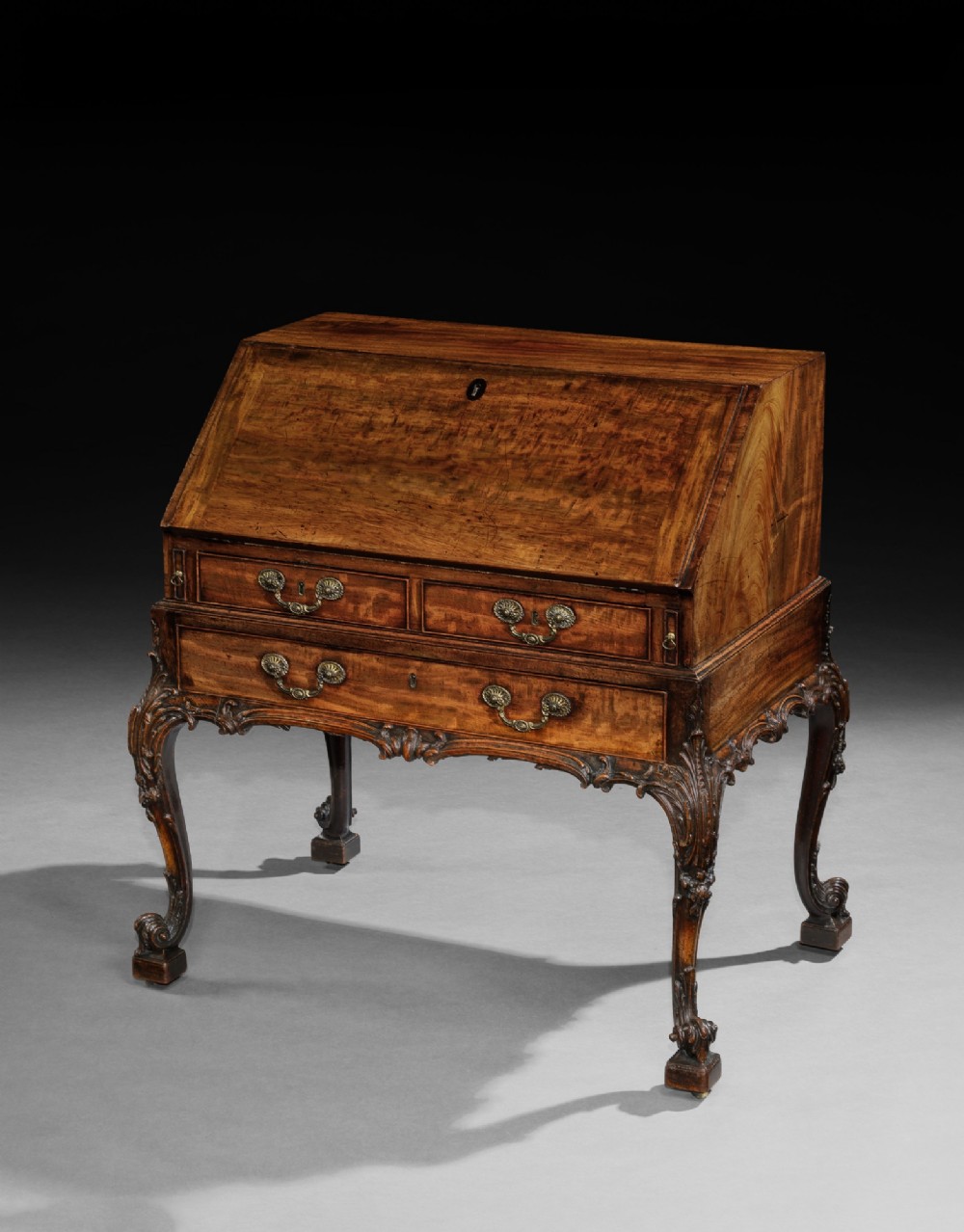
The bureau with sloped fall is veneered with finely figured fiddleback mahogany, opening to reveal an interior with central door, cross banded and veneered with flame mahogany. Flanked on either side by drawers and pigeonholes and a leather lined writing surface.
The two short and one long drawer below with finely chased gilt brass handles. The stand is elaborately carved with ‘C’ scrolls, cabochons and acanthus leaves.

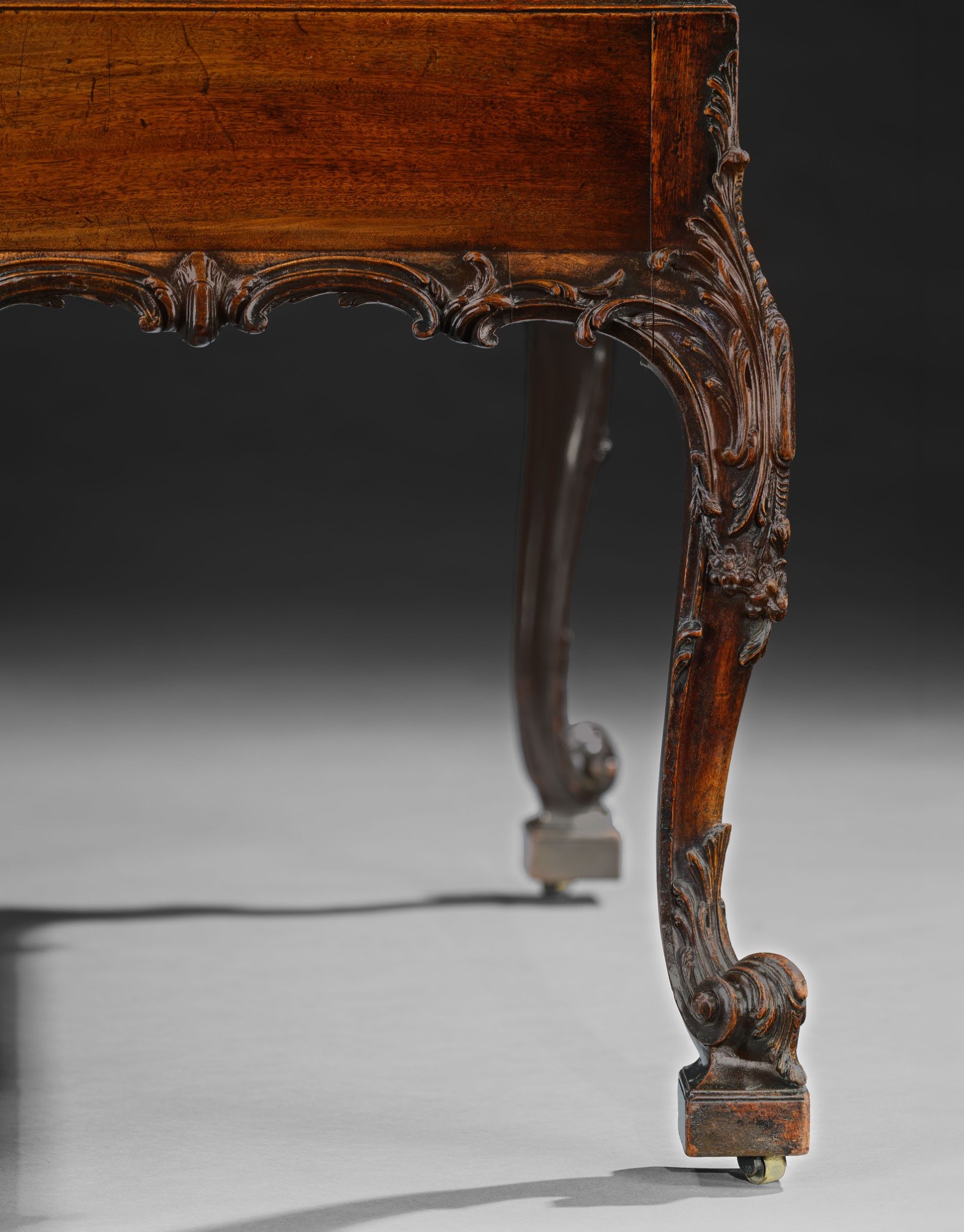
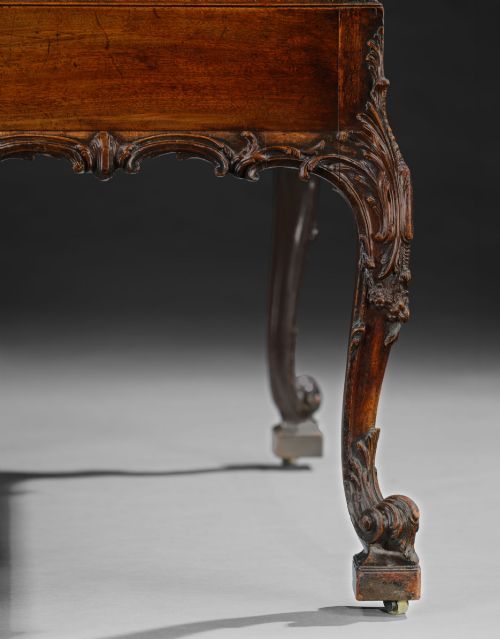
The cabriole legs are similarly carved with stylised foliage and garlands of flowers over scrolled feet adorned with acanthus and block feet with the original recessed castors. Of exceptional colour and untouched patina.
Certain characteristics of this bureau closely associate it with the work of Thomas Chippendale. In terms of design, it certainly showcases much distinctive and extremely well executed English Rococo carving of the circa 1760 period. These carved elements relate closely to specific stylistic aspects featuring among the contemporaneous drawings that appear in the three editions of Chippendale’s seminal work, “The Gentleman and Cabinet-Maker’s Director”, published between 1754 and 1762. In particular, a drawing for a desk and bookcase No CXI in 1760 which shows a bureau with a similarly carved stand.
With regards to construction, the above piece employs chamfered drawer stops and short grain drawer kickers, both of which allow for the smooth opening of its drawers, and at the same time these have clearly minimised wear of the internal components. This construction also ensures that the drawers do not drop down much, if at all, during the drawer-opening process. Such attributes are often found on carcass furniture produced in the Chippendale workshop, particularly in the early 1760’s.

Provenance

Purchased from Mallett and Sons Ltd

Private Collection

Thence by descent

Dimensions

Width 92.5 cm (36″)

Height 93.5 cm (36 1/2”)

Depth 61 cm (24″)

Date of Manufacture

Andreas de Jong Ltd. has dated this George III Mahogany Bureau Stand to the Georgian era.

Physical Dimensions
Height
93.5cm (36.81")
Width
92.5cm (36.42")
Depth
61cm (24.02")
Reference Numbers
Sellingantiques Reference
SA1245993
Dealers Internal Reference
REF 1052
Description
Reference 1052

English, Circa. 1760

“
The bureau with sloped fall is veneered with finely figured fiddleback mahogany, opening to reveal an interior with central door, cross banded and veneered with flame mahogany.
Andreas de Jong Ltd.

Flanked on either side by drawers and pigeonholes and a leather lined writing surface.

fig 1. An 18th-century George III mahogany bureau on stand featuring a slant-front writing slope, carved cabriole legs, brass bail handles, and rich wood grain.
fig 1. A George III Period Carved Mahogany Bureau on Stand

The two short and one long drawer below with finely chased gilt brass handles. The stand is elaborately carved with ‘C’ scrolls, cabochons and acanthus leaves.

The cabriole legs are similarly carved with stylised foliage and garlands of flowers over scrolled feet adorned with acanthus and block feet with the original recessed castors. Of exceptional colour and untouched patina.

fig 2. An 18th-century George III mahogany bureau on stand featuring a slant-front writing slope, carved cabriole legs, brass bail handles, and rich wood grain.
fig 2. A George III Period Carved Mahogany Bureau on Stand

Certain characteristics of this bureau closely associate it with the work of Thomas Chippendale. In terms of design, it certainly showcases much distinctive and extremely well executed English Rococo carving of the circa 1760 period. These carved elements relate closely to specific stylistic aspects featuring among the contemporaneous drawings that appear in the three editions of Chippendale’s seminal work, “The Gentleman and Cabinet-Maker’s Director”, published between 1754 and 1762. In particular, a drawing for a desk and bookcase No CXI in 1760 which shows a bureau with a similarly carved stand.

fig 3. An 18th-century George III mahogany bureau on stand featuring a slant-front writing slope, carved cabriole legs, brass bail handles, and rich wood grain.
fig 3. A George III Period Carved Mahogany Bureau on Stand

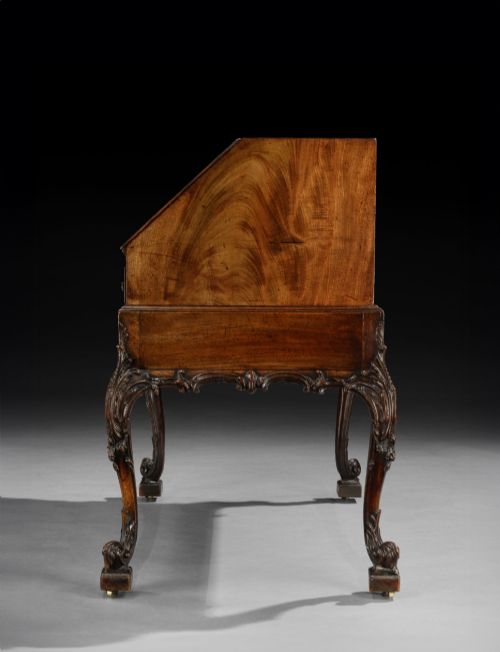
With regards to construction, the above piece employs chamfered drawer stops and short grain drawer kickers, both of which allow for the smooth opening of its drawers, and at the same time these have clearly minimised wear of the internal components. This construction also ensures that the drawers do not drop down much, if at all, during the drawer-opening process. Such attributes are often found on carcass furniture produced in the Chippendale workshop, particularly in the early 1760’s.

Provenance

Purchased from Mallett and Sons Ltd

Private Collection

Thence by descent

Dimensions

Width 92.5 cm (36″)

Height 93.5 cm (36 1/2”)

Depth 61 cm (24″)

Date of Manufacture

Andreas de Jong Ltd. has dated this George III Mahogany Bureau Stand to the Georgian era.

Height
93.5cm (36.81")
Width
92.5cm (36.42")
Depth
61cm (24.02")
Reference Numbers
Sellingantiques Ref
SA1245993
Dealers Internal Ref
REF 1052
Andreas de Jong Ltd.
Sellingantiques verified Since Feb 2023

Specialising in 18th and early 19th century english and irish antique furniture

Dealer Profile

You can view the stock and full dealer information on the Andreas de Jong Ltd. Profile Page

Trade Associations

Andreas de Jong Ltd. is a registered member of BADA 
PDF SHARE
SAVE
An 18th-century George III mahogany bureau on stand featuring a slant-front writing slope, carved cabriole legs, brass bail handles, and rich wood grain.
1 / 4
Archive I An 18th-century George III mahogany bureau on stand featuring a slant-front writing slope, carved cabriole legs, brass bail handles, and rich wood grain.

A George III Period Carved Mahogany Bureau on Stand
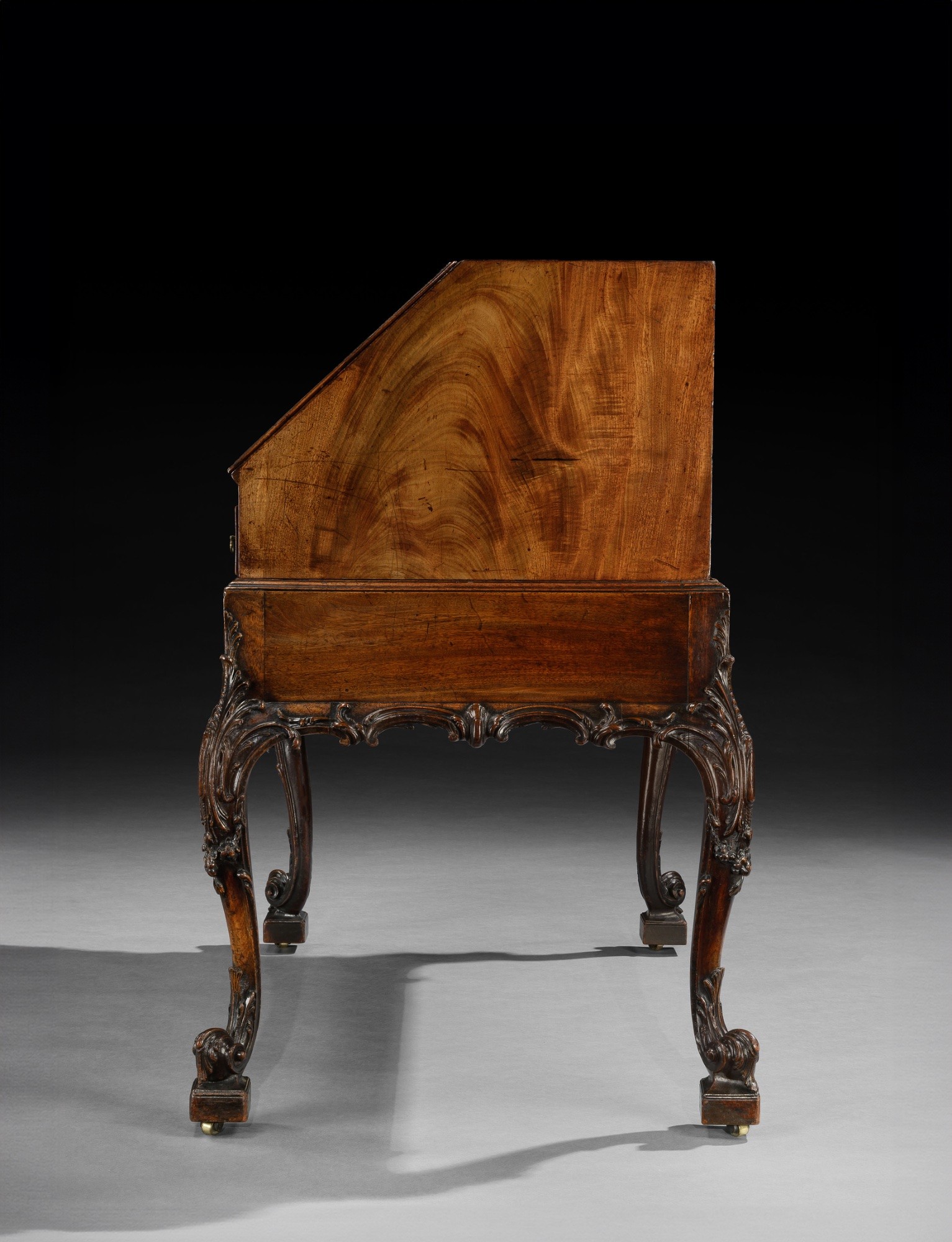
Archive II An 18th-century George III mahogany bureau on stand featuring a slant-front writing slope, carved cabriole legs, brass bail handles, and rich wood grain. View II
Archive III An 18th-century George III mahogany bureau on stand featuring a slant-front writing slope, carved cabriole legs, brass bail handles, and rich wood grain. View III
Archive IV An 18th-century George III mahogany bureau on stand featuring a slant-front writing slope, carved cabriole legs, brass bail handles, and rich wood grain. View IV
Enlarged Archival View
Telephone 07880 620291
Location
London
United Kingdom

By appointment only.
Verified Since Feb 2023
Items For Sale 20
Items Sold 5
Andreas de Jong Ltd.
Verified Since Feb 2023
View Dealer Info
Location: London, United Kingdom, , By appointment only.
Verified
Feb 2023
For Sale
20
Sold
5
An 18th-century George III mahogany bureau on stand featuring a slant-front writing slope, carved cabriole legs, brass bail handles, and rich wood grain.
A GEORGE III PERIOD CARVED MAHOGANY BUREAU ON STAND
Ref: SA1245993
An 18th-century George III mahogany bureau on stand featuring a slant-front writing slope, carved cabriole legs, brass bail handles, and rich wood grain.
Detail View 1
Detail View 2
Detail View 3
Archival Detail
Every single antique dealer on our platform is individually approved by our internal team. We verify their professional trade history, ethical standards, and photographic quality to ensure a secure, high-standard buying environment. Upon joining, every dealer agrees to a strict 9-point code of conduct. While issues can occasionally arise, our dealers typically resolve them swiftly and directly with the buyer. In fact, since our founding in 2002, Sellingantiques has only had to step in to help resolve an issue on roughly five occasions—a true testament to the quality of our dealers and their dedication to your happiness.
Our dealers are highly experienced in packing and shipping fragile, high-value antiques. Because you are in direct contact with the dealer, you will be able to easily go through all available shipping and insurance options together to ensure your item arrives safely.
Antiques are the ultimate green purchase. By choosing historical pieces over newly manufactured goods, you completely eliminate the carbon footprint of modern mass production while preserving exceptional, timeless craftsmanship.
Written by Sellingantiques from the dealer’s photographs and listing
  • ObjectDesks & Bureaux
  • Period18th century
  • StyleGeorge III
  • MaterialMahogany, Brass
  • ColourWarm Brown
  • MotifsCabriole legs, Slant front, Carved apron, Brass bail handles
  • SizeH 93.5 cm (37 in) x W 92.5 cm (36 in) x D 61 cm (24 in)

This George III period bureau on stand exemplifies English Rococo design from circa 1760. Constructed from mahogany, the piece displays a rich warm brown colour with a figured timber grain across the sloped fall-front and drawer fronts. The exterior incorporates brass bail handles with chased backplates, a keyhole escutcheon on the slope, and an elaborately carved apron on the stand. Four cabriole legs support the structure, terminating in scrolled feet. The dimensions measure 93.5 cm high, 92.5 cm wide, and 61 cm deep. In a contemporary home, this desk functions as a workspace in a study or library, or as a statement display piece in a living room.

A George III bureau on stand is an 18th-century English writing cabinet featuring a sloped fall-front section resting atop a carved table-like base with legs, popular during the mid-to-late 1700s.

Craftsmen primarily used dense West Indian mahogany, featuring flame or figured grain veneers, hand-cut oak drawer linings, and cast brass drop handles with decorative backplates.

Authentic period pieces show hand-dovetailed drawer joinery, irregular saw marks on unexposed surfaces, natural shrinkage across timber panels, and original cast brass fittings with subtle hand-chased details.

Position the bureau in a hallway, home office, or living room as a focal point, pairing its dark mahogany patina with contemporary wall colours, modern abstract art, or subtle neutral textiles.

Maintain the finish by dusting with a soft cotton cloth and applying high-grade beeswax polish once or twice a year, keeping the furniture away from direct heat sources and humid environments.
items
Add keywords to the filter
Price
£100
£250000
Era
Period
Style
Material
Origin
Stock Location
Recently Added
Online Payments
Categories