





Chippendale Slant Front Bureau
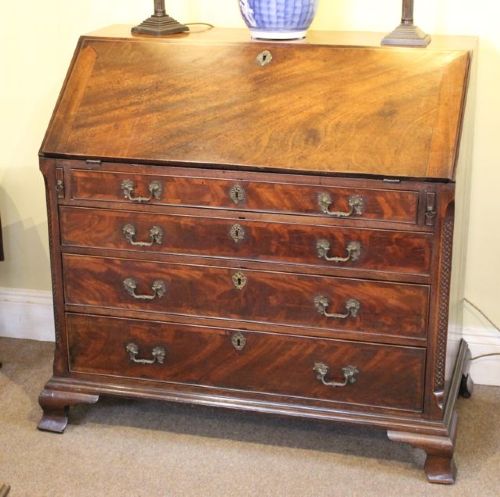
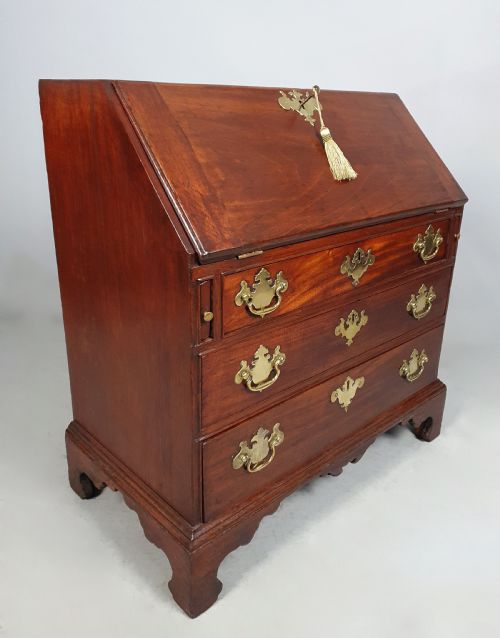
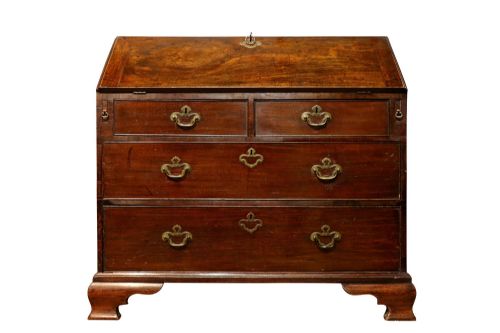
A chippendale slant front bureau is a fitted writing desk with a hinged writing flap, appearing here in mahogany, oak, fruitwood, and padauk wood.
Chippendale Slant Front Bureau
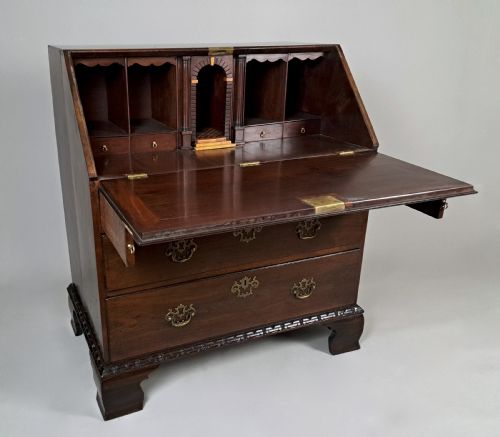
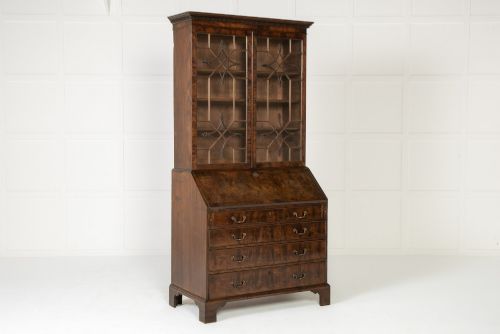
When you search for a chippendale slant front bureau, you encounter functional writing furniture designed with a sloping fall-front flap that conceals an internal arrangement of small drawers and pigeonholes. The selection includes standalone desks alongside taller bureau bookcases and pieces raised on stands.
The objects span the eighteenth century and the Georgian period, together with later revival interpretations from the early twentieth century. Mahogany dominates the listings, accompanied by regional variants in oak and fruitwood.
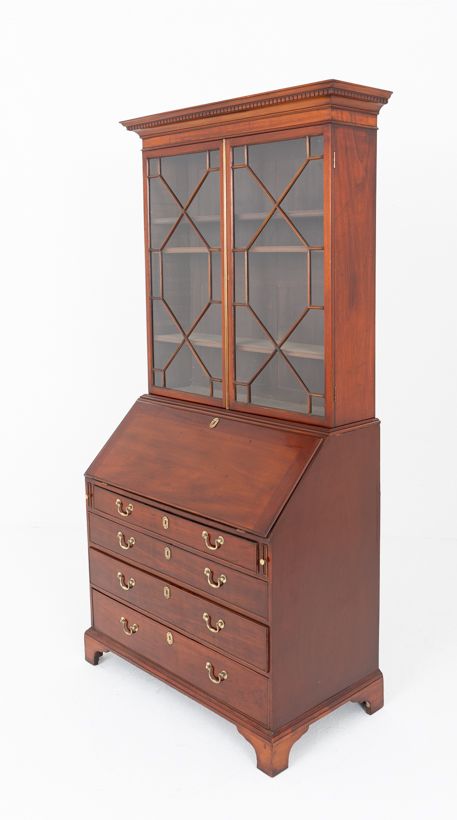
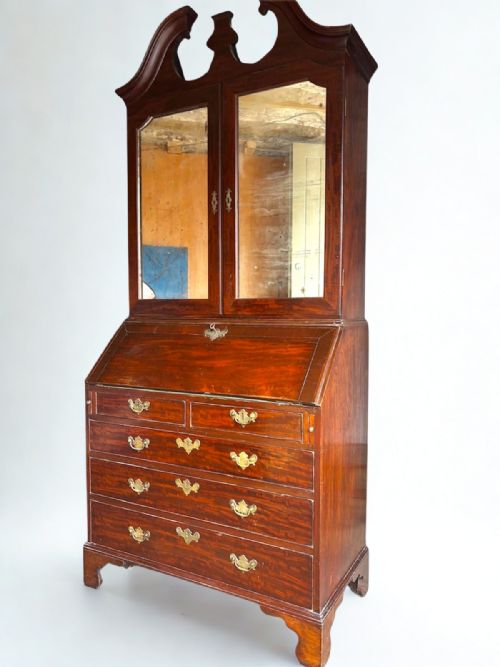
Most examples combine the drop-front desk format with fitted stationery compartments, whilst larger cabinet variations incorporate glazed or mirrored upper bookcase sections.
How they were made
Cabinetmakers utilised solid timbers and selected veneers, primarily mahogany, oak, fruitwood, cedarwood, and padauk wood, matched for figure and colour across the fall-front panels and drawer fronts.
Construction techniques involve traditional joinery to form the carcass, interior compartments, and structural supports, supplemented by cast brass hardware such as drop handles and escutcheons.
Some miniature mahogany desks provide all the complex interior drawers of a full-sized bureau scaled down for a tabletop.
What varies in quality
Quality differentiates through the choice and figuring of the timber, the complexity and execution of the internal stationery compartments, and the crispness of carved details on the exterior.
Proportion and the integrity of the original hardware and construction methods further distinguish superior examples from standard production pieces and later revivals.
GILES GRENDY
The Chippendale Slant Front Bureau Glossary
- Slant front bureau
- A desk featuring an angled hinged flap that drops down to create a writing surface. It conceals internal compartments when closed.
- Bureau bookcase
- A writing bureau combined with an upper shelving or cabinet section enclosed by doors. These doors frequently feature glass or mirror panels.
- Fall-front
- The hinged writing flap of a bureau that lowers from a vertical or sloped position to a horizontal plane. It rests on support lopers when opened.
- Bureau on stand
- A form where the bureau body sits upon an open frame with legs rather than resting on a chest of drawers. This elevates the writing height.
- Padauk wood
- A dense tropical timber valued for its distinct reddish colour and stability. It appears in specific cabinet work from the eighteenth century.
Chippendale Slant Front Bureau: Frequently Asked Questions
What is a chippendale slant front bureau?
A chippendale slant front bureau is a writing desk featuring an angled flap that opens to reveal a fitted interior of drawers and pigeonholes. These pieces date from the eighteenth century through to later revival periods.
They combine practical desk space with enclosed storage, appearing either as standalone cabinets or combined with upper bookcase sections.
How do I identify the wood used?
Examination of the grain, colour, and weight reveals the primary timber used in the construction. Mahogany and oak are common, alongside rarer woods like padauk and fruitwood.
Secondary timbers inside drawers often assist in confirming the regional origin and period of the piece.
What is the difference between a bureau and a bureau bookcase?
A standard bureau consists of the desk base with a slant front and internal fittings, often standing on bracket feet or a frame. A bureau bookcase adds a substantial upper cabinet for storing books or display.
Upper sections commonly feature glass or mirrored doors to showcase contents while protecting them from dust.
Where were these desks placed in a home?
These pieces functioned primarily as private writing and administrative desks in domestic libraries, parlours, or private chambers. The lockable fall-front secured personal papers and correspondence.
Their substantial construction meant they remained permanent fixtures in primary rooms rather than portable furniture.