
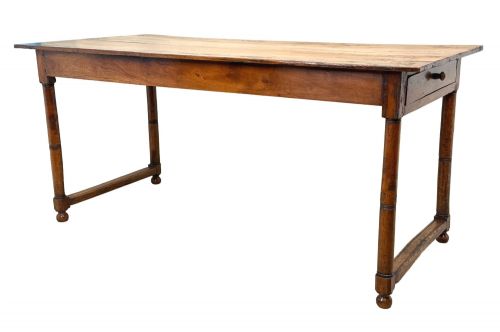


Fruitwood Writing Desk
A fruitwood writing desk offers warm timber tones and a compact surface for correspondence, drawing collectors who appreciate honest provincial craftsmanship.
Fruitwood Writing Desk
A fruitwood writing desk brings together functional workspace and domestic warmth, appearing across the eighteenth and nineteenth centuries in regional European forms. These pieces serve as practical surfaces for daily correspondence while displaying the varied grain patterns inherent to fruitwood timbers.
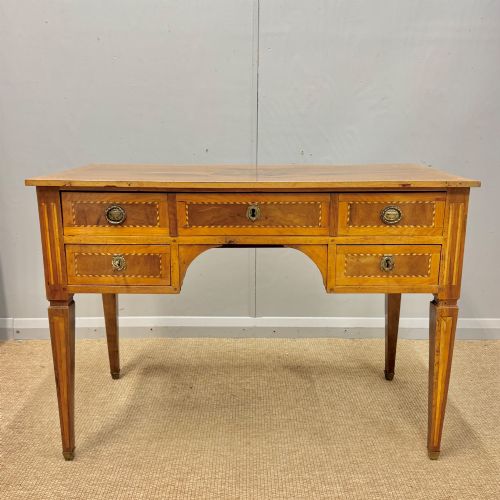
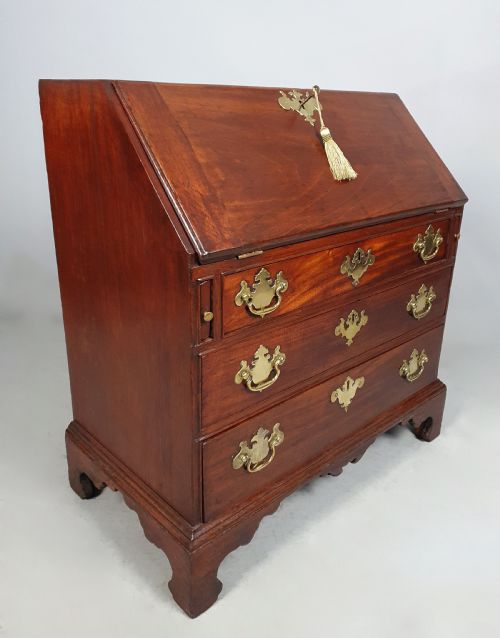
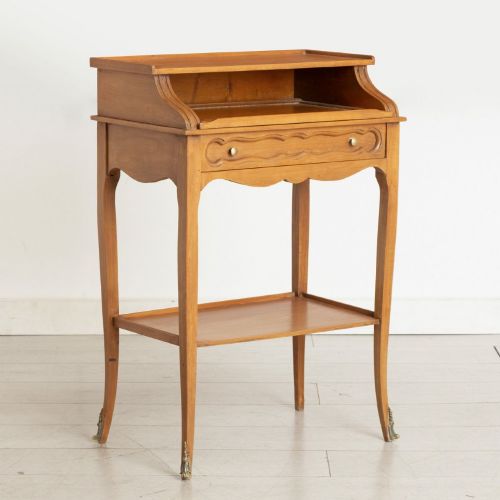
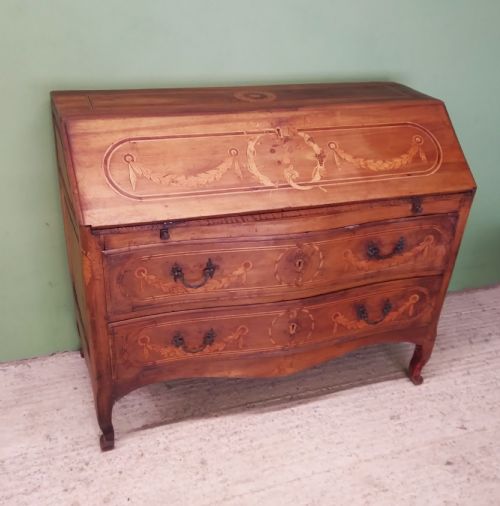
The versions met on this page range from small antique French ladies writing tables to marquetry bureaus and occasional writing desks. Makers of these pieces utilised timber varieties alongside walnut, cedarwood, oak, and tulipwood to construct forms aligned with French Provincial, Georgian, Neoclassical, and Louis XVI styles.
Buyers encounter forms spanning standard writing tables, bureaus, and secretaires, often incorporating brass hardware or marquetry details. The selection reflects domestic utility from periods including the eighteenth and nineteenth centuries.
Distinctions in quality
Quality rests upon the precision of the marquetry work and the harmonious integration of secondary timbers like cedarwood and oak. Finer examples display meticulous parquetry patterns and balanced proportions across the writing surface and base.
The sophistication of the stylistic execution separates standard provincial items from elevated pieces featuring ormolu mounts and intricate French or Maltese detailing. Surface preservation and the original relationship between hardware and timber define the standing of each piece.
Fruitwood Writing Desk Retail Price Guide 2026
Typical asking prices for fruitwood writing desk among the pieces listed under this phrase on Sellingantiques today, from the lower quarter to the upper quarter. They describe what is for sale here now, not the wider market.
Listings feature pieces spanning the eighteenth and nineteenth centuries, incorporating materials such as fruitwood, brass, walnut, cedarwood, oak, fabric, and tulipwood.
MILLET
The Fruitwood Writing Desk Glossary
- Fruitwood
- Timber derived from fruit-bearing trees such as pear, apple, or cherry, known for a warm tone and fine grain.
- Marquetry
- Decorative veneer work forming pictorial patterns using various coloured woods and materials.
- Parquetry
- Geometric mosaic woodwork used for floors or furniture surfaces, creating repeating patterns.
- Bureau
- A sloping desk opening to form a writing surface above a bank of drawers.
- Ormolu
- Gilt bronze ornamentation applied to furniture mounts and decorative hardware.
Fruitwood Writing Desk: Frequently Asked Questions
What is a fruitwood writing desk?
A fruitwood writing desk is a practical antique surface constructed primarily from timbers such as pear or cherry, used traditionally for correspondence and record keeping.
These pieces reflect regional styles from the eighteenth and nineteenth centuries, including French Provincial and Georgian designs.
Where were these desks made?
The desks originate from various European regions, notably France and Malta, reflecting local cabinet-making traditions and provincial tastes.
Workshops utilised locally available fruitwoods alongside imported decorative veneers like tulipwood.
How do I care for fruitwood furniture?
Care involves maintaining stable indoor humidity and avoiding direct sunlight to protect the natural timber tones and delicate marquetry.
Regular dusting with a dry cloth preserves the polished surface without the need for heavy chemical polishes.