





Regency Marquetry Desk
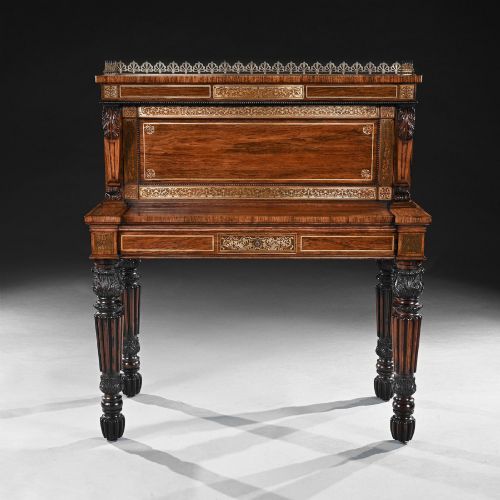
A regency marquetry desk is a fitted writing piece defined by meticulous wood inlay, offering both functional surface space and decorative presence.
Regency Marquetry Desk
A regency marquetry desk combines the architectural symmetry of the early nineteenth century with detailed patterned wood surfaces. These items emerge from the Regency and William IV periods, alongside later nineteenth century interpretations.
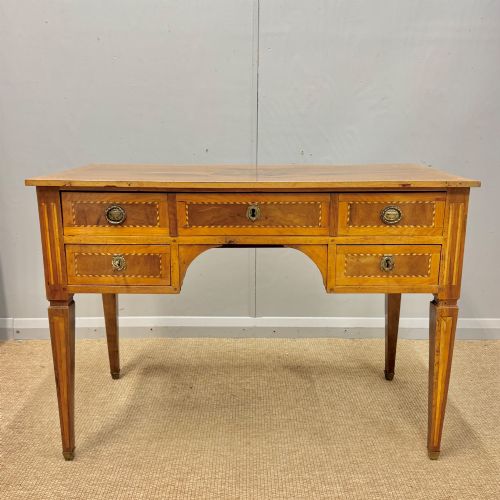
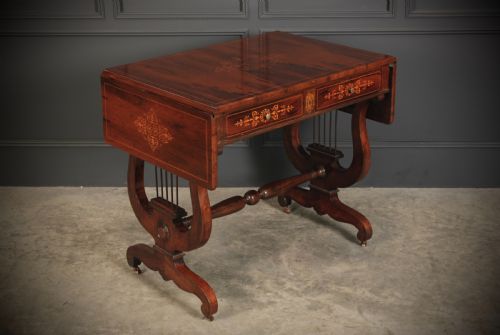
The inventory on this page shows forms stretching from freestanding library tables and escritoires to smaller writing boxes and desk stands. Rosewood and mahogany dominate the timber selection, frequently paired with fruitwood and satinwood inlay.
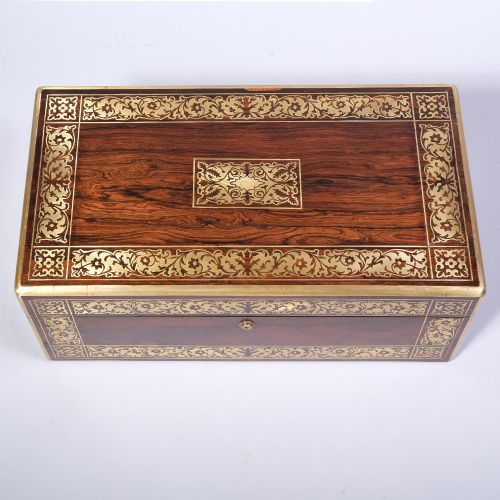
Buyers frequently encounter variants incorporating brass stringing and cut brass inlays alongside traditional floral marquetry. Smaller accessories like desk stands and writing boxes share the same decorative vocabulary as the larger writing tables.
How they were made
Cabinet makers utilised dense imported hardwoods like rosewood and flame mahogany as the primary structural and visual foundations. These timbers were selected for their rich grain patterns and deep natural tones.
Marquetry and inlay work required contrasting veneers such as fruitwood and satinwood to create pictorial or geometric motifs. Brass components, including stringing and boulle work, were meticulously embedded into the timber surfaces.
Secondary materials such as leather provided functional writing inserts, while glass and brass hardware completed the construction of desk stands and boxes.
Regency Marquetry Desk Retail Price Guide 2026
Typical asking prices for regency marquetry desk among the pieces listed under this phrase on Sellingantiques today, from the lower quarter to the upper quarter. They describe what is for sale here now, not the wider market.
Several pieces include secret compartments hidden behind dummy book spines or sliding panels for confidential documents.
What varies in quality
The standard of a regency marquetry desk rests upon the precision of the veneer work and the choice of primary timber. Finer examples display seamless integration of contrasting woods where individual elements fit together without visible gaps.
The sophistication of the brass inlay and mounts distinguishes superior pieces from standard workshop output. Crisply cut brass stringing and well-defined floral marquetry indicate a higher level of craftsmanship during manufacture.
Gillows Oxford Street Workshop
The Regency Marquetry Desk Glossary
- Marquetry
- Decorative veneer applied to furniture in patterns and pictures. It uses thin slices of various woods and other materials to form intricate designs.
- Rosewood
- A heavy, durable timber with a dark grain used extensively in nineteenth-century cabinet making. This wood accepts a high polish and forms the base for much brass inlay.
- Escritoire
- A small writing desk fitted with drawers and compartments. These pieces often feature drop-front writing surfaces and elaborate interior arrangements.
- Satinwood
- A yellowish exotic timber utilised for contrasting inlay work. Its reflective grain provides bright detail against darker grounds like mahogany.
Regency Marquetry Desk: Frequently Asked Questions
What is a regency marquetry desk?
A regency marquetry desk is a nineteenth-century writing surface decorated with detailed wood veneers and often inlaid with brass. These pieces reflect the neoclassical tastes of the period through balanced proportions and refined ornamentation.
They serve as both functional workspaces and decorative focal points within a room. The integration of contrasting timbers defines their visual appeal.
How do I care for rosewood furniture?
Rosewood surfaces require stable humidity levels and protection from direct sunlight to prevent timber movement and fading. Regular dusting with a soft, dry cloth preserves the polished finish.
Avoid placing damp items directly onto the wood or leather writing surfaces. Professional wax applications maintain the natural lustre of the timber over time.
Where were these desks used?
These desks belonged primarily in private libraries, drawing rooms, and studies of nineteenth-century residences. Freestanding library tables occupied the centre of rooms, while smaller writing boxes rested on tables or chests.
Their placement depended on the specific form, with larger tables designed for prominent display and smaller boxes intended for portable correspondence.
How do I distinguish Regency from later styles?
Regency pieces typically exhibit strict classical proportions, restraint in ornamentation, and specific material combinations such as rosewood and cut brass. Later nineteenth-century interpretations often incorporate heavier carving or mixed stylistic revivals.
Examining the construction methods, secondary timbers, and the nature of the brass inlay helps clarify the period of manufacture.