



Antique Fruitwood Desk
An antique fruitwood desk brings warmth and a distinct grain to a workspace, combining domestic practicality with mellow tones.
Antique Fruitwood Desk
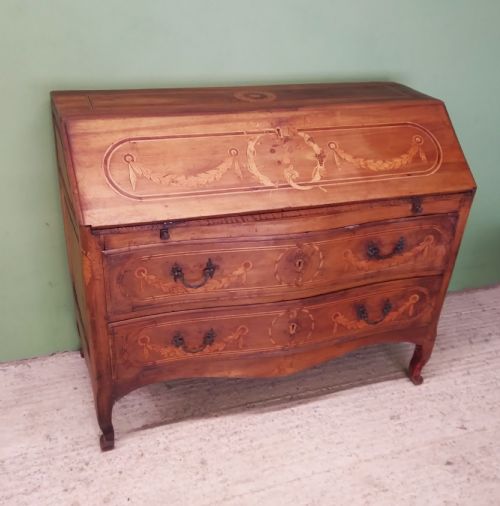
An antique fruitwood desk encompasses writing tables, bureaus, and compact writing surfaces made primarily from domestic fruit timbers. These pieces range from eighteenth-century Georgian examples to nineteenth-century French provincial items, often displaying rich patination developed over generations of use.
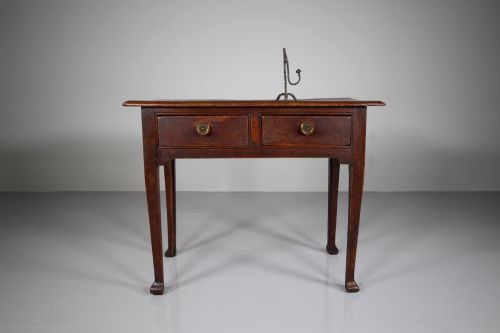
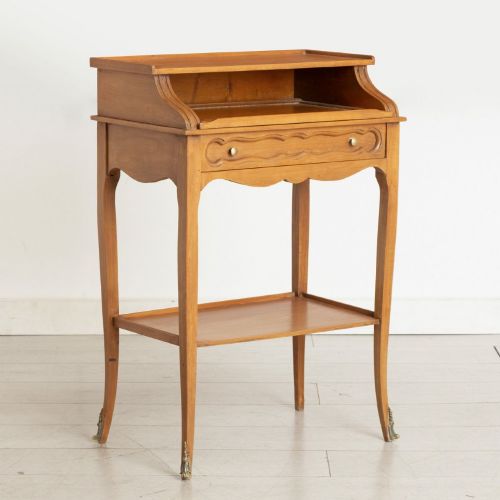
Buyers seeking this phrase frequently encounter related forms such as lowboys, occasional writing tables, and bureaux, alongside occasional library and console desks. The selection spans straightforward country craftsmanship to sophisticated marquetry models originating from English and continental workshops.
How they were made
Fruitwood timber, notably cherry and pear, was selected for its dense grain and turned easily on lathes for legs and stretchers. Cabinetmakers often paired fruitwood with secondary woods like oak, elm, and cedar to construct sturdy drawer linings and structural frames.
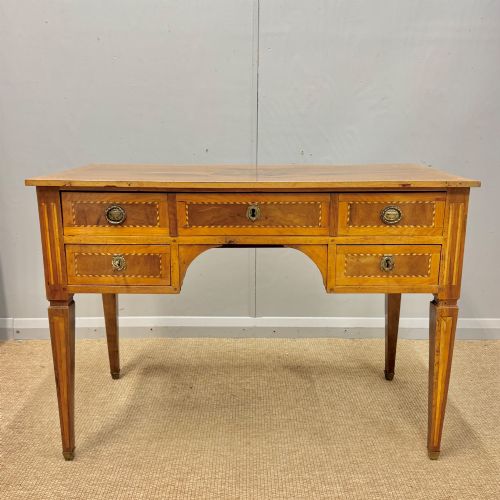
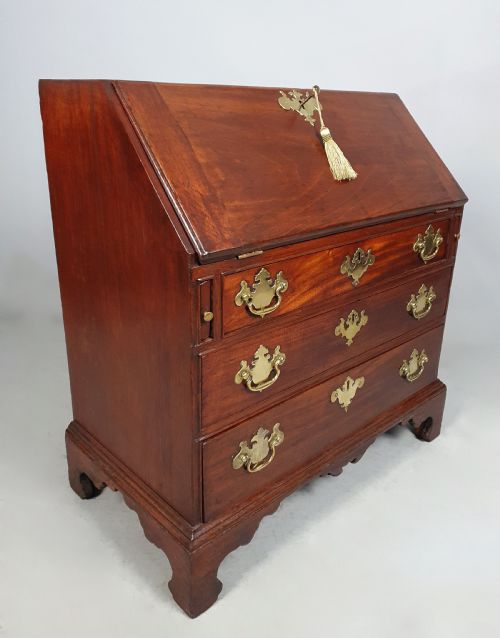
Surface decoration frequently relied on contrasting veneers, marquetry inlay, and hand-rubbed wax finishes that highlighted the natural tone of the timber. Brass handles, escutcheons, and occasional ormolu mounts completed the construction of these writing surfaces.
Pounce pots stood ready on desks to sprinkle powdered resin over wet ink, preventing smudges before blotting paper gained popularity.
What varies in quality
The degree of preservation in the original timber surface and the depth of patination dictate the visual appeal of a piece. Fine execution shows in the crispness of turned details, the tight fit of dovetail joints in drawers, and the restraint applied to marquetry.
Proportion and structural integrity separate standard utility pieces from exceptional examples. Desks retaining their original brass hardware, unblemished writing surfaces, and harmonious timber matching command greater interest.
Paul Garnier·Millet
The Antique Fruitwood Desk Glossary
- Bureau
- A sloping writing flap opening to reveal internal compartments and small drawers, often positioned above wider storage drawers. This form became popular during the eighteenth century for private correspondence.
- Marquetry
- Decorative patterns formed by fitting contrasting veneers into a prepared wooden surface. Craftsmen used various tinted woods to create floral or geometric designs across desk lids and tabletops.
- Lowboy
- A small table equipped with one or more rows of drawers, commonly used as a dressing table or a compact writing desk. These pieces typically feature slender cabriole or turned legs.
- Patination
- The deep, lustrous surface sheen developed on antique wood through age, handling, and wax polishing. This quality cannot be readily replicated by artificial means.
- Stretchers
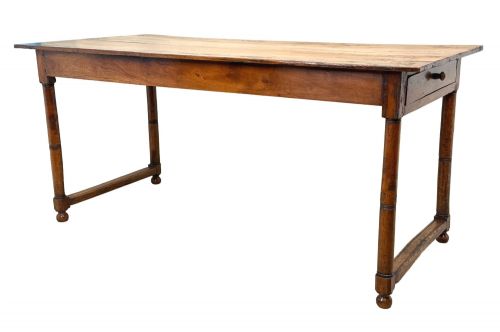
- Horizontal wooden braces connecting the legs of a table or chair to provide structural rigidity. They often display neat wood-turning.
Antique Fruitwood Desk: Frequently Asked Questions
What is an antique fruitwood desk?
An antique fruitwood desk is a writing surface constructed primarily from woods such as apple, pear, or cherry, dating from the eighteenth or nineteenth centuries. These pieces were built for domestic correspondence and record-keeping, utilising local timbers instead of imported mahogany or walnut.
Over time, exposure to light and wax polishing gives fruitwood a distinct amber or warm brown tone with a smooth grain. They appear in various regional styles, from English country workshop designs to refined French provincial forms.
How do I care for fruitwood furniture?
Fruitwood responds best to regular dusting with a soft, dry cloth and occasional applications of traditional beeswax to nourish the timber. Avoid placing the desk near direct heat sources or in strong sunlight, which can dry out the wood and fade the natural colour.
Maintaining a stable room temperature prevents the timber from shrinking or expanding, which helps protect older joints and veneered surfaces from cracking. Gentle handling preserves the original patination built up over centuries.
How can I tell the period of a desk?
Dating a desk involves examining the construction methods used in the drawers, the tools marks left by the maker, and the style of the legs and hardware. Eighteenth-century pieces often feature hand-cut dovetails and pegged joints, whereas nineteenth-century items may incorporate machine-sawn elements.
Comparing the secondary woods, such as oak or elm framing beneath the fruitwood exterior, also helps establish the geographic origin and likely decade of manufacture. Hardware styles and lock mechanisms provide further clues to the date.
Were these desks used for writing?
These pieces served primarily as functional workspaces for writing letters, managing household accounts, and reading documents before the widespread use of electric lighting. Many include small interior drawers and pigeonholes designed to hold inkwells, quills, and stationery.
Compact forms suited smaller rooms and bedrooms where a full-sized library table would prove too large. The integration of drawers kept essential writing tools close at hand during daily use.