


Carved Rococo Desk
A carved rococo desk brings exuberant French scrollwork and serpentine timber forms directly into a study, offering rich period character.
Carved Rococo Desk
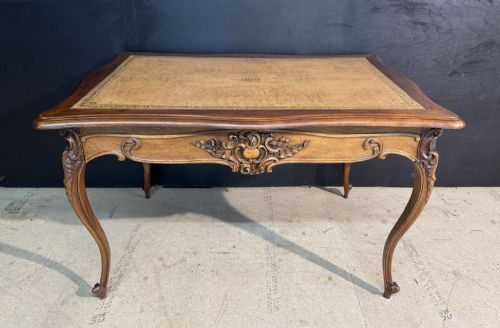
A carved rococo desk sits within a lineage of ornate writing furniture spanning the eighteenth and nineteenth centuries, drawing on revival movements across France, Britain, and Italy. These pieces display flamboyant shell motifs, C-scrolls, and asymmetrical shaping that define the aesthetic.
Most examples encountered on this page date from the Victorian era and the broader nineteenth century, reflecting a strong preference for revival furniture in burr walnut, mahogany, and rosewood. While writing tables and bureau bookcases also appear, the core focus remains on expressive wooden desks built for domestic chambers.
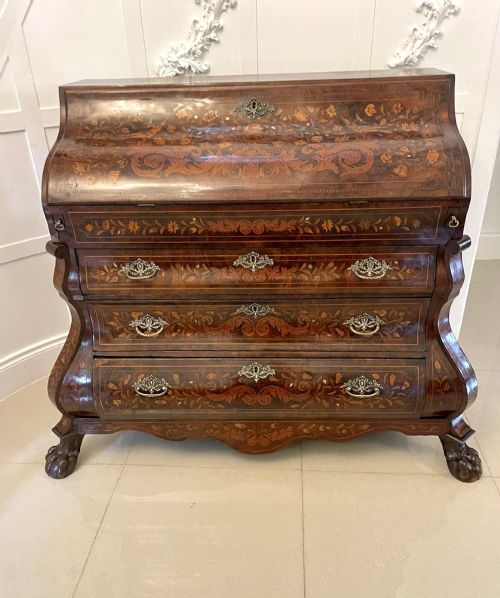
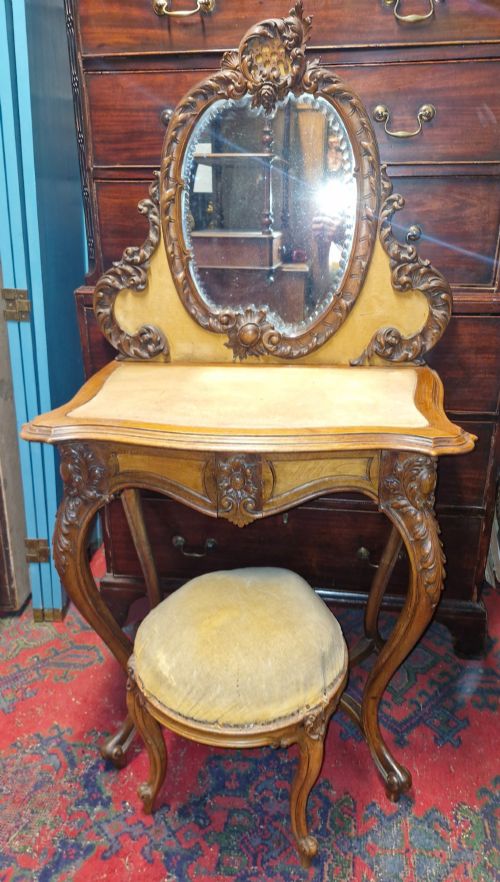
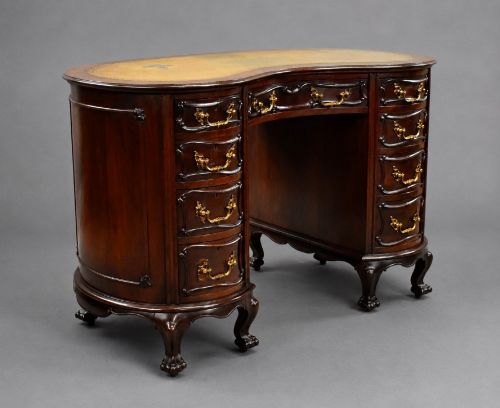
Origin points vary widely, with makers in France, Italy, and Britain producing distinct interpretations of the style. Buyers frequently encounter serpentine fronts, cabriole legs, and elaborate marquetry inlay that elevate a functional writing surface into a sculptural centrepiece.
Materials and construction
Cabinetmakers relied heavily on dense hardwoods like walnut, burr walnut, and mahogany, often applying intricate floral marquetry or giltwood accents to enhance the surface texture. Carved elements were worked directly into the solid timber or applied as gesso mouldings.
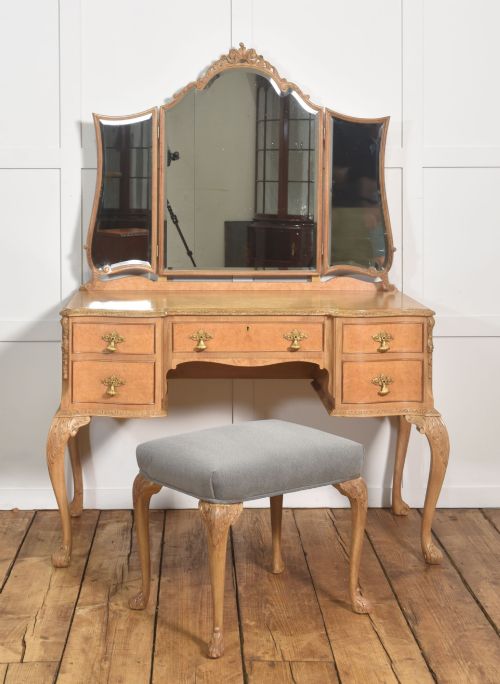
Structural forms incorporate serpentine fronts, cabriole legs, and shaped aprons, requiring advanced joinery to support curved surfaces and heavy writing tops. Secondary materials such as leather inserts and brass hardware complete the construction of each desk.
An inquisitive black forest walnut mantel clock watches silently over the room, carved in the French rococo style by Swiss and German hands.
What separates the finest examples
The distinction between ordinary and exceptional pieces lies in the depth and precision of the hand-carving and the choice of timber veneer. Superior desks display crisp, high-relief scrollwork and symmetrically matched burr walnut figures rather than flat, mechanical milling.
Internal construction, such as dovetailed drawer linings and original brass fittings, marks the standard of the workshop. Pieces bearing documented maker attributions or superior marquetry naturally command greater attention from discerning collectors.
Samuel Marti·Holland and Son·E and R
The Carved Rococo Desk Glossary
- Bombe
- A bulging, convex shape characteristic of advanced case furniture. This swelling profile requires complex timber shaping.
- Cabriole leg
- A furniture leg that curves outward and then tapers inward, finishing in a foot. It mimics the shape of an animal's leg.
- Marquetry
- Decorative veneer patterns formed from pieces of contrasting timber. Craftsmen assemble these thin sections to create floral or geometric scenes.
- Serpentine front
- A furniture front curving outward at the centre and inward at the sides. This fluid outline defines many rococo revival desks.
- Gesso
- A plaster-like mixture applied to wood surfaces before gilding. It provides a smooth base for gold leaf application.
Carved Rococo Desk: Frequently Asked Questions
How do I identify a true period desk?
Examine the timber shrinkage, hand-cut dovetails inside the drawers, and the crispness of the carving. Authentic period pieces show tool marks and wear consistent with age rather than uniform machine production.
Compare the secondary woods used inside the carcass with standard regional practices of the eighteenth or nineteenth century to confirm geographical origin.
Where should I place a carved desk?
These desks suit studies, libraries, or principal reception rooms where their sculptural silhouettes and carved details can be appreciated from multiple angles. Positioning them away from direct sunlight protects vulnerable wood veneers and leather surfaces.
Ensure the room maintains stable humidity levels to prevent the solid timber and applied marquetry from cracking or lifting.
How do I care for antique wood surfaces?
Dust regularly with a soft, dry cloth and apply a quality beeswax periodically to nourish the timber and maintain a soft sheen. Avoid modern silicone sprays that can permanently damage historic French polish.
Keep leather writing inserts conditioned with specialist balms to prevent them from drying out and cracking over time.
What distinguishes revival pieces from older ones?
Revival furniture, particularly from the Victorian period, often utilises machine-assisted manufacturing alongside hand-finishing, whereas eighteenth-century originals relied entirely on manual woodworking techniques.
Hardware styles, secondary framing timbers, and specific revival design interpretations help differentiate an 1850s piece from a true 1750s original.