

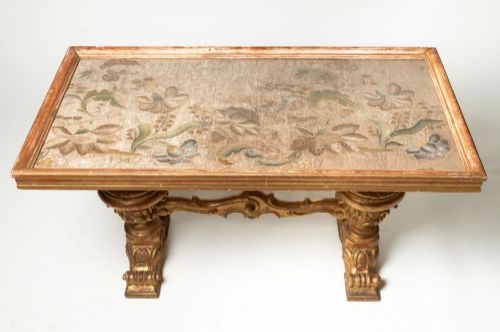
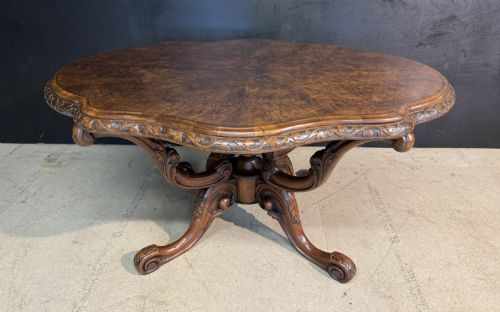
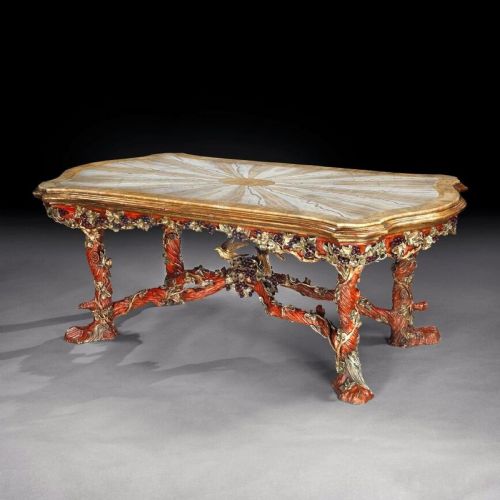
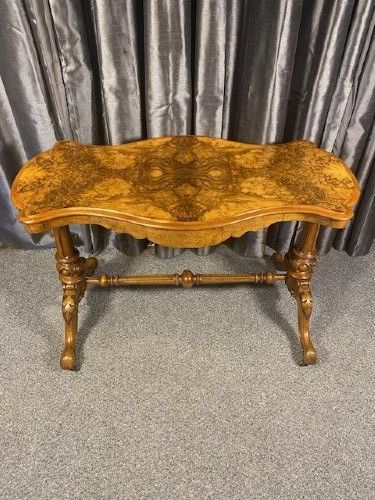
Rococo Centre Table
A rococo centre table brings exuberant curves and rich timber into a room, designed to be admired from every angle.
What these tables are
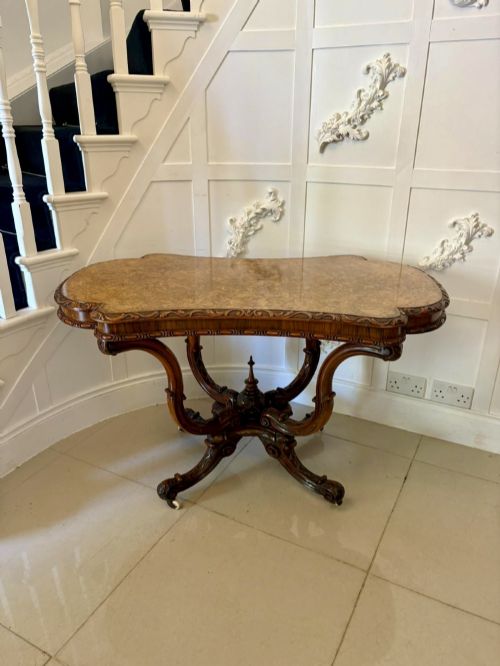
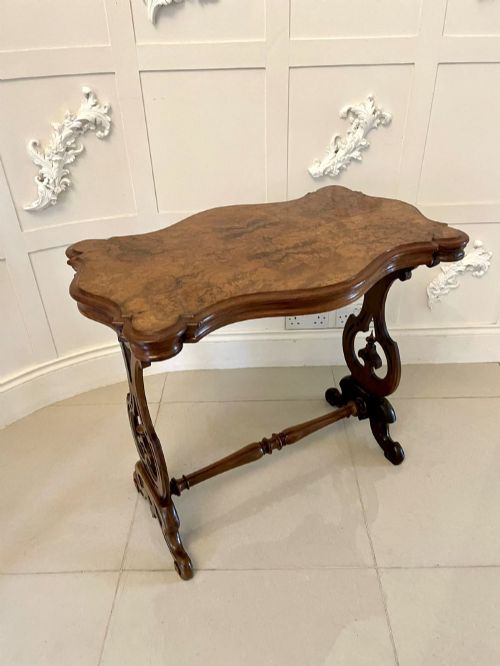
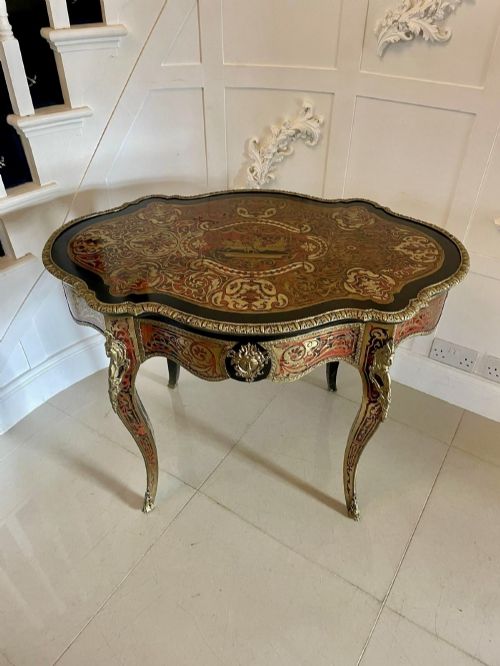
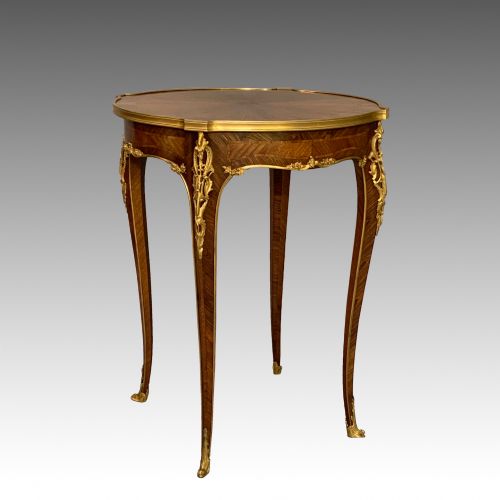
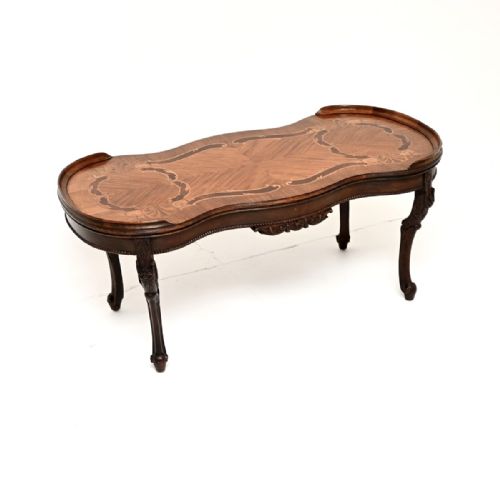
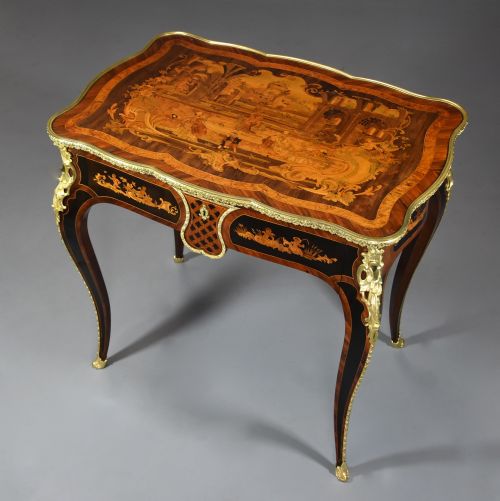
A rococo centre table stands free in a room rather than against a wall, finished on all sides so it can command the middle of a space. The form emerges in walnut, mahogany, burr walnut, kingwood, and bleached oak, often taking the shape of a centre table, occasional table, or bureau plat.
The pieces on this page span the eighteenth, nineteenth, and twentieth centuries, including examples from eighteen-sixty, eighteen-eighty, nineteen-ten, nineteen-twenty, and nineteen-sixty. They draw heavily on French Rococo Revival, Louis XV style, and Georgian traditions.
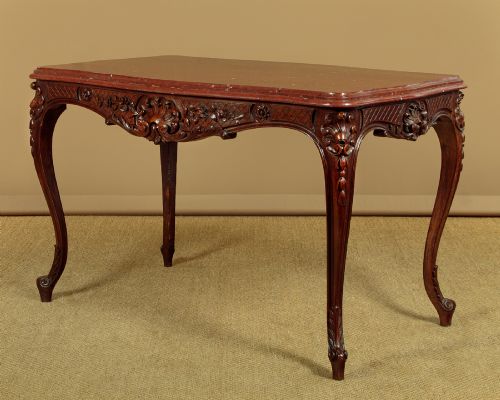
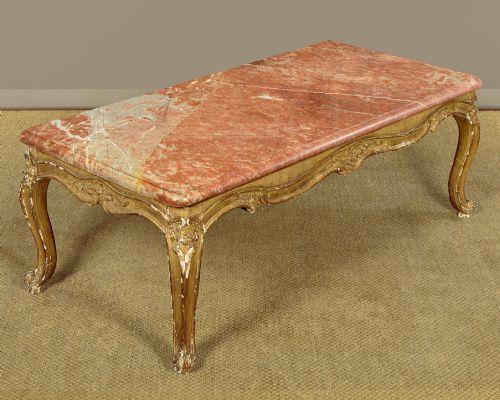
Buyers encounter solid green marble polished tops, inlaid surfaces, and marquetry alongside simpler timber constructions. These objects function as grand gaming surfaces, writing desks, or decorative occasional tables.
How they were made
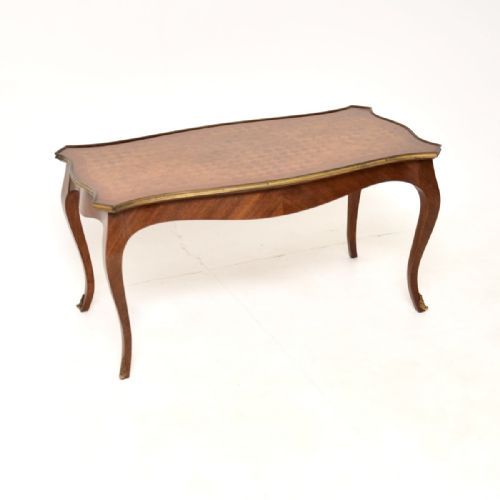
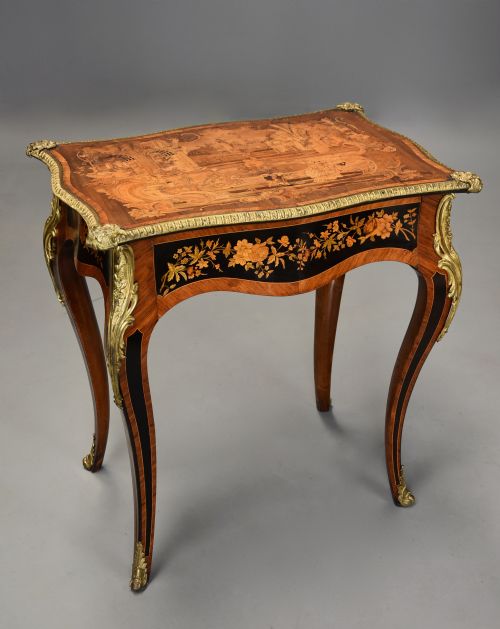
Cabinetmakers select figured timbers such as walnut, burr walnut, mahogany, and kingwood, frequently employing marquetry and delicate inlay to pattern the tops. Frames are shaped with the characteristic asymmetrical curves and fluid lines of the style.
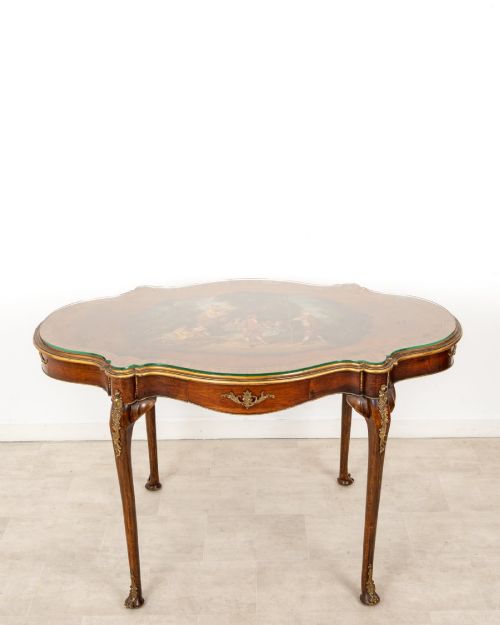
Many examples incorporate cast brass, ormolu, and bronze mounts that accent the structural joints and scrollwork feet. Stone elements appear too, as seen in the heavy solid green marble polished tops fitted directly to the wooden frames.
Retail Price Guide 2026
Typical UK retail prices for rococo centre table, calculated from the Sellingantiques database of over a million retail prices indexed since 2003. This retail price guide relies exclusively on Sellingantiques data; no external sources or auction records are used, so the figures do not describe the wider market.
Some tables double as games boards, proving that eighteenth-century aristocracy took their parlour pastimes with considerable seriousness.
What varies in quality
Quality rests in the fluency of the carved woodwork and the precision of the timber matching, particularly where burr veneers or marquetry meet across a shaped top. Tables with crisp, detailed bronze or ormolu mounts show greater investment by the maker than those with simplified hardware.
The integrity of the free-standing frame dictates longevity, separating robustly constructed pieces from those where movement in the timber compromises the joints. Finer examples balance elaborate French styling with structural stability across both walnut and mahogany.
The Rococo Centre Table Glossary
- Centre table
- A freestanding table finished on all sides, designed to sit in the middle of a room rather than against a wall. These pieces frequently feature shaped tops in marble or inlaid wood.
- Ormolu
- Gilded bronze applied as decorative mounts and accents on furniture frames. It highlights the asymmetrical curves typical of revival pieces.
- Marquetry
- The art of applying small pieces of veneer to a structure to form decorative patterns and pictures. It appears frequently on the surfaces of writing desks and occasional tables.
- Bureau plat
- A flat-topped writing desk designed to stand free in a room. These often incorporate drawers and decorative mounts along the apron.
- Burr walnut
- Timber sliced from walnut tree growths, producing swirling, highly figured grain patterns. Cabinetmakers prize this material for decorative table tops.
Frequently Asked Questions
Where should I place a centre table?
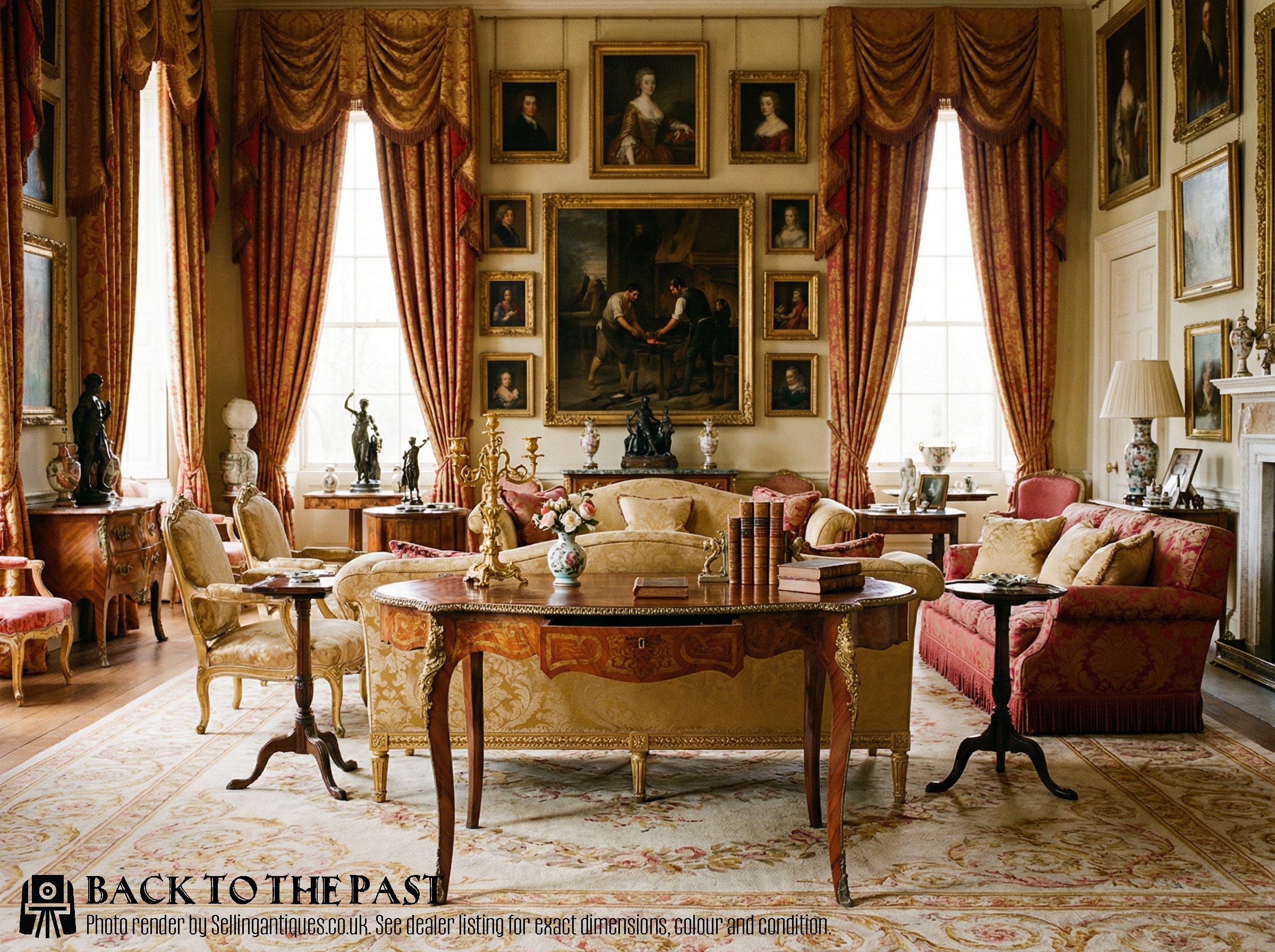
These pieces are designed to stand free in the middle of a room, where their finished backs and sides remain visible from all angles. They work well in large reception rooms or entrance halls as central focal points.
Avoid pushing them against walls, as the curved aprons and decorative mounts are intended to be walked around and appreciated in open space.
Can I use these tables for daily writing?
Many examples, particularly those styled as bureau plat or fitted with polished marble, serve practical purposes as desks or writing surfaces. The sturdy timber and stone tops accommodate daily tasks.
Ensure you use appropriate blotters or pads to protect antique polished wood and marble surfaces from scratches and ink stains.
How do I tell an 18th century table from a 19th century revival piece?
Eighteenth-century originals display hand-carved joinery and timber patination characteristic of the period's working methods. Nineteenth-century revival pieces often use machine-cut elements alongside cast bronze mounts.
Examining the secondary woods underneath and inside the drawers helps clarify the actual period of manufacture.
How do I care for marble tops?
Solid green marble polished tops require gentle cleaning with a damp cloth and mild, non-acidic soap. Avoid harsh chemical cleaners that can etch the polished stone surface.
Using coasters for drinks prevents moisture rings from forming on both marble and timber finishes.