




Ornate Writing Table
An ornate writing table brings classical craft to a study, offering a dedicated surface shaped by period marquetry and mounts.
Ornate Writing Table
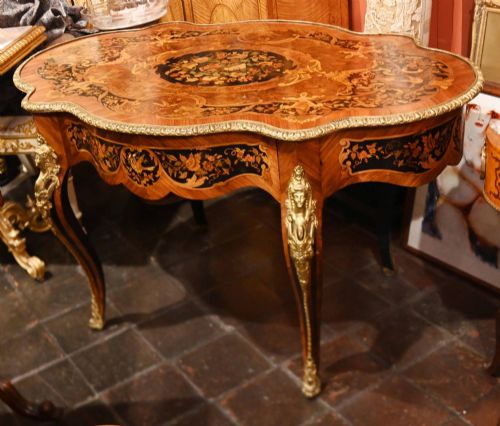
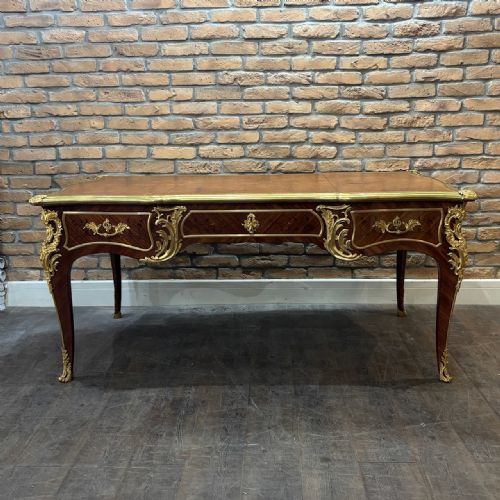
An ornate writing table combines a practical desk surface with decorative flourish, most commonly taking the form of a French bureau plat or a Victorian revival piece.
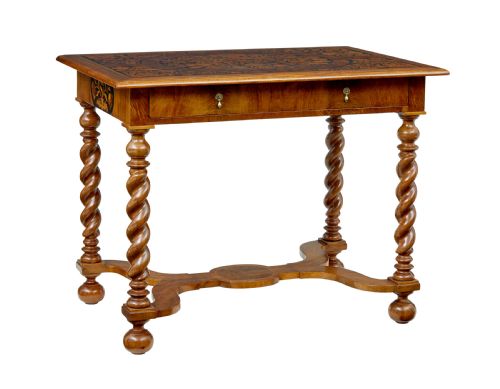
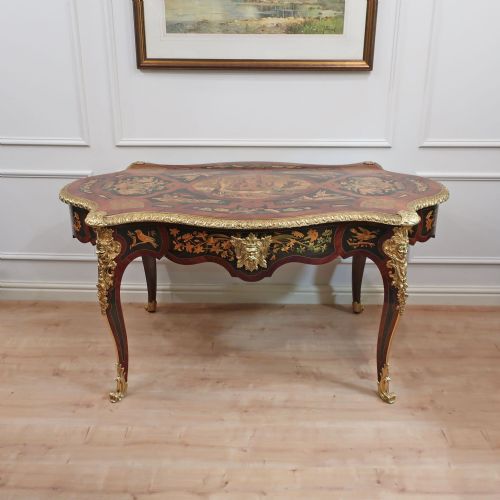
The selections span from walnut and mahogany constructions to elaborate marquetry examples bearing brass, ormolu, or bronze mounts across nineteenth-century workshops.
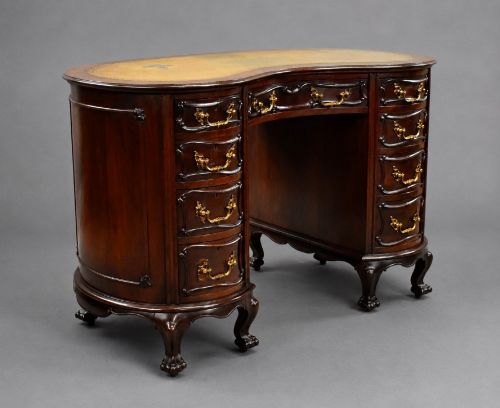
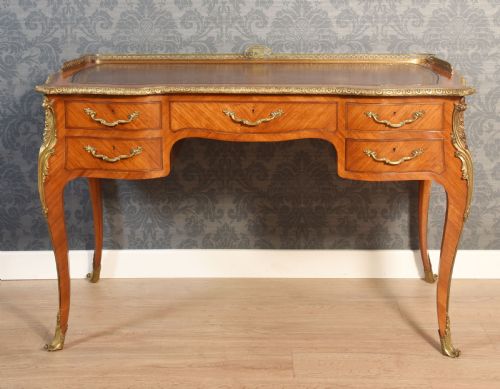
Buyers encounter forms ranging from kidney-shaped desks and bureau de dame writing cabinets to freestanding centre tables adapted for correspondence.
Materials and construction methods
Cabinetmakers built foundational carcases in timbers such as walnut, mahogany, rosewood, kingwood, and satinwood, often applying intricate parquetry and marquetry veneer patterns.
Decorative metalwork in ormolu, brass, and gilt bronze frames edges, mounts legs, and highlights key escutcheons alongside fitted leather writing surfaces.
Listings feature nineteenth-century writing tables in walnut, mahogany, and kingwood, alongside French Louis XV style pieces.
Judging the standard of execution
Quality rests upon the crispness of hand-carved details, the precision of wood inlays, and the integrity of the underlying cabinet timbers rather than mere surface gilding.
Superior examples display balanced proportions, original mounts, and refined internal drawer construction that distinguish bespoke commissions from mass production.
Angiolo Barbetti Firenze
The Ornate Writing Table Glossary
- Bureau Plat
- A freestanding writing table fitted with drawers, originating in France during the eighteenth century and revived later.
- Ormolu
- Gilt bronze applied to furniture mounts, cast and chased by hand to provide metallic contrast against dark woods.
- Marquetry
- The art of applying decorative veneer pieces to form pictorial or geometric patterns across a table top.
- Padauk
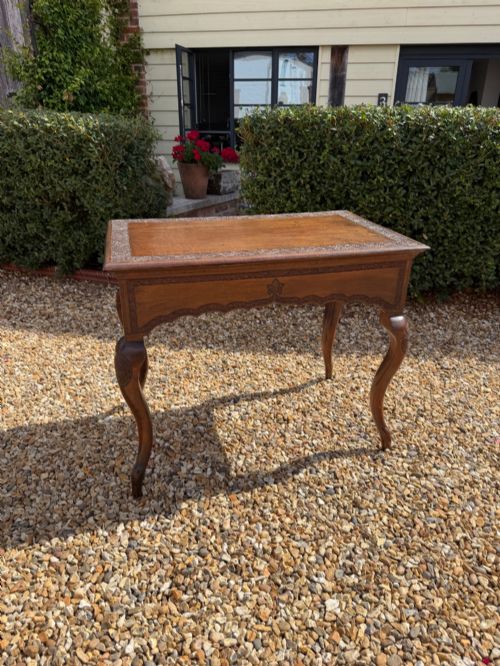
- A dense tropical hardwood utilised in carved Anglo-Indian furniture pieces for deep reddish colour and durability.
- Parquetry
- Geometric wood inlay work arranged in patterns such as squares, chequers, or cubes on furniture surfaces.
Ornate Writing Table: Frequently Asked Questions
What is a bureau plat?
A bureau plat is a flat-topped writing desk designed to sit freestanding in a room, typically featuring drawers beneath the surface.
These tables date heavily to French revival periods and often incorporate bronze mounts or leather inserts.
How do I spot Victorian revival styles?
Victorian revival pieces borrow heavily from earlier French motifs like Louis XV and Louis XVI designs, using heavy walnut or mahogany.
Look for symmetrical curves, applied ormolu, and elaborate marquetry that imitate eighteenth-century royal furniture.
Where were Anglo-Indian tables made?
Anglo-Indian tables were produced during the nineteenth century, often combining British furniture forms with traditional local carving techniques.
Carved padauk and dense local timbers define the regional aesthetic of these desks.
What woods are most common?
Walnut, mahogany, and kingwood form the primary structural and decorative timbers found across these tables.
Exotic veneers such as satinwood and rosewood appear frequently in parquetry and marquetry patterns.