




French Walnut Server
A french walnut server brings warmth and utility to a dining room, combining solid timber with practical surface space.
French Walnut Server
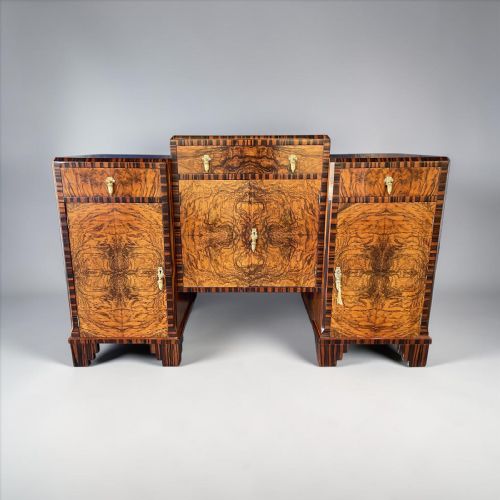
A french walnut server takes many forms across different eras, appearing as sideboards, buffets, serving tables, and side cabinets. Buyers seeking this phrase encounter formats ranging from eighteenth-century provincial buffets to twentieth-century Art Deco sideboards.
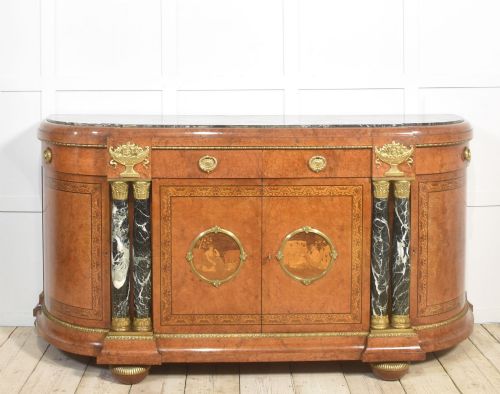
The selection includes marble-topped serving surfaces alongside carved wooden cabinets with multiple doors and drawers. Origins span provincial workshops and grand chateau styles, reflecting both rustic utility and formal reception rooms.
How they were made
Construction relies primarily on walnut and burr walnut, frequently paired with contrasting materials like marble for tops and brass, iron, or ormolu for mounts and hardware. Glass panels and ebony details also appear on specific stylistic examples.
Cabinetmakers utilised traditional joinery combined with carved ornamentation, sculptural marble slabs, and metal mounts. Surface finishes highlight the natural grain of the timber, whether finished with a smooth polish or left in a more tactile, carved state.
Some metamorphic servers secretly change their form, proving that French cabinetmakers loved a clever party trick just as much as a pretty carved leg.
What varies in quality
Quality rests in the depth of the timber grain, the precision of the carving, and the integration of secondary materials such as fitted marble slabs and cast ormolu mounts. Finer examples display harmonious proportions and confident sculptural detail across panels and legs.
The sophistication of the design dictates the overall standard, moving from straightforward provincial utility pieces to elaborate revival styles with substantial carved decoration and heavy marble tops. Structural integrity and the original pairing of stone to timber define the upper tier.
The French Walnut Server Glossary
- Ormolu
- Gilded bronze mounts applied to furniture for decoration. This technique was widely used in French cabinetmaking to accent corners, handles, and apron rails.
- Burr walnut
- Timber taken from a tree growth that produces intricate, swirling grain patterns. It is sliced into veneers to create decorative surfaces on cabinet doors and tabletops.
- Bombe
- A convex, bulging shape characteristic of certain decorative furniture styles. This curved profile requires skilled carpentry to achieve balanced proportions.
- Buffet
- A sideboard or serving cabinet used for holding food and tableware. These pieces often feature a combination of cupboards and drawers.
French Walnut Server: Frequently Asked Questions
How do I date a french walnut server?
Dating relies on stylistic clues, construction methods, and materials present in the piece. Eighteenth-century examples often show simpler provincial lines or deep carved panels, whereas later nineteenth-century pieces lean into Renaissance or Rococo revivals.
Twentieth-century items frequently adopt streamlined Art Deco geometries or clean modern surfaces. Comparing the hardware, timber thickness, and leg styles helps place the piece within its historical period.
Are marble tops original to these servers?
Marble tops frequently appear on nineteenth and twentieth-century sideboards and serving tables. They provided a durable, heat-resistant surface for presenting food and drink.
Inspecting the fit and the supporting frame reveals whether the stone belongs to the piece. Original marble sits flush and matches the proportions of the wooden base below.
How do I clean a walnut surface?
Maintaining walnut requires gentle dusting with a soft cloth to prevent particulate buildup. Avoid harsh chemical sprays that strip the underlying polish of the timber.
Periodic application of appropriate furniture wax helps nourish the wood grain. Keeping the piece away from direct heat sources prevents the timber from drying out or splitting.
What is the difference between a buffet and a server?
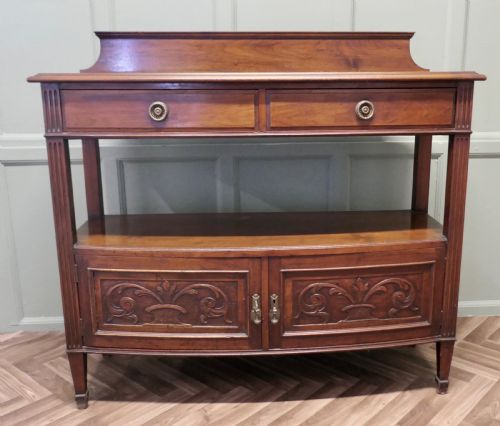
A buffet generally provides enclosed storage through cupboards and drawers for dining accessories. Servers often present a lighter, more open table format designed specifically for presenting dishes.
Historical terminology frequently overlaps, with many pieces functioning in both capacities. Examining the interior configuration clarifies the primary intended use of the furniture.