

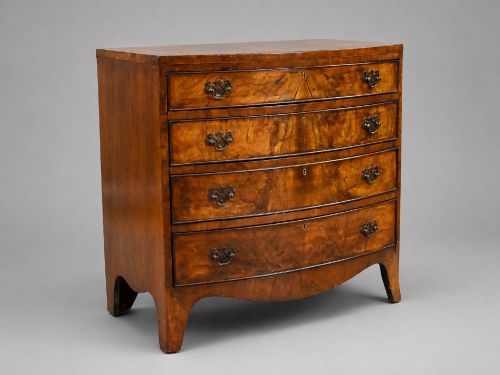
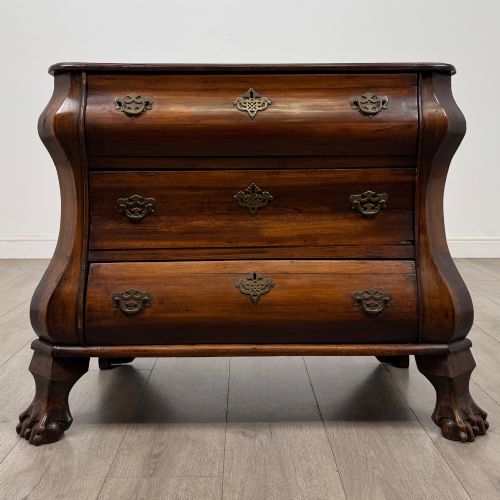
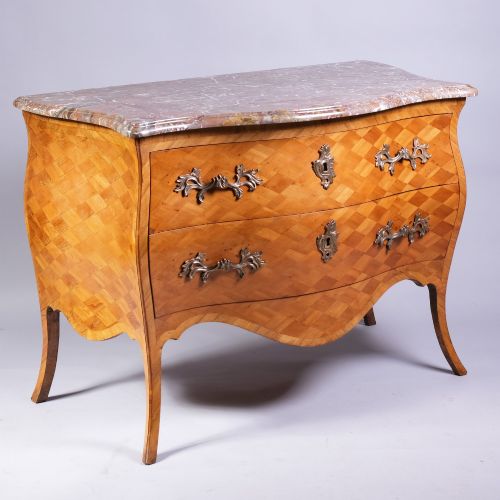

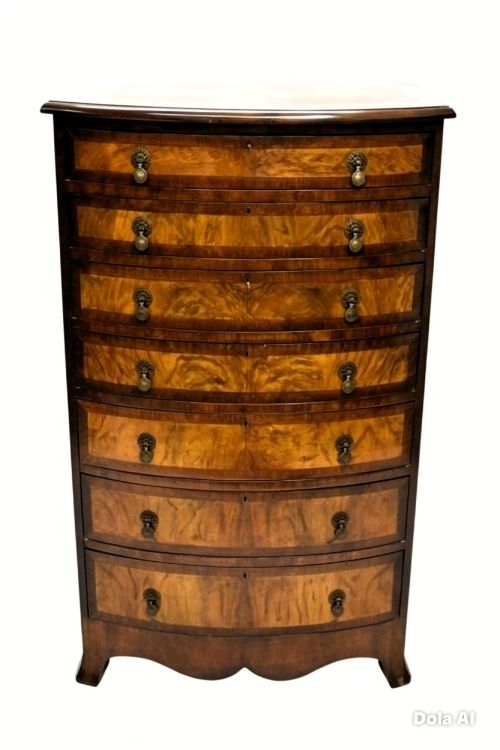
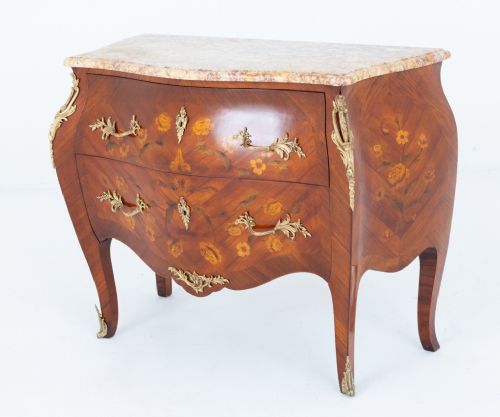


Curved Walnut Commode
A curved walnut commode offers serpentine timber and generous proportions, bringing European elegance and practical storage to a period interior.
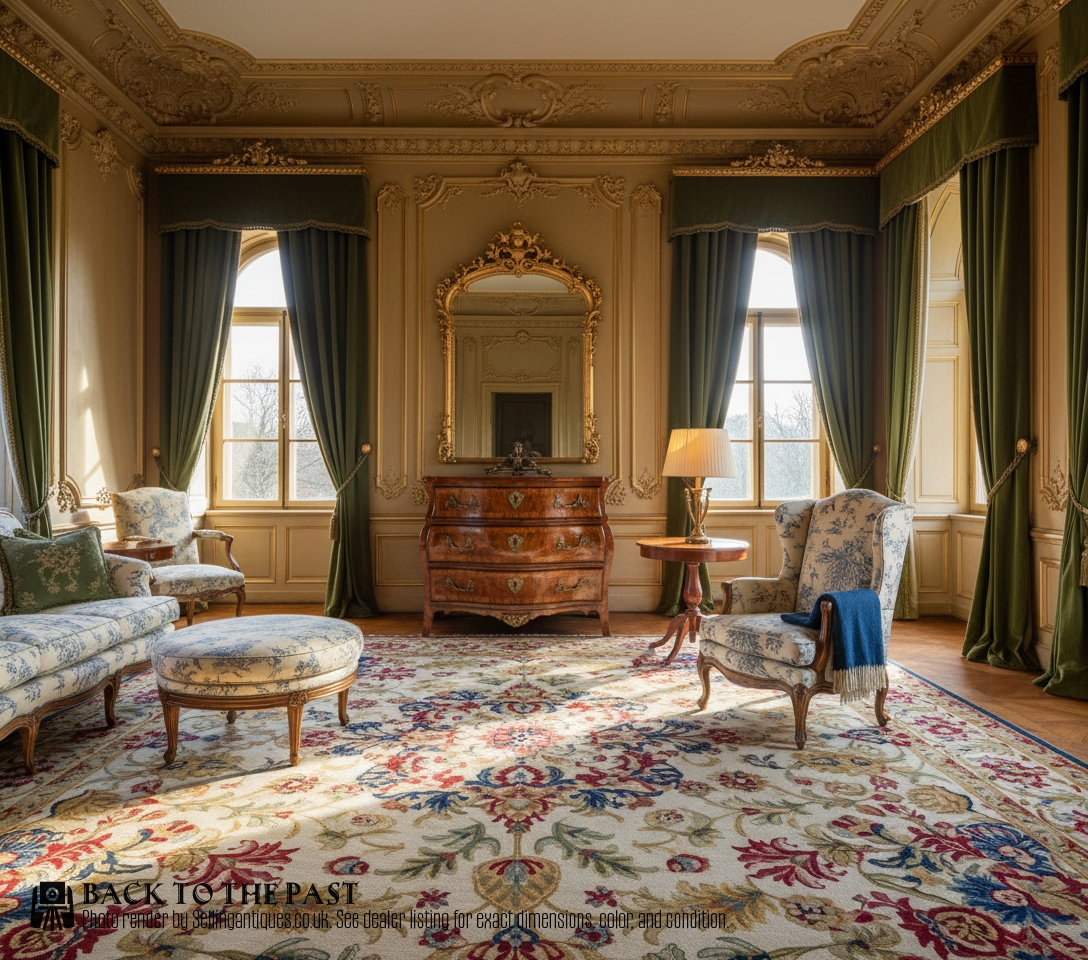
Curved Walnut Commode
When you search for a curved walnut commode, you encounter a selection of chest of drawers and side cabinets spanning the eighteenth century through the early twentieth century. These pieces originate primarily from French, Dutch, and English traditions, appearing in bow front, serpentine, and bombe shapes.
The most common examples on this page date from the Edwardian era and the early twentieth century, drawing heavily on Louis XV and Queen Anne revival styles. Alongside these later interpretations, eighteenth-century origins emerge in continental pieces featuring bold swelling outlines and rich marquetry.
Makers and cabinetmakers constructed these items using walnut, burr walnut, and kingwood veneers, frequently mounting them with marble tops, brass handles, and ormolu details. Their forms range from small bedside chests to large sideboards designed for prominent display in reception rooms.
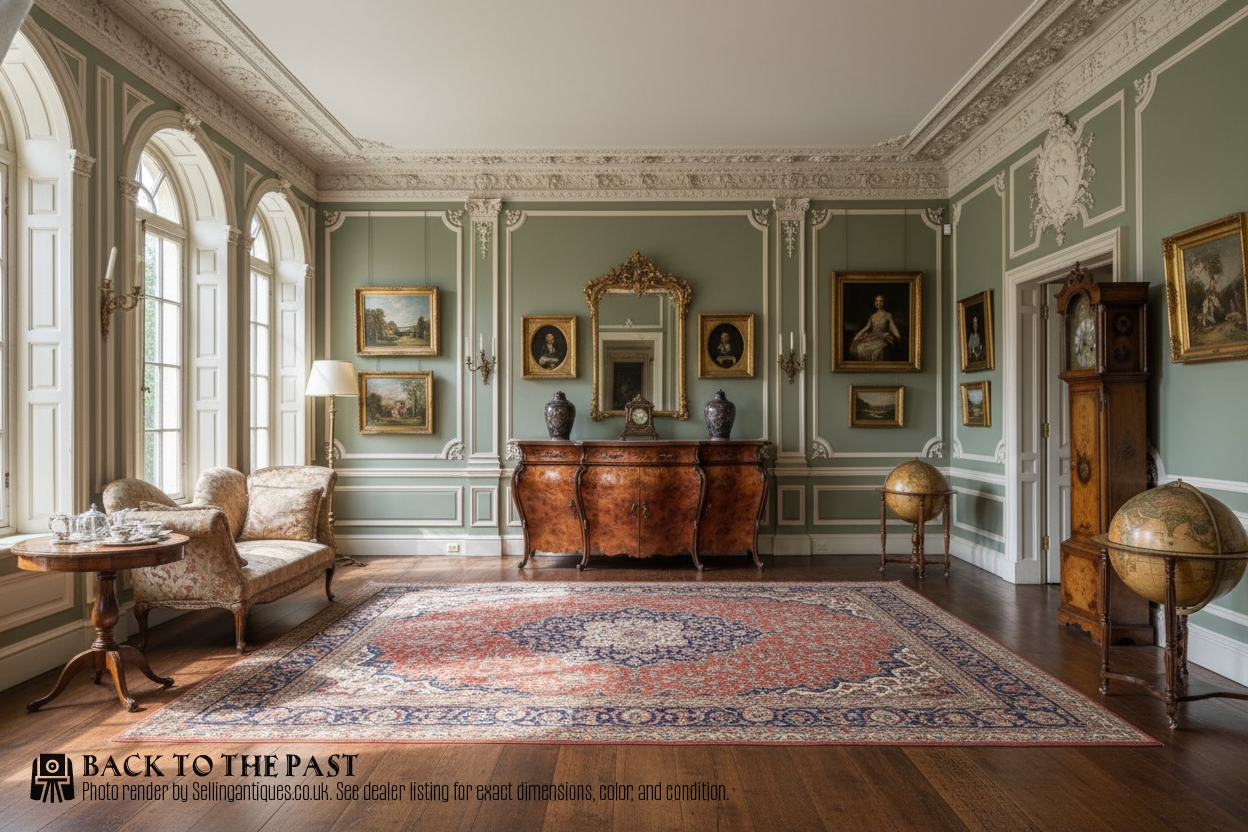
Assessing Quality and Craftsmanship
The quality of a curved walnut commode rests upon the selection of the timber veneers and the precision of the cabinetmaker's shaping. Finer examples display symmetrical burr walnut figures that wrap continuously across the drawer fronts, matched with crisp, detailed bronze or ormolu mounts.
Structural integrity and originality dictate the standing of each piece, distinguishing master-carved eighteenth-century continental works from later revival furniture. The integration of fitted marble tops and the preservation of original marquetry inlay further separate standard production items from exceptional commissions.
Listings feature walnut, burr walnut, and kingwood veneers paired with marble tops, brass, and ormolu across Edwardian and eighteenth-century forms.
The Curved Walnut Commode Glossary
- Bombe
- A bulging, swelling chest shape characteristic of continental furniture. This sweeping profile requires advanced veneer work over curved wooden carcases.
- Serpentine
- A front outline curving inward at the centre and outward at the ends. It appears frequently on eighteenth-century and revival commodes.
- Marquetry
- Decorative patterns formed by inserting pieces of wood veneer into a background veneer. Craftsmen use varied timbers to create pictorial or geometric designs.
- Ormolu
- Gilded bronze mounts applied to furniture for decoration. These cast metal details enhance the corners, handles, and apron rails of French pieces.
- Crossbanding
- A border band of veneer laid around the edges of a panel with the grain running perpendicular to the centre. This technique frames the primary wood grain.
Curved Walnut Commode: Frequently Asked Questions
How do I clean a marble top?
Wipe the marble surface gently using a soft cloth dampened with warm water and a mild, neutral soap. Avoid acidic cleaners, vinegar, or harsh detergents that can etch the polished stone.
Dry the surface thoroughly after washing to prevent water spots. Applying a specialist stone wax periodically helps protect the finish from staining.
Where should I place a commode?
Position your commode against a principal wall in a hallway, bedroom, or living room where its curved profile can be appreciated. Ensure it stays away from direct heat sources and strong sunlight to protect the walnut veneer.
Allow sufficient clearance around the drawers and doors for unobstructed opening. These substantial pieces anchor a room visually and function well beneath a mirror or painting.
How do I identify the wood?
Examine the grain patterns and colour variations across the flat and curved surfaces of the furniture. Walnut typically presents a rich brown tone with darker grain streaks, while burr walnut displays distinctive swirling knot clusters.
Look closely at veneer edges to distinguish solid timber from applied decorative layers. Kingwood often shows lighter golden-brown streaks contrasting with darker purplish-brown areas.
Can I use furniture polish?
Apply a high-quality beeswax sparingly using a soft lint-free cloth, following the direction of the wood grain. Buff the surface gently after a short period to achieve a natural, protective sheen.
Avoid silicone-based sprays or modern aerosol polishes that build up residue over time. Regular dusting with a dry microfibre cloth is usually sufficient for daily maintenance.