



Louis XV Style Sideboard
A louis xv style sideboard brings sweeping French curves and tactile marble surfaces into a room, offering both sculptural presence and deep storage.
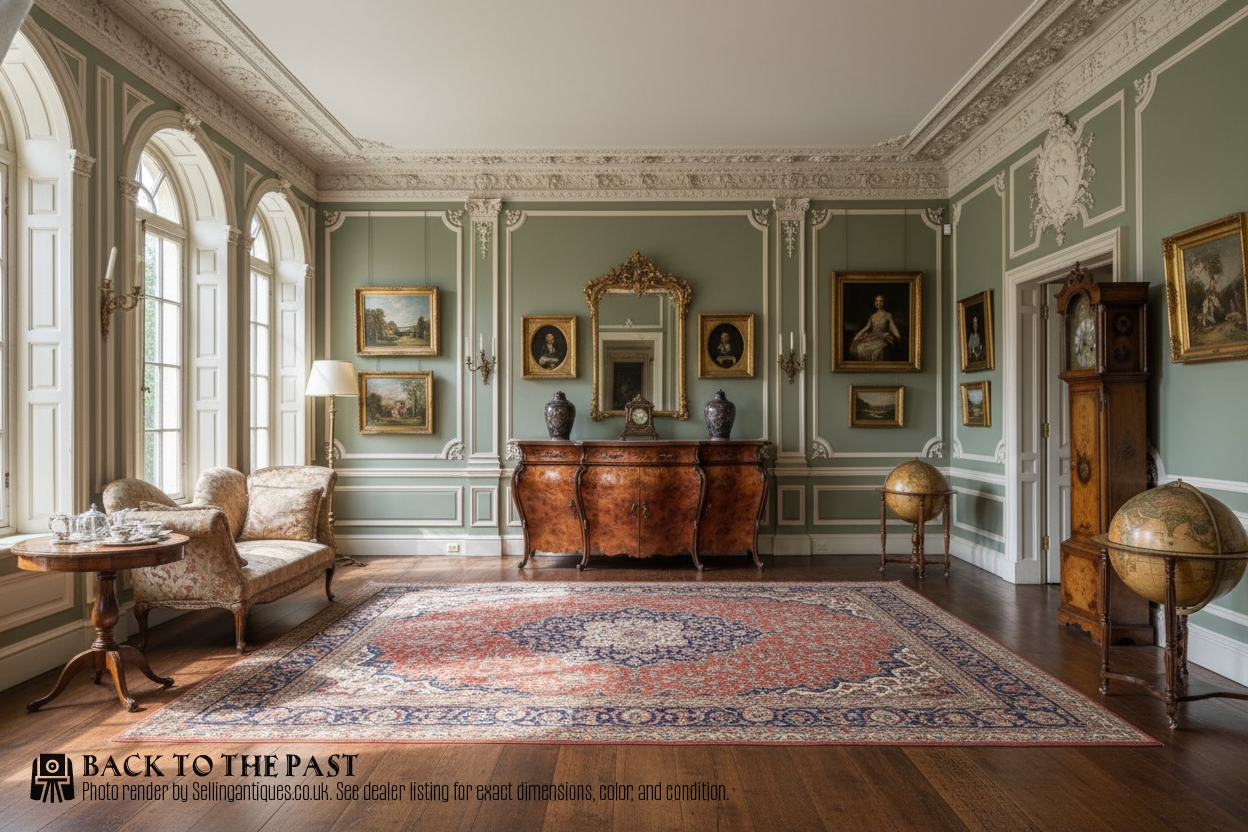
Identifying a louis xv style sideboard
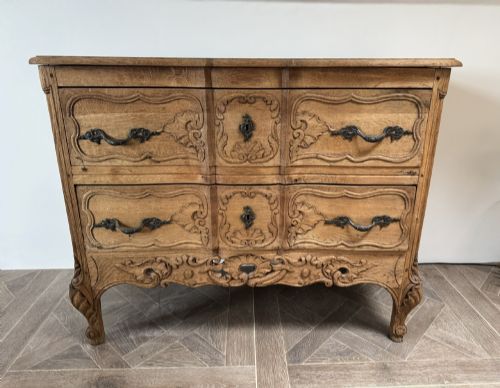
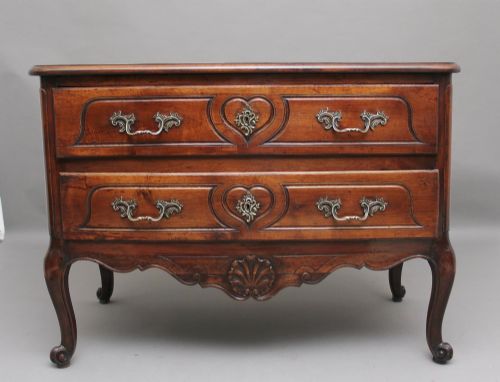
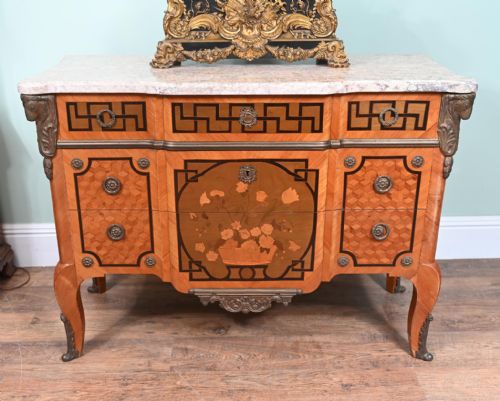
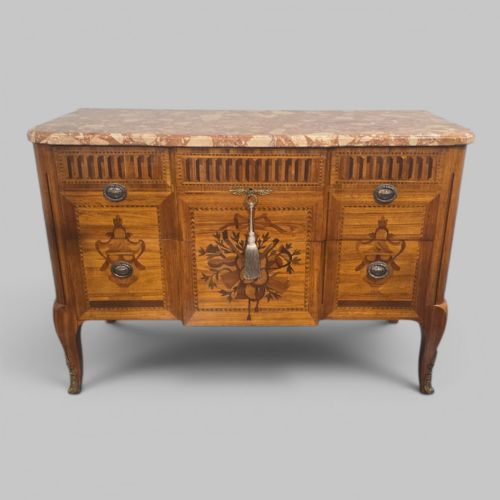
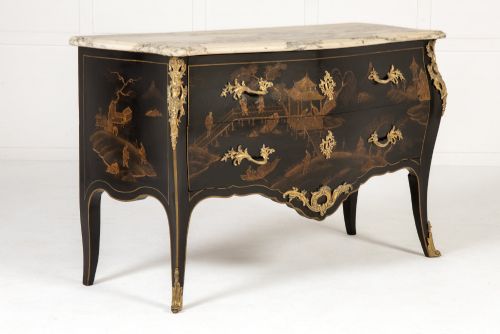
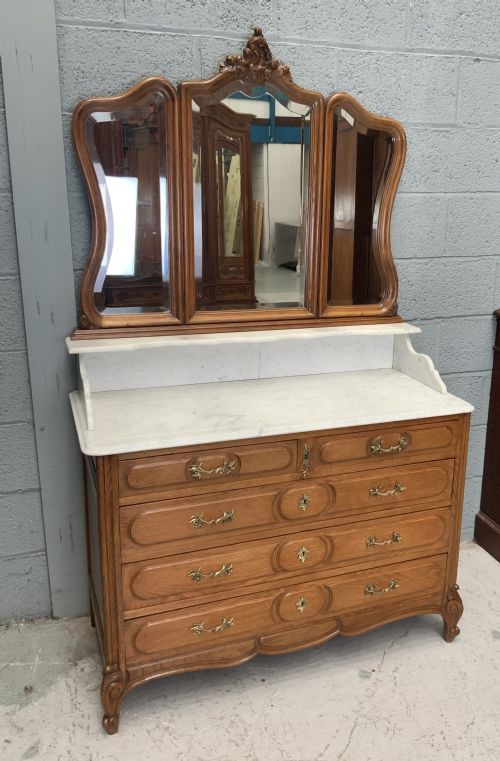
When searching for a louis xv style sideboard, buyers encounter substantial French provincial storage furniture built with characteristic serpentine outlines and shaped wooden tops. These pieces draw on eighteenth-century aesthetics while emerging predominantly from early twentieth-century workshops.
The selections available here span the early decades of the twentieth century, specifically around 1900, 1910, and 1930. Forms range from bombe shaped carcasses to linear proportions, often incorporating contrasting wood veneers and stone surfaces.
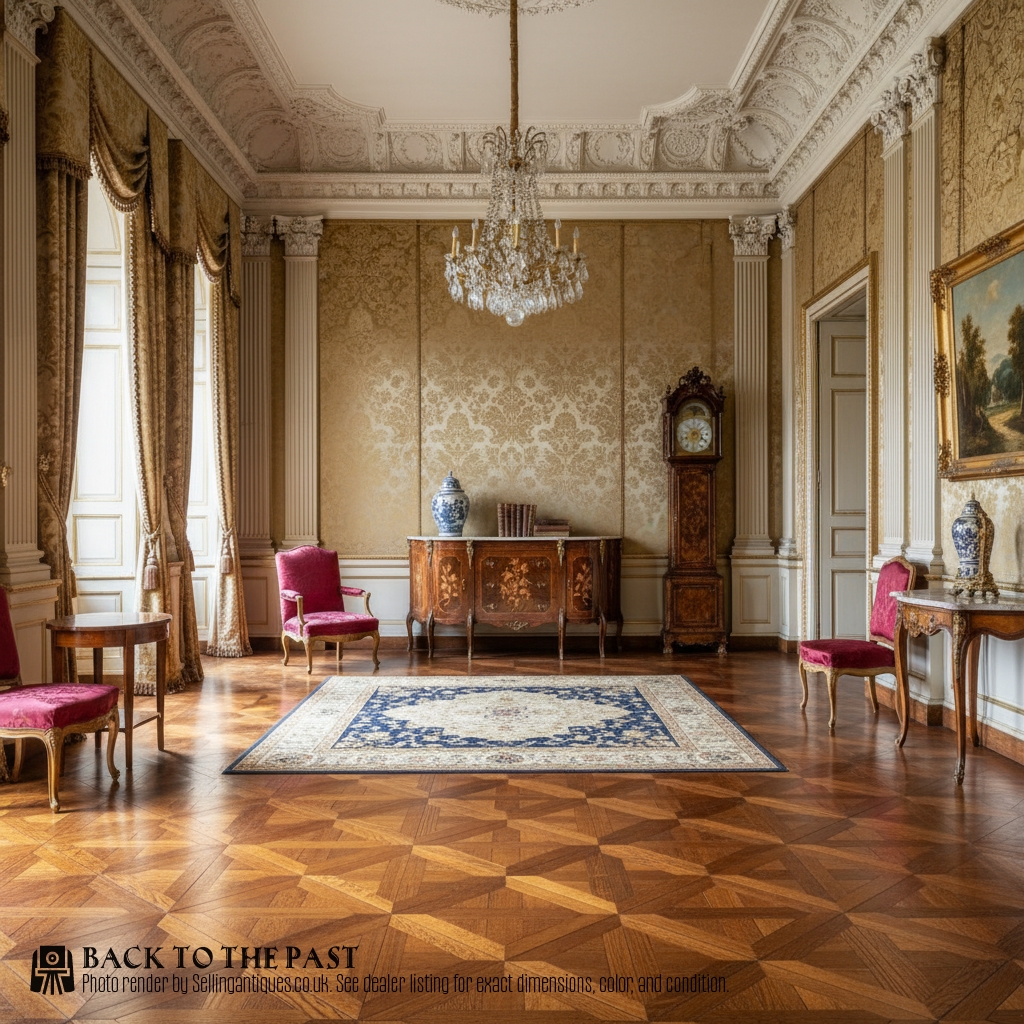
Construction and materials
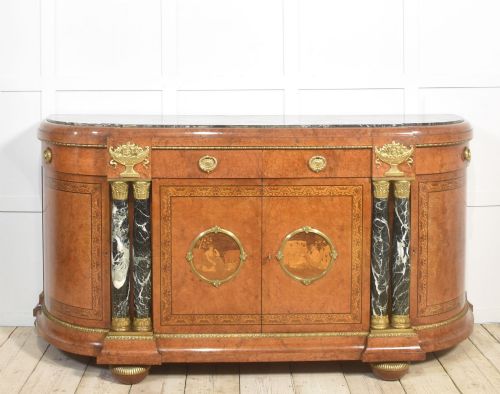
Cabinetmakers utilised sturdy structural woods like oak and walnut as a foundation, applying decorative burr walnut veneers and intricate marquetry or parquetry patterns across the exterior surfaces. These complex geometric and floral arrangements demonstrate high levels of carpentry skill.
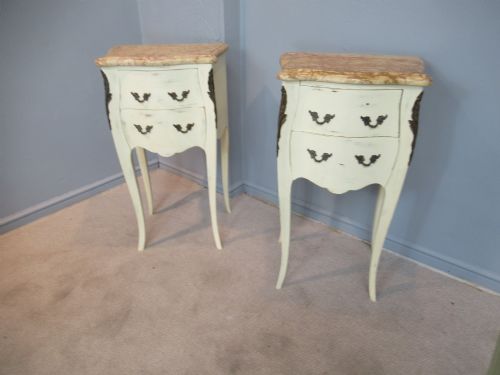
Heavy slabs of polished marble form the upper surfaces of several examples, providing a cool, durable counter-top. Metal detailing appears through cast brass and ormolu mounts that accent the corners, handles, and feet.
Retail Price Guide 2026
Typical UK retail prices for louis xv style sideboard, calculated from the Sellingantiques database of over a million retail prices indexed since 2003. This retail price guide relies exclusively on Sellingantiques data; no external sources or auction records are used, so the figures do not describe the wider market.
The furniture often includes hidden weight through thick marble slabs, turning a simple room rearrangement into an unexpected workout.
Judging the range
Quality separates simple production pieces from superior examples through the depth and complexity of the surface ornamentation, such as intricate parquetry tops and detailed marquetry scenes. The choice of timber also dictates standing, with rich burr walnut and carefully matched veneers holding greater visual weight than plain oak.
Hardware and secondary materials further define the tier of the piece. Finely chased ormolu mounts and heavy, thick marble tops indicate a higher grade of manufacture compared to simpler brass handles and standard timber surfaces.
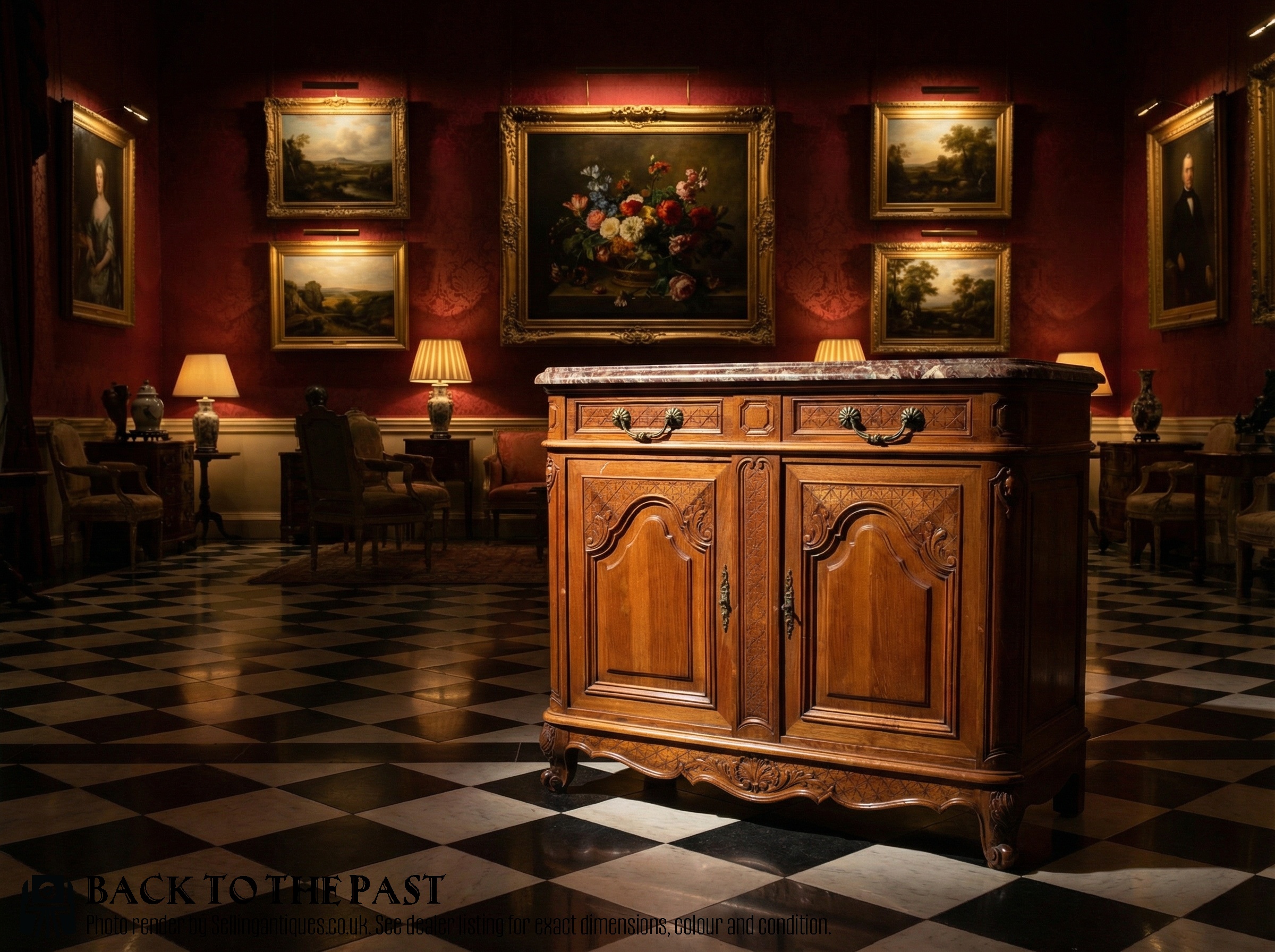
The Louis XV Style Sideboard Glossary
- Bombe
- A swelling, outward-curving profile found on the sides and fronts of advanced cabinet furniture. This undulating shape requires specialist woodworking technique to construct accurately.
- Marquetry
- Inlays of different coloured wood veneers forming decorative pictures or patterns. Artisans cut these delicate pieces by hand to fit flush into the surface.
- Parquetry
- Geometric wood inlay patterns resembling mosaics, often seen on the upper surfaces of these cabinets. The arrangement creates subtle tonal contrasts across the grain.
- Ormolu
- Gilt bronze mounts applied to furniture for decorative accent and edge protection. The technique involves finishing metal with gold leaf or mercury gilding.
- Burr walnut
- Wood grain taken from a tree growth that yields swirling, highly figured patterns. Cabinetmakers prize this timber for its rich visual texture.
Frequently Asked Questions
What rooms suit a louis xv style sideboard?
These large storage pieces suit formal dining rooms or spacious living areas where their decorative profiles can function as focal points. The stone tops provide durable surfaces for displaying objects or serving food during gatherings.
Their substantial proportions require adequate floor space to allow the serpentine shapes and mounted metal details to be viewed properly without crowding the surrounding interior.
How do I care for marble top sideboards?
Marble surfaces require regular dusting with a soft cloth and immediate wiping of acidic liquids to prevent staining. Using coasters and protective mats preserves the polished stone finish over time.
Avoid abrasive cleaning agents that can dull the natural polish. Gentle soap and water suffice for routine maintenance of the stone.
How do I maintain wood veneers and ormolu?
Wood veneers benefit from occasional application of quality furniture wax to nourish the grain and protect against dryness. Keep these pieces away from direct heat sources and strong sunlight to prevent the timber from fading.
Ormolu mounts simply need gentle dusting with a dry microfibre cloth. Avoid chemical metal cleaners which can strip the surface gilding from the bronze.
Are these sideboards original eighteenth-century pieces?
The pieces available through this search date from later revival periods, specifically the early decades of the twentieth century around 1900, 1910, and 1930. They emulate the curving aesthetic of the original French reign but utilise construction methods of their own era.
This revival craftsmanship offers robust everyday usability while retaining the classic silhouette and decorative flourishes associated with the historical style.