


Inlaid Walnut Chest
An inlaid walnut chest brings rich grain and sharp stringing into a room, offering both generous storage and striking period presence.
What an inlaid walnut chest is
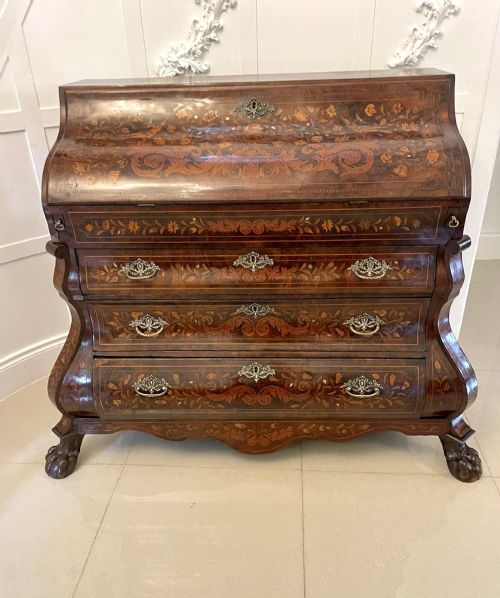
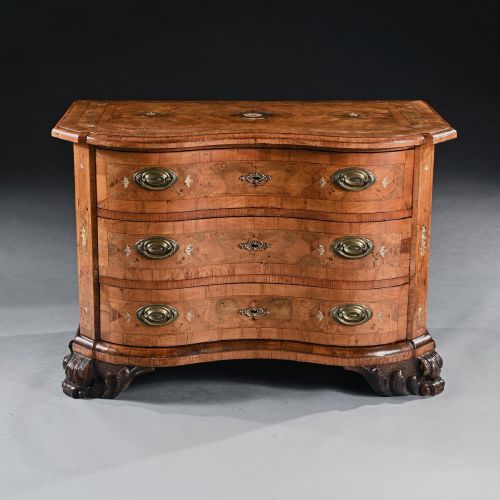
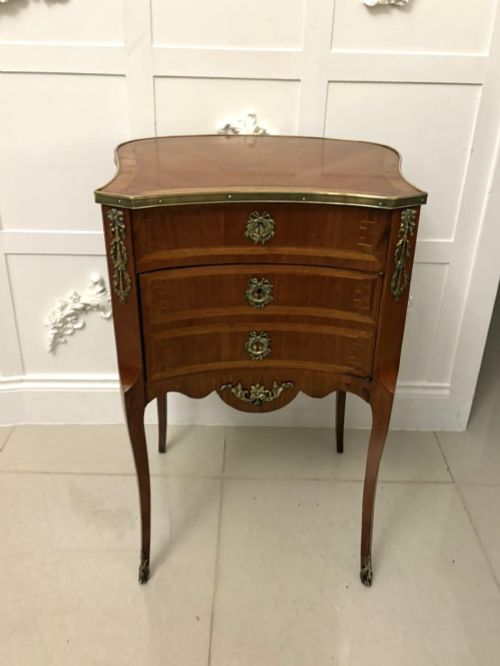
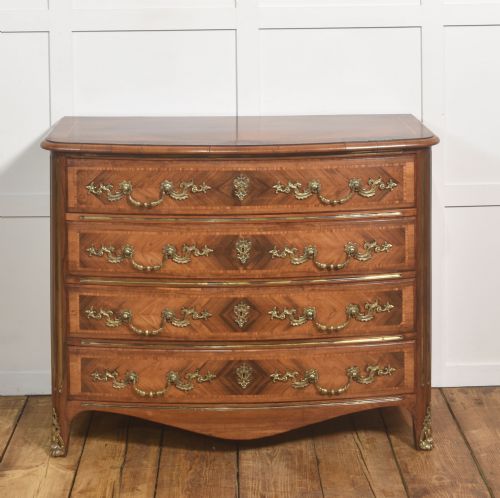
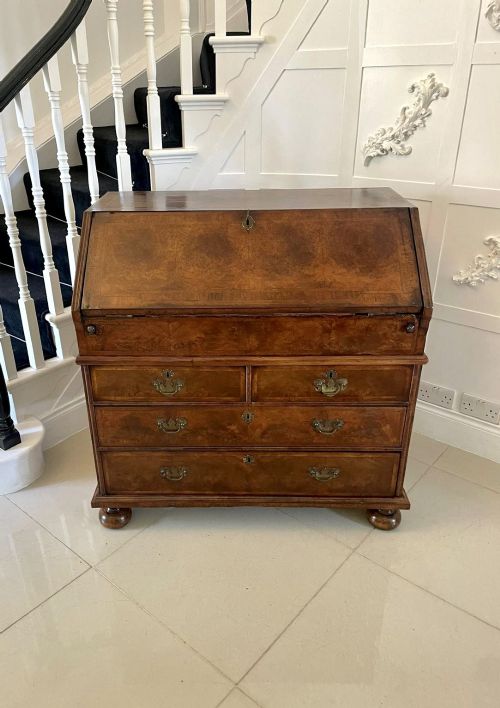
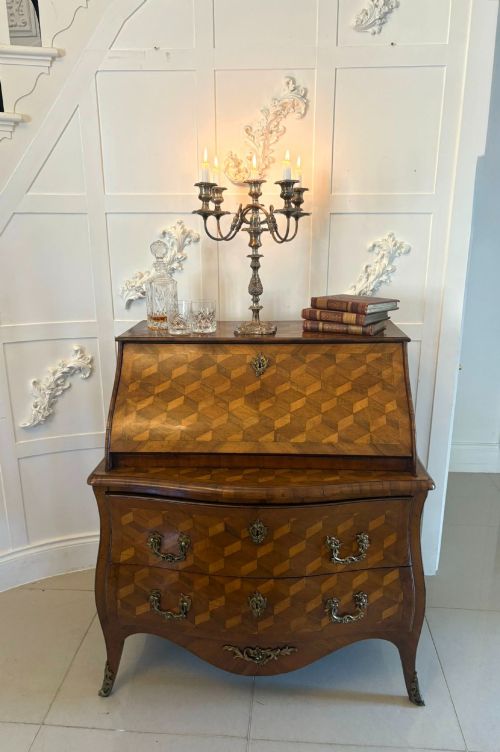
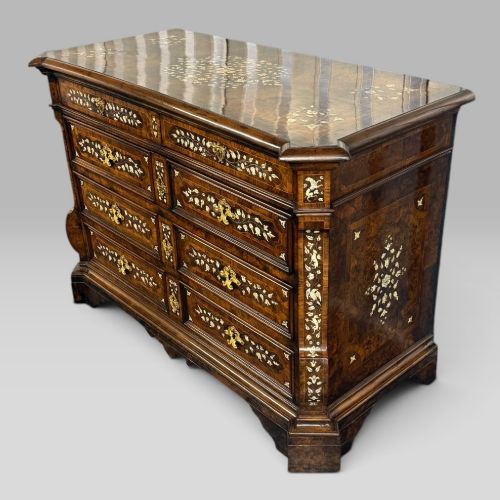
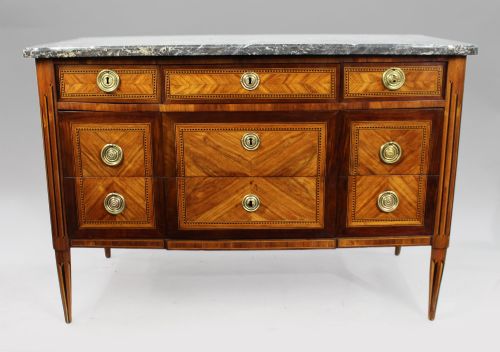
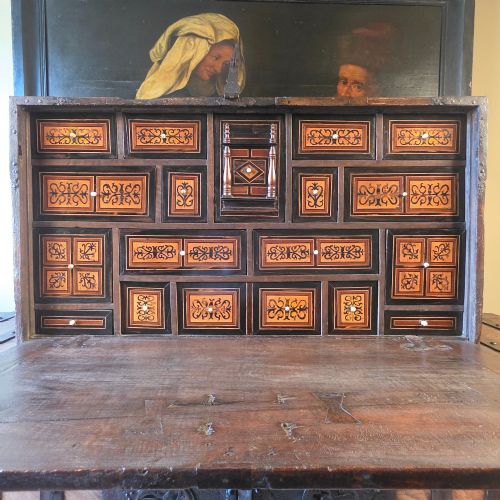
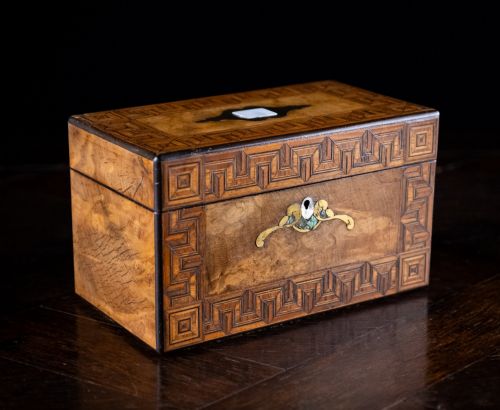
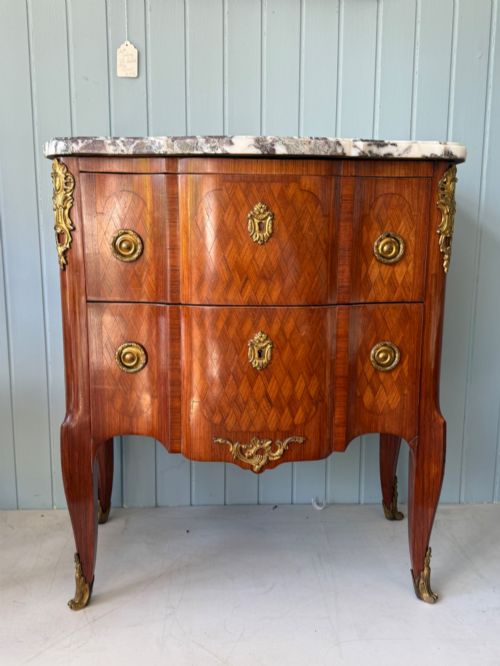
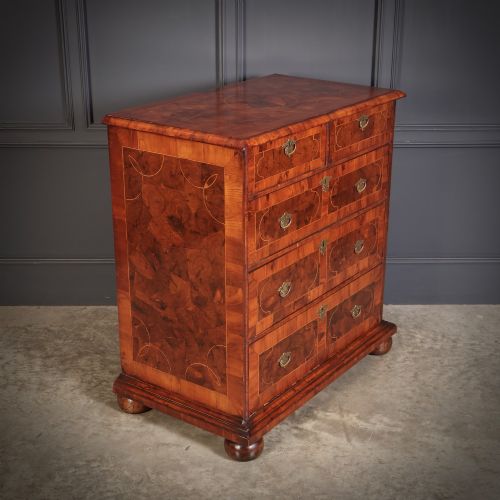
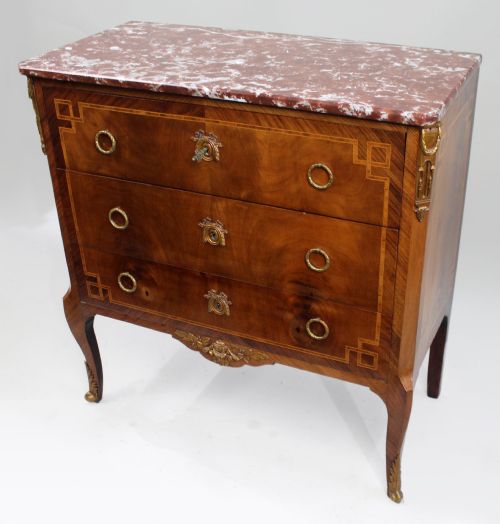
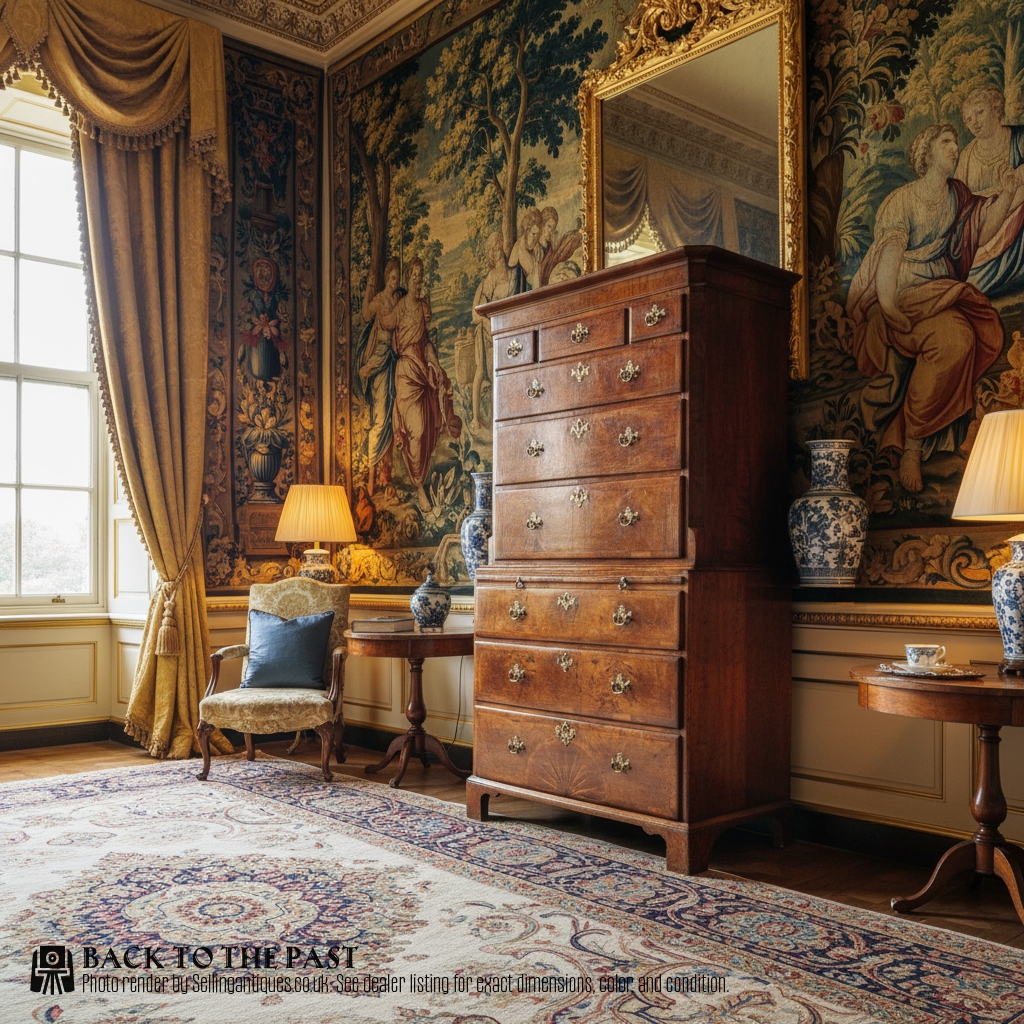
An inlaid walnut chest is a substantial storage piece constructed primarily from figured timbers and enriched with decorative banding, stringing, or marquetry. The examples encountered here range from early Georgian tallboys and chests on chests to Continental bombe commodes and nineteenth-century variations.
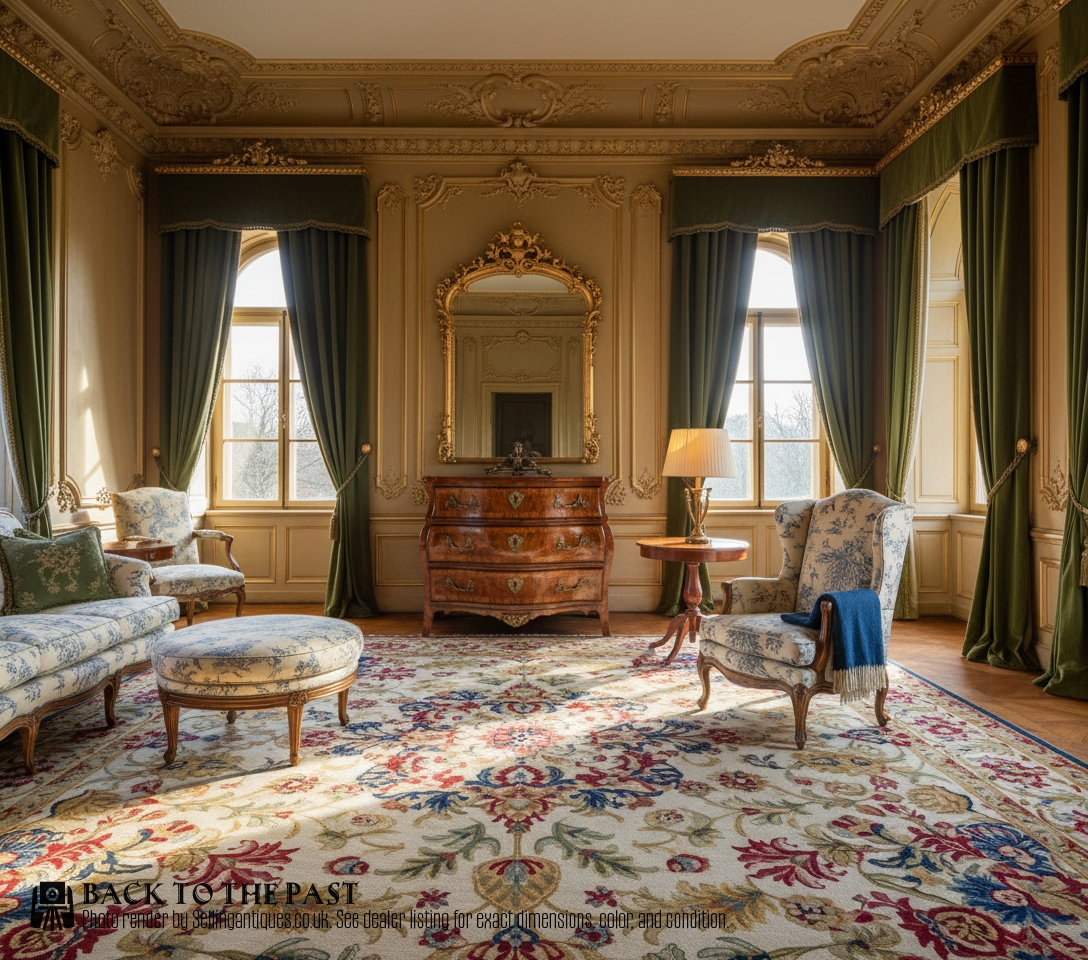
Buyers look for these pieces to anchor a bedroom or living space with deep brown tones and complex grain patterns. The selection commonly includes formal Georgian designs alongside Dutch, French, and Italian influenced commodes featuring shaped fronts.
Forms vary from standard drawer configurations to secretaire variations, tallboys, and chests on stands. Walnut remains the unifying medium, paired with contrasting inlay work that defines drawers, tops, and corners.

How they were made
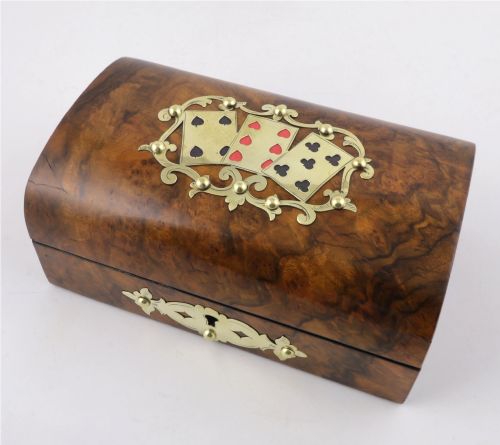
Cabinetmakers constructed these chests using solid timber frames and applied veneers or burr walnut panels to drawer fronts and top surfaces. Walnut, burr walnut, and fruitwood provided the primary visual contrast, often laid in geometric patterns or pictorial marquetry.
Makers integrated brass drop handles and escutcheons to secure and accent the drawers. Line inlay, crossbanding, and feather banding demanded precise hand-cutting to frame the drawer borders and top edges.
Retail Price Guide 2026
Typical UK retail prices for inlaid walnut chest, calculated from the Sellingantiques database of over a million retail prices indexed since 2003. This retail price guide relies exclusively on Sellingantiques data; no external sources or auction records are used, so the figures do not describe the wider market.
The archive for this phrase includes William and Mary, Georgian, Victorian, and early twentieth-century examples utilising burr walnut, fruitwood, and brass.
What varies in quality
Quality rests primarily in the choice of veneer and the crispness of the inlay work. Highly figured burr walnut and complex geometric seaweed or marquetry patterns command attention for their visual depth.
The sophistication of the silhouette defines the better pieces, from straight-front Georgian proportions to sweeping serpentine and bombe forms. Original brass hardware and well-executed secondary timbers further separate standard examples from finer works.
The Inlaid Walnut Chest Glossary
- Crossbanding
- A border veneer applied with the grain running perpendicular to the central panel. This technique creates a distinct framing effect around drawer fronts and tabletops.
- Bombe
- A swelling, convex furniture profile associated with Continental commodes. This shape requires advanced woodworking skill to veneer successfully.
- Tallboy
- A tall chest of drawers built in two sections, typically featuring a chest on chest or chest on stand configuration. It maximises vertical storage space.
- Marquetry
- The art of creating decorative patterns using fitted pieces of different coloured wood veneers. It often depicts floral or geometric scenes on the primary surfaces.
- Secretaire
- A desk disguised as a chest of drawers, containing a fitted drop-front writing drawer. These pieces combine storage with a compact workspace.
Frequently Asked Questions
What is a walnut tallboy?
A tallboy is a stacked storage unit featuring a smaller chest resting upon a larger base chest. It provides generous vertical storage without demanding excessive floor space.
These pieces typically date from the Georgian period and stand on bracket or bun feet.
What is feather banding?
Feather banding is a decorative wood inlay made from diagonally cut veneers arranged to resemble a herringbone or feather pattern. Cabinetmakers used it to frame drawer perimeters.
This technique adds subtle movement and contrast to figured walnut surfaces.
Where should I place an inlaid chest?
An inlaid chest serves as a practical focal point in a hallway, bedroom, or living room. The rich timber tones pair well with both traditional and contemporary interiors.
Keep the piece away from direct heat sources to protect the walnut veneers and delicate stringing.