


Large French Credenza
A large french credenza brings stately presence and grand display to a room, offering ample surface and cabinet space.
Large French Credenza
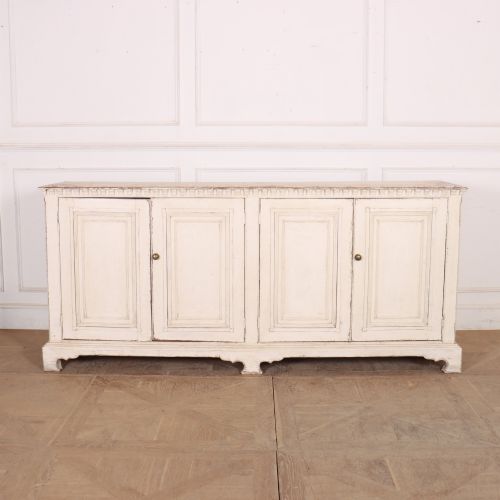
When you search for a large french credenza, you are looking at substantial cabinet furniture designed for display and storage in principal rooms. These pieces originate across periods such as the nineteenth century and the Georgian era, presenting impressive forms that anchor a scheme.
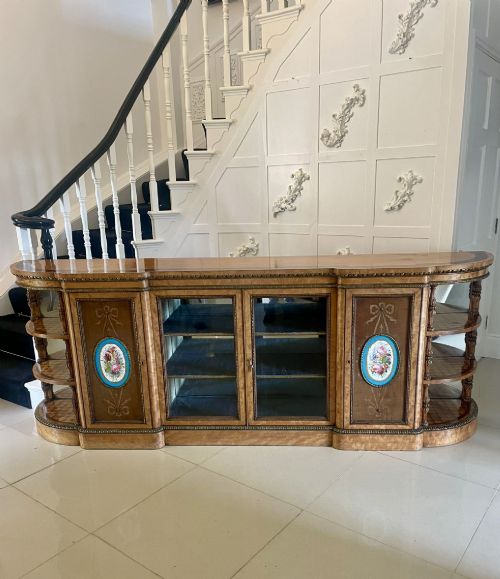
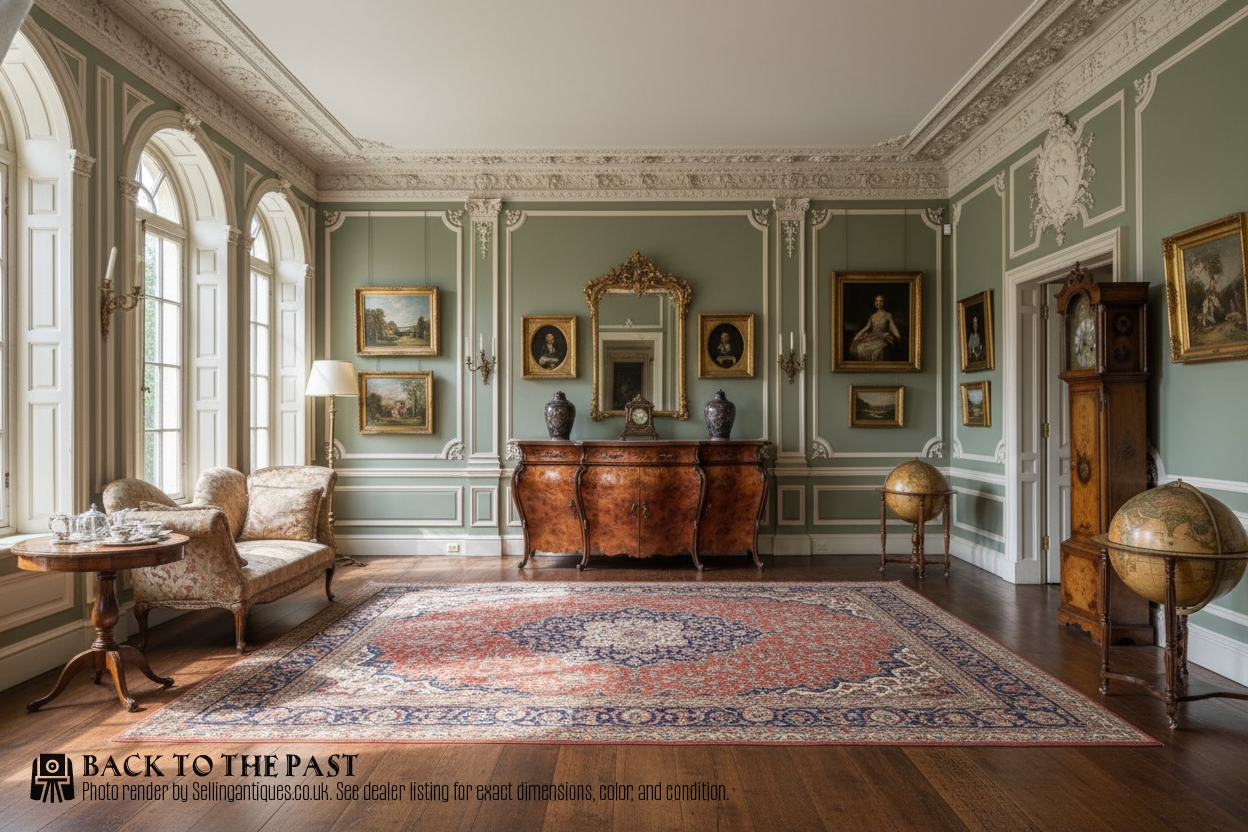
The versions most frequently met on this page include walnut and burr walnut credenzas, alongside related forms like side cabinets and enfilades. They arrive in styles spanning Victorian, French Empire, and Rococo Revival, often displaying serpentine contours or bombe shapes.
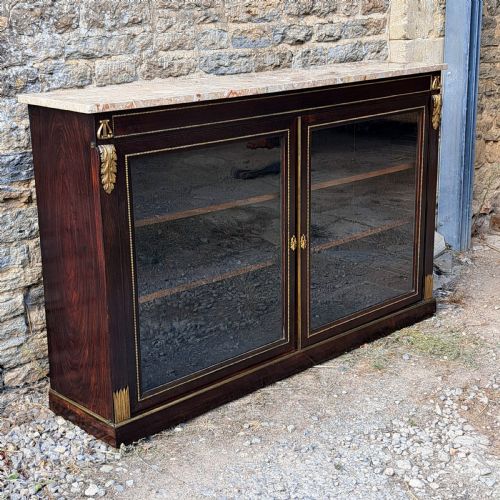
Makers utilised rich timbers including satinwood and rosewood, incorporating glazed sections and marble tops. These grand items function as focal points in large dining spaces or formal reception rooms.
How they were made
Cabinetmakers constructed these frames from hardwoods like walnut, mahogany, and oak, often applying figured veneers such as burr walnut and satinwood. Marquetry inlays and painted finishes add visual depth to the timber surfaces.
Metal ornamentations play a defining role, with cast ormolu and brass mounts highlighting the structural lines and door frames. Marble tops provide a heavy, durable surface, while inset porcelain plaques introduce colourful detail to the facade.
What varies in quality
The calibre of a piece depends heavily on the refinement of its joinery and the selection of timber veneers. Finely figured burr walnut and intricate marquetry indicate superior workshop standards compared to simpler planking.
The weight and detail of the cast ormolu mounts distinguish finer examples from standard production. Crisp detailing in the brass and bronze ornamentation elevates the overall finish of the cabinet.
The Large French Credenza Glossary
- Ormolu
- Gilded bronze mounts applied to furniture for decoration. This technique creates metallic highlights that contrast with dark timber surfaces.
- Marquetry
- Fitted wood veneers arranged to form decorative pictures or geometric patterns. Craftsmen cut contrasting timbers to create these detailed pictorial surfaces.
- Enfilade
- A suite of rooms aligned together, or a long sideboard designed for a grand dining room. These low cabinets provide extensive surface and storage capacity.
- Bombe
- A swelling, outward-curving furniture shape associated with continental cabinetmaking. This contour requires skilled curving of wood and veneer.
- Serpentine
- A front line that curves inward in the centre and outward at the sides. This fluid shape demands precise carpentry and moulding.
Large French Credenza: Frequently Asked Questions
Where should I place a credenza?
These large cabinets suit spacious dining rooms, grand hallways, or expansive living areas where their considerable length can be appreciated.
Ensure the floor space accommodates the substantial footprint and that the room has adequate clearance for opening doors.
How do I clean marble tops?
Wipe the marble surface gently with a soft, damp cloth using mild, neutral soap. Avoid acidic cleaners or vinegar, which can etch the polished stone.
Dry the surface thoroughly afterwards to prevent water marks.
What is the difference between a credenza and a sideboard?
While both offer long storage surfaces, credenzas traditionally feature low profiles and often incorporate glass display sections or porcelain mounts.
Sideboards frequently serve dining functions with built-in drawers and cupboards designed specifically for tableware.
How do I care for walnut veneer?
Dust the timber regularly with a dry, soft cloth and avoid placing the piece in direct sunlight to prevent fading. Apply natural beeswax occasionally to nourish the grain.
Keep the furniture away from direct heat sources to stop the veneer from lifting.