



French Marble Top Credenza
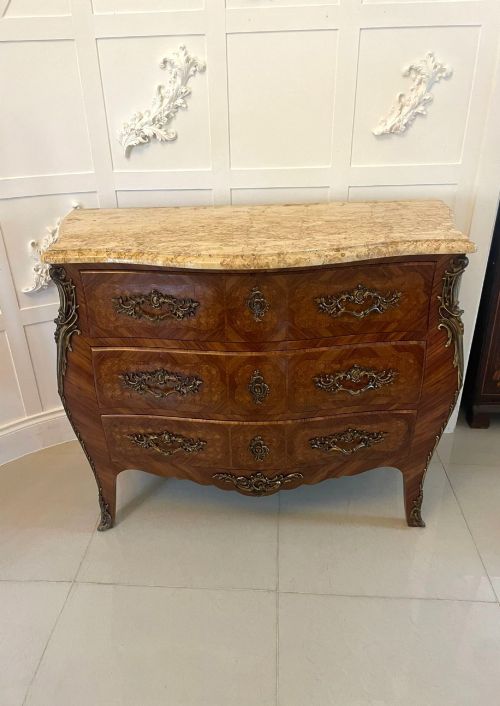
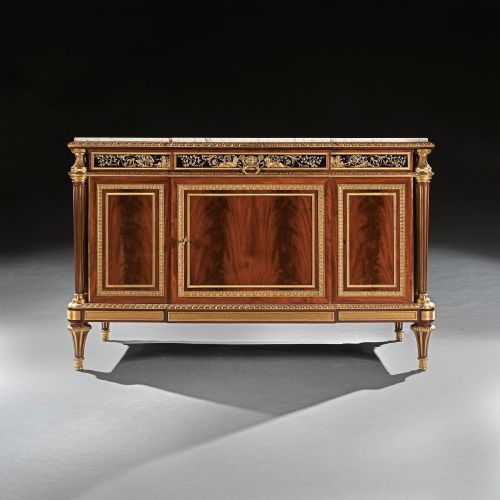
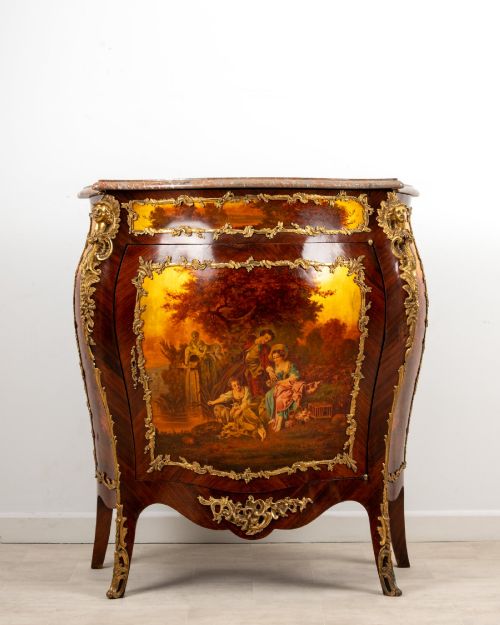
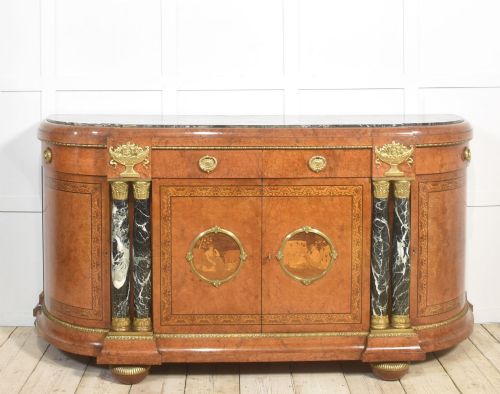
A french marble top credenza delivers imposing timber presence paired with a cool, heavy stone surface designed to anchor a formal interior.
French Marble Top Credenza
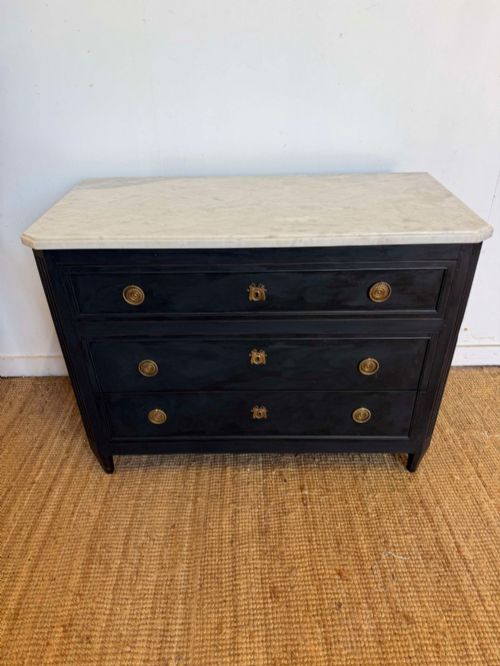
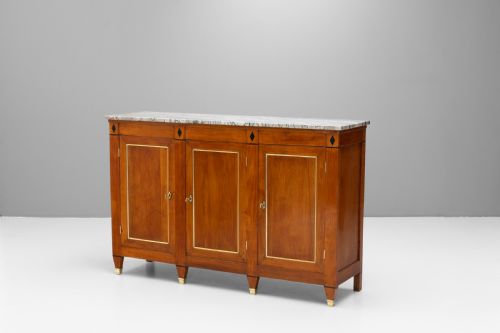
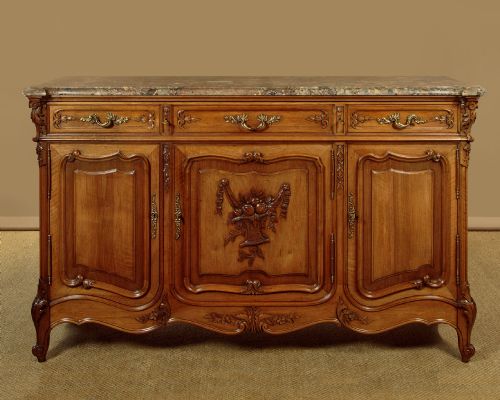
A french marble top credenza sits within a broad family of storage furniture that includes side cabinets, commodes, buffets, and pier cabinets spanning the nineteenth and early twentieth centuries. These pieces appear in revival modes such as Louis XV, Louis XVI, and Napoleon III, alongside French Empire and Provincial expressions.
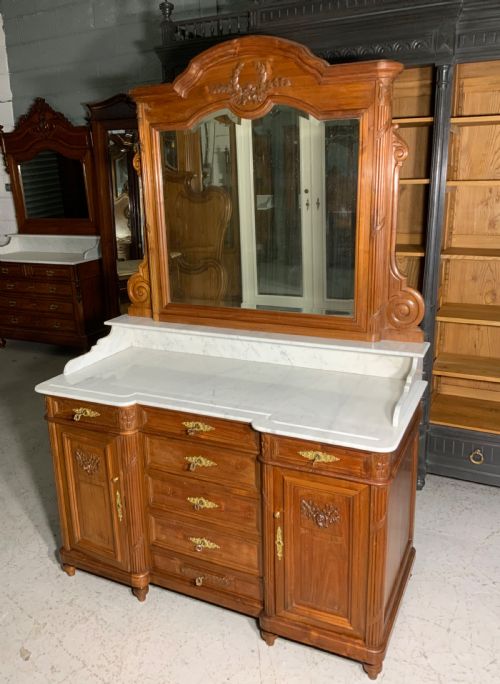
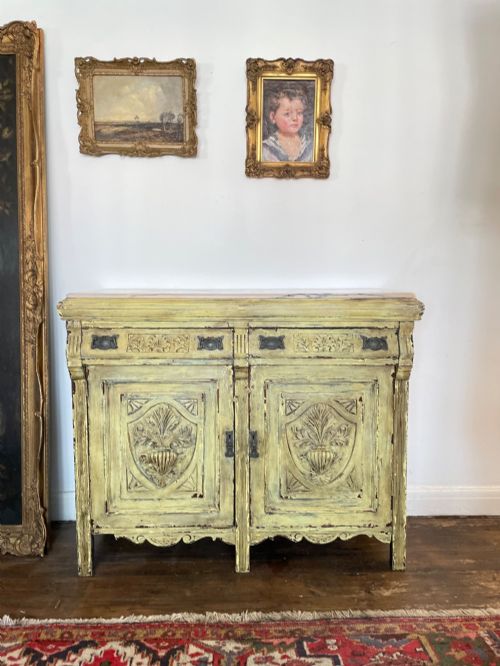
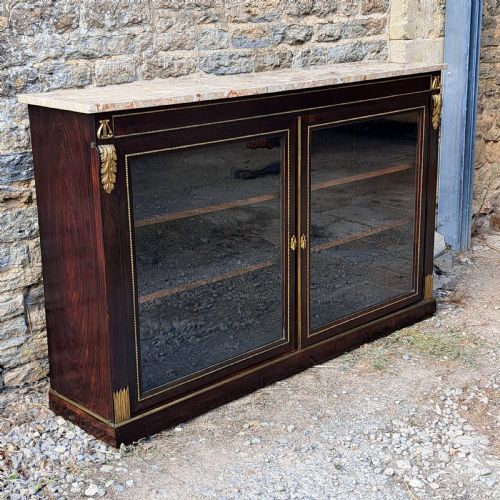
Most examples found on this page function as low storage units or display pieces, combining wooden cabinetry with fitted stone slabs. The proportions vary from compact side cabinets to expansive sideboards, but the defining characteristic remains the heavy marble surface set above doors or drawers.
How They Were Made
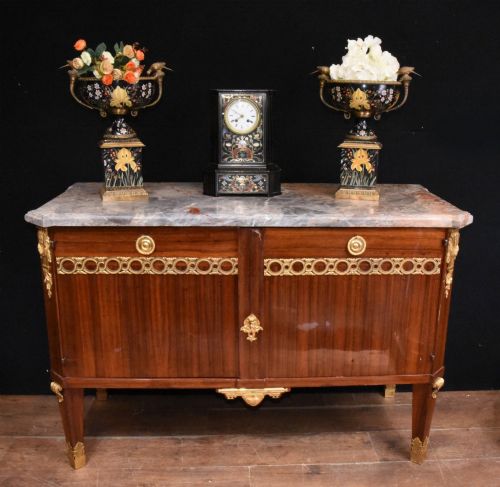
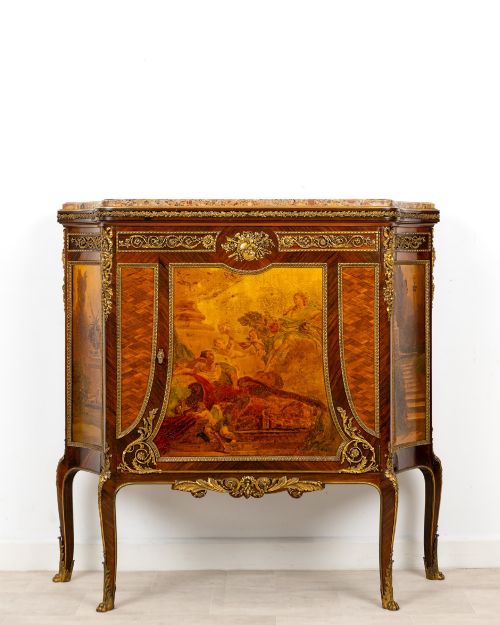
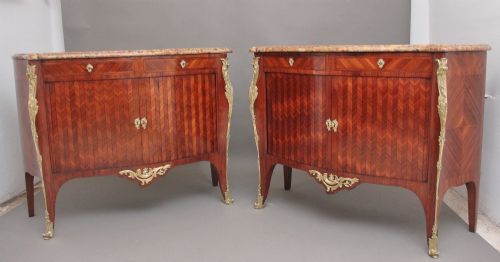
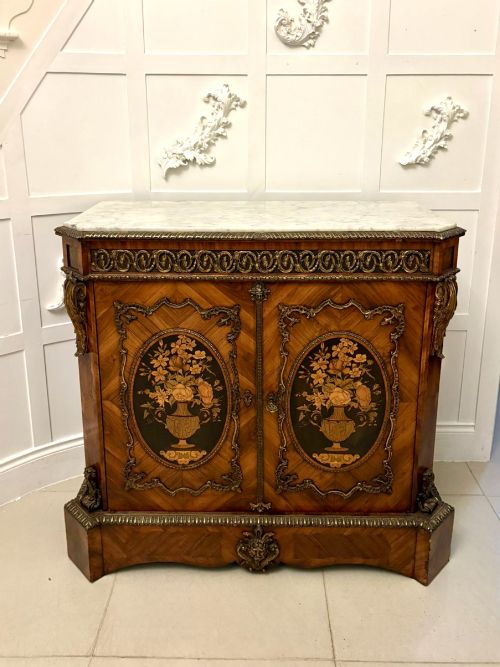
Cabinet makers utilised dense structural timbers such as mahogany, walnut, rosewood, and kingwood, frequently applying intricate marquetry, parquetry, or Vernis Martin painted panels to the exterior surfaces. Ebonised finishes and tortoiseshell inlay appear alongside brass stringing and detailed parquetry patterns.
Gilt bronze and ormolu mounts punctuate the corners, frames, and aprons, while heavy marble slabs are shaped to follow the contours of the timber carcase below. These stone tops rest directly upon the cabinet structure, providing a durable and decorative horizontal plane.
French Marble Top Credenza Retail Price Guide 2026
Typical asking prices for french marble top credenza among the pieces listed under this phrase on Sellingantiques today, from the lower quarter to the upper quarter. They describe what is for sale here now, not the wider market.
Several examples arrive with unexpected 'barn find' histories, adding a layer of dusty mystery to their gilded mounts.
What Varies In Quality
The distinction between standard production and exceptional work rests on the crispness of the ormolu mounts and the precision of the marquetry or parquetry patterns inlaid into the timber. Pieces bearing signatures from notable makers or workshops demonstrate superior bronze-chasing and cabinet-making technique.
Materials dictate the upper tiers of quality, seen in the selection of figured kingwood, rich burr walnut, and thick, intricately veined marble slabs. The fluidity of bombé curves and the complexity of Boulle work further separate ordinary cabinet-making from master execution.
Henry Dasson·Edward Holmes Baldock·Maison Millet·Joseph Zwiener·Beurdeley
The French Marble Top Credenza Glossary
- Ormolu
- Gilded bronze mounts applied to furniture for decorative accent. The technique involves creating finely chased bronze details coated in gold amalgam.
- Marquetry
- Inlaid wood veneers arranged in pictorial or geometric patterns. Craftsmen cut contrasting timber veneers to fit flush within a prepared surface.
- Vernis Martin
- A type of simulated Japanese lacquer developed in France during the eighteenth century. It uses multiple layers of varnish to achieve a translucent, glossy finish often decorated with painted scenes.
- Boulle
- A form of marquetry employing brass and tortoiseshell developed by André-Charles Boulle. The technique creates contrasting negative and positive patterns across the furniture surface.
French Marble Top Credenza: Frequently Asked Questions
What is a french marble top credenza used for?
These pieces provide substantial enclosed storage in dining rooms, living spaces, or grand hallways. The interior shelving accommodates tableware, linens, or books while keeping items concealed behind timber doors.
The flat stone surface offers a durable stage for displaying lamps, sculptures, or decorative objects. Because the top is stone, it resists moisture and heat better than standard wooden furniture surfaces.
How do I identify the period of a credenza?
Dating relies on stylistic clues drawn from historical revivals and construction methods. Pieces reflecting Louis XV or Louis XVI revivals often feature elaborate ormolu and curved lines, while later twentieth-century examples shift towards cleaner, restrained geometric forms.
The choice of timber veneer and mounting hardware also signals the era of manufacture. Nineteenth-century pieces frequently display dense woods like kingwood and rosewood paired with hand-chased gilt bronze mounts.
How should I care for the marble top?
Marble requires gentle cleaning with a damp cloth and mild, neutral soap. Avoid acidic cleaners, vinegar, or citrus substances that can etch the polished stone surface.
Using coasters and protective pads prevents scratches and staining from liquids or heavy objects. Periodic sealing helps protect the porous stone from absorbing accidental spills.
How do I care for the wood and ormolu?
Wooden surfaces benefit from occasional dusting with a soft, dry cloth to prevent grit accumulation. Natural wax can be applied sparingly to maintain the sheen of mahogany, walnut, and kingwood veneers.
Ormolu mounts should be dusted gently without using abrasive metal polishes that strip the original gilding. Keeping the furniture away from direct sunlight and steady heat sources protects the timber carcase from warping.