

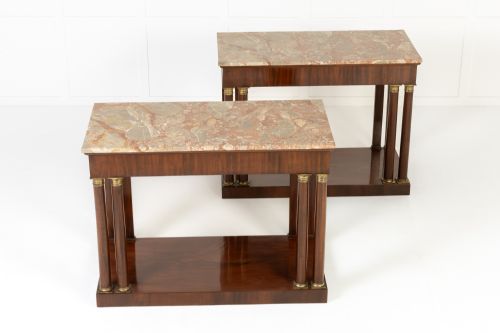


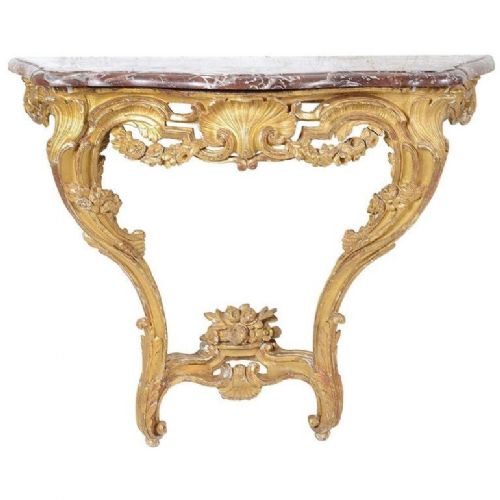
Red Marble Console Table
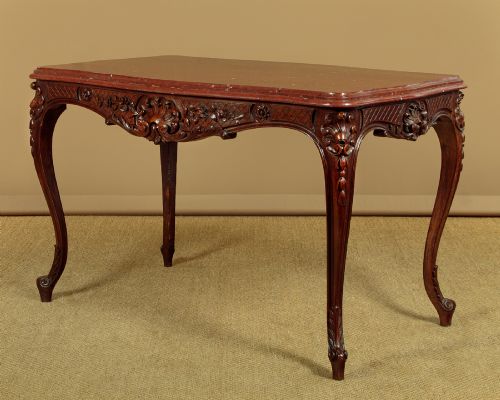
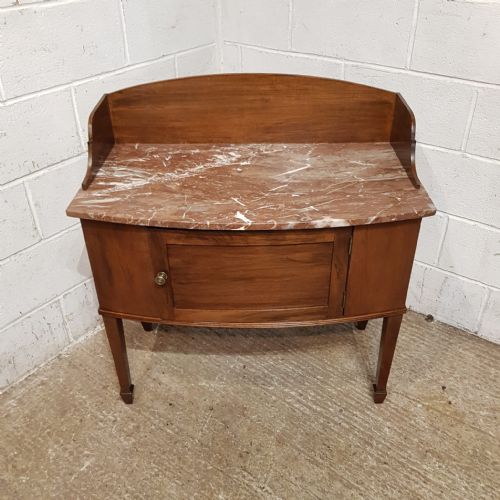
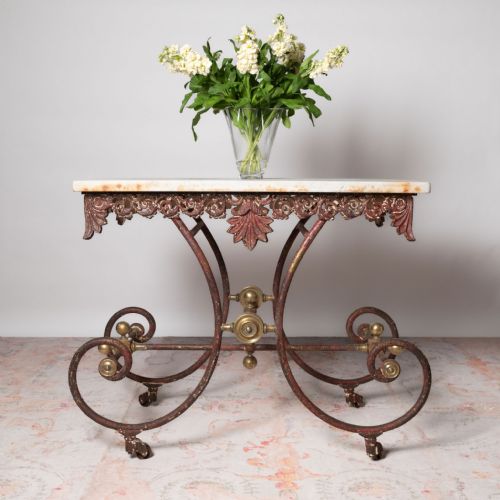
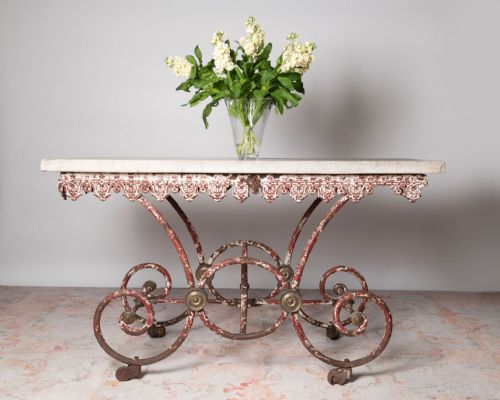
A red marble console table brings striking veined stone and architectural presence to a hall or drawing room.
What a red marble console table is
When you search for a red marble console table, you are looking at wall-fixing or freestanding pier tables designed to stand against a flat wall, often paired with matching mirrors. The examples you meet on this page span the eighteenth and nineteenth centuries, including Regency, Victorian, and various French and Italian revival styles.
The forms range from demi-lune shapes to rectangular tables and complete console and mirror sets. They emerge from periods such as the eighteenth century, the Regency era, and the nineteenth century, drawing on Italian Neoclassical, Georgian style, French Rococo, and French Renaissance Revival designs.
How they were made
Makers constructed the foundational frames using timber, painted wood, and carved giltwood enhanced with gesso. These structural elements frequently incorporated intricate hand-carved details characteristic of French and Italian workshops.
The distinctive tops feature marble, rouge marble, and faux porphyry, sometimes complemented by glass elements within associated trumeau mirrors. Artisans selected rich stones to contrast with the gilded or painted wooden bases below.
Retail Price Guide 2026
Typical UK retail prices for red marble console table, calculated from the Sellingantiques database of over a million retail prices indexed since 2003. This retail price guide relies exclusively on Sellingantiques data; no external sources or auction records are used, so the figures do not describe the wider market.
Listings here feature materials such as marble, rouge marble, giltwood, gesso, and rosewood across eighteenth and nineteenth-century periods.
What varies in quality
The distinction between standard and exceptional pieces rests in the depth and sharpness of the gesso and wood carving on the frame. Finer examples display crisper hand-chiseled details and more harmonious proportions between the stone top and the gilded support.
Quality also shows in the selection and preparation of the marble or rouge marble top itself, where richer natural veining and precise edge profiling elevate the piece. The integrity of the original gilding and timber substructure further separates standard decorative items from superior period works.
The Red Marble Console Table Glossary
- Console table
- A table designed to stand against a wall, traditionally supported by two or four legs or fixed directly to the wall with brackets. These pieces were often placed beneath large mirrors in formal reception rooms.
- Demi-lune
- A half-moon shape characteristic of certain eighteenth and early twentieth-century console tables. This curved format allowed tables to sit flush against smaller wall spaces.
- Giltwood
- Timber that has been coated with a thin layer of gold leaf over a gesso preparation. It provides the brilliant reflective surfaces seen on many nineteenth-century French and Regency frames.
- Rouge marble
- A deep reddish ornamental stone prized for its dramatic white and grey veining. It forms the striking upper surfaces of several tables listed here.
- Trumeau mirror
- A decorative wall mirror featuring an integrated painted or carved panel above the glass. These are frequently found paired with matching console tables.
Frequently Asked Questions
How were these tables used historically?
Historically, console tables were placed against drawing room and hallway walls to display decorative objects, porcelain, or lamps. Their architectural design allowed them to anchor large wall mirrors and fill empty vertical expanses.
Because they were often fixed to the wall, they provided a stable surface despite their sometimes slender proportions.
How do I live with a console table?
Living with a console table involves positioning it in an entryway, living room, or hallway where its stone top and carved frame can be appreciated without obstruction. Keeping the surface styled simply lets the natural veining of the marble remain the focal point.
Ensure the wall-fixing requirements are respected, as many period console tables rely on structural support against the wall for stability.
How can I tell the period of a console table?
Dating a console table requires examining the carving techniques, the composition of the timber or gesso, and the specific design vocabulary. Eighteenth-century and Regency pieces often exhibit distinct neoclassical or rococo proportions that differ from later Victorian revivals.
Comparing the edge profile of the marble and the method of gilding provides further clues to the era of manufacture.