
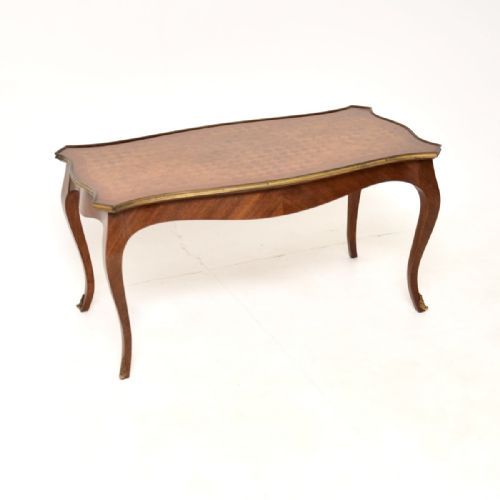
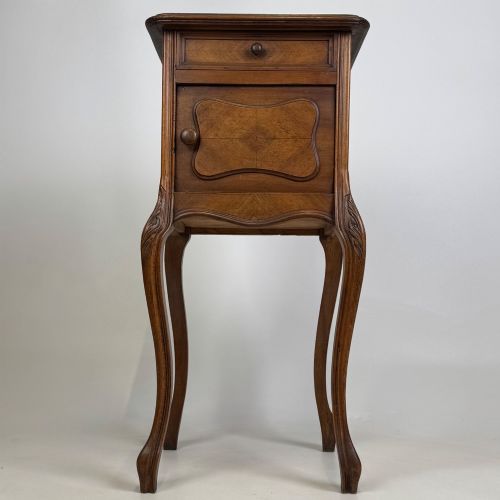
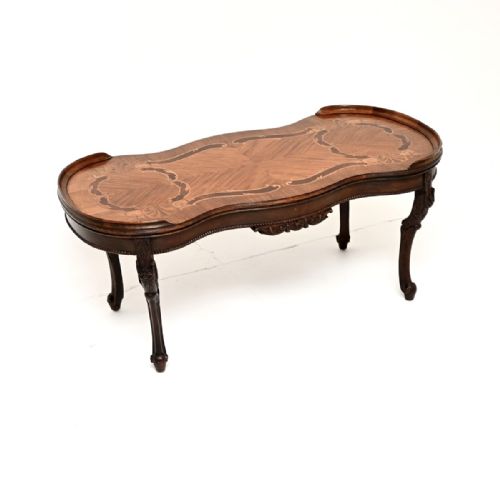
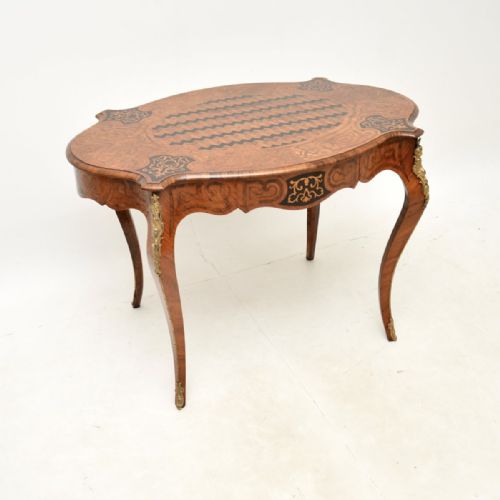
Louis XV Walnut Table
A louis xv walnut table brings fluid serpentine lines and rich timber tones into a room, offering both practical surface space and distinct period character.
Louis XV Walnut Table
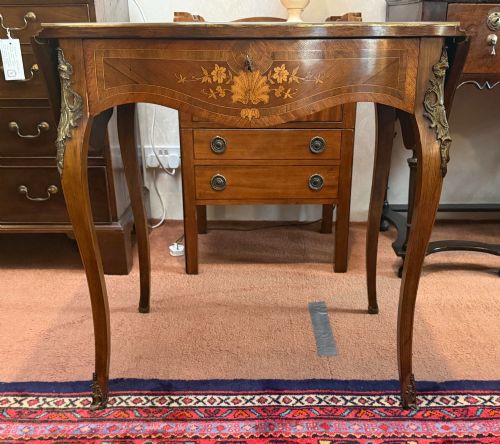
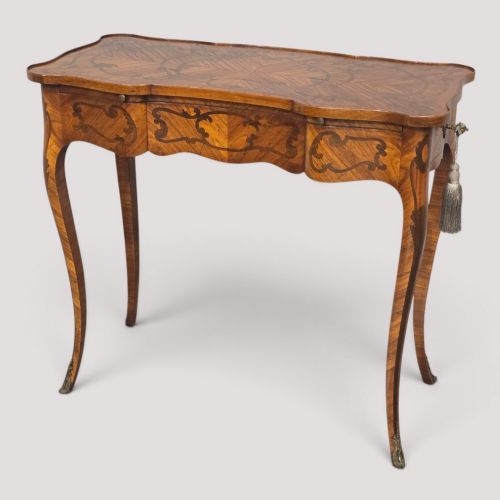
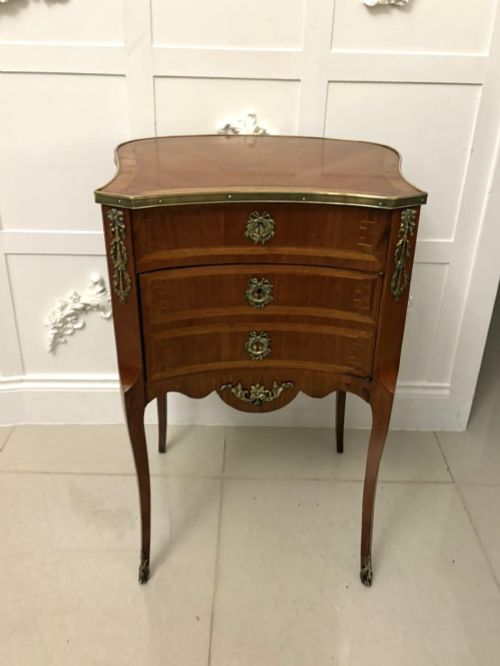
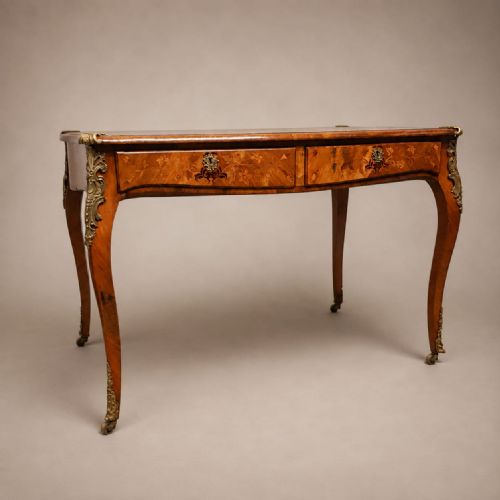
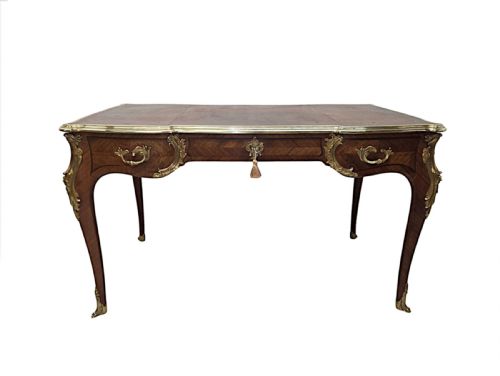
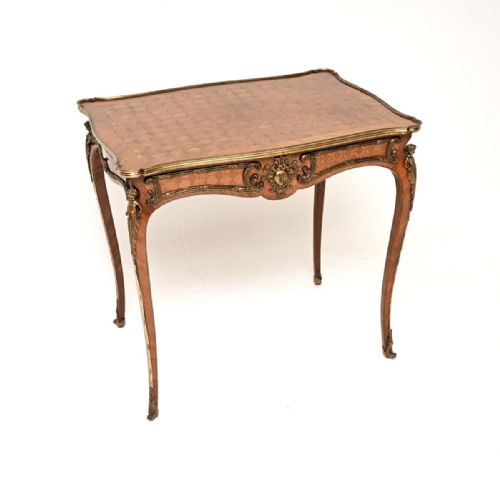
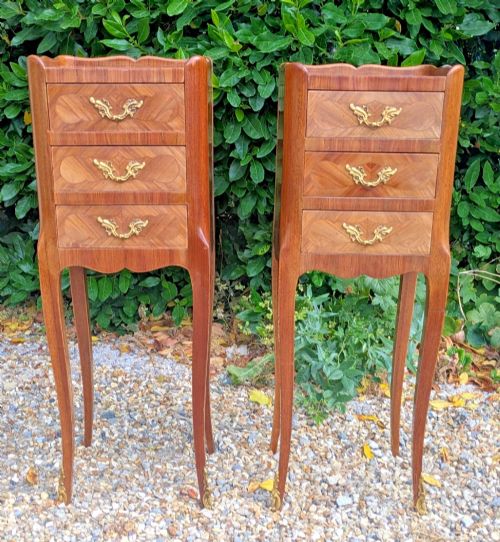
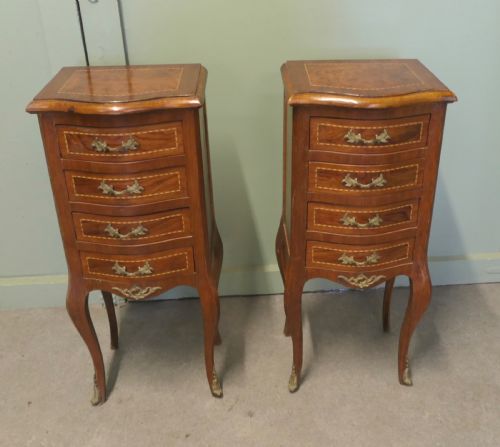
A louis xv walnut table encompasses a diverse range of forms designed for daily living and social display, spanning from compact bedside cabinets and lamp tables to expansive writing desks and occasional tables.
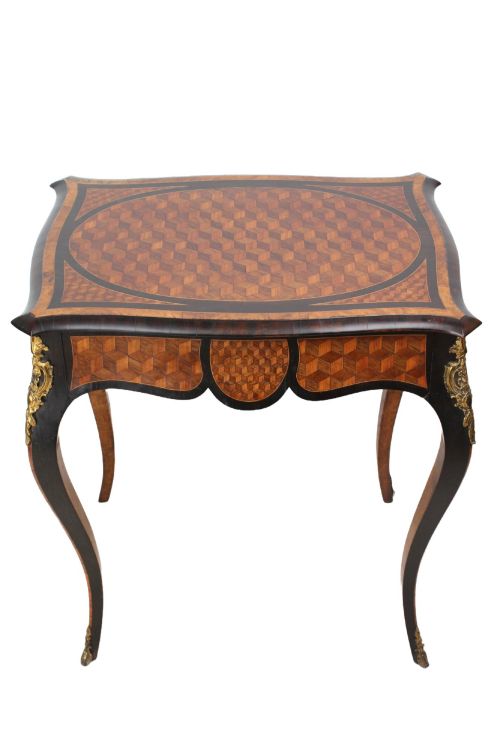
Makers and workshops utilised walnut, burr walnut, and contrasting timbers like kingwood to construct these pieces, often incorporating shaped tops, cabriole legs, and marquetry detailing.
How they were made
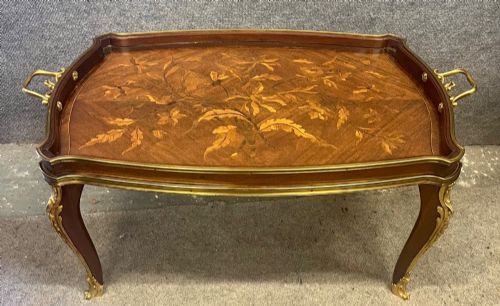
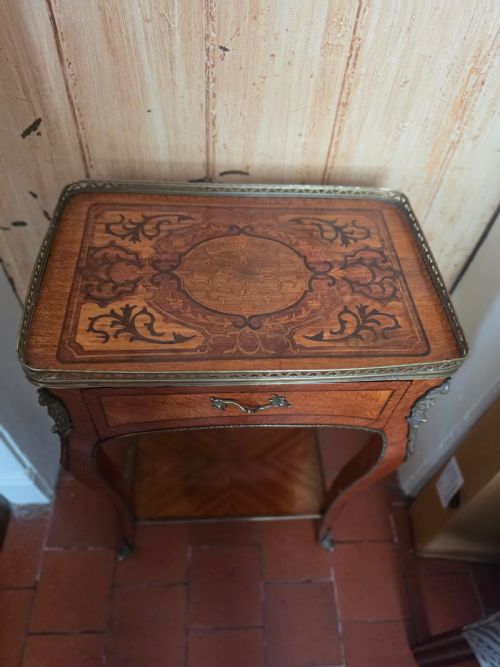
Craftsmen shaped solid and veneered walnut over sturdy carcases, frequently employing intricate parquetry and floral marquetry in contrasting woods to create decorative surface patterns.
Cast ormolu mounts, brass details, and leather inset writing surfaces were integrated into the construction to accentuate the curved contours and enrich the overall appearance.
Marble slabs, particularly in rouge or white variations, were fitted to the tops of specific side tables and bedside chests to provide durable, polished surfaces.
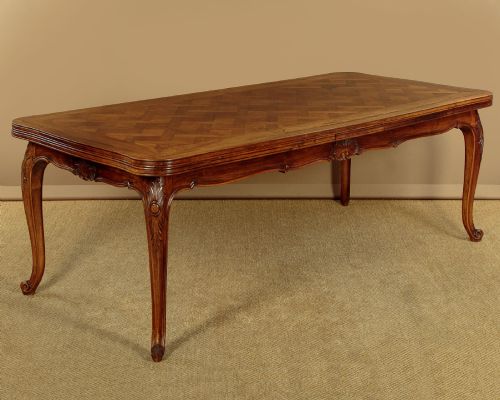
One unexpected survivor is a grand ten-foot dining table standing firmly in the Louis XV revival taste.
What varies in quality
The refinement of the carving on the cabriole legs and aprons distinguishes standard production from superior examples, where hand-chiseled details and balanced proportions demonstrate exceptional workshop skill.
The complexity and precision of the wood inlay, together with the crispness of the cast ormolu mounts and the depth of the timber's natural patina, elevate the overall standard of a piece.
JAS Shoolbred·L.Martin of Paris·Gillows
The Louis XV Walnut Table Glossary
- Bureau Plat
- A freestanding writing desk featuring a rectangular top, typically fitted with drawers in the frieze and standing on cabriole legs. This form gained prominence in eighteenth-century France.
- Ormolu
- Gilded bronze applied as decorative mounts to furniture edges, corners, and feet. It protects vulnerable areas while adding visual contrast to the walnut timber.
- Marquetry
- Decorative patterns formed by inserting thin veneers of various coloured woods into a prepared wooden ground. Floral motifs and geometric designs are common examples.
- Cabriole Leg
- A furniture leg that curves outward and then tapers inward to a foot, mimicking animal limbs. It is a defining characteristic of the Louis XV style.
- Parquetry
- Geometric wood inlay work arranged in repeating patterns such as cubes or chequers. It creates a textured, decorative surface on table tops and drawer fronts.
Louis XV Walnut Table: Frequently Asked Questions
Where should I place a louis xv walnut table?
These tables adapt well to various interior spaces, functioning effectively as lamp tables beside seating, bedside chests in a bedroom, or standalone writing desks in a study.
Their compact proportions and finished backs often allow them to sit freestanding within a room rather than strictly against a wall.
How do I care for the walnut and polish?
Maintenance requires simple dusting with a soft, dry cloth and the occasional application of traditional beeswax to nourish the timber and preserve the patina.
Harsh chemical cleaners and excessive moisture must be avoided to protect both the wood finish and any delicate ormolu or leather inserts.
How do I distinguish revival pieces from earlier items?
Examining the construction methods, timber seasoning, and wear patterns helps indicate the age of the piece, as nineteenth and twentieth-century revival items often display different internal secondary woods compared to eighteenth-century originals.
Stylistic cues and hardware fixings also provide reliable clues regarding whether a table dates to the original period or a later revival.
What is the difference between a side table and an occasional table?
A side table typically serves a specific supporting function against a wall or beside furniture, often incorporating drawers or lower tiers for storage.
An occasional table is generally lighter and more easily moved about a room to meet temporary needs for display or holding small items.