
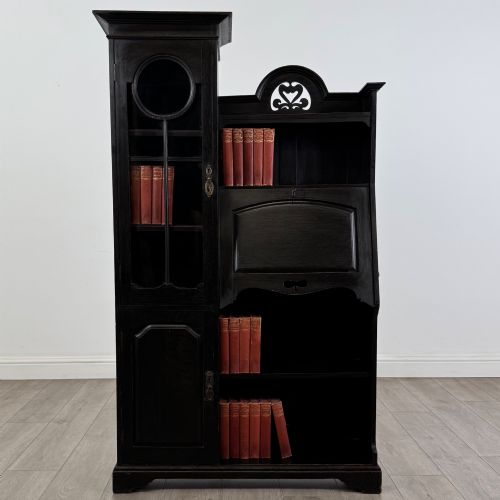
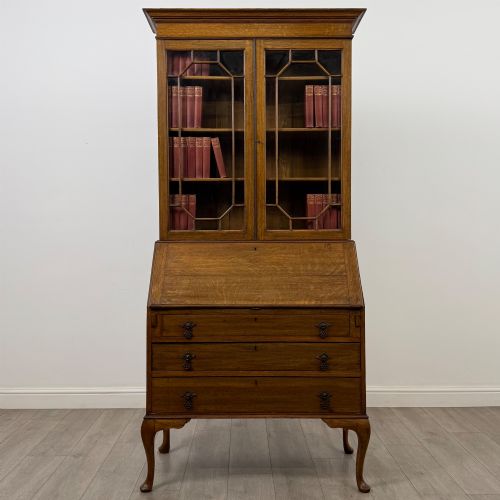
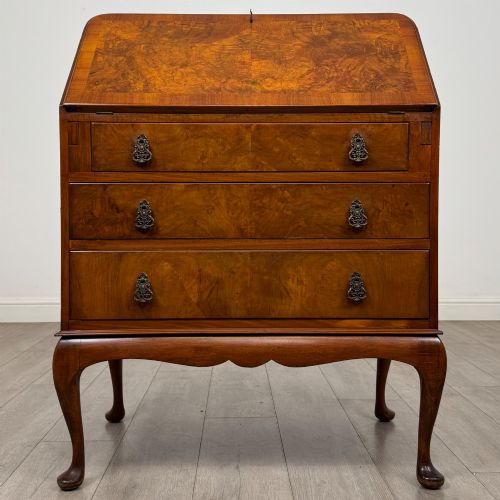
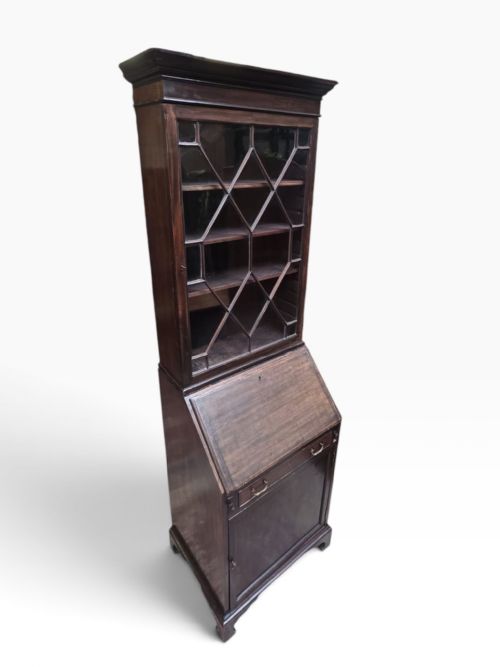
Edwardian Slant Front Bureau
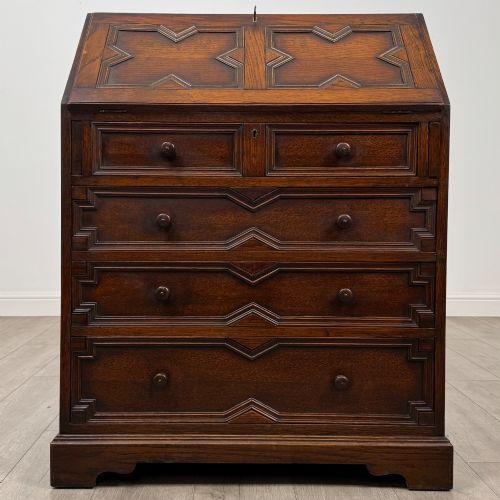
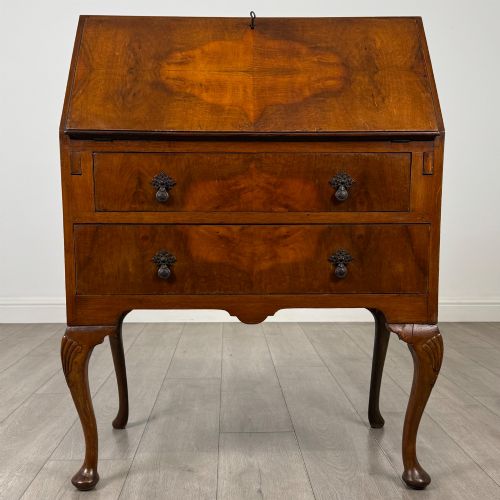
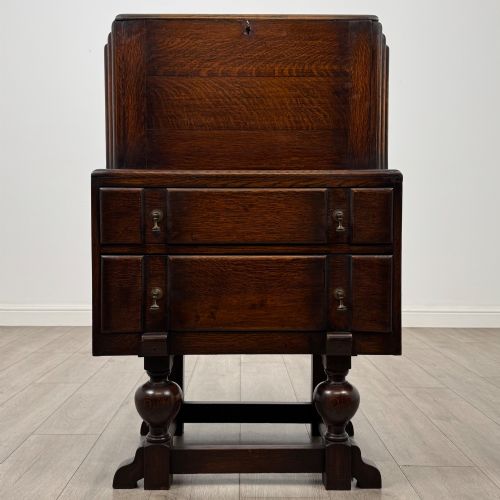
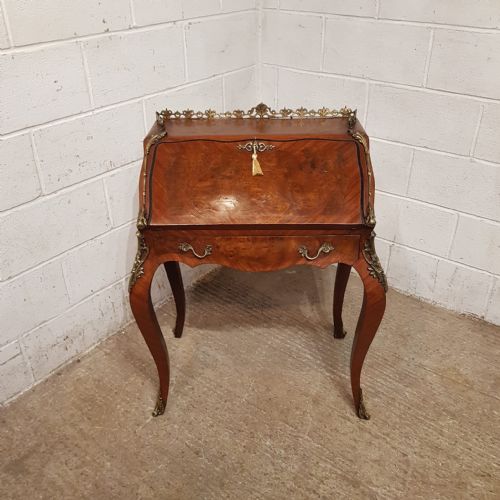
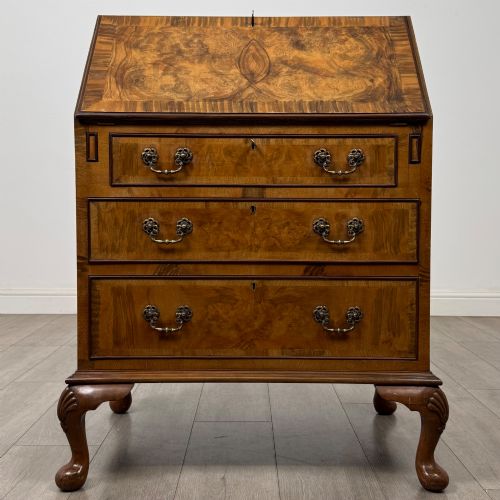
An edwardian slant front bureau provides a sloping writing flap that opens to reveal internal pigeonholes and drawers.
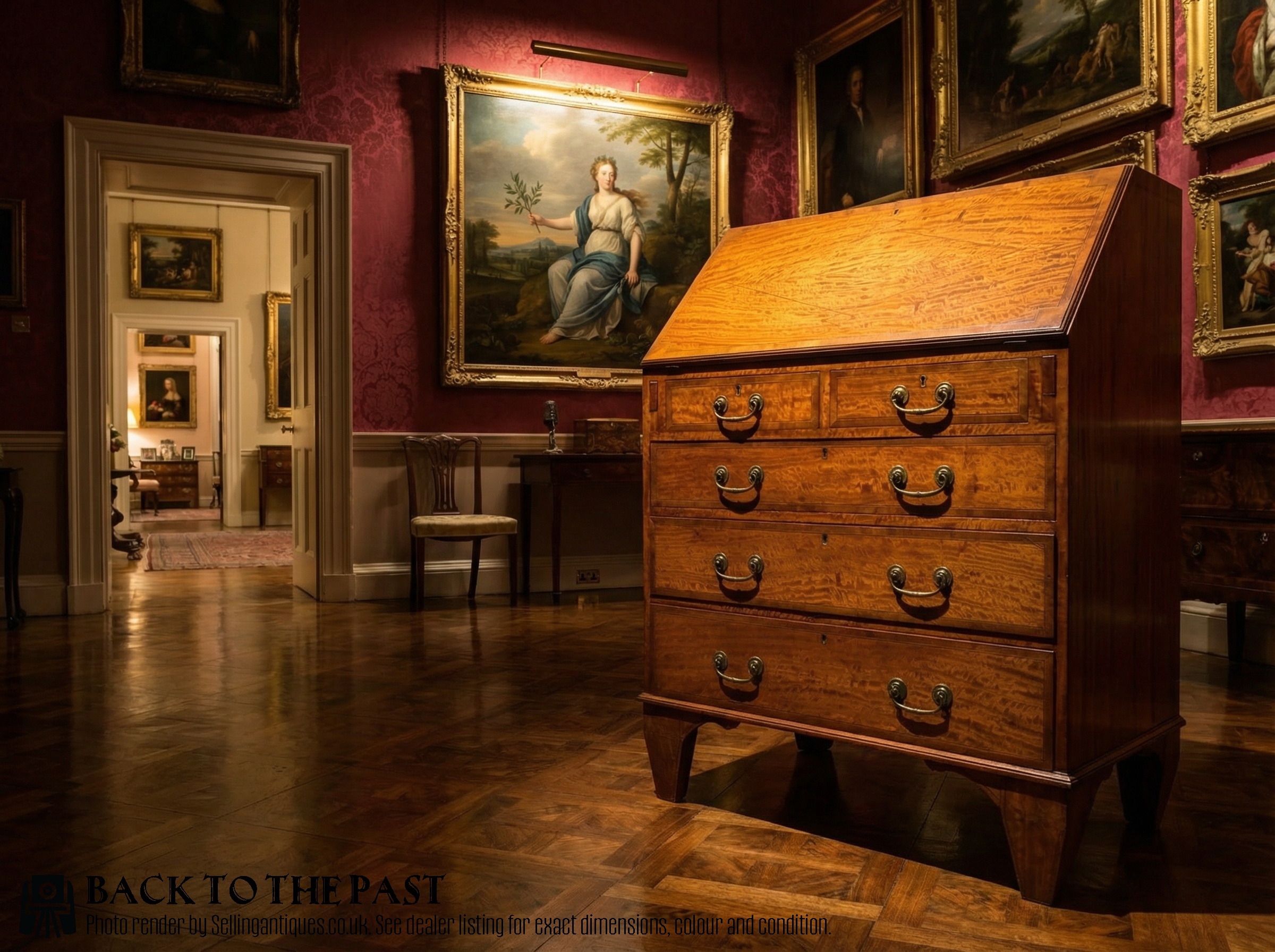
Edwardian Slant Front Bureau
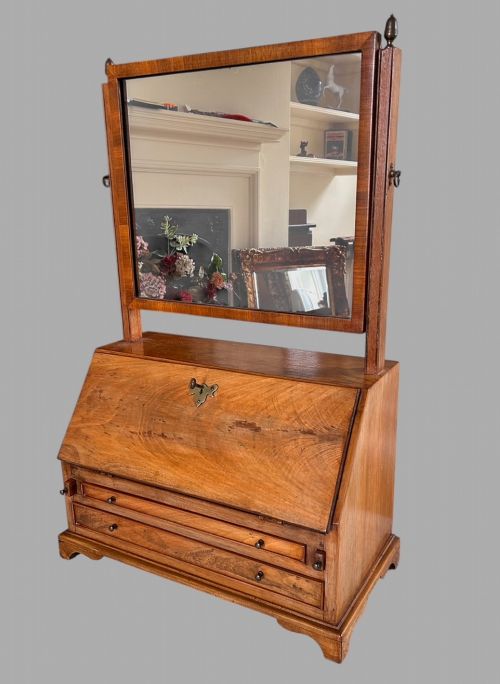
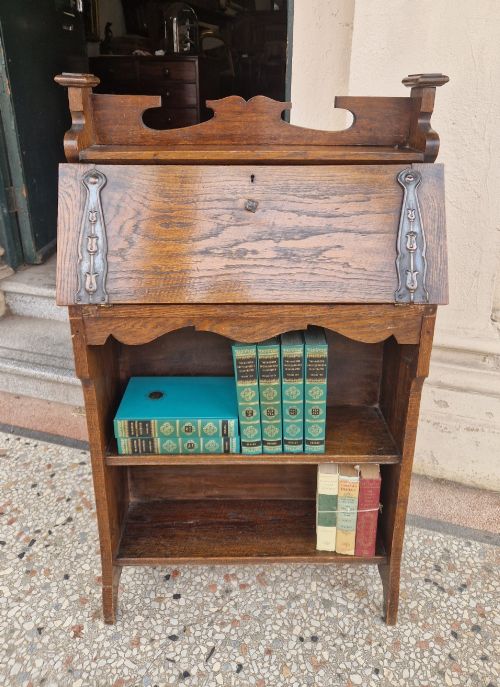
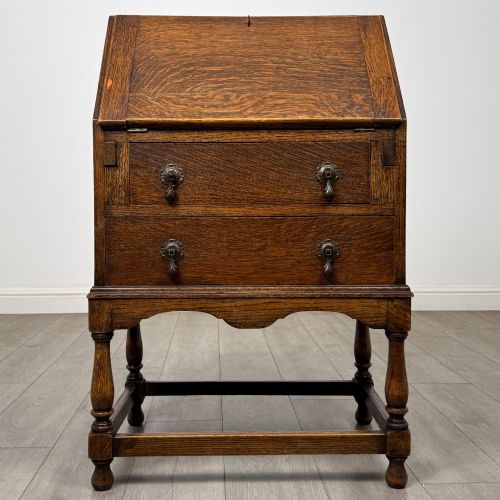
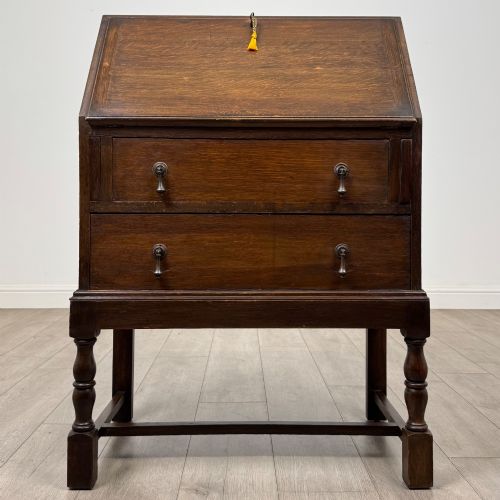
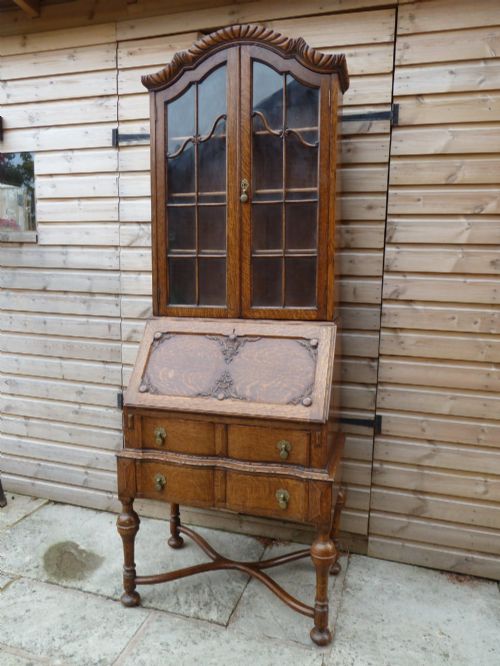
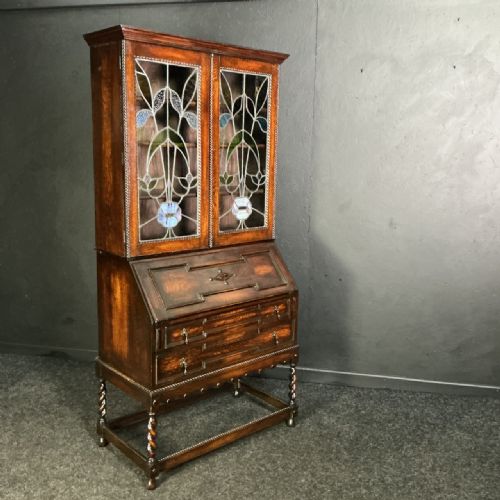
An edwardian slant front bureau combines a compact writing desk with enclosed drawer storage, frequently seen in forms that incorporate upper bookcase cabinets. These pieces date predominantly from the Edwardian era and the early twentieth century, drawing upon earlier Georgian and Victorian design principles.
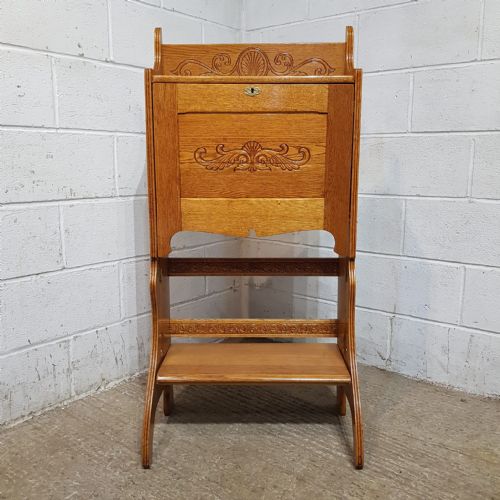
The standard version encountered on this page is constructed from oak or mahogany, often featuring a fitted interior behind the hinged writing flap. Variations range from small tabletop bureau formats to large bureau bookcases and taller writing desks.
Makers and cabinetmakers of the period also produced revival styles including Jacobean, Queen Anne, and Chinoiserie finishes alongside simpler Arts and Crafts interpretations.
How they were made
Cabinetmakers utilised solid timbers and selected veneers such as walnut, burr walnut, satinwood, and mahogany over supportive framing woods like oak and elm. Surfaces were frequently polished to highlight the natural grain, while decorative examples incorporated marquetry inlay and painted details.
Hardware typically consisted of brass handles, escutcheons, and hinges that secured the fall-front writing surface. Glass panels were integrated into the upper doors of taller bureau bookcase variations to display books and collections.
Some slant front writing desks include hidden secret compartments behind the internal pigeonholes for storing valuables.
What varies in quality
The standard of timber selection and veneer matching distinguishes finer examples from standard production pieces, with figured walnut, burr walnut, and satinwood representing the upper tiers of craftsmanship. Finer cabinets display meticulous attention to the internal arrangement of pigeonholes, small drawers, and secret compartments behind the slant front.
Structural integrity relies upon the precision of the joinery in the fall-front hinges and drawer construction. Pieces featuring hand-painted decoration, marquetry inlay, or specialised Chinoiserie lacquer work reflect higher artisan involvement than plain utilitarian versions.
The Edwardian Slant Front Bureau Glossary
- Slant front
- The hinged angled board that pulls down or folds forward to create a flat writing surface. It conceals the internal stationery compartments when closed.
- Bureau bookcase
- A dual-purpose piece comprising a lower writing bureau combined with an upper glazed shelving cabinet. It offers storage for both books and writing materials.
- Marquetry
- Decorative veneer work formed by fitting together small pieces of coloured wood, shell, or ivory to create pictorial designs on the surface. This technique appears on select walnut and mahogany models.
- Pigeonhole
- A small, open compartment fitted within the interior of the bureau for sorting letters and papers. These compartments are often flanked by miniature drawers.
- Secretaire
- A cabinet or desk containing a built-in writing drawer or fold-down writing flap. The term frequently applies to Davenport desks and specialised writing furniture.
Edwardian Slant Front Bureau: Frequently Asked Questions
What is an edwardian slant front bureau?
An edwardian slant front bureau is a writing desk featuring a hinged, angled lid that opens forward to provide a flat writing surface. Inside, it contains small drawers and pigeonholes for correspondence.
These pieces were popular for household administration during the early twentieth century and frequently include sets of graduated drawers beneath the writing compartment.
How do you use the slant front?
The slant front is lowered by unlocking or unlatching the lid, allowing it to rest upon supporting wooden brackets or pull-out lopers attached to the bureau frame. This reveals the internal writing space.
When closed, the angled lid protects the writing materials and keeps the interior contents concealed from view.
What woods were used for these bureaus?
Cabinetmakers constructed these pieces using woods such as oak, mahogany, walnut, and satinwood. Finer versions often featured burr walnut veneers or specialised marquetry inlay.
Secondary woods like elm and pine were occasionally utilised for internal framing and drawer linings.
How do I identify an Edwardian piece?
Edwardian pieces date from the reign of King Edward VII, spanning the early 1900s up to approximately 1910. They often exhibit lighter timber tones and revival styles influenced by Sheraton and Chippendale designs.
Construction methods from this period typically combine traditional hand joinery with early machine assistance, differing from heavier mid-Victorian or solid Georgian furniture.