
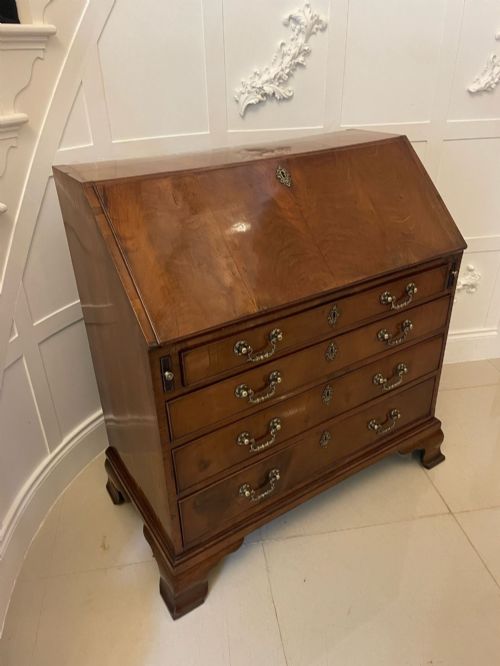
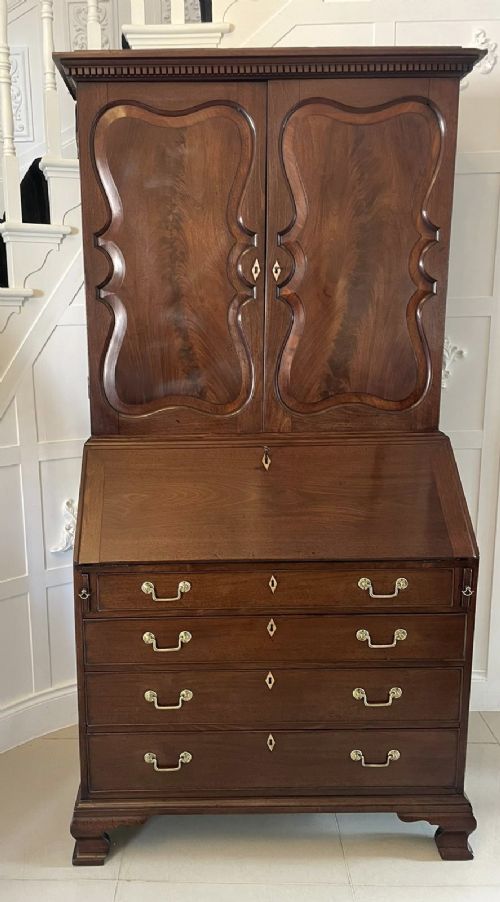
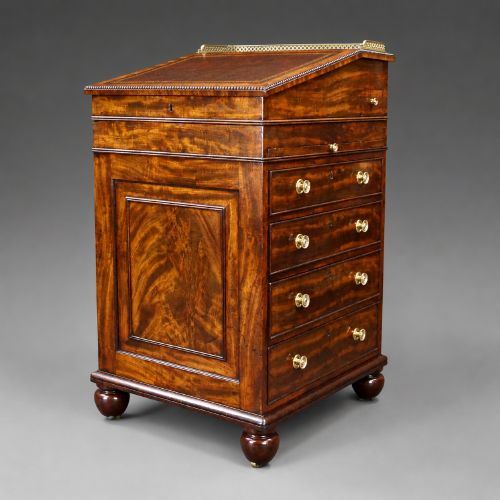
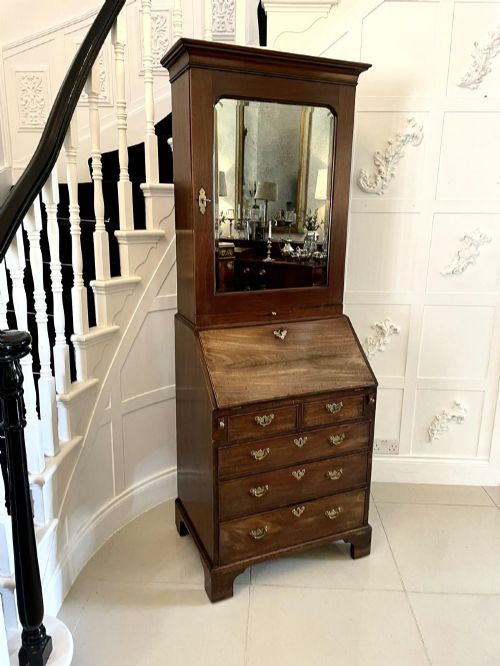

Mahogany Slant Desk
Mahogany slant desk pieces are handsome Georgian and Edwardian writing bureaux offering practical storage and a sloping workspace that every study needs.
What the pieces are
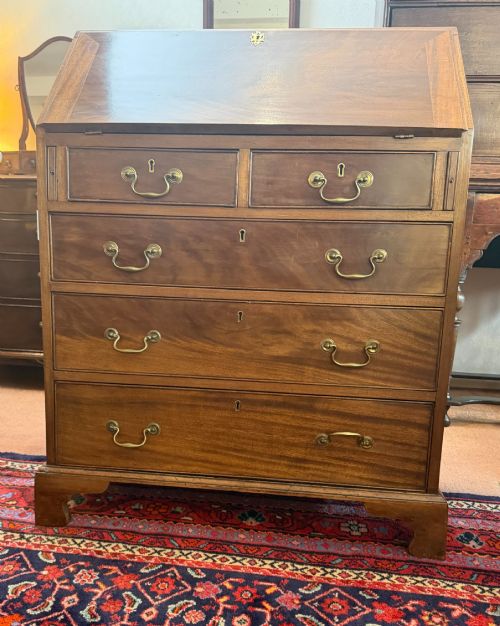
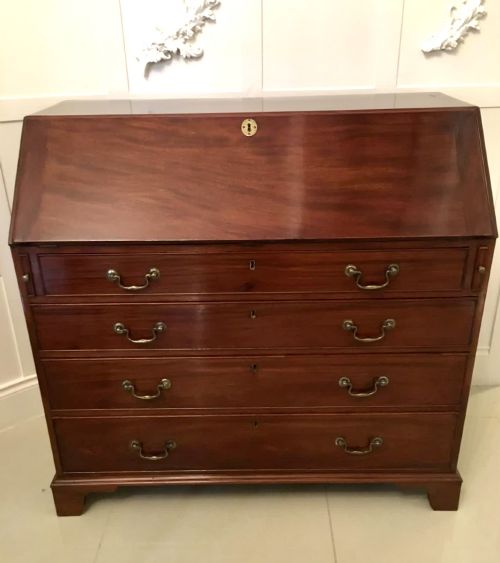
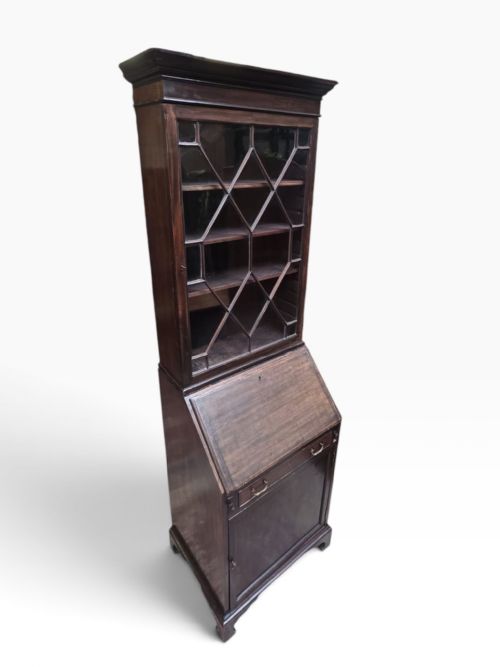
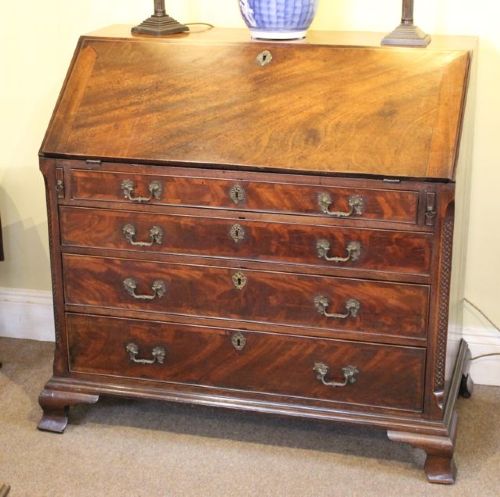
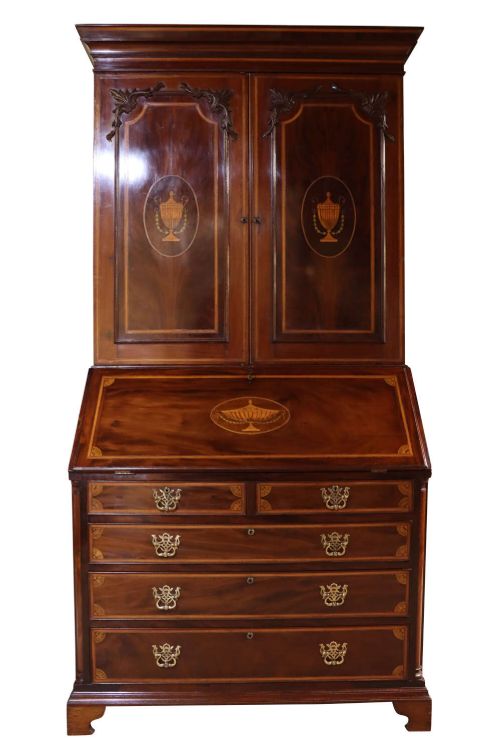
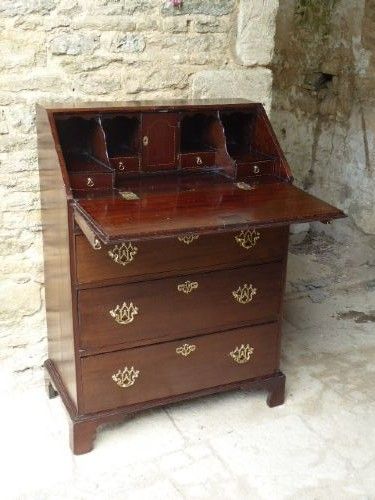
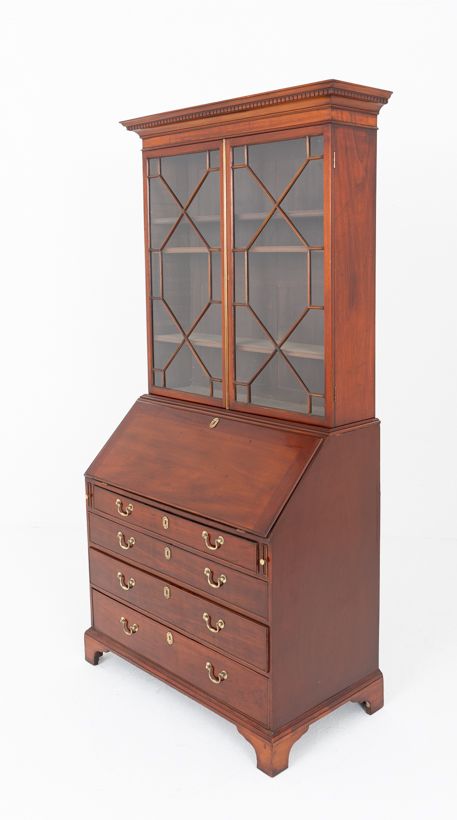
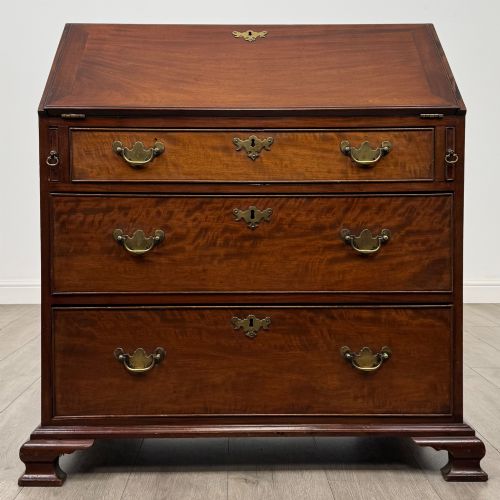
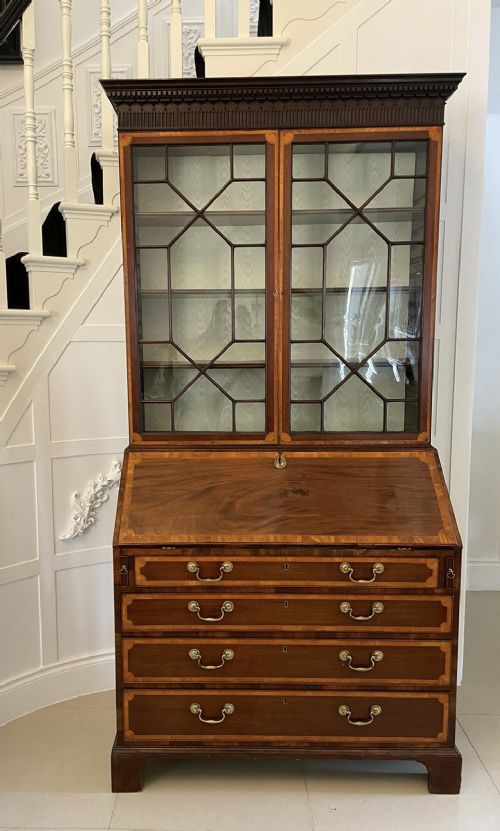
A mahogany slant desk takes the form of a bureau, combining a sloping fall-front lid with drawers beneath. These traditional writing pieces provide a private surface for correspondence while concealing inner compartments and pigeon holes.
The examples gathered here span the Georgian and Edwardian eras, predominantly featuring English craftsmanship in rich timbers. Buyers encounter both substantial 18th-century pieces and lighter 2000-century reinterpretations.
Forms include classic Georgian bureaux and refined Edwardian writing desks. Each object reflects the domestic requirements of its period, from formal eighteenth-century chambers to later domestic settings.
How they were made
Cabinet makers constructed these sloping bureaux using solid mahogany, frequently supported by internal framing of oak. The timber receives a polished finish that highlights the natural grain of the wood.
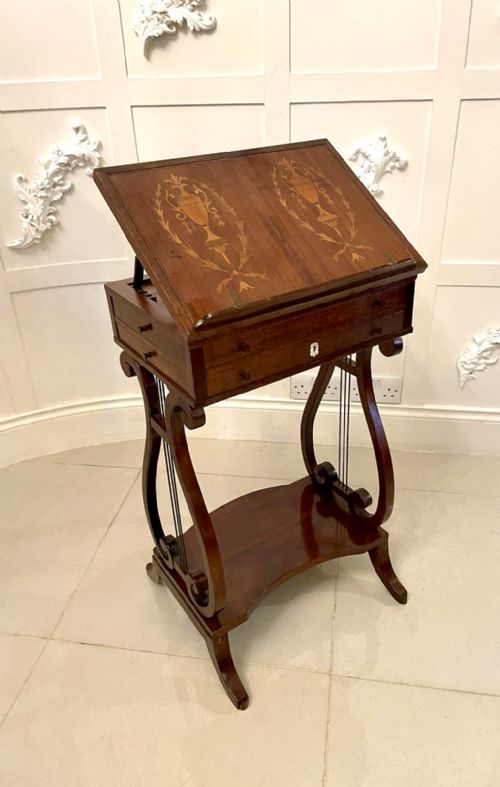
Finer examples incorporate decorative details such as satinwood inlay to enrich the writing surface and drawer fronts. Brass handles and escutcheons complete the construction, securing drawers and operating falls.
Retail Price Guide 2026
Typical UK retail prices for mahogany slant desk, calculated from the Sellingantiques database of over a million retail prices indexed since 2003. This retail price guide relies exclusively on Sellingantiques data; no external sources or auction records are used, so the figures do not describe the wider market.
Secret compartments hidden behind miniature drawers delighted Georgian writers who needed a secure spot for private letters.
What varies in quality
The distinction between standard and superior pieces rests upon the choice of timber and the precision of the cabinet work. Richly figured mahogany and crisp satinwood inlay elevate an ordinary bureau into a distinguished specimen.
Construction methods also separate the output of different workshops, seen in the neat dovetailing of drawers and the careful integration of oak secondary woods. Finer execution ensures the fall-front operates smoothly and the internal fittings remain balanced.
The Mahogany Slant Desk Glossary
- Bureau
- A writing cabinet featuring a sloping hinged lid that drops to form a desk surface. It usually contains small drawers and pigeon holes inside.
- Fall-front
- The sloping panel of a desk that pulls down or folds forward to provide a writing surface. This component conceals the internal compartments when closed.
- Satinwood
- A pale, lustrous exotic timber native to India and Sri Lanka, often used for contrasting inlay and stringing on mahogany furniture.
- Georgian
- A period of English design spanning the reigns of the first four Georges, noted for elegant proportions and quality cabinet making.
- Edwardian
- An early 20th-century period of furniture production that often revived earlier Georgian styles with lighter proportions and decorative wood inlay.
Frequently Asked Questions
What is a mahogany slant desk?
A mahogany slant desk is a traditional writing bureau featuring a sloping hinged lid. When opened, this lid reveals a fitted interior with small compartments.
Beneath the writing surface, multiple drawers provide storage for papers and household items.
How do I date a bureau?
Dating relies on timber selection, construction methods, and stylistic details such as brass hardware. Georgian examples display heavier proportions and simpler interiors.
Edwardian pieces often incorporate lighter satinwood inlay and refined decorative touches reflecting later revival tastes.
Where were these desks used?
These pieces served primarily in private studies, libraries, and principal bedchambers of large houses. They provided a secure place to manage correspondence and keep financial records.
The sloping lid allowed the owner to write comfortably while concealing sensitive documents when closed.
How do I maintain the wood?
Keep the mahogany away from direct sunlight and heat sources to prevent the timber from drying out. Regular dusting with a soft cloth preserves the polished surface.
Occasional application of appropriate wax polish nourishes the grain without building up heavy residue.