



Sheraton Style Bureau
A sheraton style bureau brings refined neoclassical balance and figured timbers into a room, offering a practical writing slope alongside elegant proportions.
Sheraton Style Bureau
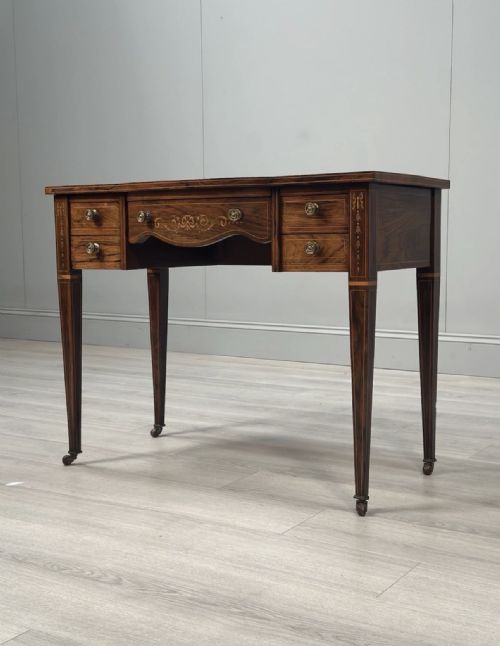
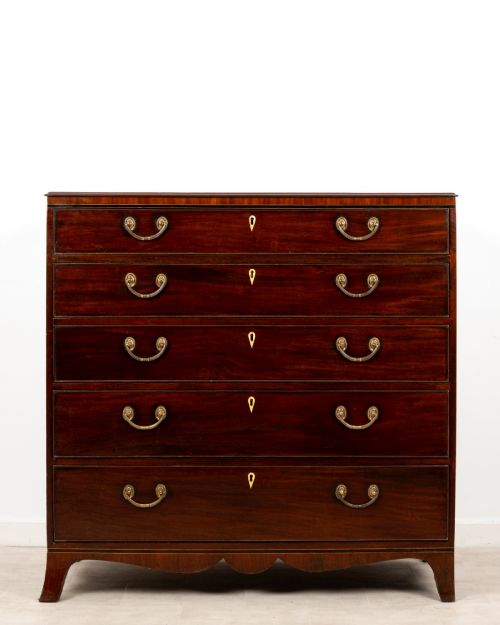
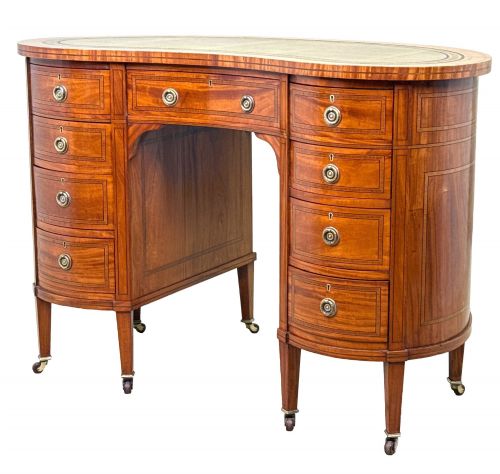
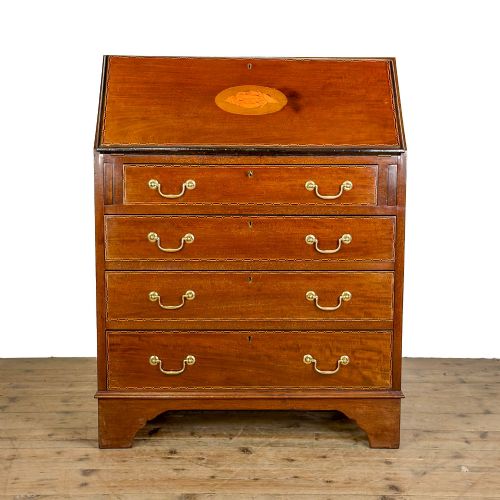
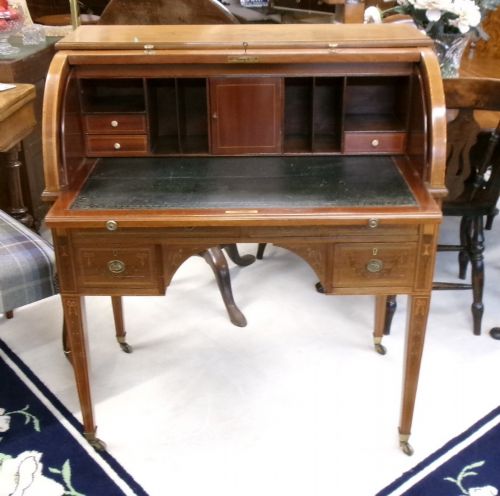
When you search for a sheraton style bureau, you encounter writing furniture rooted in the neoclassical designs of the late eighteenth century and reimagined during the Edwardian period and Victorian eras. These pieces combine fitted internal compartments with drop-down writing slopes or cylinder fronts, often resting on slender tapering legs.
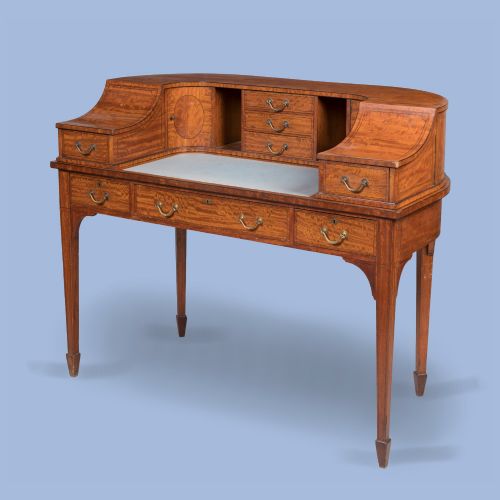
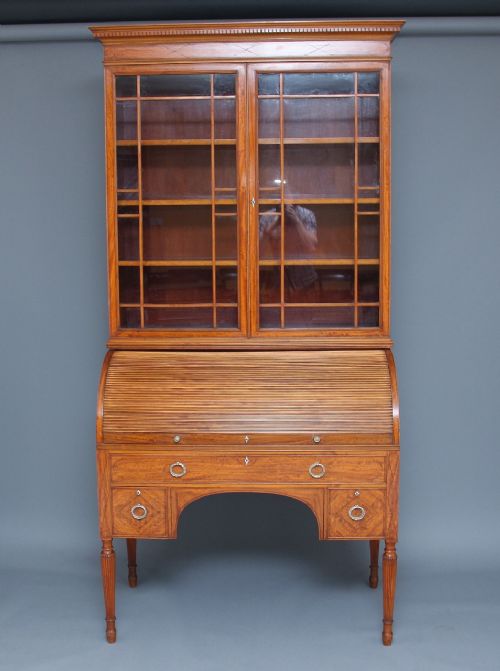
The versions most frequently met on this page span the Edwardian Sheraton Revival and the nineteenth century, utilising mahogany and satinwood with delicate contrasting stringing. They range from compact ladies desks to substantial bureau bookcases and Carlton House writing desks.
Makers and workshops of the revival period drew heavily upon original George III vocabulary, translating straight lines and symmetrical paneling into domestic forms suited for period and modern interiors alike.
Materials and construction
Makers relied on solid mahogany and rich satinwood as primary timbers, enhanced by contrasting bandings of boxwood and rosewood. These woods were chosen for their capacity to take fine geometric stringing and complex marquetry motifs.
Brass fittings, including delicate drop handles and escutcheons, punctuate the drawer fronts and cupboards. Glass doors appear on bookcase tops, while writing surfaces frequently feature hand-tooled leather inserts.
Cabinetmakers employed careful veneering techniques over secondary woods to display dramatic grain figures, securing structural stability while presenting a polished exterior.
Sheraton Style Bureau Retail Price Guide 2026
Typical asking prices for sheraton style bureau among the pieces listed under this phrase on Sellingantiques today, from the lower quarter to the upper quarter. They describe what is for sale here now, not the wider market.
Listings feature items spanning the Georgian, Victorian, and Edwardian periods, utilising mahogany, satinwood, and rosewood.
Distinctions in quality
The division between standard commercial production and exceptional cabinet work rests in the precision of the marquetry and the choice of timber figure. Superior examples display meticulously hand-painted floral details and perfectly matched veneer grains across every drawer front.
Internal architecture marks another clear tier of execution, where finer pieces contain secret compartments, satinwood pigeonholes, and small drawers with dovetailed joints. The integration of secondary woods and the crispness of brass hardware further separate workshop grades.
Edwards and Roberts·Gillows of Lancaster·Henry Samuel·Maple and Co
The Sheraton Style Bureau Glossary
- Cylinder top
- A curved wooden roll that slides back to reveal a fitted writing surface and pigeonholes. This mechanism requires precise joinery to operate smoothly.
- Inlay
- Pieces of contrasting timber or shell fitted flush into recesses within the primary wood. It defines the neoclassical aesthetic.
- Marquetry
- Elaborate pictorial or geometric veneers assembled from various coloured woods. It decorates the major display surfaces of finer cabinets.
- Superstructure
- A stepped arrangement of small drawers and shelves sitting atop a desk base. It provides organizational compartments without enlarging the footprint.
- Stringing
- Thin lines of contrasting wood inlaid around drawer borders and table edges. It creates a crisp linear frame for the primary timber.
Sheraton Style Bureau: Frequently Asked Questions
How do I date a sheraton style bureau?
Dating relies on examining the secondary timbers, the style of brass hardware, and the construction methods used inside the drawer carcasses. Pieces from the Georgian period show hand-cut dovetails and native woods, whereas Edwardian revivals often exhibit machine standardisation alongside deliberate stylistic reproduction.
Secondary clues include the type of finish and the wear patterns on the writing surface. Comparing the construction details against documented workshop practices helps confirm the era of manufacture.
What is a Carlton House desk?
A Carlton House desk is a specialised writing table featuring a curved superstructure of small drawers and compartments enclosing the back and sides of the desk. This layout originated in the late eighteenth century and was frequently revived during the Edwardian era for refined domestic use.
The enclosed arrangement offers extensive compartmentalization while maintaining an elegant profile suitable for placement in the centre of a room.
How do I care for satinwood and mahogany?
Maintenance requires keeping these desks away from direct sunlight and heat sources to prevent the veneers from drying and lifting. Regular dusting with a soft, dry cloth preserves the polished finish without introducing moisture.
Occasional application of microcrystalline wax feeds the timber and protects the surface from minor abrasions. Avoid silicone polishes that can penetrate the grain and alter the sheen.
What is the difference between a bureau and a writing table?
A bureau specifically incorporates a sloping front that folds down to create a writing surface, concealing a group of small drawers and pigeonholes inside. A writing table provides an open flat surface, sometimes with drawers beneath the top, but lacks the enclosed sloping flap.
Both forms served domestic correspondence, but the bureau offered greater privacy and secure storage for personal papers.