
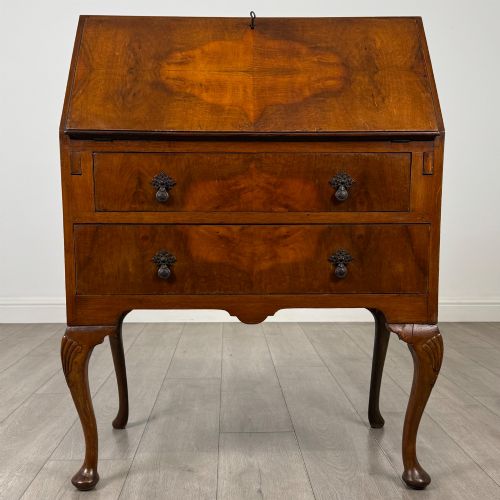
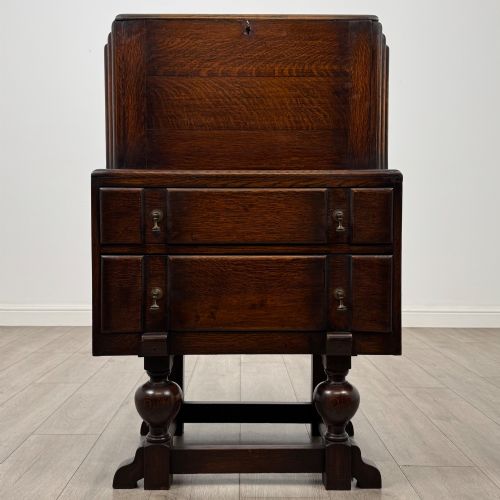
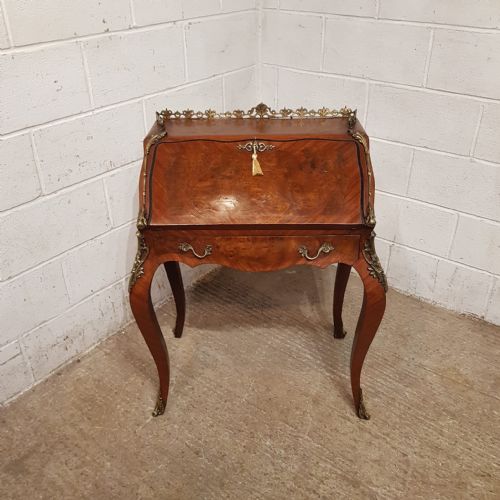
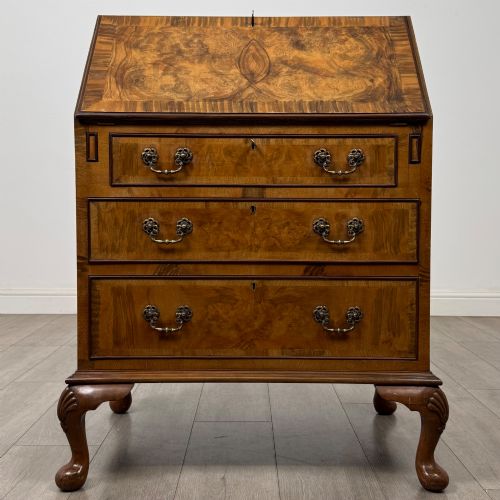
Edwardian Slant Front Desk
An Edwardian slant front desk brings a fitted writing surface and concealed storage to a room with compact elegance.
Defining the Edwardian slant front desk
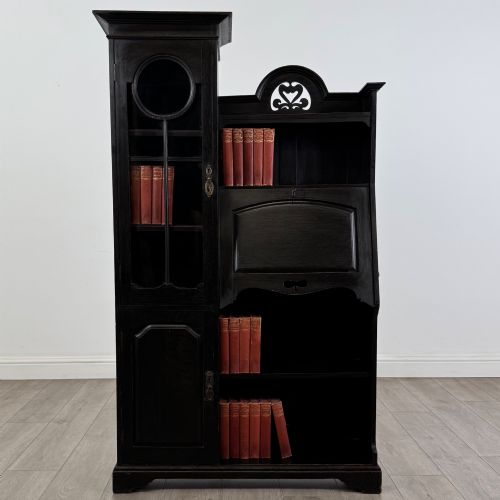
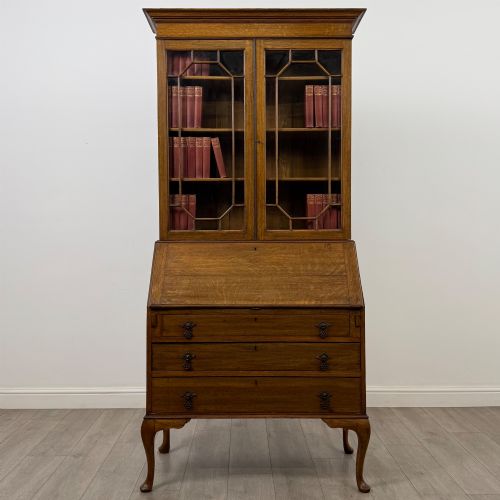
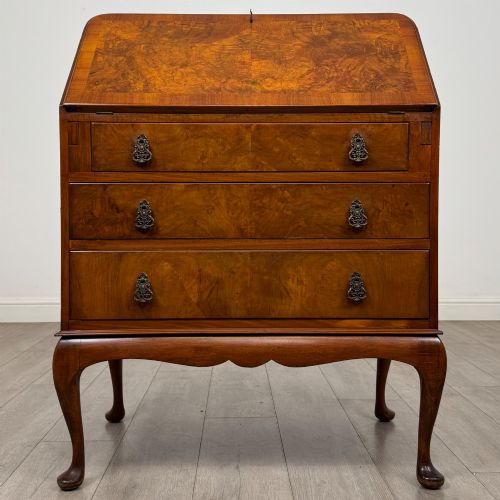
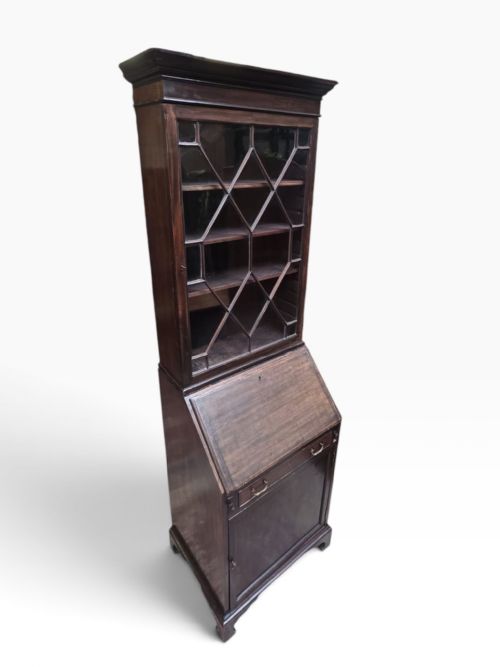
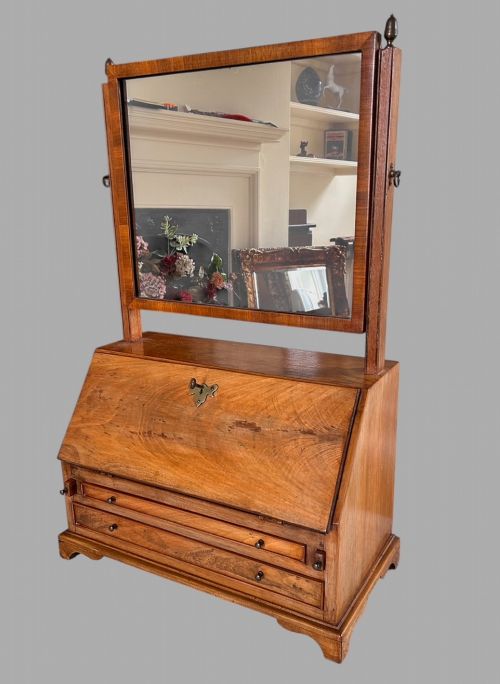
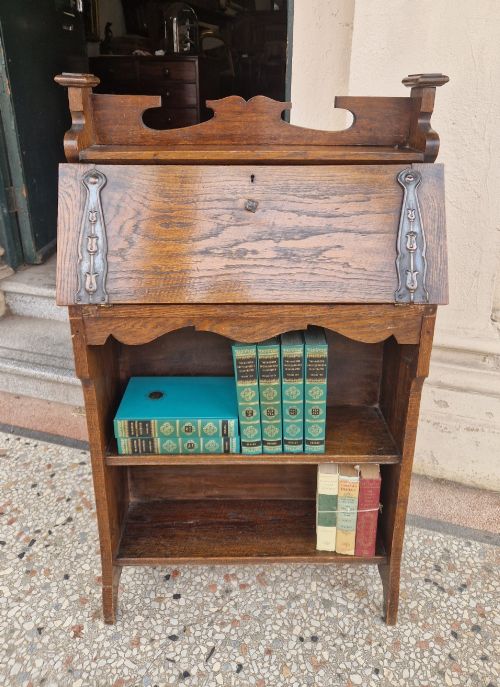
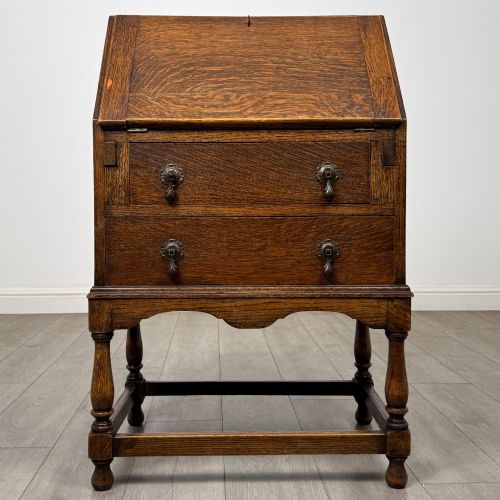
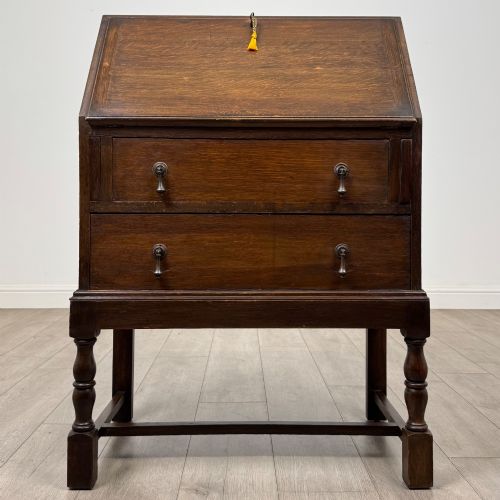
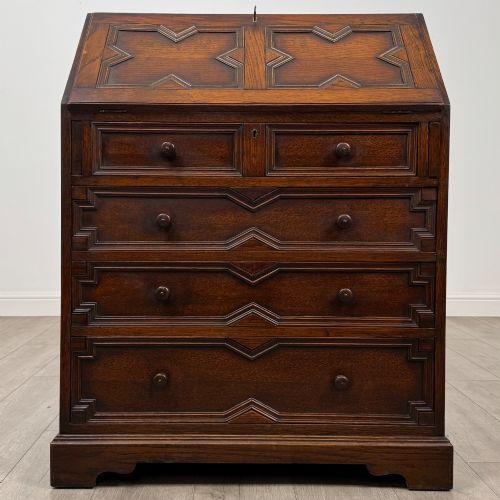
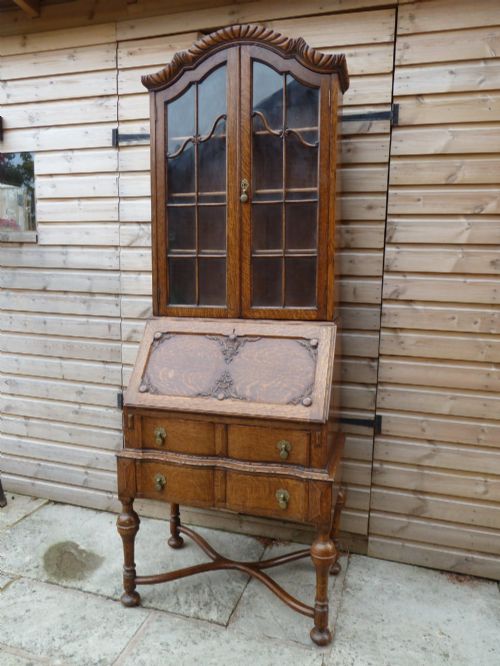
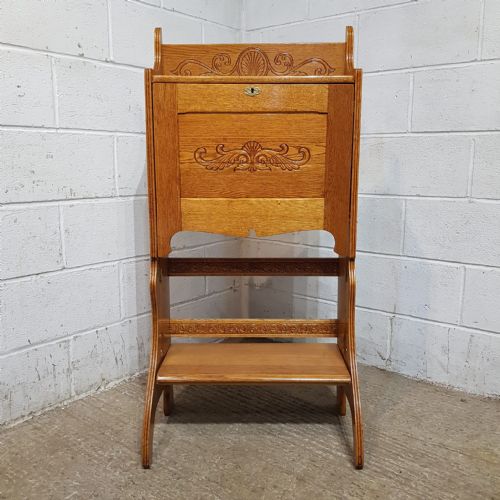
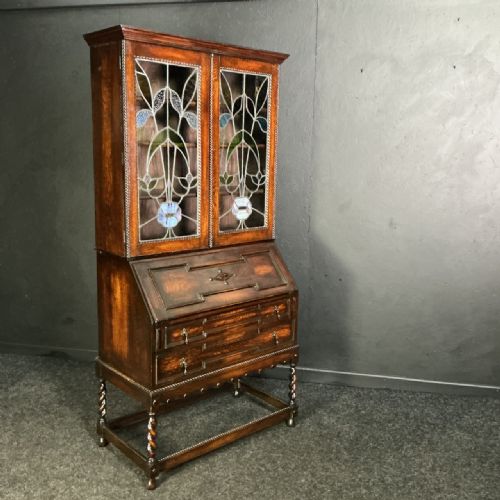
The edwardian slant front desk unites the traditional form of the writing bureau with the lighter aesthetic favoured at the turn of the twentieth century. These pieces offer a fold-down writing flap that opens to reveal small drawers and pigeonholes for correspondence. Such items appear on this page as writing bureaus, bureau bookcases, and compact Davenport desks.
The selection ranges from simple oak writing bureaus to taller bureau bookcases featuring glass-fronted upper sections. Mahogany and satinwood examples often display delicate inlay work that reflects the prevalent style of the period. Dimensions vary from small satinwood pieces designed for boudoirs to larger mahogany workstations suitable for a study.
Buyers encountering these items will note a distinct shift from heavier Victorian precedents toward lighter proportions and refined timber figuring. The integration of a slant front conceals paperwork while maintaining a tidy silhouette when not in use. These desks serve as practical writing surfaces that double as handsome storage cabinets for household papers.
Materials and construction
Makers constructed these desks using a variety of hardwoods including mahogany, oak, and walnut, often accentuating surfaces with satinwood inlay. Timber selection governed both the weight and visual character of the furniture, ranging from dark, rich mahogany grains to paler oak textures. Interior fittings relied on secondary timbers to build the small drawers and dividers housed behind the sloped flap.
Brass hardware such as handles, hinges, and escutcheons provided functional durability and metallic contrast against the polished wood. Writing surfaces frequently incorporated inset panels of leather to provide a smooth plane for penwork. Glass panels appeared in the upper doors of taller bureau bookcases to display books or display items securely.
Retail Price Guide 2026
Typical UK retail prices for edwardian slant front desk, calculated from the Sellingantiques database of over a million retail prices indexed since 2003. This retail price guide relies exclusively on Sellingantiques data; no external sources or auction records are used, so the figures do not describe the wider market.
Listings feature items spanning the Victorian and Edwardian periods, constructed in mahogany, oak, walnut, and satinwood with brass and glass elements.
Qualities of craftsmanship
Excellence in these pieces rests upon the precision of the satinwood inlay and the subtlety of the timber grain selection. Finer desks demonstrate seamless joints around the complex angles of the slant front and internal stationery compartments. The quality of the brass fittings and the smoothness of the drawer actions further distinguish superior workshop production from standard commercial output.
The presence of an upper bookcase section introduces architectural detail through glazed framing and proportioned cornices. Pieces that combine satinwood inlay with well-figured mahogany exhibit a higher degree of artisan skill. The structural integrity of the fall-front hinges and internal pigeonhole arrangement dictates the lasting utility of the desk.
The Edwardian Slant Front Desk Glossary
- Bureau bookcase
- A writing bureau with an enclosed shelving unit fitted above the desk. This combined form provides both workspace and display capacity in a single tall item.
- Davenport desk
- A compact pedestal desk featuring a sloped writing surface and drawers opening to the side. This form emerged in the Victorian era and persisted into subsequent decades.
- Satinwood inlay
- Ornamental wood veneer contrasting against a darker primary timber. Craftsmen utilised this technique to create geometric or floral patterns on drawer fronts and writing flaps.
- Fall front
- The hinged panel that lowers to form a horizontal writing surface. It conceals internal compartments when closed.
Frequently Asked Questions
What is a slant front desk?
A slant front desk is a piece of furniture featuring an angled hinged flap that pulls down to create a flat writing surface. Behind this flap lie various small drawers and pigeonholes for storing stationery.
Such desks combine concealed storage with a compact footprint, making them practical for domestic use.
How do I use the writing flap?
The hinged flap is lowered to a horizontal position, often supported by integrated pull-out wooden arms or automatic desk supports. This creates a stable platform for writing letters or placing ledgers.
When closed, the flap locks shut to keep documents private and tidy.
Where were bureau bookcases placed?
Bureau bookcases typically stood in studies, libraries, or living rooms where both writing facilities and book storage were required. Their vertical orientation maximised floor space while offering substantial storage.
The upper glass doors allowed owners to display books while keeping them free from dust.
What timbers are common on these desks?
Makers frequently utilised mahogany, oak, and walnut as primary cabinet timbers. Satinwood and detailed inlay work provided decorative contrast on drawer fronts and writing flaps.
Secondary woods like pine or oak were often employed for internal drawer construction.