

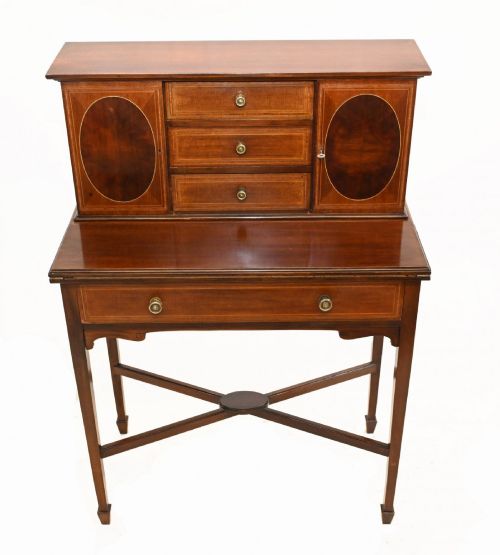
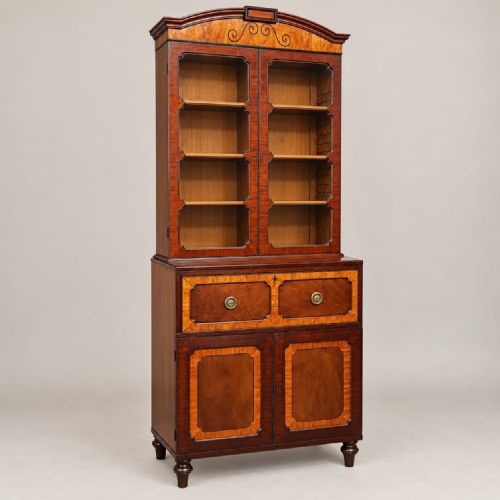
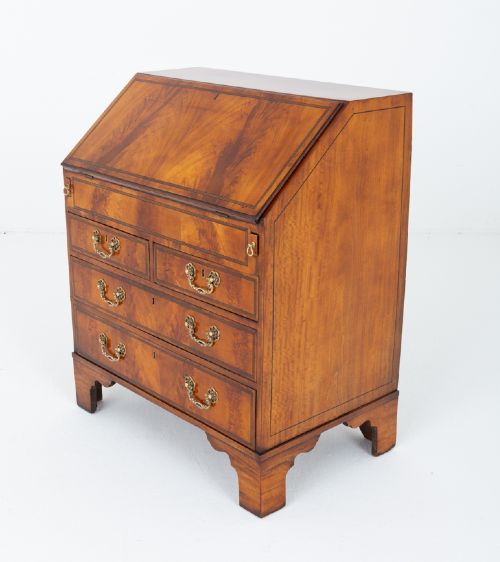
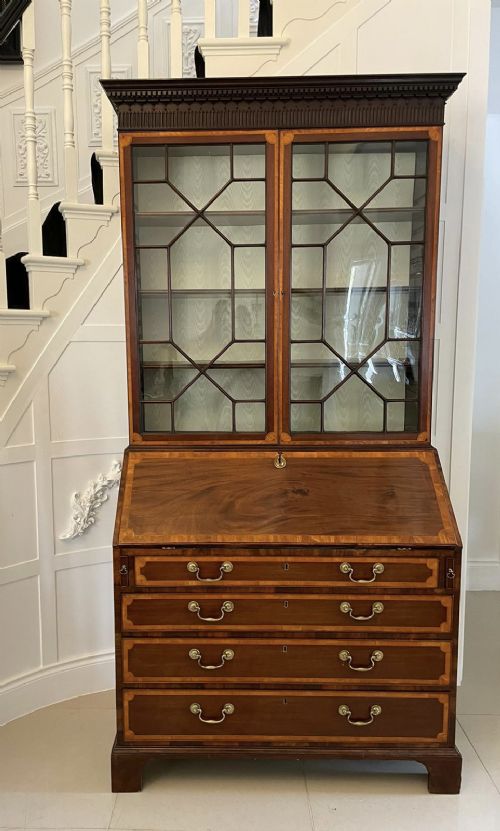
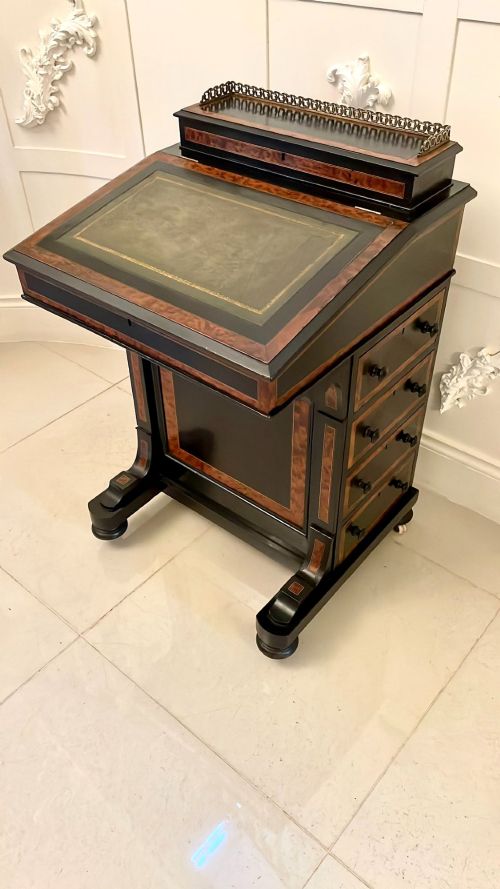
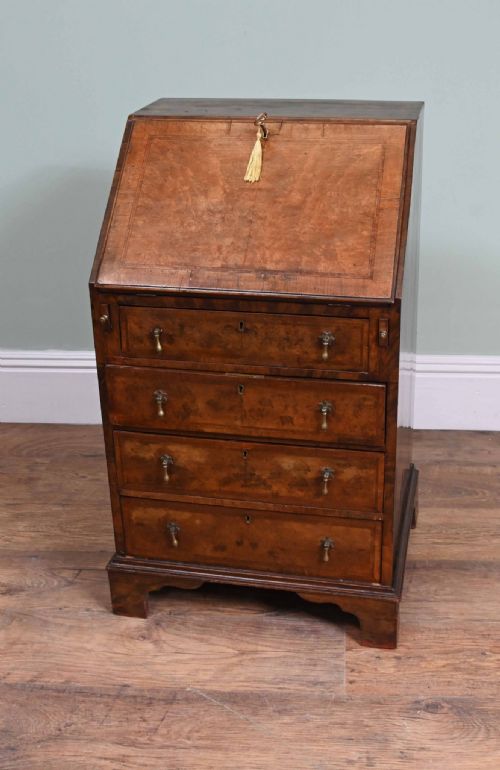


Crossbanded Writing Bureau
A crossbanded writing bureau brings timber grain to the fore, offering a practical writing slope alongside concealed compartments for paperwork.
Crossbanded Writing Bureau
A crossbanded writing bureau combines a sloping fall-front lid with internal pigeonholes and drawers, resting atop a chest of larger drawers or a table frame. When buyers search for a crossbanded writing bureau, they encounter timber furniture spanning the seventeenth century through to the Edwardian era, with Georgian and Victorian examples appearing frequently.
The primary forms on this page include walnut and oak specimens alongside mahogany and satinwood variants, incorporating stepped interiors and secret drawers. Construction spans multiple centuries of cabinet-making, reflecting shifts from seventeenth-century mulberry and early walnut pieces towards later satinwood cylinder desks and Edwardian writing tables.
How they were made
Cabinet-makers constructed these items using solid timbers such as oak and mahogany, often applying decorative veneers of walnut, burr walnut, burr yewwood, or satinwood across the exterior surfaces. Crossbanding forms a distinct border where grain patterns run perpendicular to the main panel, framing the primary timber.
Makers integrated brass hardware, including original brass handles, alongside oak-lined drawers and fitted interiors featuring stepped partitions. Inlaid wood details frequently complement the crossbanded borders to accentuate the structural lines of the fall-front and drawer fronts.
Crossbanded Writing Bureau Retail Price Guide 2026
Typical asking prices for crossbanded writing bureau among the pieces listed under this phrase on Sellingantiques today, from the lower quarter to the upper quarter. They describe what is for sale here now, not the wider market.
Listings span the 17th Century through to 1900, incorporating oak, walnut, mahogany, and satinwood forms.
What varies in quality
Quality rests in the choice of timber figure, such as burr walnut or burr yewwood, and the precision of the crossbanding applied to the borders. Superior examples exhibit harmonious grain matching across the fall-front and drawer fronts, paired with timber linings inside the drawers.
Interior complexity dictates the grade of the piece, with stepped arrangements and secret drawers marking more ambitious cabinet-making. The integrity of the original brass handles and the crispness of any inlaid wood further separate standard production from finer workshop output.
Coxed & Woster
The Crossbanded Writing Bureau Glossary
- Crossbanding
- A border of veneer applied to the edges of a panel where the grain runs at right angles to the central wood. This technique provides a decorative frame to drawer fronts and fall-front lids.
- Fall-front
- The hinged sloping lid of a bureau that lowers to serve as a writing surface. It conceals the pigeonholes and small drawers within.
- Stepped interior
- An arrangement of internal compartments and drawers arranged in tiers rising towards the back of the bureau. This feature provides structured storage for letters and documents.
- Burr walnut
- Timber taken from a growth on a walnut tree, yielding a swirling pattern of knots and eyes. Cabinet-makers prized this material for high-status veneered surfaces.
Crossbanded Writing Bureau: Frequently Asked Questions
What is a crossbanded writing bureau?
A crossbanded writing bureau is a piece of antique furniture featuring a sloping hinged lid that opens to reveal a fitted interior of small drawers and pigeonholes. The exterior surfaces are framed by distinctive borders of veneer where the wood grain runs in a perpendicular direction.
These items combine workspace and storage within a single cabinet, often standing on bracket feet or resting on a table base. The form evolved across several centuries, utilising timbers from native oak to exotic satinwood.
How do I date an old bureau?
Dating relies on examining the timber species, construction methods of the internal drawers, and the overall style of the piece. Seventeenth and early eighteenth-century examples frequently employ walnut or mulberry, while Georgian pieces often feature mahogany with inlaid details.
Later Edwardian versions introduce lighter satinwood and distinct hardware styles. Secondary woods inside the drawers and the presence of secret compartments also offer clear chronological markers.
Where should I place a bureau?
A bureau suits studies, living rooms, or bedrooms where its compact footprint provides both a writing surface and enclosed storage. Placing the piece away from direct sunlight and heat sources protects vulnerable walnut and satinwood veneers from drying out.
Sufficient floor space in front of the cabinet is necessary to allow the fall-front lid to lower fully into the horizontal writing position.
How do I care for antique veneer?
Maintaining antique veneer involves keeping ambient humidity stable and avoiding harsh cleaning chemicals or excessive moisture. Regular dusting with a soft, dry cloth preserves the polished surface of the wood without disturbing the original finish.
Applying a traditional beeswax polish occasionally helps nourish older timber surfaces, particularly on burr walnut and mahogany pieces.