

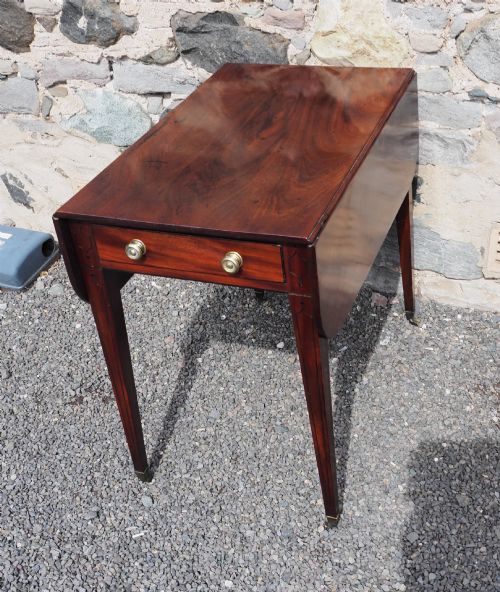
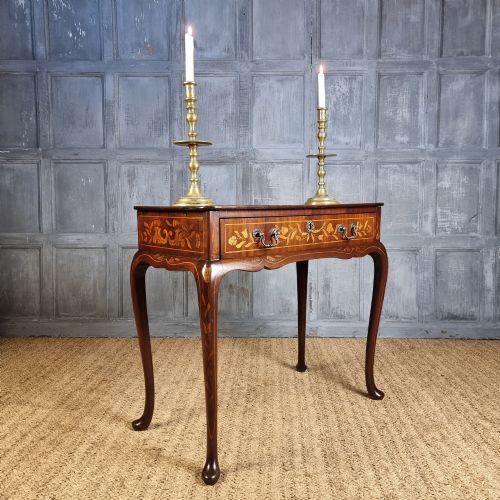
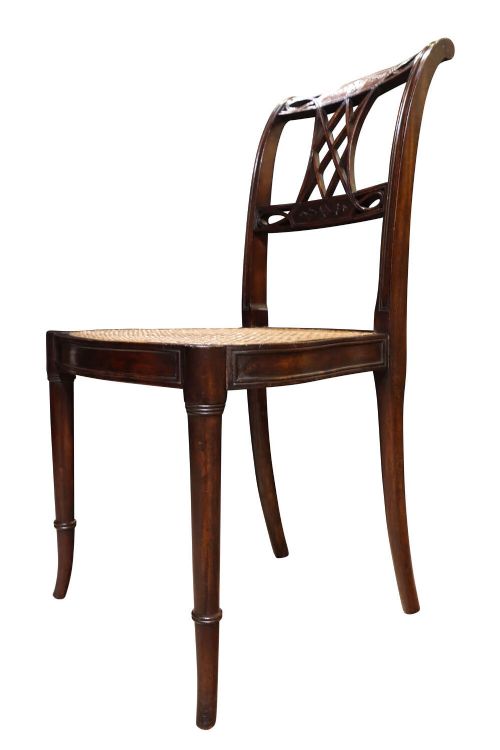
Inlaid Wooden Desk
An inlaid wooden desk brings pattern and craft into a room, offering a functional writing space framed by centuries of cabinetmaking tradition.
Inlaid Wooden Desk
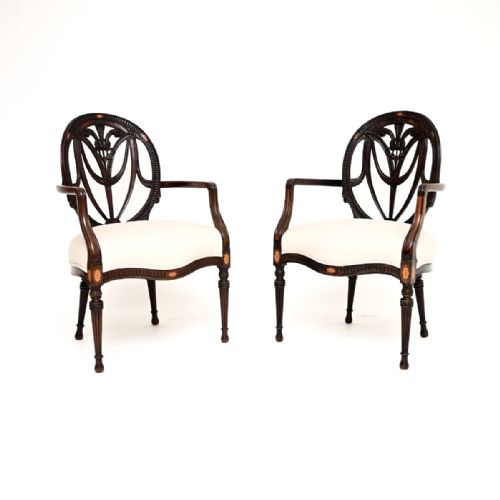
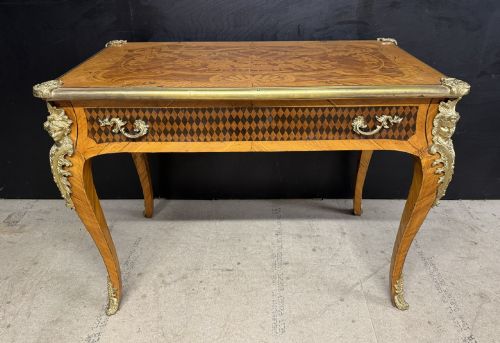
When searching for an inlaid wooden desk, a buyer looks at practical writing furniture decorated with contrasting timbers, decorative banding or marquetry. The pieces available span periods from the Georgian era through the Victorian age to the Edwardian period.
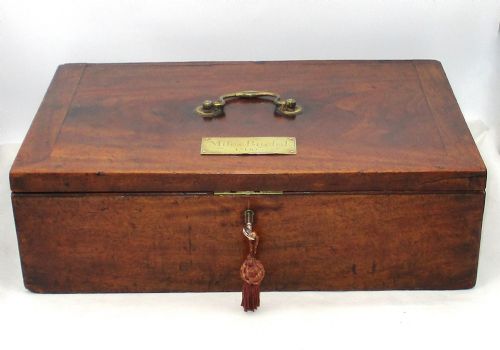
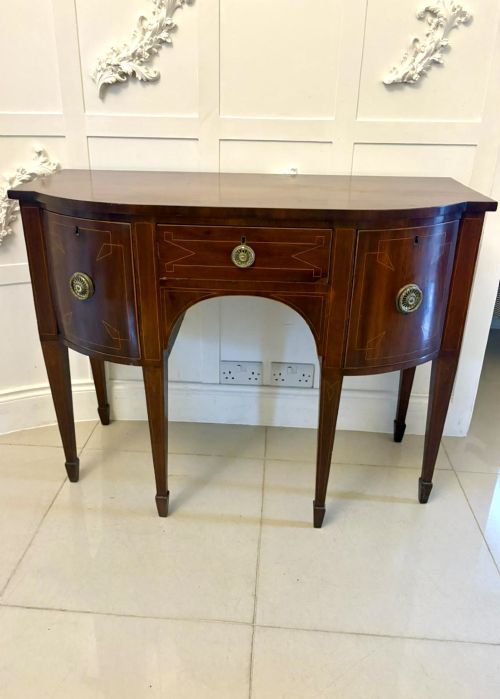
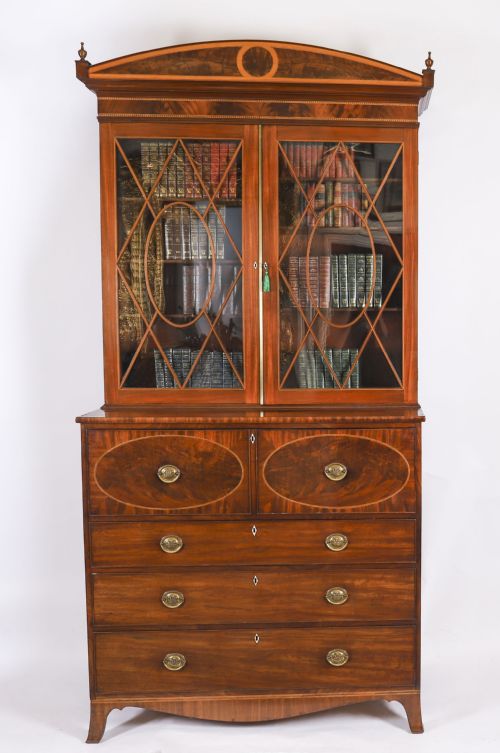
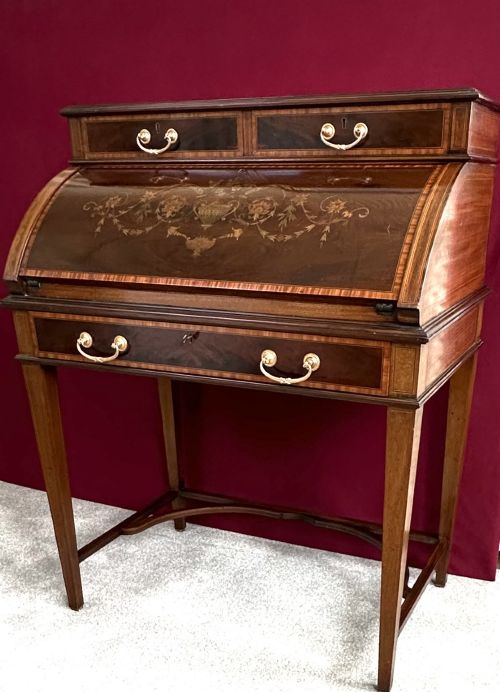
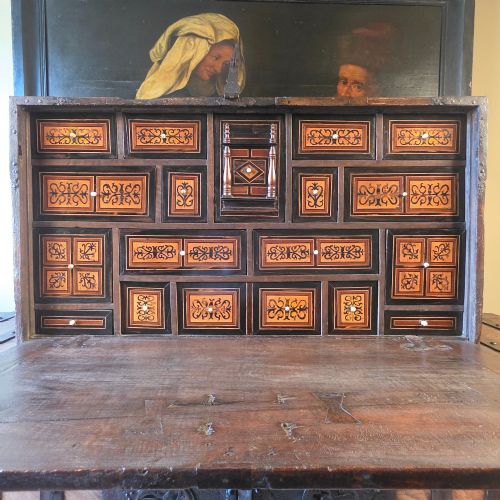
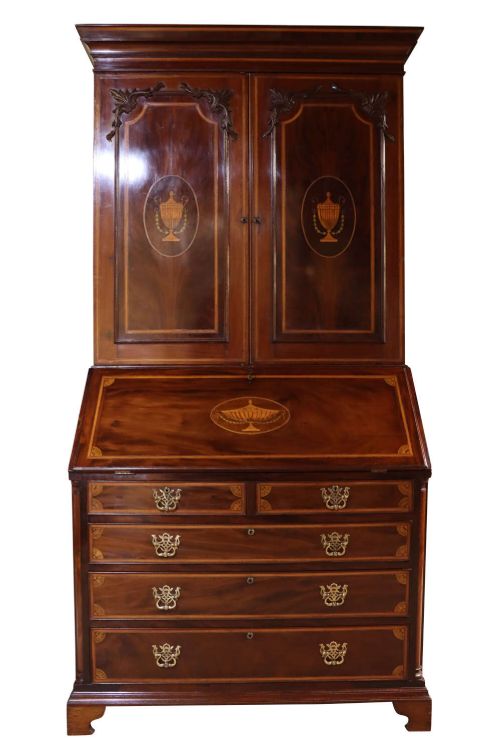
The versions most commonly met on this page include mahogany writing tables, cylinder tambour bureaux and fall-front writing desks embellished with boxwood or satinwood stringing. These surfaces combine functional drawers and writing ledges with ornamental veneer work.
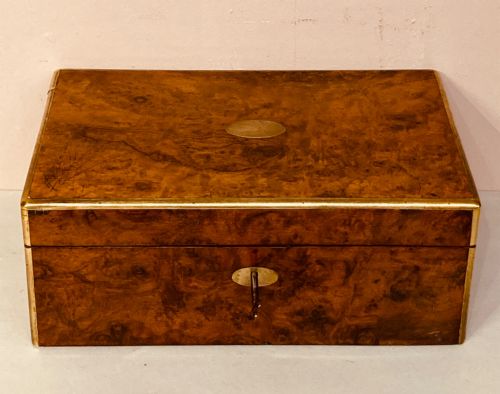
Other related forms appear in the listings, such as Victorian ebonised and burr walnut writing desks alongside Edwardian barrel-fronted examples. Each type reflects the prevailing taste of its decade for rich timber grain paired with precise geometric or floral inlay.
How they were made
Cabinetmakers constructed these desks using solid primary timbers such as mahogany, oak or walnut, often applying decorative veneers of flame mahogany, rosewood or burr walnut to the exterior surfaces. Satinwood and boxwood provided the pale contrast needed for fine stringing and banded borders.
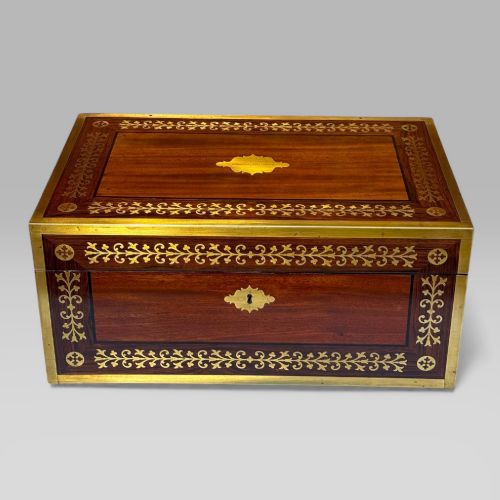
Inlay and marquetry techniques required meticulous hand-cutting of small wood pieces to fit flush into recesses carved into the primary wood. Brass mounts, escutcheons and campaign corners were frequently integrated to reinforce edges and add structural detail.
Inlaid Wooden Desk Retail Price Guide 2026
Typical asking prices for inlaid wooden desk among the pieces listed under this phrase on Sellingantiques today, from the lower quarter to the upper quarter. They describe what is for sale here now, not the wider market.
The furniture selection includes campaign writing slopes, cylinder tambour bureaux, and fall-front writing desks.
What varies in quality
Quality rests in the precision of the timber selection and the crispness of the inlay work. Finer desks display tightly figured flame mahogany or burr walnut matched symmetrically across the writing surface and drawer fronts.
The standard of execution in the stringing and floral motifs dictates the grade of the piece. Superior examples show seamless joints between contrasting woods without visible filler, alongside secondary timbers of solid oak or mahogany inside the drawers.
Heals
The Inlaid Wooden Desk Glossary
- Inlay
- A technique where pieces of contrasting timber, shell or metal are set into a recessed surface to form a decorative pattern. This differs from veneer by sitting level within a cut-out channel rather than covering the whole board.
- Marquetry
- The art of creating pictorial or decorative designs on furniture using varied veneers assembled on a paper pattern. It frequently incorporates fruitwoods and dyed timbers to render floral or scroll motifs.
- Stringing
- Thin, narrow lines of contrasting wood inlay used to outline drawers, legs or tabletops. Edwardian and Georgian cabinetmakers utilised this method to define the geometry of a desk.
- Banding
- A decorative border of veneer running along the edges of tabletops or drawer fronts, often featuring alternating grains or contrasting dark and light woods. It frames the central panel of the writing surface.
- Burr Walnut
- Timber taken from the gnarled growth of a walnut tree, yielding a swirling, highly figured grain pattern. It appears on high-grade cabinet doors and writing slopes.
Inlaid Wooden Desk: Frequently Asked Questions
How do I date an antique desk?
Dating relies on observing the secondary timbers, construction methods, hardware, and prevailing decorative styles. Georgian pieces often feature solid mahogany framing, while Edwardian examples commonly showcase lighter satinwood banding.
Cabinetry details, such as drawer linings and joinery techniques, help place a piece within periods like the 18th century, Regency, or Edwardian era.
How were these desks used?
These desks served primarily for correspondence, household administration, and keeping records. Writing slopes provided portable surfaces for writing letters before fitted bureau desks became standard in domestic rooms.
Compartments, small drawers, and pigeonholes inside the desk kept stationery, inkwells, and documents organised for daily use.
How do I care for inlaid wood?
Maintenance involves keeping wooden furniture away from direct sunlight and steady heat sources to prevent the dry veneers from lifting or splitting. Regular dusting with a soft, dry cloth preserves the finish.
Occasional application of appropriate furniture wax nourishes the timber and maintains the natural lustre of the varied wood grains and inlay.