
Period Walnut Chest
When you want a period walnut chest, you are looking at centuries of cabinet-making that combine rich timber figures with sturdy structural forms.
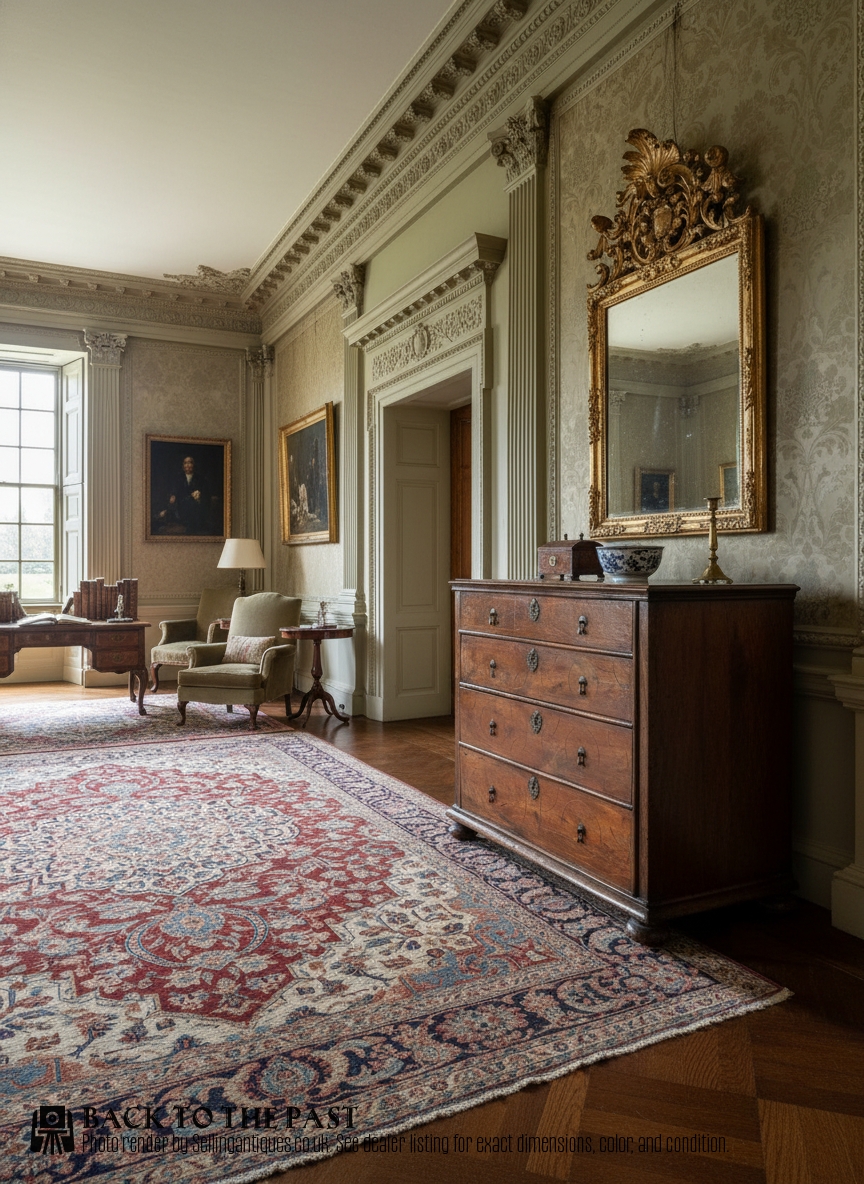
Period Walnut Chest
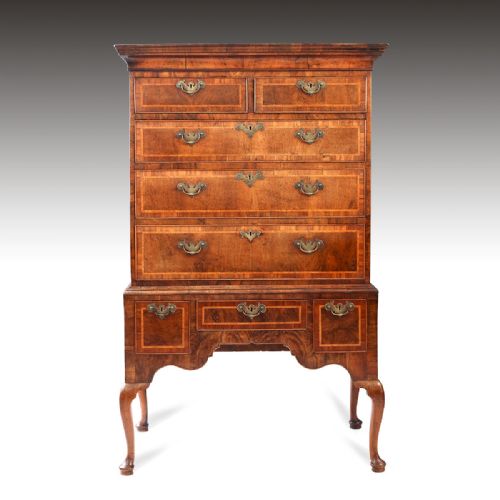
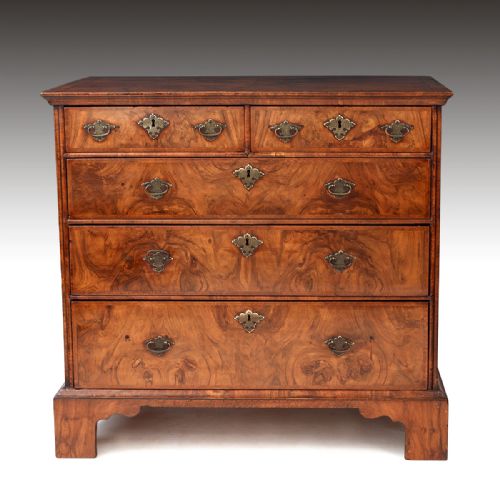
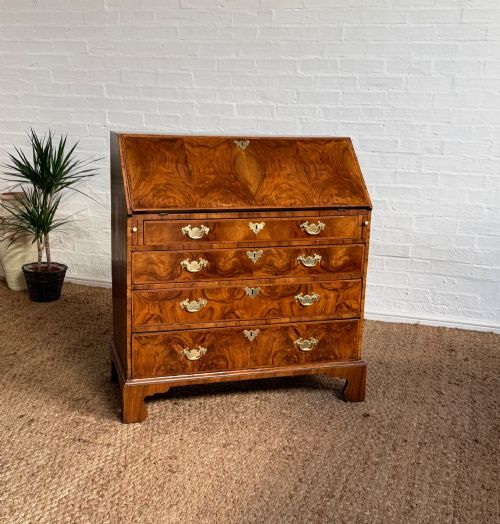
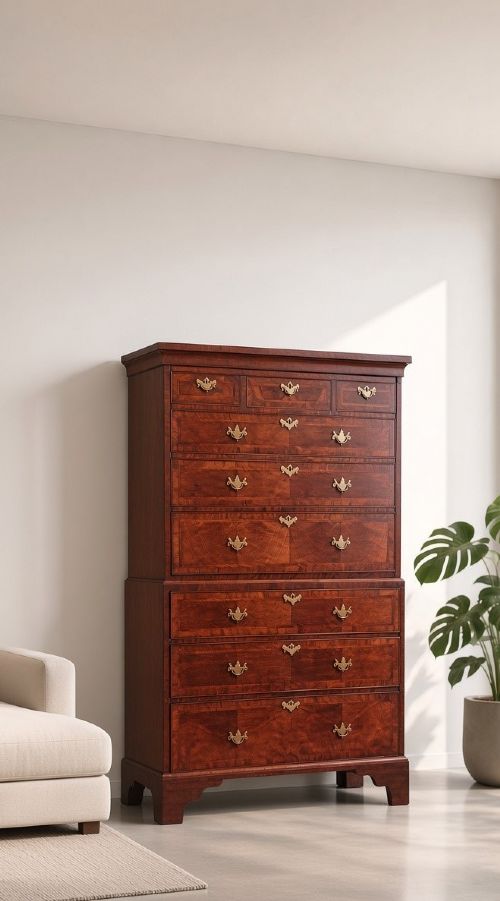
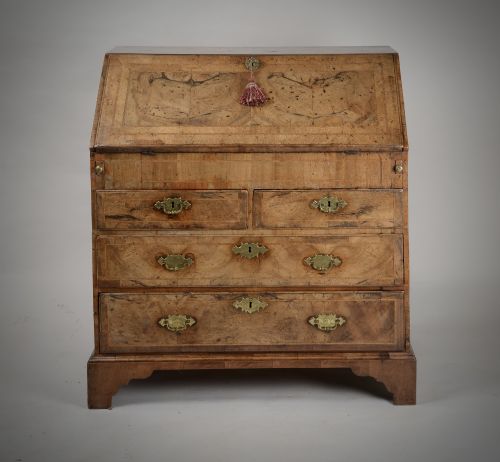
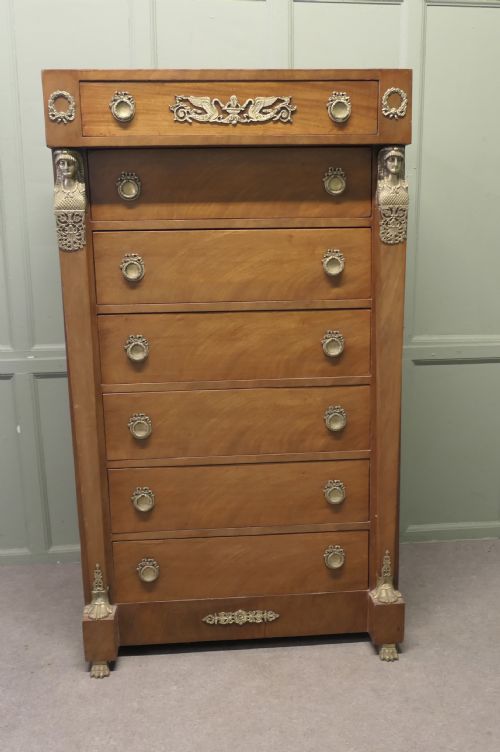
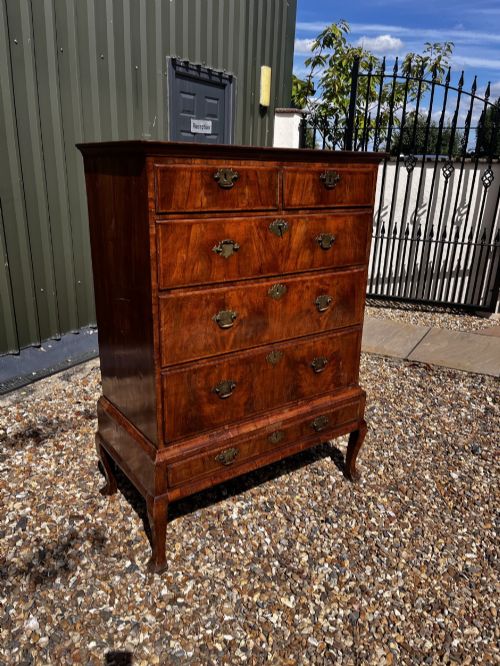
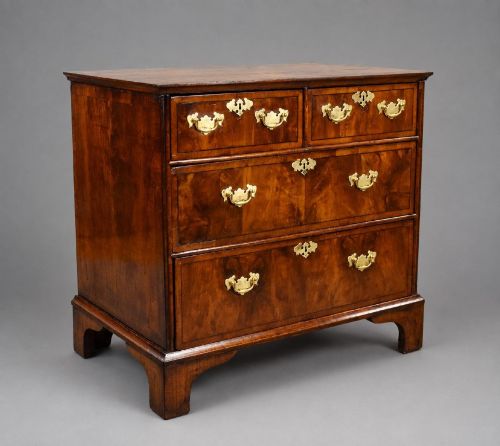
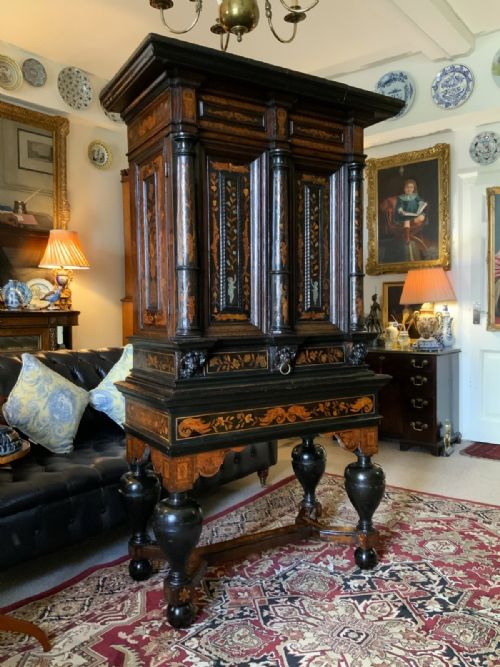
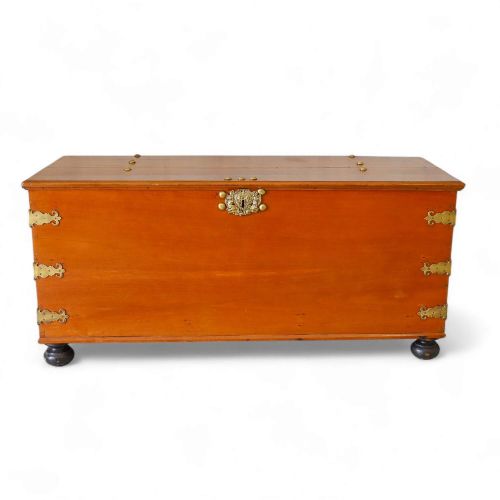
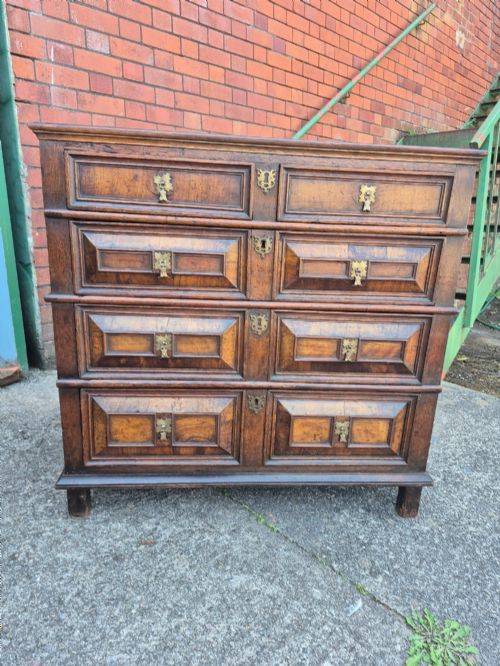
A period walnut chest encompasses a variety of domestic storage forms ranging from simple drawer units to complex chests on stands, bureaus, and tallboys. These pieces date principally from the seventeenth and eighteenth centuries, through the William and Mary, Queen Anne, and Georgian eras, with later nineteenth-century Victorian and Edwardian examples also appearing.
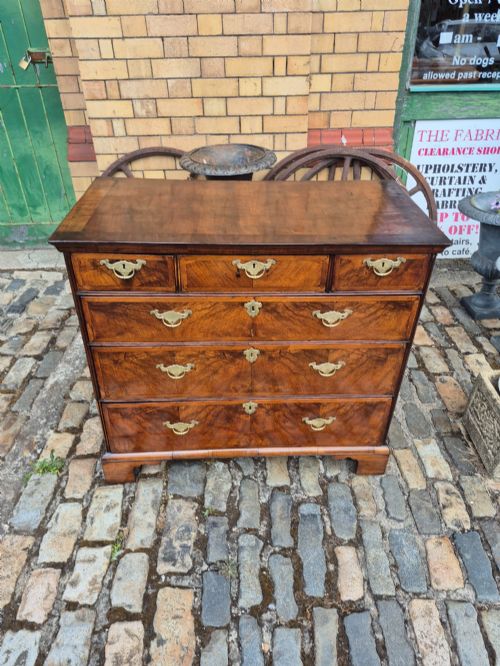
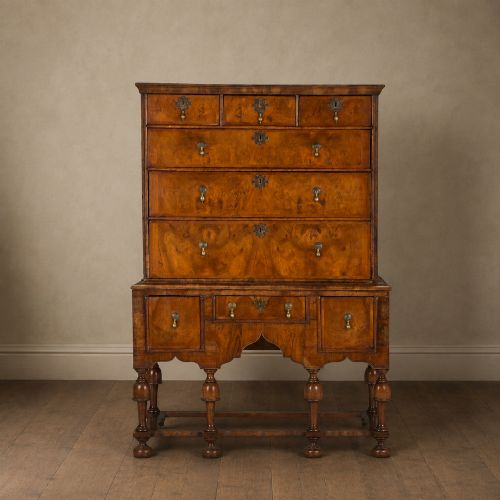
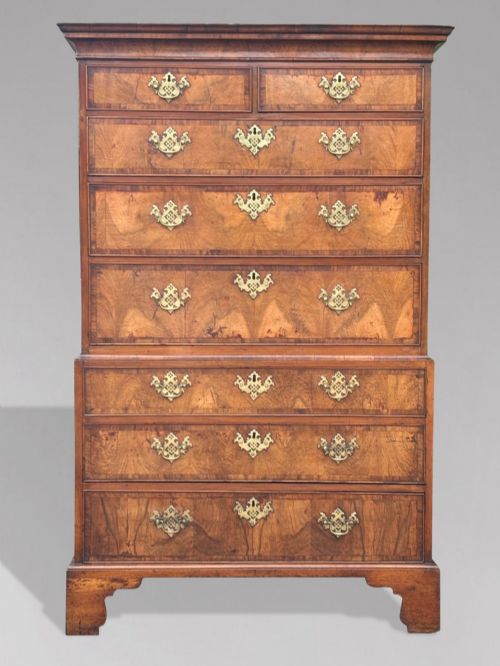
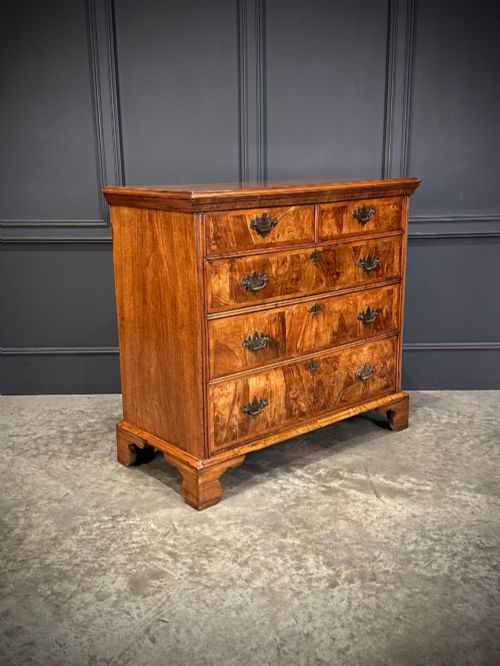
The standard chest of drawers is the most frequent form encountered, though elevated variations such as the chest on stand or chest on chest frequently appear in the listings. Timber selection defines the category, moving from early straight-grained walnut to highly figured burr walnut and marquetry-inlaid surfaces.
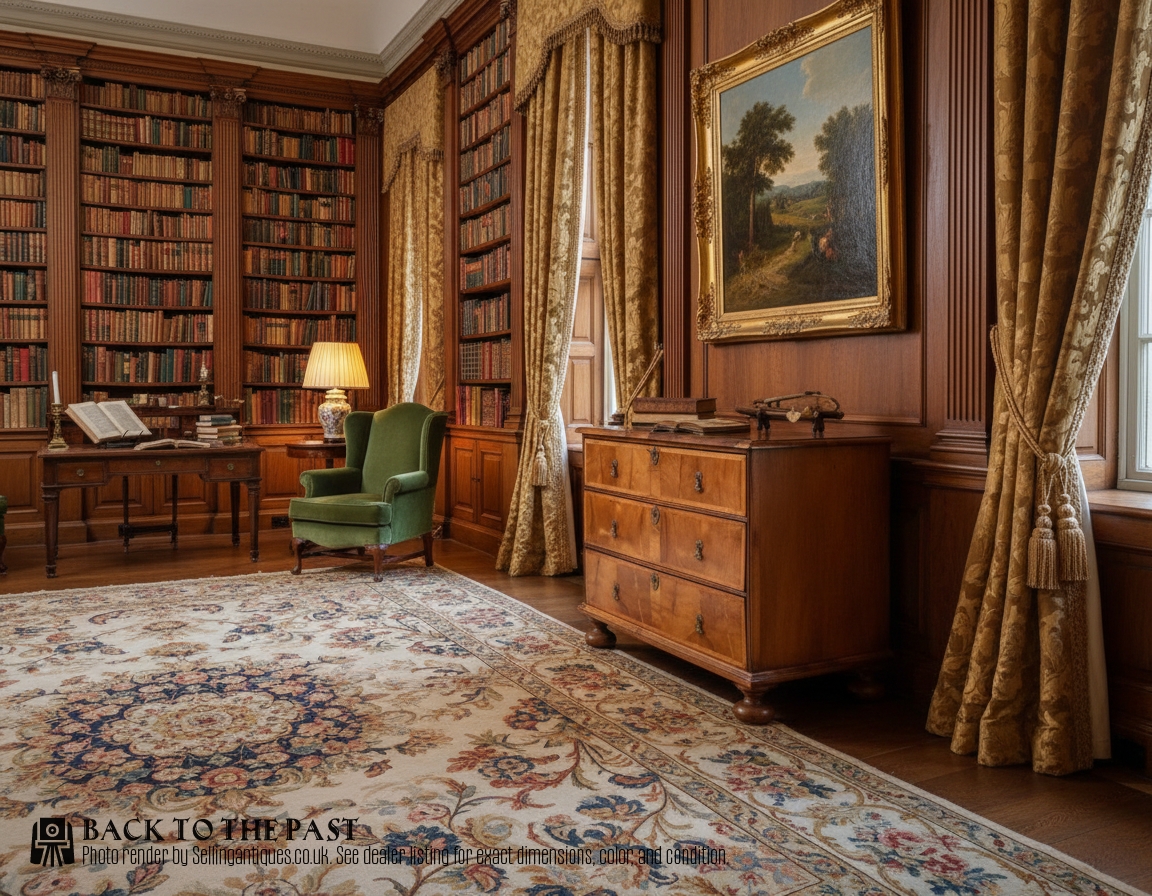
How they were made
Cabinet-makers utilised walnut veneer applied to secondary woods such as oak or pine, creating decorative grain patterns like oyster cuts or feather-banded borders. Cross-banding in boxwood or fruitwood often framed the drawer fronts, while brass drop handles and escutcheons provided functional hardware.
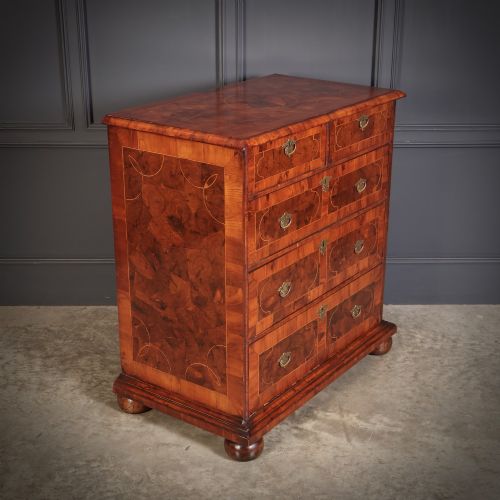
Early joinery relied on solid timber construction combined with intricate geometric inlays or marquetry panels. Surface finishing involved polishing to highlight the natural figuration and warm tones of the walnut timber.
Listings feature walnut chests spanning from the 17th century through the Georgian era to Victorian and Edwardian revivals.
What varies in quality
The distinction between tiers rests upon the choice of veneer figure, the crispness of inlay work, and the preservation of original surfaces. Pieces featuring highly figured burr walnut or intricate marquetry command attention for their visual complexity.
Proportion and structural integrity also dictate standing, with untouched patination and original brass hardware elevating specific examples. Lesser instances show heavy restoration, replaced secondary timbers, or compromised surface finishes.
The Period Walnut Chest Glossary
- Burr walnut
- Timber taken from the warted growth on a walnut tree, yielding highly swirly and decorative grain patterns. It was frequently used for veneering primary drawer fronts and cabinet doors during the seventeenth and eighteenth centuries.
- Chest on stand
- A two-part form consisting of a drawer chest raised upon an open leg frame. This elevated style is heavily associated with the William and Mary and Queen Anne periods.
- Oyster veneering
- The practice of slicing small branches crosswise to produce circular or oval patterns resembling oyster shells. This technique defined many late seventeenth-century surfaces.
- Feather-banding
- A decorative inlay technique using small strips of veneer cut diagonally and laid in a herringbone pattern around drawer perimeters. It provides a crisp border to figured walnut panels.
- Chest on chest
- A tall storage unit comprising a smaller chest stacked directly upon a larger base chest, often termed a tallboy. These pieces maximised vertical storage while displaying continuous grain matching.
Period Walnut Chest: Frequently Asked Questions
How do I date a walnut chest?
Dating relies on observing construction methods, timber choices, and hardware styles across different reigns. Seventeenth-century examples often display geometric mouldings and oyster veneer, whereas eighteenth-century pieces favour clean drawer proportions and feather-banded borders.
Secondary woods inside the drawers also offer clues, as early pieces frequently utilise oak linings. Changing fashions in brass handles and leg shapes further help narrow down the decade of manufacture.
What is a walnut bachelors chest?
A bachelors chest is a compact drawer unit featuring a fold-over top that creates a small writing surface. These pieces emerged strongly during the George I period for private correspondence.
They combine the storage capacity of a standard small chest with the utility of a desk. Their diminutive proportions make them particularly adaptable for modern living spaces.
How should I clean antique walnut furniture?
Maintenance requires gentle dusting with a dry, soft cloth to prevent abrasive particles from scratching the polished surface. Avoid modern silicone sprays, opting instead for traditional beeswax applied sparingly to nourish the dry timber.
Keep wooden chests away from direct sunlight and radiators to prevent the walnut veneer from drying out or lifting. Consistent indoor humidity protects both the primary face veneers and the underlying carcase woods.
What distinguishes burr walnut from plain walnut?
Plain walnut displays a straight, relatively uniform grain pattern derived from the main trunk of the tree. Burr walnut comes from the irregular growths on the tree, producing dense, swirling patterns that catch the light.
Cabinet-makers reserved burr veneers for the most prestigious commissions, applying them to primary display surfaces. Plain walnut was frequently utilised for structural carcases or simpler provincial furniture.