




Geometric Inlaid Chest
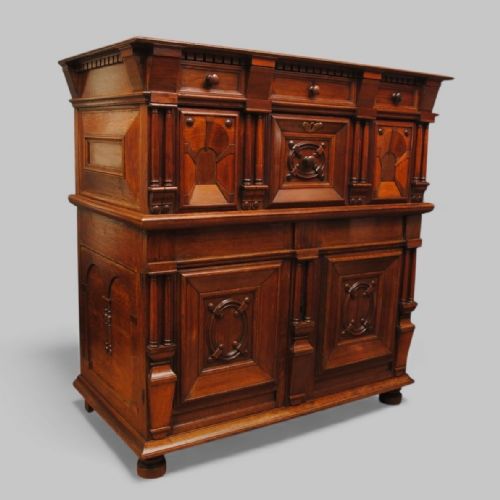
A geometric inlaid chest brings severe, rhythmic pattern to seventeenth-century timber through meticulous contrasting veneers.
Geometric Inlaid Chest
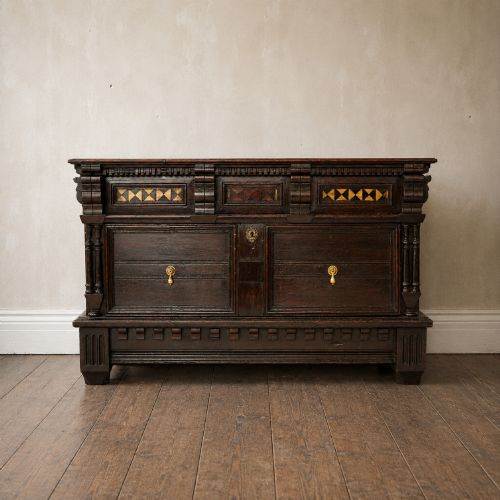
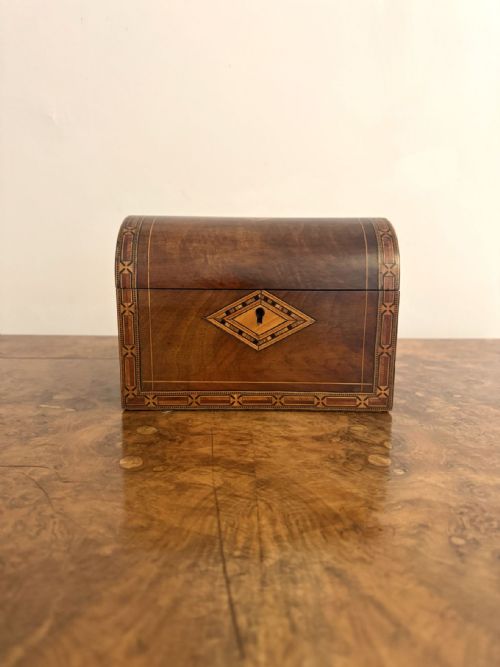
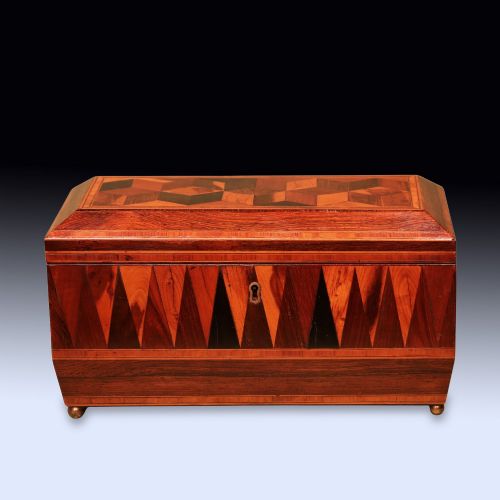
A geometric inlaid chest is a sturdy storage piece defined by structured surface decoration rather than open grain. The selection here leans heavily toward seventeenth-century forms in oak and walnut, alongside later tea caddies and smaller caskets.
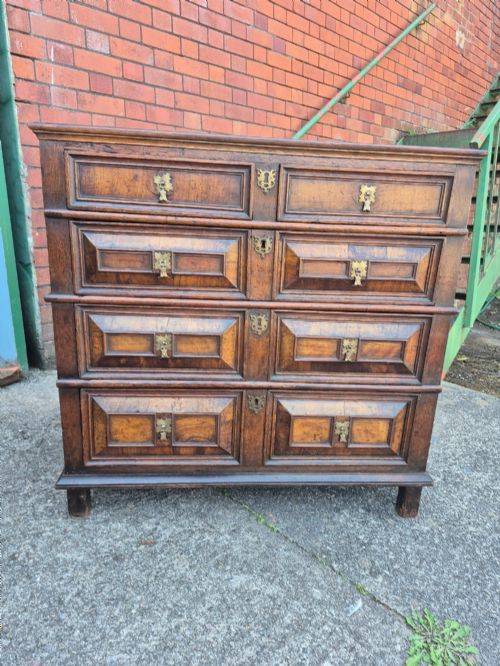
Buyers frequently encounter substantial chests of drawers split into two parts, decorated with multi-wood motifs. Pieces span seventeenth-century origins up to Victorian boxes, showing how geometric work persisted across centuries.
The dominant forms are chests of drawers, mule chests, and cabinets, supplemented by smaller items like tea caddies. Origins stretch from English workshops to Italian and Anglo-Indian contexts.
How they were made
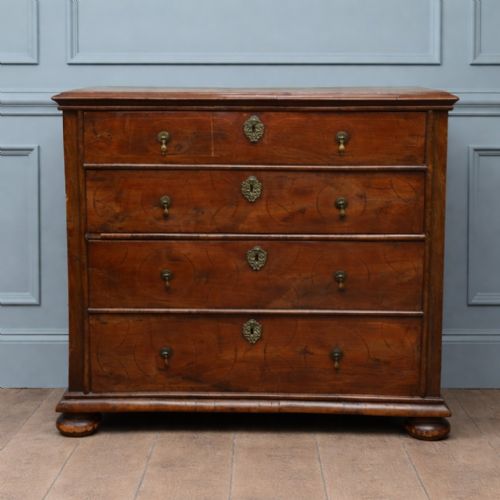
Cabinetmakers constructed these surfaces using oak and walnut as foundational woods, enriched with fruitwood, snakewood, and rosewood details. Oyster veneering sliced branch wood transversely to reveal circular patterns, laid down carefully across the carcase.
Inlay work required precise cutting of mixed woods to form interlocking shapes and mosaic bands. Brass hardware, such as escutcheons and drop handles, was fitted to complement the dark, figured timber.
Intricate specimen bone veneers occasionally slip into the mix, proving that nineteenth-century makers loved a tiny, pale surprise.
What varies in quality
Quality rests in the precision of the veneer work and the crispness of the geometric alignments. Pieces that maintain tight joints and balanced grain patterns across multiple woods show superior workshop discipline.
The choice of primary and secondary timbers dictates the overall weight and presence of the chest. Finer examples balance intricate mosaic or oyster veneer with robust structural framing that survives centuries of use.
The Geometric Inlaid Chest Glossary
- Oyster veneer
- A method of slicing branch wood across the grain to produce circular, oyster-like shapes. These sections were arranged closely together to cover large drawer fronts.
- Parquetry
- Geometric mosaic woodwork formed by fitting small blocks of coloured wood together. It creates repeating patterns on boxes and larger furniture surfaces.
- Mule chest
- A storage chest fitted with one or more drawers beneath the main compartment. This form bridges the traditional coffer and the modern chest of drawers.
- Escutcheon
- A protective plate surrounding a keyhole, frequently cast in brass on these pieces. It anchors the central axis of drawer fronts and cabinet doors.
Geometric Inlaid Chest: Frequently Asked Questions
What is a geometric inlaid chest?
A geometric inlaid chest is a storage furniture piece featuring patterned wood veneers arranged in strict, repeating shapes. These items rely on contrasting tones of walnut, oak, and fruitwood to build visual depth.
Most examples date from the seventeenth century, employing techniques like oyster veneering and parquetry to ornament drawer fronts and lids.
How do I date a geometric chest?
Dating relies on construction methods, timber choices, and hardware styles. Early pieces from the seventeenth century often feature oak frames with walnut or fruitwood veneers.
Later items, such as Victorian boxes, utilise rosewood and distinct mosaic banding. Comparing the internal construction to known period examples helps clarify the date.
Where were these chests made?
The pieces originate from various regions including English workshops, Italian ateliers, and Anglo-Indian production centres. Each region brought distinct timber combinations and decorative preferences to the form.
English makers favoured oak and walnut foundations, while Italian and continental examples often displayed diverse fruitwood and parquetry arrangements.
How do I care for inlaid wood?
Inlaid furniture requires stable indoor humidity and protection from direct sunlight to prevent veneer lifting. Regular dusting with a dry cloth keeps the surface clean without moisture damage.
Avoid placing these items near heat sources that might dry out the old timbers and adhesives holding the geometric patterns together.