

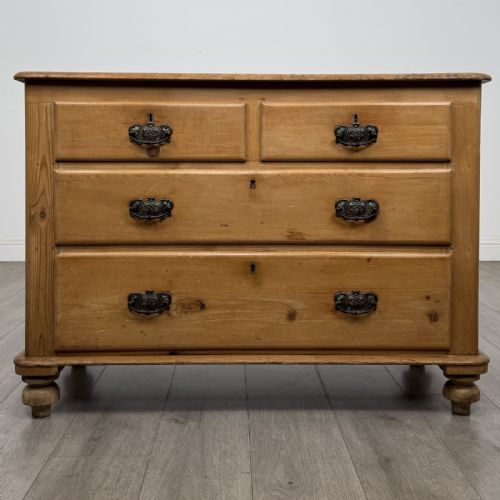
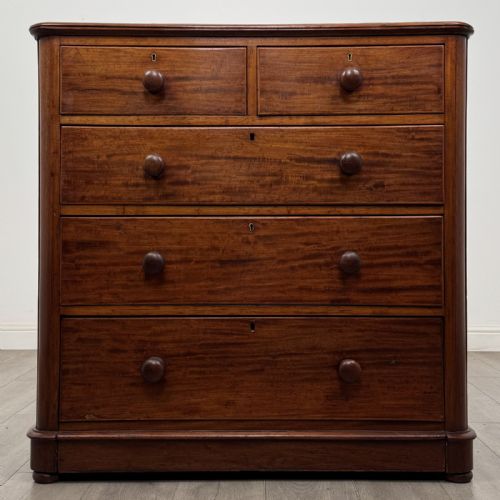
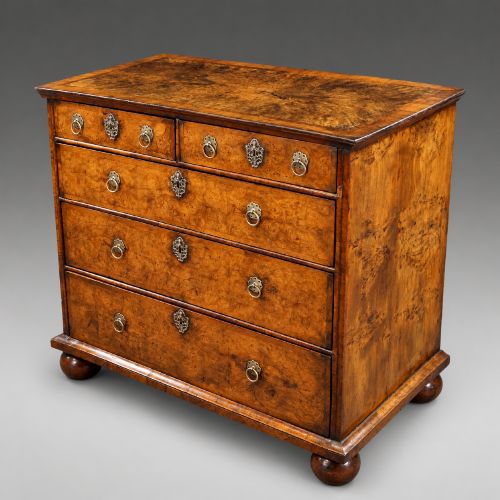
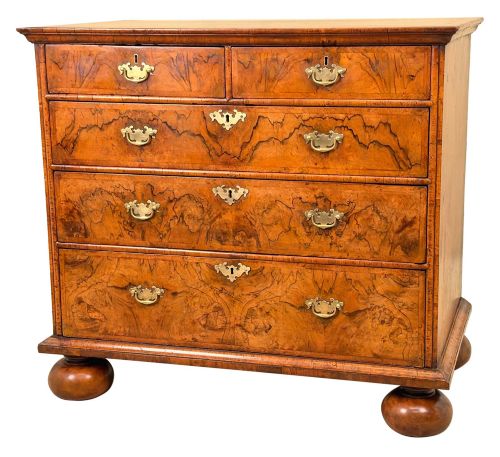
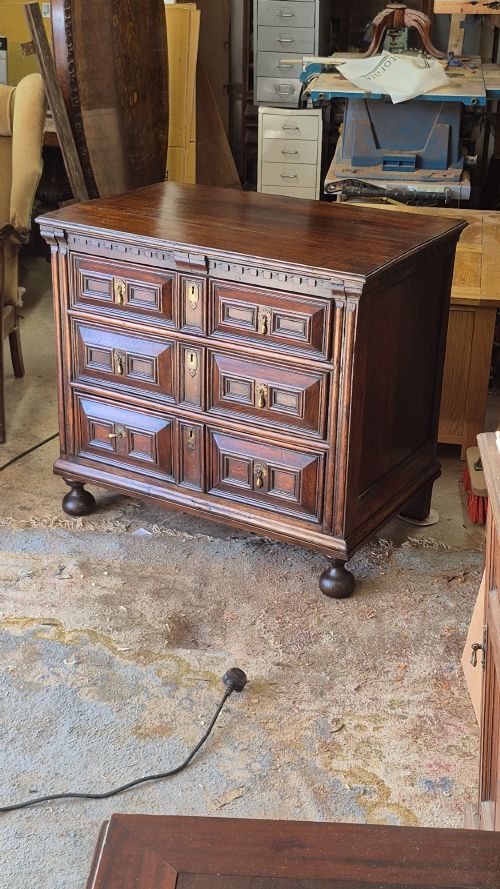
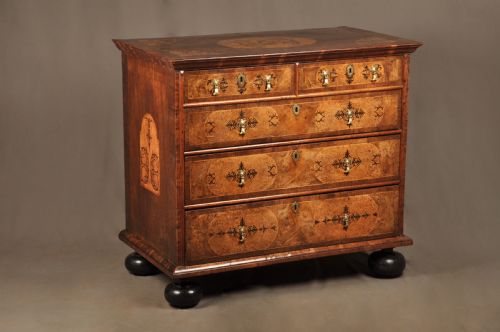
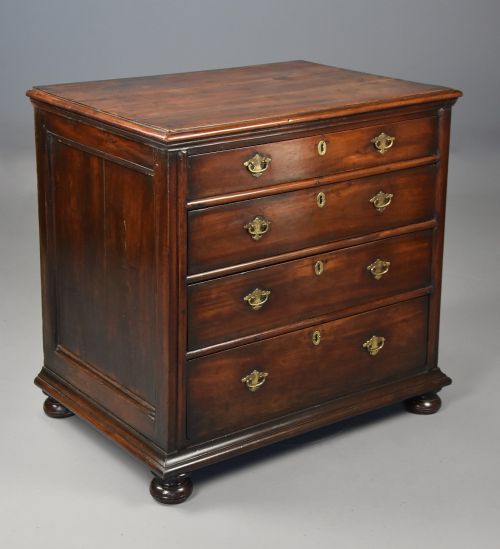

Antique Chest on Bun Feet
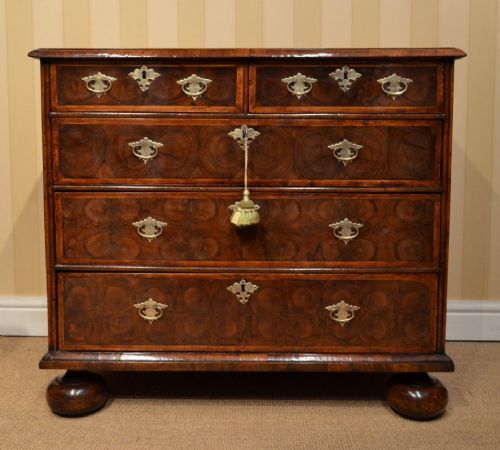
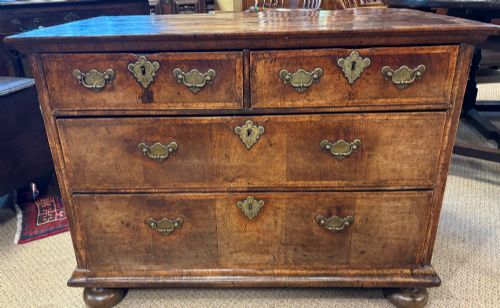
An antique chest on bun feet is a heavy timber storage piece elevated on turned wooden spheres, prized for warm patination and period joinery.
Antique Chest on Bun Feet
An antique chest on bun feet brings tangible domestic history into a room through dense timbers and practical drawer configurations. The selections here centre predominantly on seventeenth-century and eighteenth-century examples, alongside later Victorian interpretations.
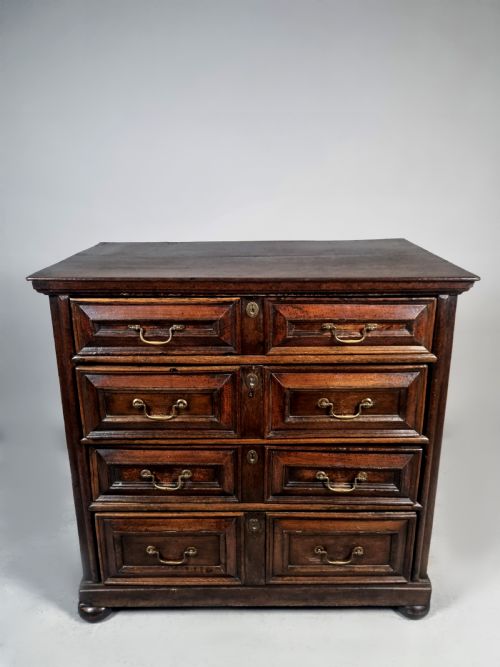
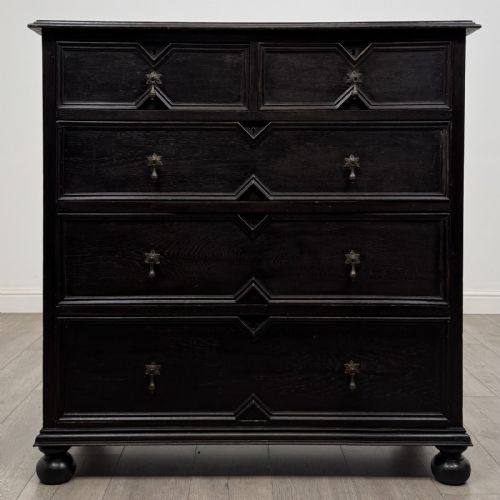
Buyers encounter walnut, oak, and fruitwood bodies organised as chests of drawers, blanket boxes, bureaux, and cabinets on chests. William and Mary and Queen Anne styling dominates the early pieces, showing distinct regional proportions and surface treatments.
Materials and construction
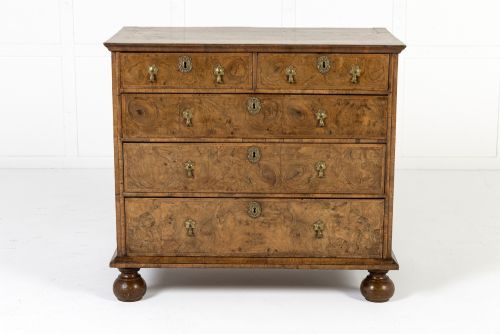
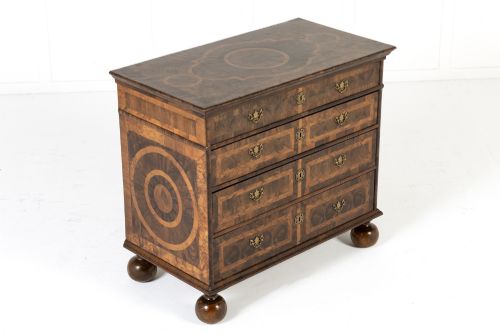
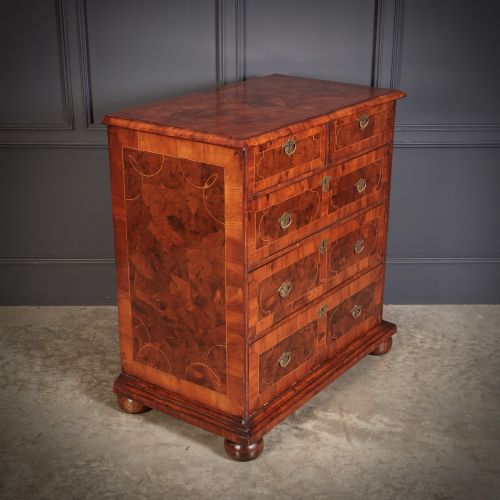
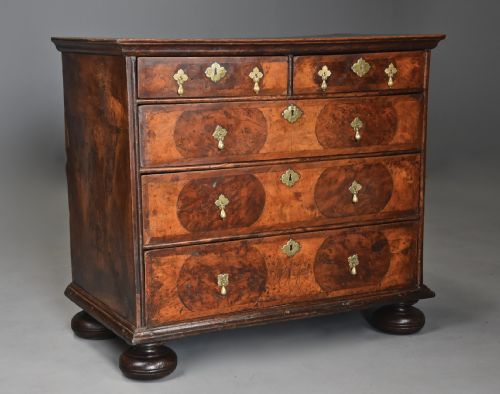
Cabinet makers utilised solid oak and walnut for structural integrity, often applying decorative veneers like oyster cuts of olive, laburnum, or walnut to primary surfaces. Marquetry inlay utilising boxwood and floral motifs decorates advanced panels from the seventeenth century.
Brass drop handles and escutcheons secure the drawer fronts, while the characteristic bun feet elevate the heavy carcass from damp floors. Geometric mouldings and cross-banding frame the drawer faces of the finest walnut and burr amboyna examples.
Antique Chest on Bun Feet Retail Price Guide 2026
Typical asking prices for chest on bun feet among the pieces listed under this phrase on Sellingantiques today, from the lower quarter to the upper quarter. They describe what is for sale here now, not the wider market.
Listings span seventeenth-century, eighteenth-century, and Victorian periods, constructed in walnut, oak, fruitwood, yew, and mahogany.
Judging the execution
Quality rests in the integrity of the timber selection and the precision of the veneer work across the primary elevations. Pieces featuring complex arabesque marquetry or symmetrical oyster cutting demonstrate higher workshop ambition than plain panelled counterparts.
The survival of original surface finishes, patination, and matching brass hardware distinguishes untouched examples from those altered over centuries of domestic use.
The Antique Chest on Bun Feet Glossary
- Oyster veneer
- Circular slices cut across small branches to create repeating patterned discs across a surface.
- Bun foot
- A spherical or slightly flattened turned wooden foot supporting the base of heavy cabinetry.
- Marquetry
- Inlaid pieces of wood fitted into a veneer to form decorative patterns or pictorial scenes.
- Escutcheon
- A protective plate surrounding the keyhole of a drawer or cabinet door.
- Bureau
- A sloping desk lid covering internal pigeonholes, sitting atop a chest of drawers.
Antique Chest on Bun Feet: Frequently Asked Questions
How do I identify William and Mary pieces?
William and Mary furniture typically exhibits rich walnut surfaces, geometric mouldings, and elaborate marquetry inlay work.
These pieces often stand on turned bun feet and utilise contrasting woods like boxwood to accentuate floral or arabesque designs.
Are these chests suitable for daily use?
These chests offer practical storage capacity through deep drawer configurations designed for domestic linens and clothing.
Careful placement away from direct heat sources protects the fragile historic veneers and solid timber carcasses.
What woods were used in these pieces?
Cabinet makers relied primarily on native oak and walnut for the foundational structure and exterior surfaces.
More decorative examples incorporate fruitwood, yew, laburnum, burr walnut, and boxwood inlay.