
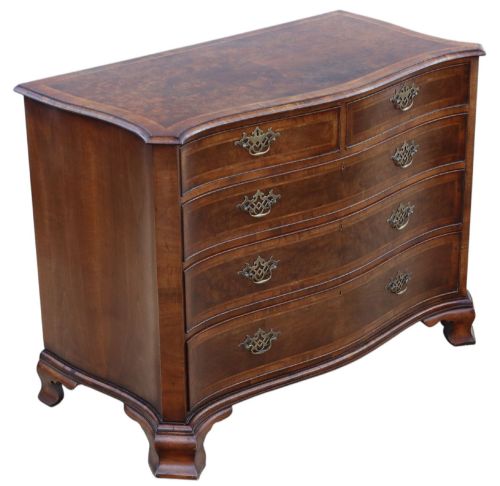
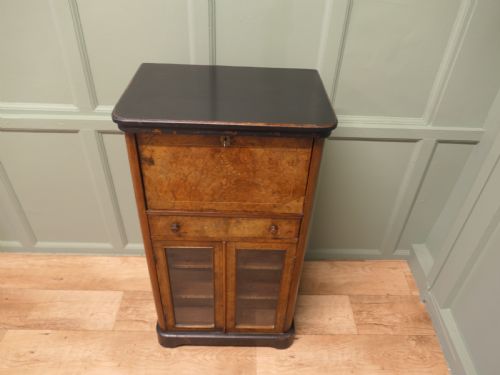


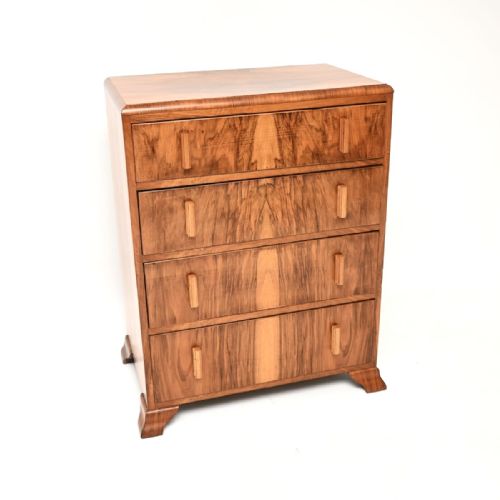
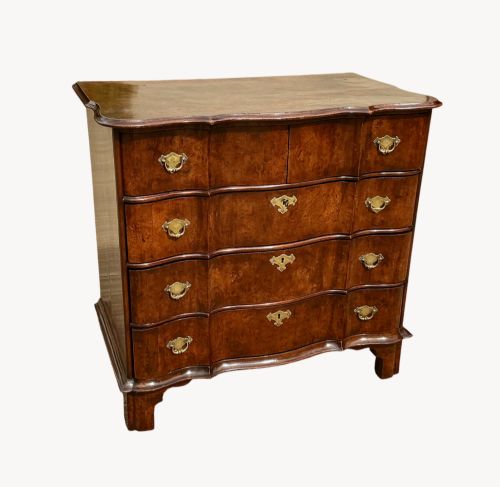
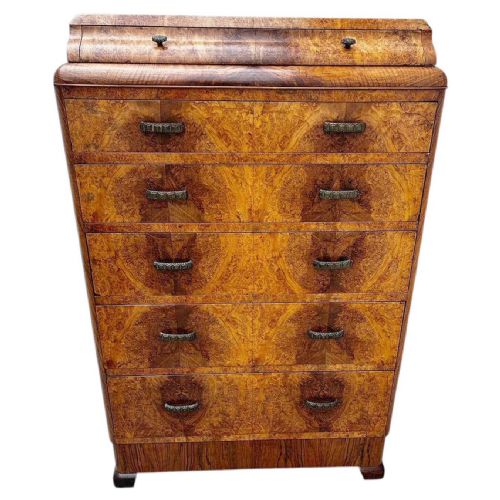
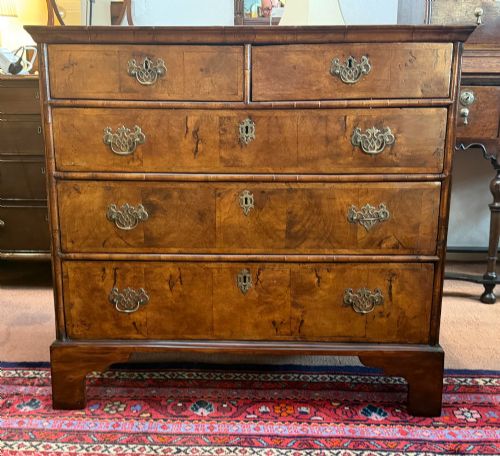
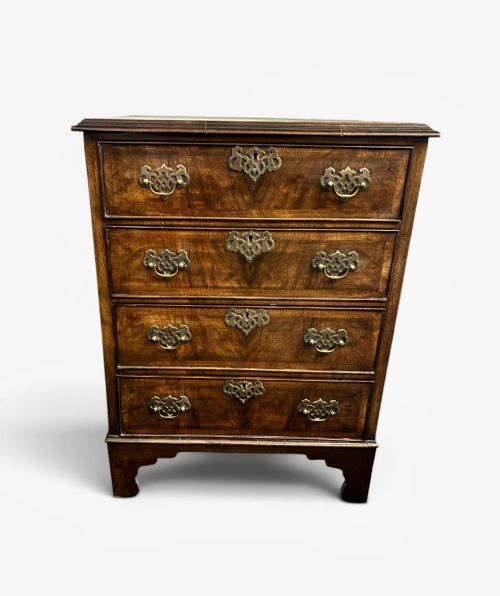
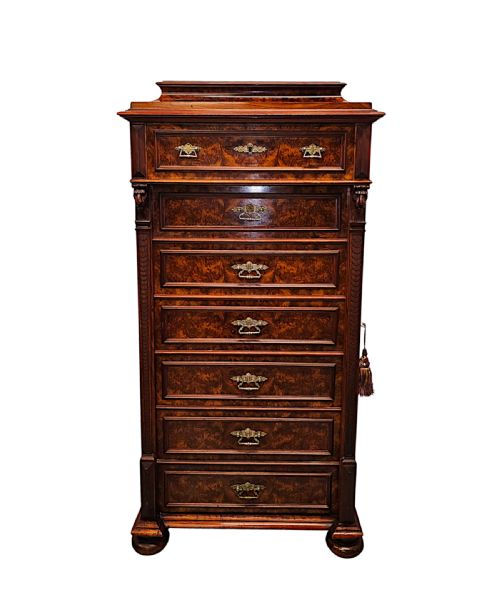
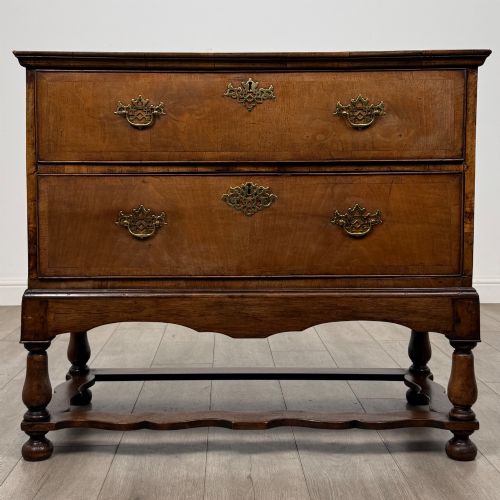
Brown Walnut Storage Chest
A brown walnut storage chest brings rich grain and substantial presence to a room, offering both character and practical capacity.
What these pieces are
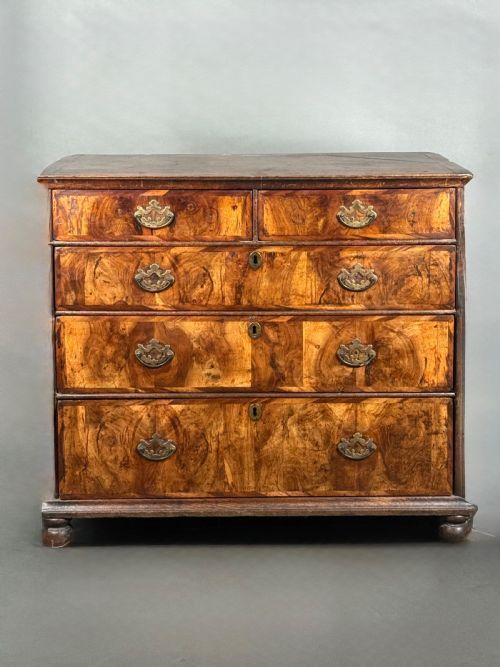
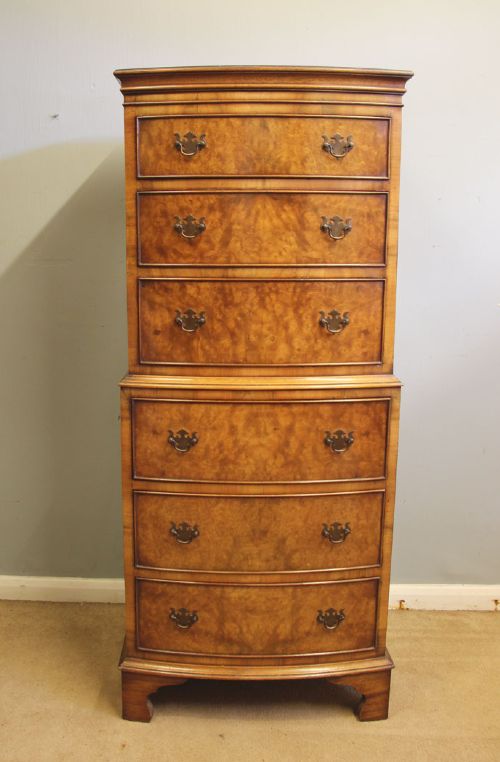
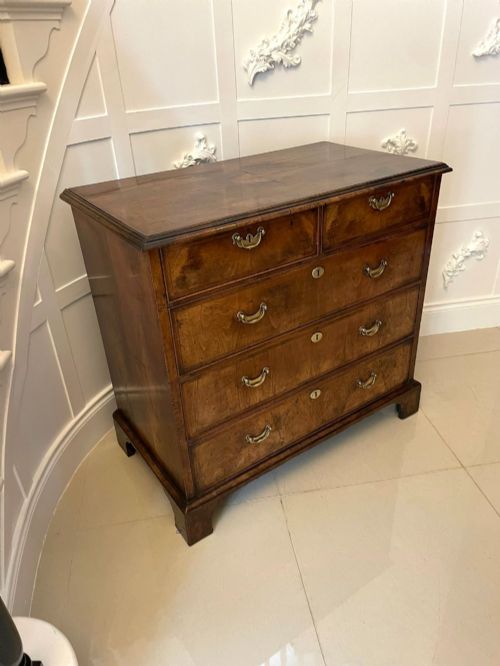
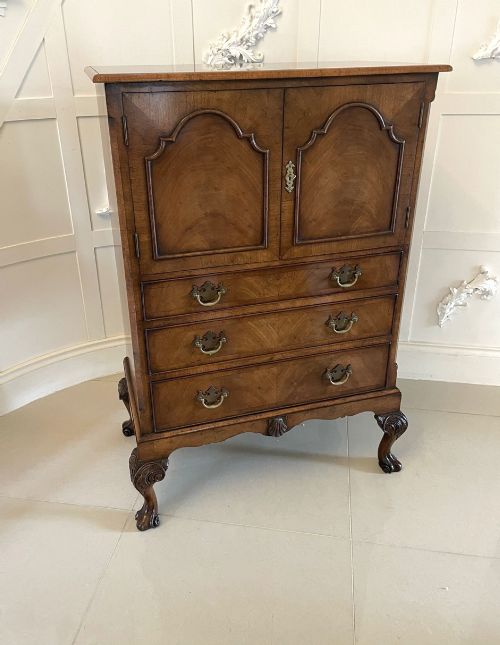
A brown walnut storage chest encompasses a varied group of functional furniture pieces designed to hold belongings while displaying the distinctive grain and deep tones of walnut. When exploring a brown walnut storage chest, buyers encounter forms ranging from Georgian chests of drawers and George III chests on stand to early twentieth-century cabinets and iron-bound trunks.
Most pieces on offer utilise traditional cabinetry forms such as chests of drawers, trunks and coffers, often enhanced by decorative veneers or specialised hardware. Each format provides a distinct approach to domestic organisation, rooted in historical periods from the eighteenth century to the early twentieth century.
How they were made
Maker construction relies heavily on solid walnut, burr walnut and oyster veneer applied over secondary timbers such as oak, creating patterned surfaces across the drawer fronts and lids. Workshops selected timber for its rich figure, often arranging veneer cuts symmetrically to accentuate the natural grain patterns.
Hardware details such as brass handles and escutcheons, alongside iron binding, reinforce the structural integrity and security of trunks and chests. Cabinetmakers employed dovetail joinery for drawers and sturdy internal framing to ensure the pieces endured daily domestic use.
Retail Price Guide 2026
Typical UK retail prices for brown walnut storage chest, calculated from the Sellingantiques database of over a million retail prices indexed since 2003. This retail price guide relies exclusively on Sellingantiques data; no external sources or auction records are used, so the figures do not describe the wider market.
Listings feature pieces spanning the Georgian era to 1930, utilising walnut, burr walnut, oyster veneer, brass, iron, oak and marble.
What varies in quality
The standard of a brown walnut storage chest rests in the choice of timber figure, particularly the complexity of burr walnut or the precision of oyster veneer work. Pieces that showcase thoughtfully matched grain patterns across their primary surfaces demonstrate a higher level of cabinetmaking ambition.
Structural refinement also separates examples, seen in the harmony of proportions between a chest and its stand, or the integration of marble tops on French commodes. Original brass hardware and well-executed internal drawer construction further distinguish the finer pieces in this category.
The Brown Walnut Storage Chest Glossary
- Burr walnut
- A decorative timber veneer harvested from the warted growths on walnut trees, prized for its swirling, highly figured grain patterns. It frequently graces the drawer fronts of eighteenth-century and later luxury furniture.
- Oyster veneer
- Thin slices of branch wood cut transversely to produce small, circular or oval motifs resembling oyster shells. Cabinetmakers arranged these closely together to create intricate, repeating patterns across cabinet surfaces.
- George III
- The period of British design spanning the reign of George III, characterised by refined proportions, classical restraint and high-quality cabinetmaking. Pieces from this era often utilise figured walnut or mahogany.
- Commode
- A low French chest of drawers or cabinet, frequently topped with marble and styled with decorative mounts. This form brings continental elegance to traditional storage furniture.
- Dovetail
- A traditional interlocking joint used in drawer construction, known for its tensile strength and resistance to being pulled apart. Fine, tight joints indicate careful hand craftsmanship.
Frequently Asked Questions
What periods do these chests cover?
The pieces span from the eighteenth century through the Georgian era up to the early twentieth century, including items from the 1910s, 1920s and 1930s.
This broad timeline means buyers can find both formal eighteenth-century designs and more domestic twentieth-century interpretations.
How do I care for walnut veneer?
Walnut veneer benefits from stable room temperatures and protection from direct sunlight, which can fade the warm brown tones over time. Regular dusting with a soft, dry cloth preserves the finish.
Applying occasional appropriate wax polish helps nourish the wood and maintain its subtle sheen without buildup.
Are these chests suitable for daily storage?
These pieces were built precisely for household storage, offering deep drawers, lidded trunks or cabinet compartments for linens, garments or papers. Their robust construction suits everyday use.
Internal configurations vary by form, from simple trunk cavities to multi-drawer arrangements suited to modern organisation.
What is a chest on stand?
A chest on stand combines an upper storage section with a supporting lower frame or stand, often raised on legs. This elevated form lightens the visual weight of the furniture.
Originating in earlier stylistic periods, this format places storage at a convenient height while showing off the timber of the base.