
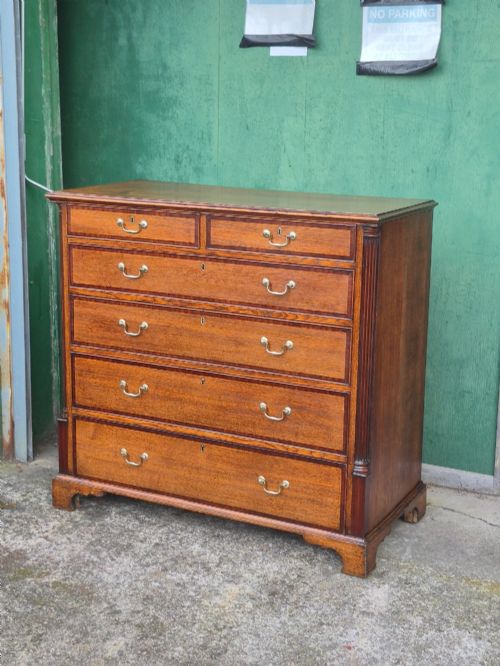
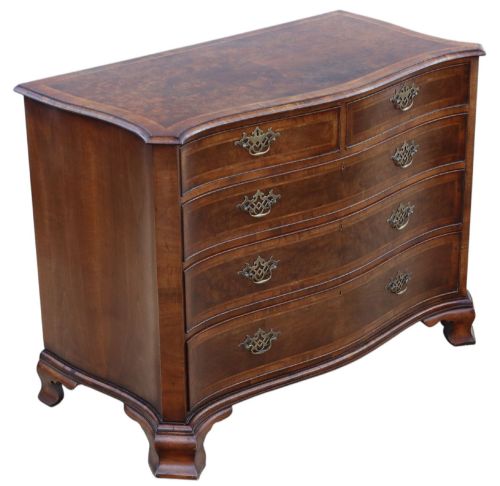
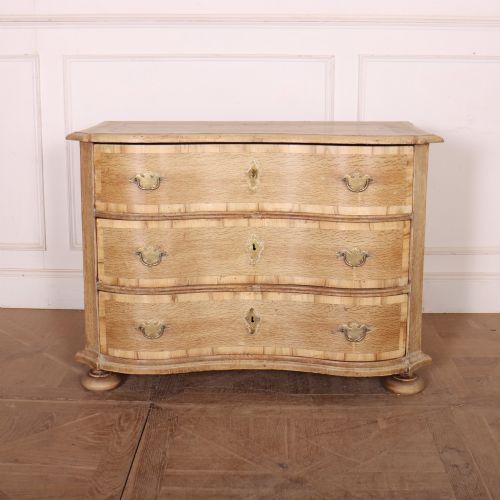
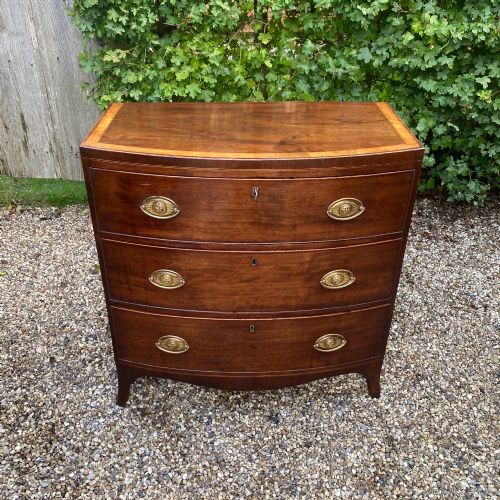
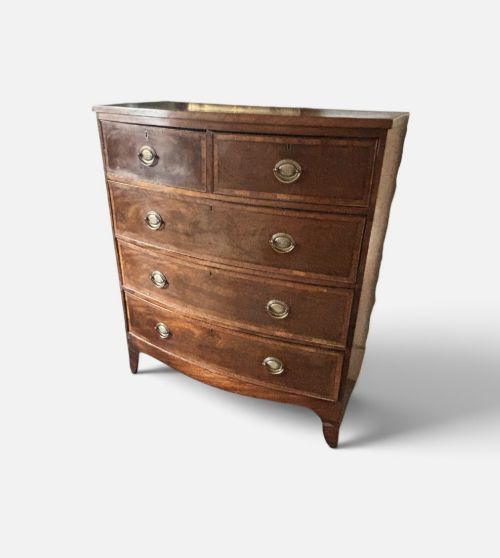
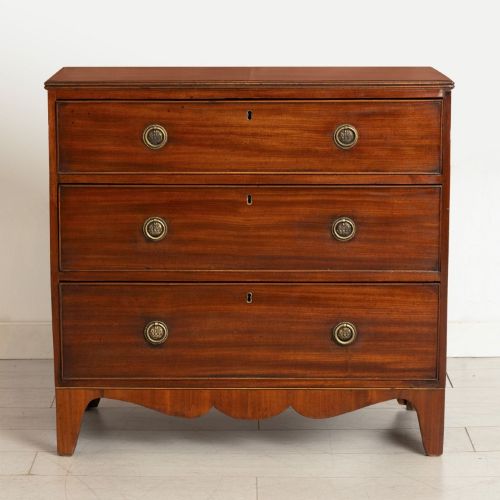
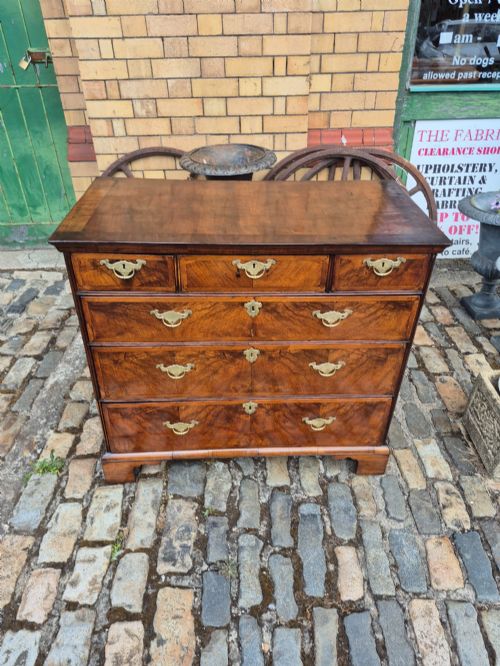
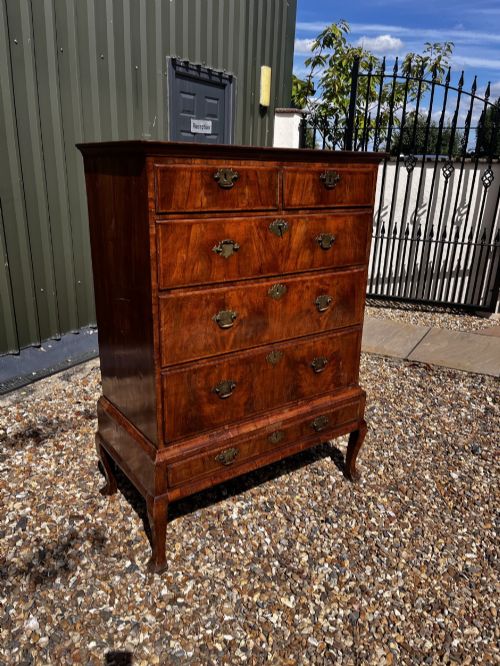

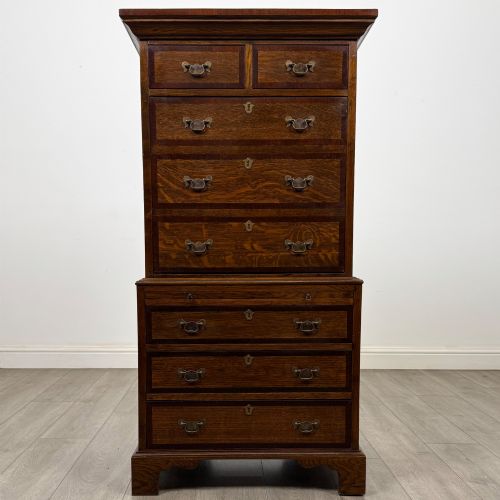
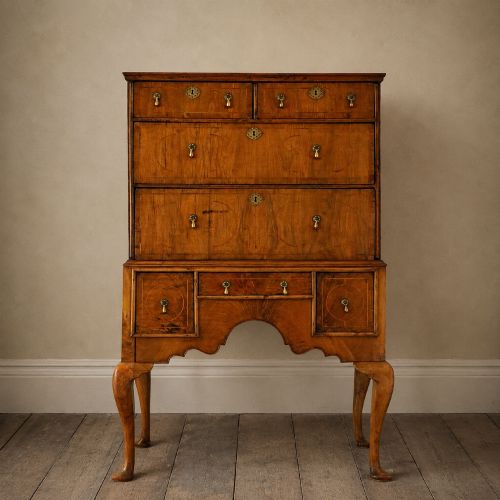
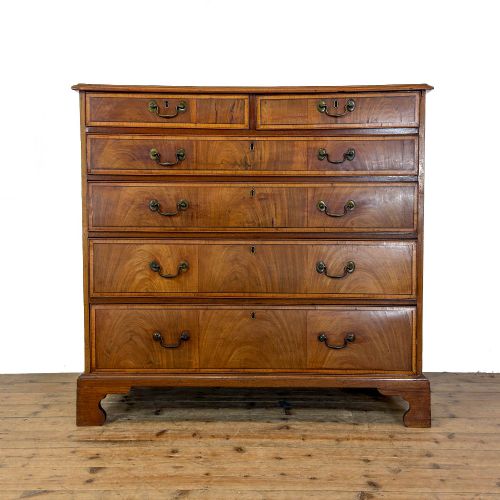
Antique Crossbanded Chest
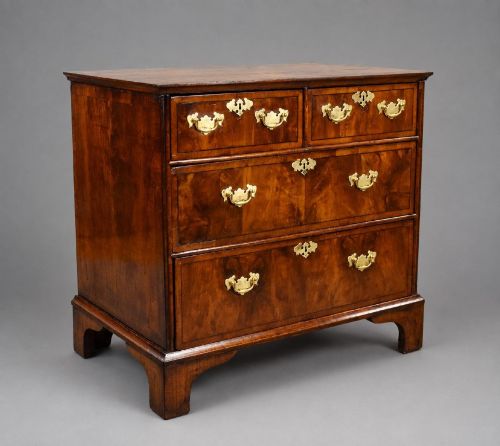
An antique crossbanded chest offers cabinet work framed in contrasting timber borders, bringing distinct figure to drawers and tops.
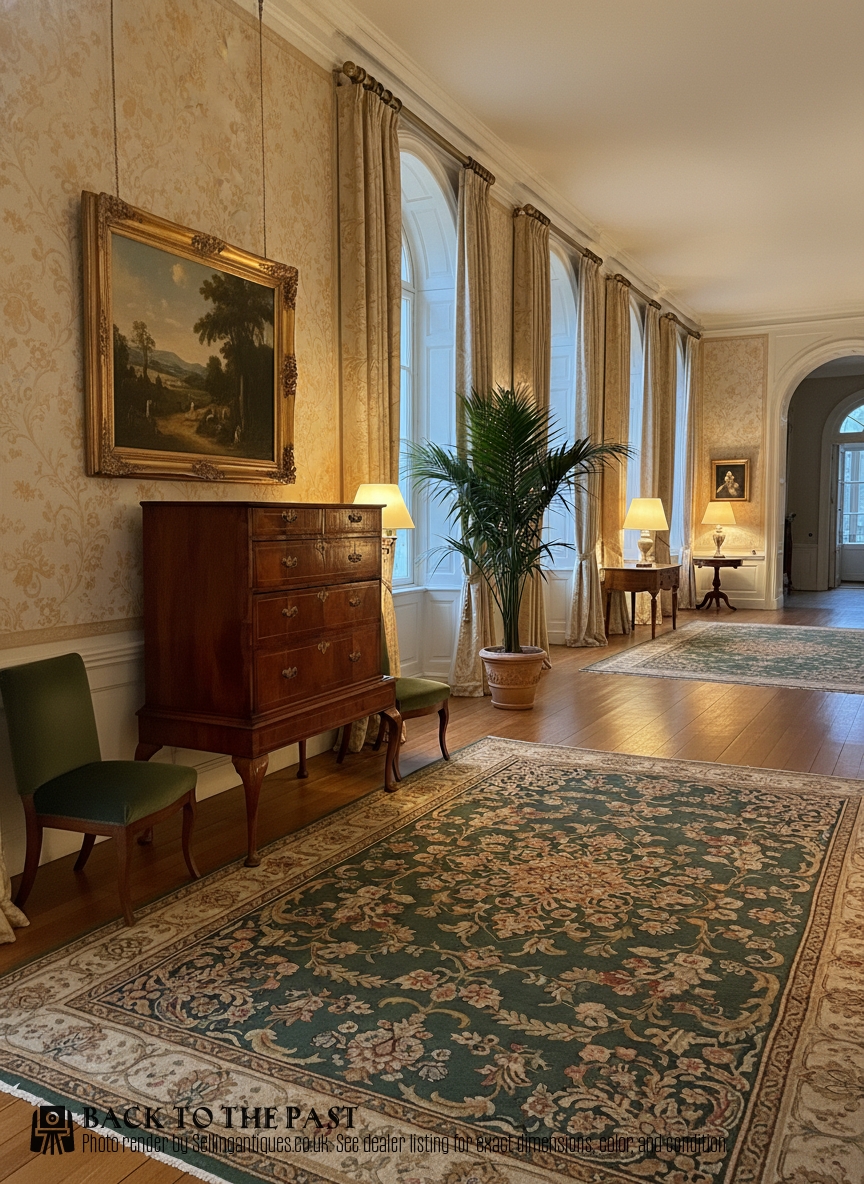
Antique Crossbanded Chest
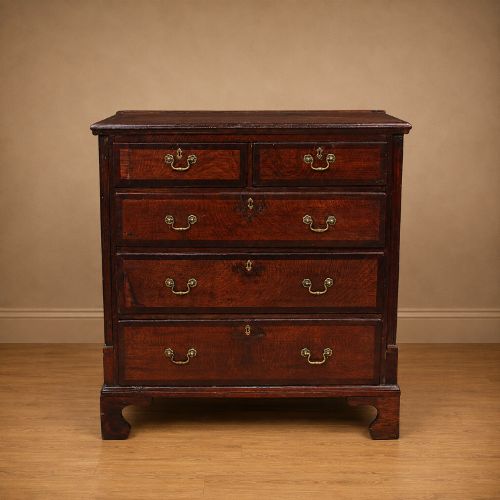
An antique crossbanded chest is a storage piece defined by a border of veneer laid across the grain, typically framing the primary timber of the top or drawer fronts. When you search for an antique crossbanded chest, you meet forms ranging from standard drawer units to specialised pieces like commodes, blanket chests, and chests on stands.
The versions most common on this page span the eighteenth and nineteenth centuries, taking shape in periods designated as Georgian, Regency, and Victorian. Woods like mahogany, walnut, and oak form the primary body, while satinwood or burr walnut provides the contrasting border.
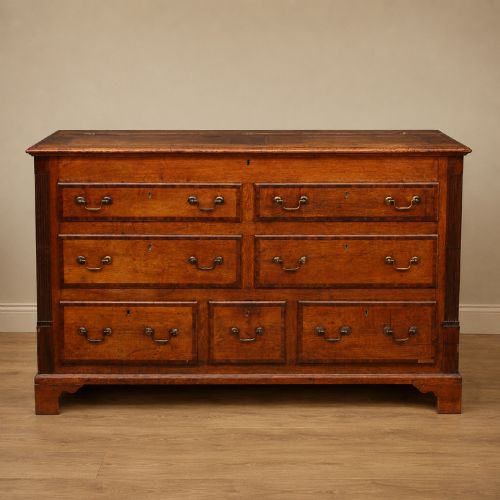
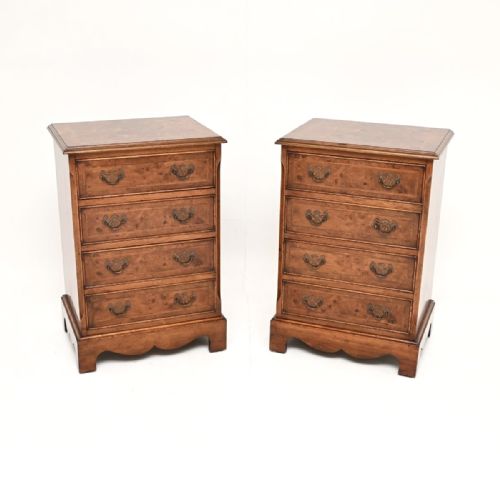
Beyond standard chest of drawers formats, the selection includes bedside tables, mule chests, linen presses, and miniature furniture. These pieces originate from British workshops alongside continental centres such as Germany, Austria, and France.
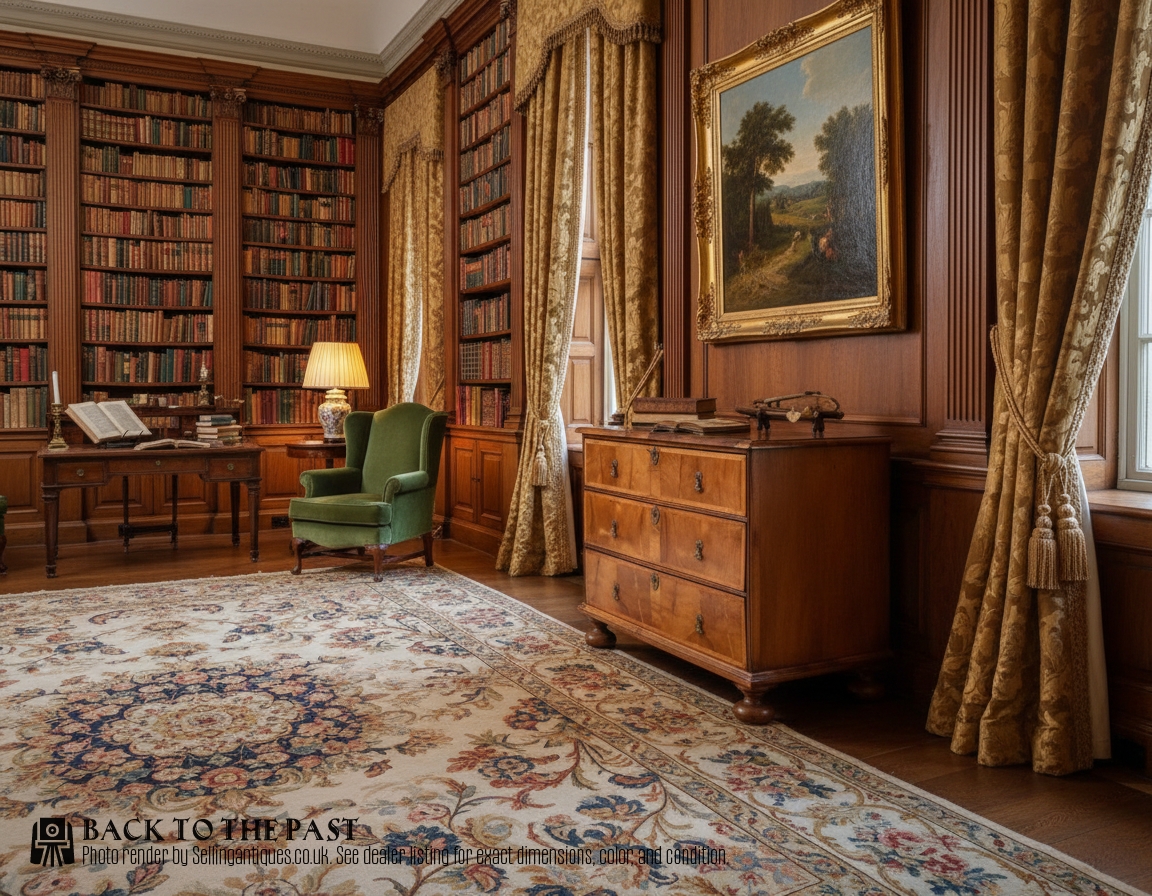
Materials and construction
Cabinet makers constructed these chests using solid timber carcases faced with fine veneers, applying crossbanding by cutting strips where the wood grain ran perpendicular to the main panel. Primary woods like oak, mahogany, and walnut supplied structural stability, while secondary timbers like pine appeared in drawer linings and carcase backs.
Contrasting decorative woods such as satinwood, burr walnut, and rosewood were sliced thin and laid in geometric bands around drawer perimeters and top edges. Brass handles and escutcheons secured with traditional fixings completed the drawer fronts, alongside dovetailed drawer construction.
Antique Crossbanded Chest Retail Price Guide 2026
Typical asking prices for crossbanded chest among the pieces listed under this phrase on Sellingantiques today, from the lower quarter to the upper quarter. They describe what is for sale here now, not the wider market.
Listings feature oak, walnut, mahogany, and satinwood across 18th century, Regency, and Victorian periods.
Variations in quality
Quality in these pieces rests upon the precision of the veneer work and the selection of timber figure. Finer examples display carefully matched burr walnut or figured mahogany where the grain patterns mirror each other symmetrically across the surface.
Construction standards appear in the tightness of the dovetail joints, the smoothness of drawer operation, and the integrity of the secondary woods used internally. Better pieces retain original brass hardware and proportional crossbanding that follows the contours of serpentine or bow fronts without interruption.
The Antique Crossbanded Chest Glossary
- Crossbanding
- A border of veneer laid with the grain running perpendicular to the main surface. This technique frames drawer fronts and tops to create a visual contrast.
- Burr walnut
- Wood taken from the growth excrescences of a walnut tree, yielding a swirling and highly figured grain pattern. Cabinet makers valued it for high-status furniture fronts.
- Bow front
- A convex, outwardly curved front elevation typical of many nineteenth-century chests and commodes. It softens the linear geometry of standard storage pieces.
- Mule chest
- A blanket chest featuring one or two drawers fitted beneath the main storage compartment. They bridge the transition between simple chests and multi-drawer tallboys.
- Dovetail
- An interlocking joint formed by interlocking wedge-shaped fingers, used primarily in drawer construction. Hand-cut variations indicate earlier periods of manufacture.
Antique Crossbanded Chest: Frequently Asked Questions
What is crossbanding on a chest?
Crossbanding involves applying a border of veneer where the wood grain runs at right angles to the surrounding panel. It frames the top or drawer fronts to add decorative contrast.
Cabinet makers used contrasting timbers like satinwood or walnut against a mahogany or oak background to highlight the geometry of the piece.
How do I date a Georgian chest?
Dating relies on examining construction methods, timber choices, and hardware styles across periods like George II and George III. Hand-cut dovetails and oak secondary woods often point to eighteenth-century origins.
Stylistic shifts, such as the introduction of satinwood inlay or bow fronts, help narrow the decade of manufacture alongside any surviving maker labels or provenance.
Where were these chests placed?
These pieces served primary storage functions in bedrooms, dressing rooms, and hallways of period homes. Taller formats held linen and garments, while smaller bedside chests kept personal items close at hand.
Miniature versions functioned as salesman samples or apprentice pieces, while larger commodes and chests on stands sat in principal reception rooms.
Are drawer linings important?
Drawer linings reveal the secondary timbers used during construction, such as oak, pine, or walnut. Original linings confirm the integrity of the piece and help verify its period.
Examining the inside of the drawers also exposes the dovetail construction and any structural repairs made over the course of its history.