




Georgian Style Walnut Desk
A georgian style walnut desk brings warmth and timeless elegance to a study.
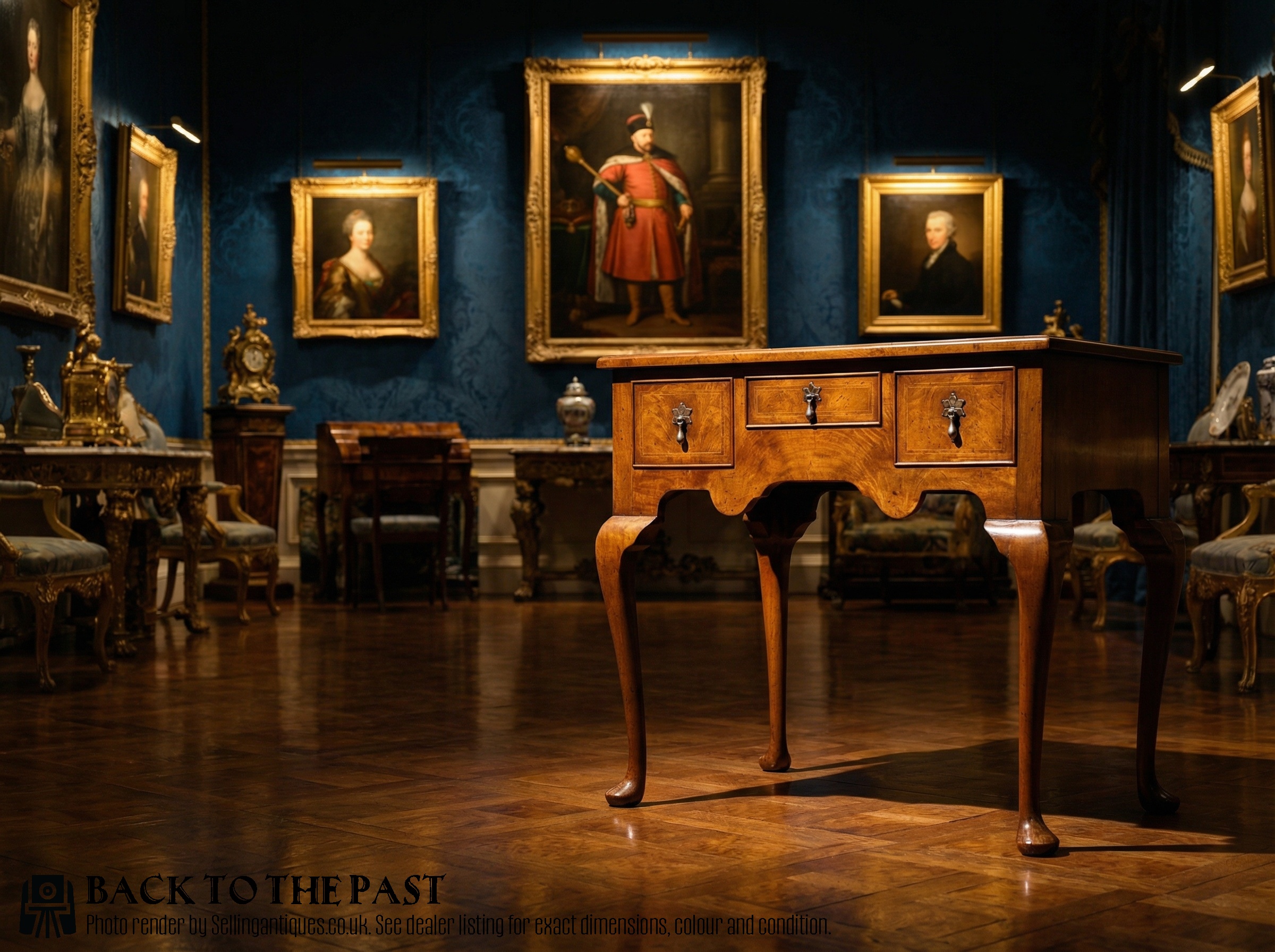
Georgian Style Walnut Desk
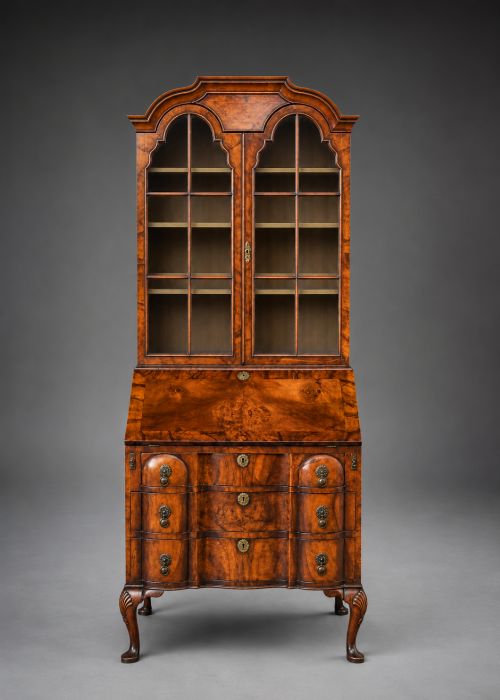
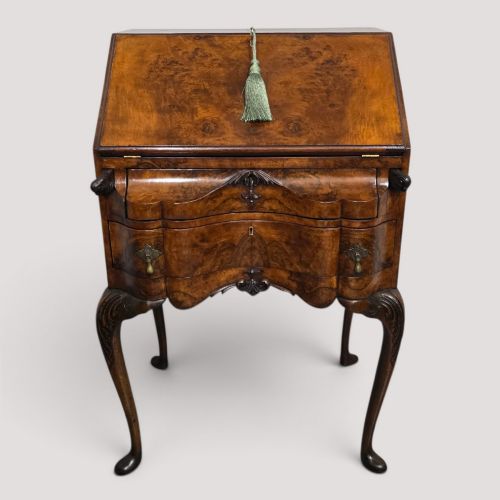
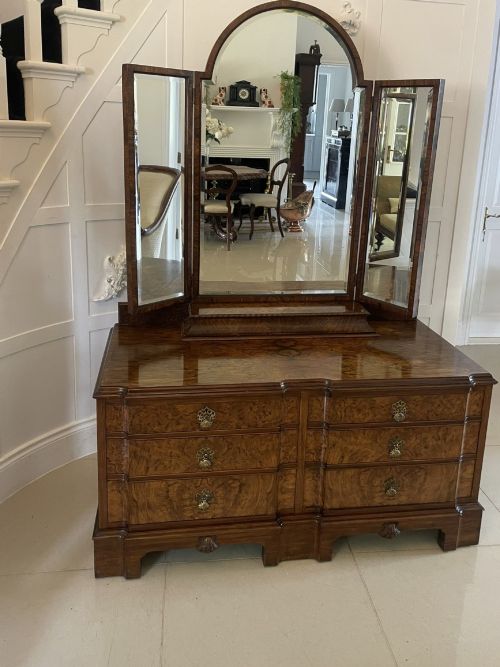
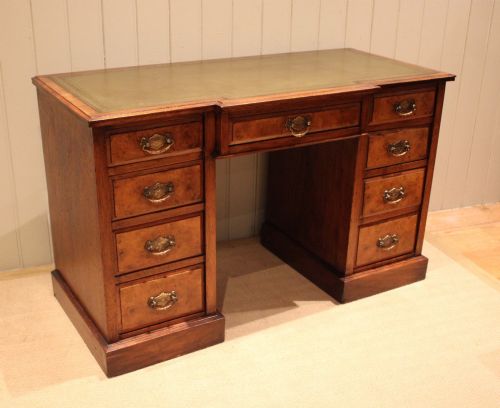
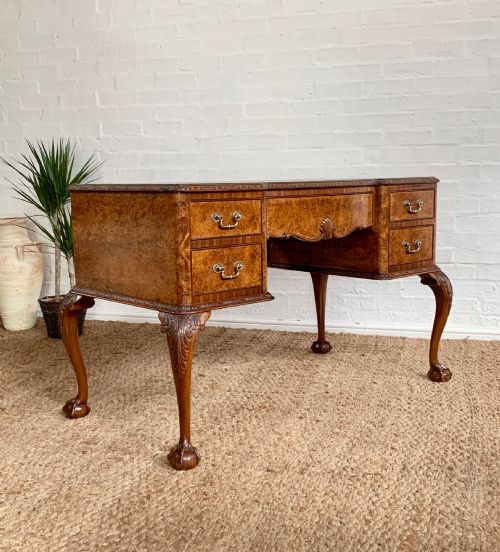
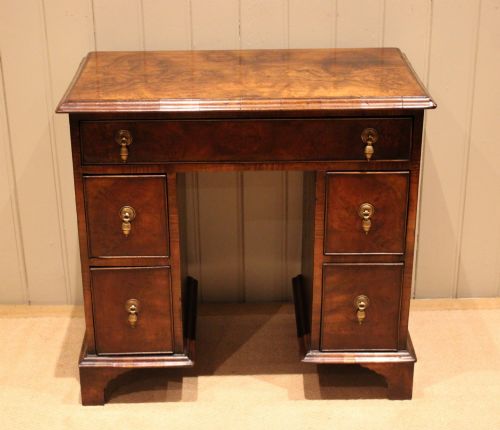
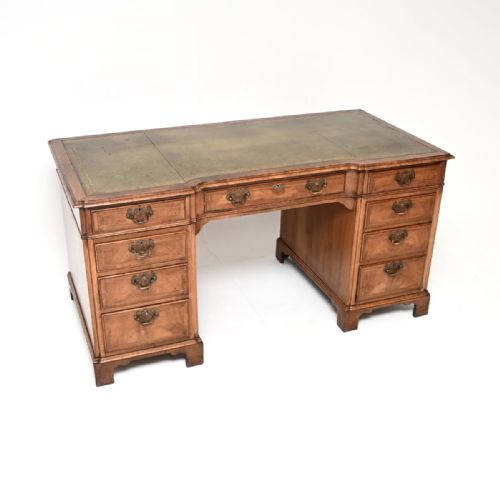
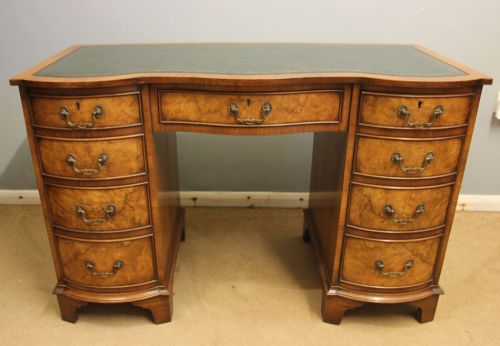
When searching for a georgian style walnut desk, buyers encounter a variety of forms including pedestal desks, kneehole desks, and writing tables. Many pieces date from the revival periods of the late nineteenth and early twentieth centuries, as well as the eighteenth century.
The aesthetic draws heavily on Queen Anne and George I design traditions, featuring shaped fronts, bracket feet, and crossbanded details. These items were built to serve as functional writing surfaces while displaying the rich figuring of the timber.
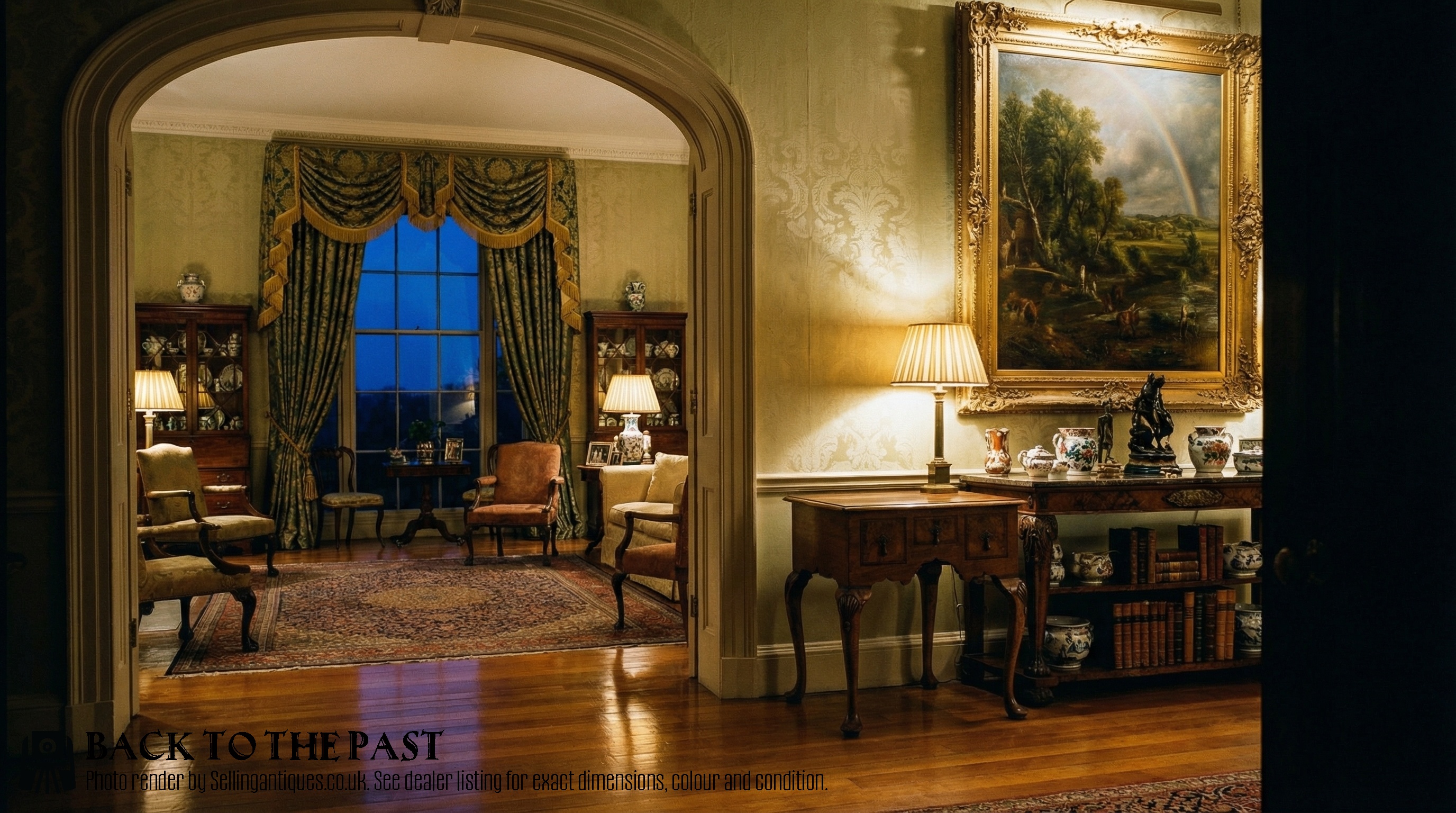
How They Were Made
Craftsmen utilised solid walnut and decorative veneers like burr walnut, laid over secondary timbers such as oak, to create rich patterned surfaces on the top and drawer fronts. Brass handles, escutcheons, and occasional mounts provided functional hardware accents.
Writing surfaces were frequently inset with tooled leather or fabric panels, bordered by banding or stringing. Joinery relied on traditional methods including dovetailing for drawer construction.
Georgian Style Walnut Desk Retail Price Guide 2026
Typical asking prices for georgian style walnut desk among the pieces listed under this phrase on Sellingantiques today, from the lower quarter to the upper quarter. They describe what is for sale here now, not the wider market.
Listings feature walnut, burr walnut, and oak, alongside writing surfaces in leather and glass.
What Varies in Quality
The choice of veneer dramatically affects the visual impact, with tightly figured burr walnut commanding greater appreciation than plain timber. Finely executed crossbanding and feather banding show the maker's precision.
Proportion and structural integrity separate standard workshop output from exceptional examples. Original brass hardware and well-preserved secondary woods indicate a higher standard of preservation and craftsmanship.
Maples of London·Maple and Co·Mappin and Webb
The Georgian Style Walnut Desk Glossary
- Burr Walnut
- A figured wood grain obtained from the wart-like growths on walnut trees, prized for its swirling patterns.
- Kneehole Desk
- A compact desk featuring a central recess for the legs, flanked by columns of small drawers.
- Crossbanding
- A strip of veneer applied to the edges of a surface with the grain running perpendicular to the centre.
- Lowboy
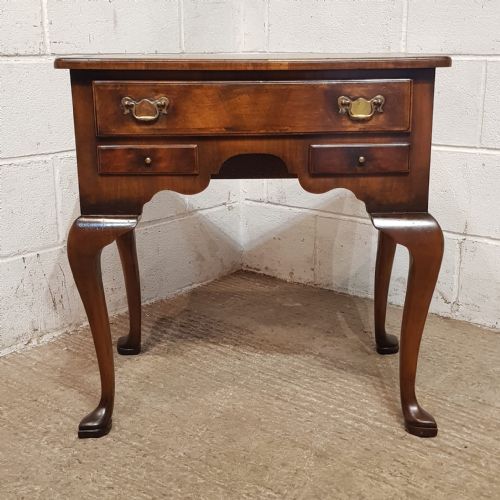
- A small table with drawers, often standing on tall cabriole legs, used historically for writing or dressing.
Georgian Style Walnut Desk: Frequently Asked Questions
What is a kneehole desk?
A kneehole desk is a compact writing table featuring a central recess for the user's legs, flanked by banks of small drawers.
These pieces offer practical storage while maintaining a tidy footprint suitable for smaller studies.
How do I identify burr walnut?
Burr walnut is recognised by its dense, swirling grain patterns created by irregular growth knots in the timber.
Cabinet makers used these figured veneers on primary surfaces like desk tops and drawer fronts to create decorative impact.
Are these desks from the eighteenth century?
While eighteenth-century examples exist, many pieces available are later revival interpretations dating from the Victorian and Edwardian eras.
These later pieces emulate the earlier styles using traditional materials and construction techniques.
What is feather banding?
Feather banding is a decorative inlay technique using small strips of veneer arranged in a herringbone pattern.
It is commonly found bordering the edges of drawer fronts and tabletops on walnut furniture.