


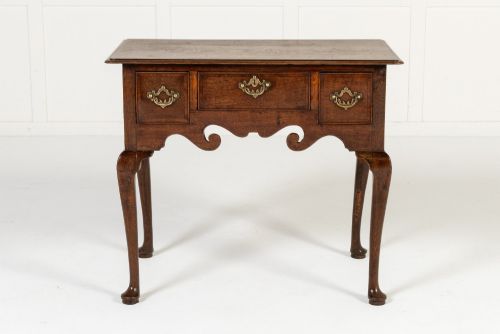
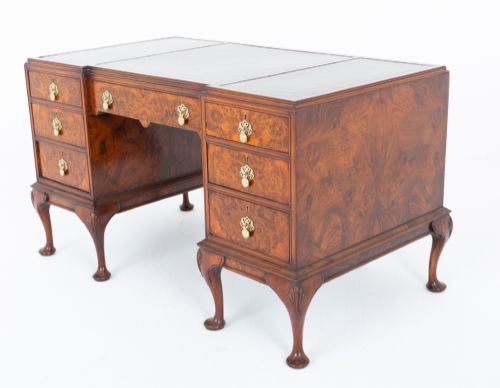
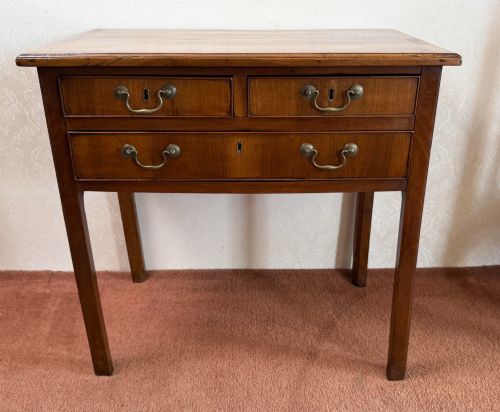
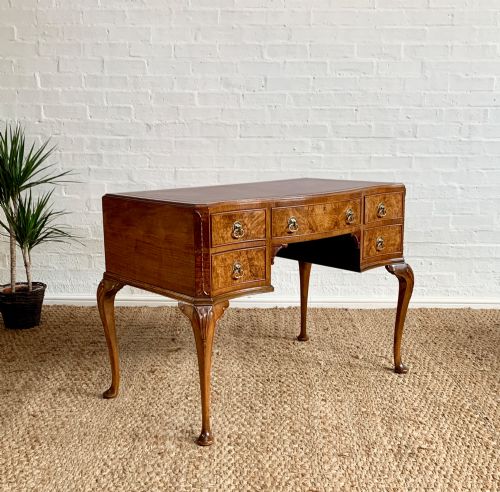

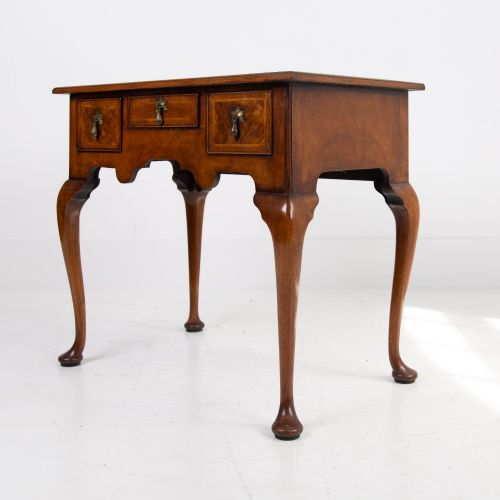
Queen Anne Writing Table
A queen anne writing table offers understated elegance and purposeful workspace, crafted from figured walnut with characteristically graceful proportions.
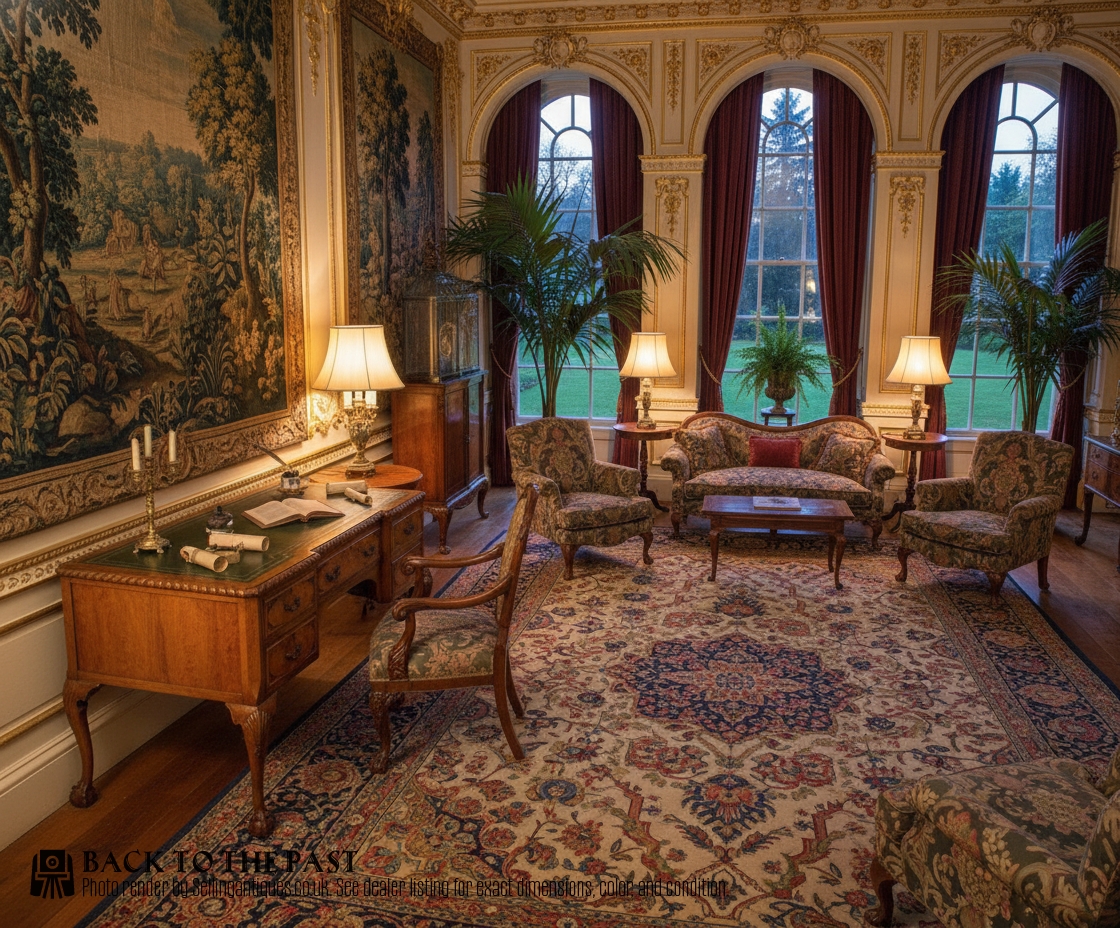
What these pieces are
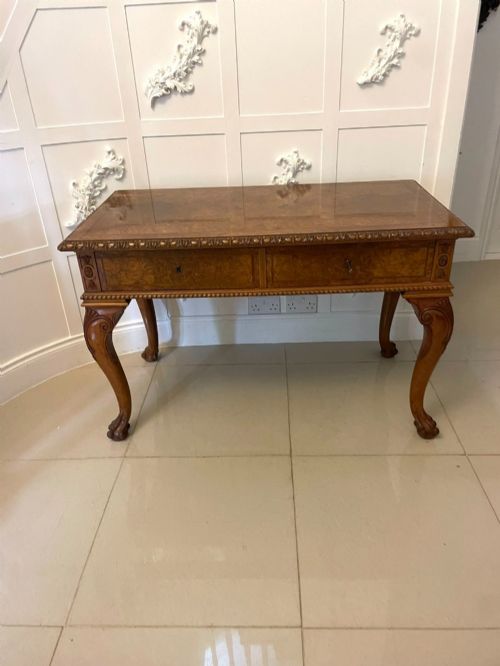
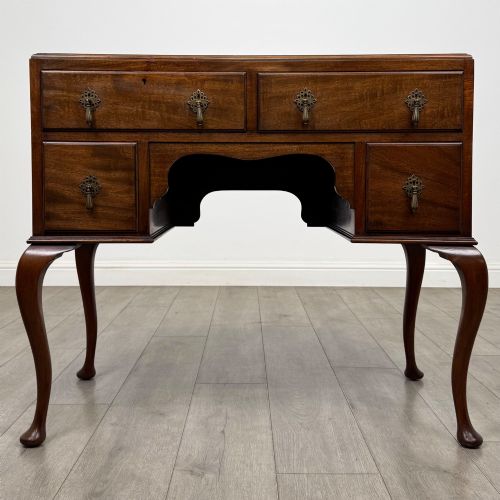
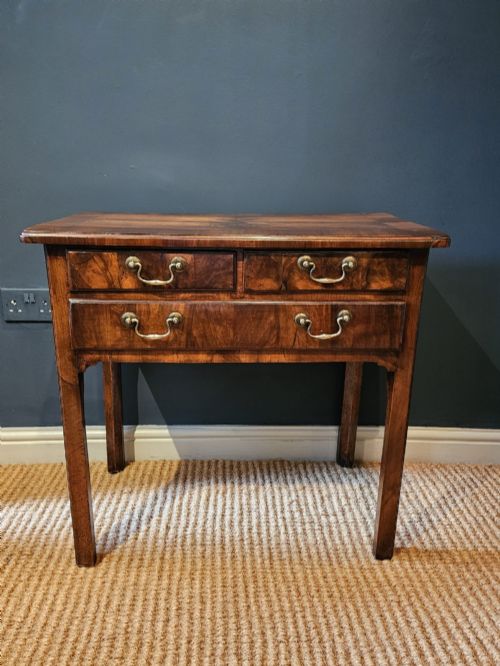
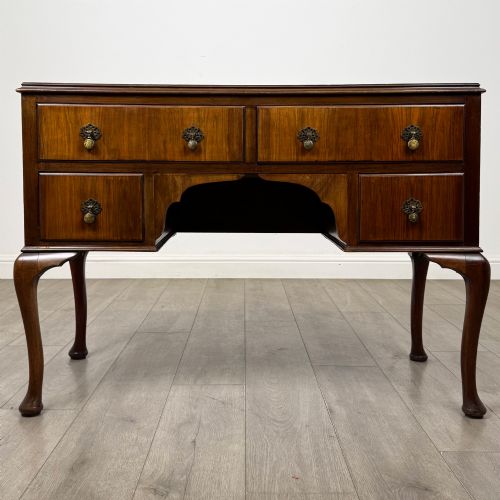
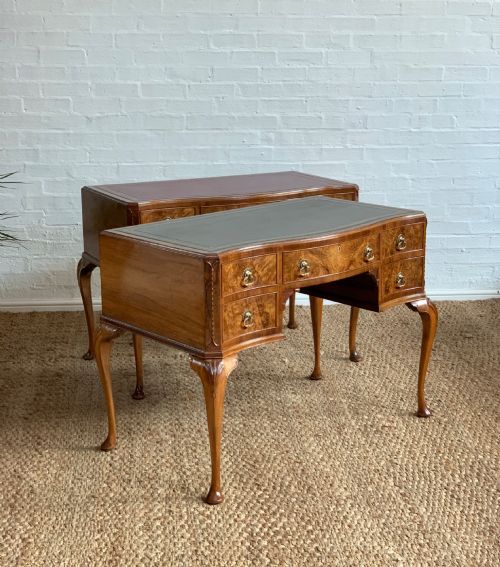
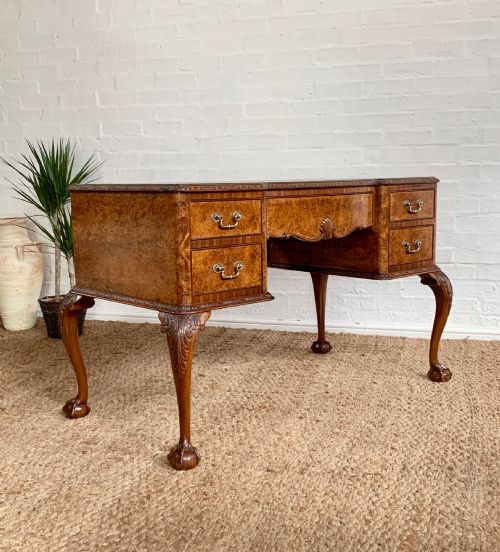
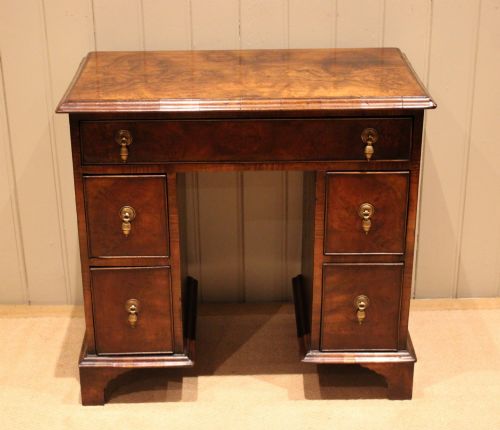
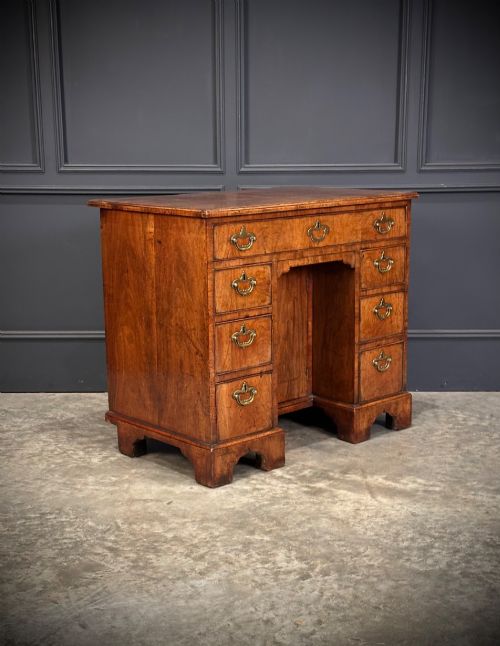
A queen anne writing table combines historical form with functional utility, spanning genuine 18th century examples and later revival pieces from the Edwardian era, 1900, and 1930. These desks and side tables appear in walnut, burr walnut, and mahogany, often featuring inset leather tops for writing surfaces. Forms range from compact kneehole desks and pedestal desks to freestanding oval tables and low boy writing tables.
The revival pieces dominate the selection, bringing the distinctive aesthetic of the style into twentieth-century interiors with high attention to cabinet work. Whytock & Reid of Edinburgh and Morris of Glasgow represent notable makers found within the archive and current listings. Buyers most frequently encounter walnut and burr walnut iterations displaying the warm, figured grain typical of the period and its revivals.
How they were made
Makers utilised solid walnut and decorative burr walnut veneers over secondary timbers, occasionally employing oyster veneer arrangements for patterned surfaces. Brass handles and drawer pulls accessorise the woodwork, whilst inset leather provides a durable writing plane.
Construction techniques involve traditional joinery suited to kneehole desks and library tables, with figured grain selected deliberately to enhance the visual appeal of the top surfaces.
Retail Price Guide 2026
Typical UK retail prices for queen anne writing table, calculated from the Sellingantiques database of over a million retail prices indexed since 2003. This retail price guide relies exclusively on Sellingantiques data; no external sources or auction records are used, so the figures do not describe the wider market.
Listings span from the 18th century through Edwardian interpretations up to 1930, utilising walnut, burr walnut, mahogany, and brass.
What varies in quality
The selection of timber grain sets the visual standard, with richly figured burr walnut and symmetrical oyster veneers marking out superior examples. Crispness in the shaping of the woodwork and the retention of original brass hardware distinguish finer pieces.
Construction integrity and the depth of the walnut colour also differentiate the range, where untouched patination on older surfaces commands greater appreciation.

Whytock & Reid of Edinburgh·Morris Of Glasgow
The Queen Anne Writing Table Glossary
- Kneehole desk
- A compact desk featuring a central recessed space for the legs, flanked by pedestals of small drawers.
- Burr walnut
- Timber taken from the wart or growth on a walnut tree, yielding a highly swirled and decorative veneer pattern.
- Oyster veneer
- Small circular or oval pieces cut cross-wise from branches, laid closely together to create an intricate mosaic effect.
- Low boy
- A small side table with drawers, often standing on slender legs, frequently utilised as a writing surface.
- Library table
- A freestanding table designed for central room placement, allowing access to drawers or workspace from multiple sides.
Frequently Asked Questions
What is a queen anne writing table?
A queen anne writing table is a desk or side table characterised by figured walnut timbers, elegant proportions, and revival styles from the early twentieth century alongside 18th century originals.
These pieces typically incorporate drawers and sometimes inset leather tops, serving as functional workspaces with distinct historical design elements.
How do I identify a revival piece?
Revival pieces date predominantly from around 1900 to 1930, utilising Edwardian and 1930s manufacturing techniques whilst mimicking the earlier aesthetic.
Examination of the interior drawer construction and the finish of the walnut timber usually reveals the twentieth-century origin.
Where were these tables used?
These tables served primarily in libraries, studies, and drawing rooms as designated spaces for correspondence and administrative tasks.
Freestanding versions allowed placement in the centre of a room rather than pushed against a wall.
What woods are most common?
Walnut is the defining timber for this group, appearing as solid walnut, highly figured burr walnut, and decorative oyster veneer.
Secondary materials include brass for handles and leather for the inset writing surfaces.