
Vintage Walnut Accent Table
A vintage walnut accent table brings warmth and grain figure to a room, ranging from Edwardian nests to Art Deco geometric forms.
Vintage Walnut Accent Table
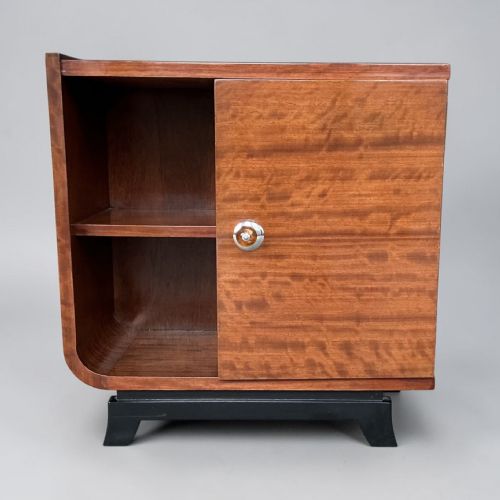
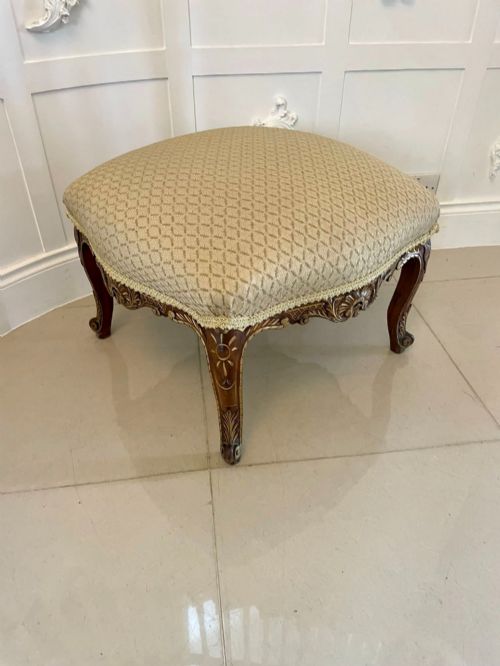
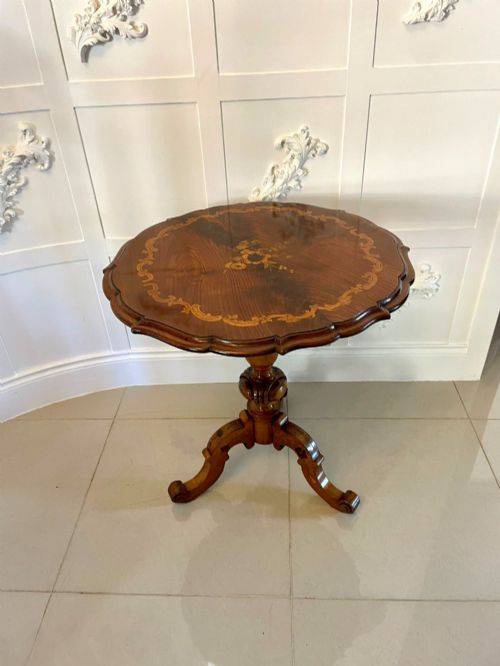
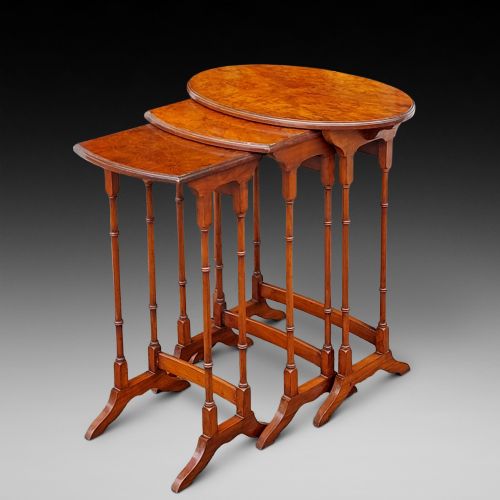
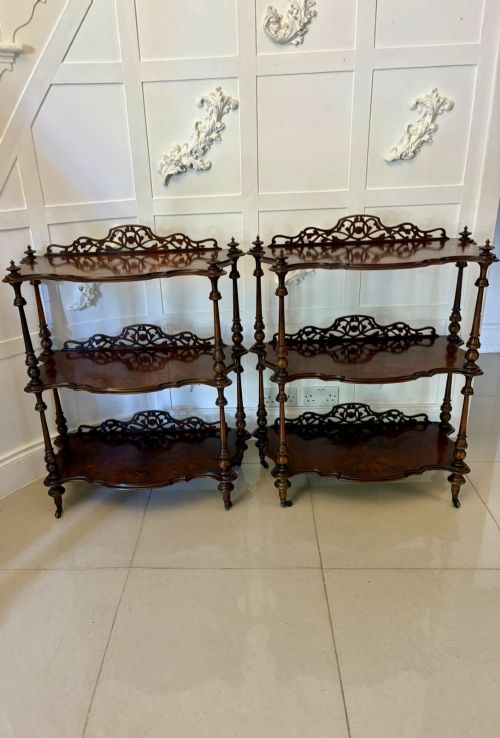
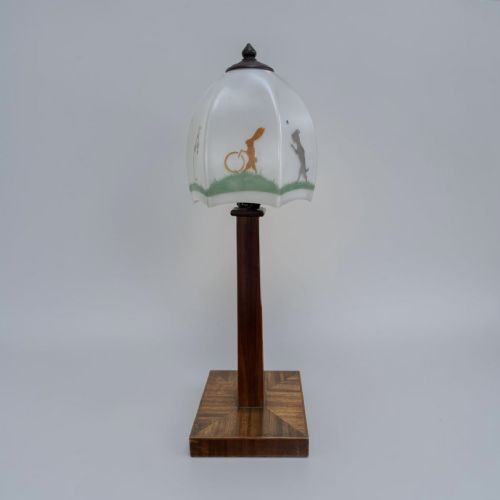
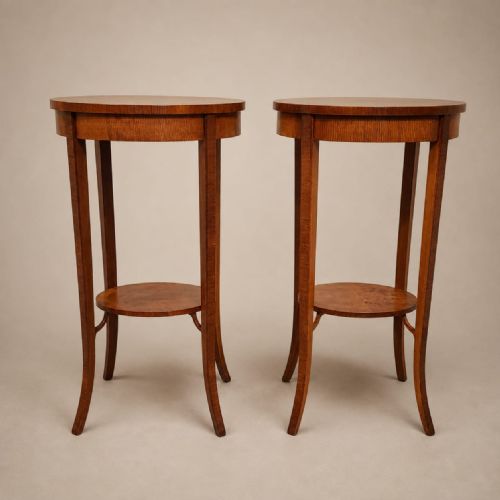
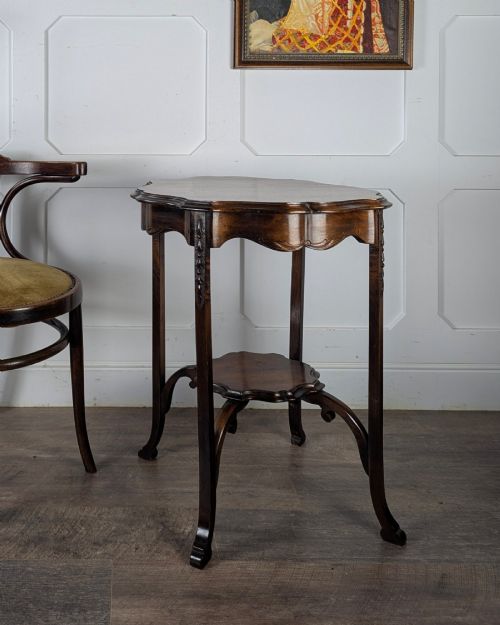
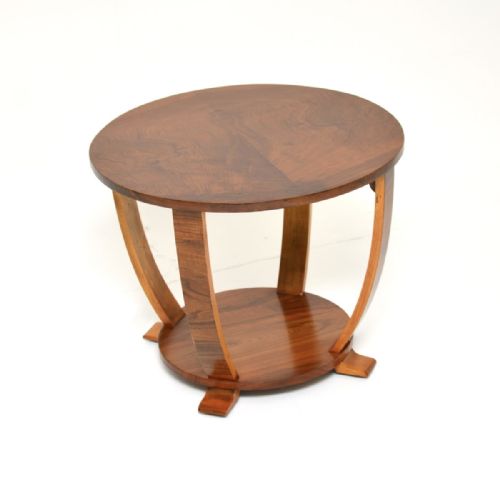
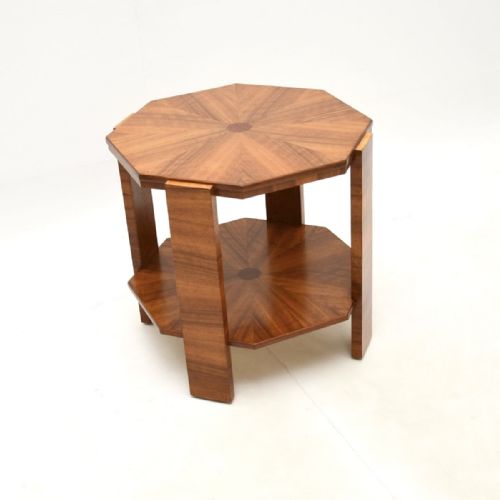
A vintage walnut accent table serves secondary functions in a room as a side piece, lamp surface, or coffee table. The pieces found here span from Victorian occasional tables to 1930s Art Deco designs and Edwardian nesting sets.
Origins include British production alongside French and Italian examples, incorporating styles from Queen Anne Revival to Arts and Crafts. These items provide practical surface space while displaying distinct period characteristics through their timber and silhouette.
Materials and construction methods
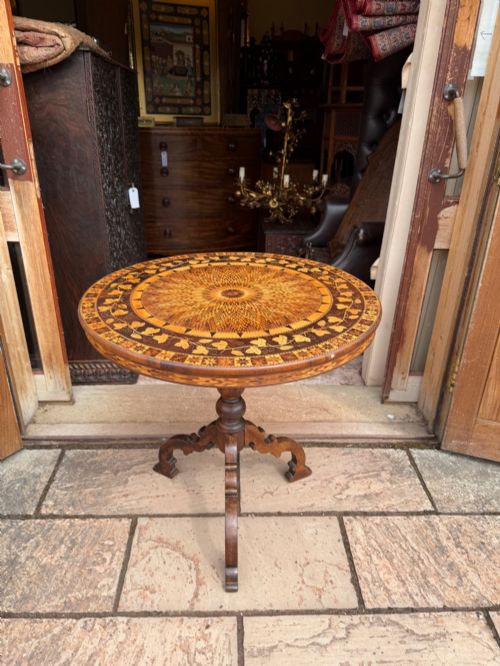
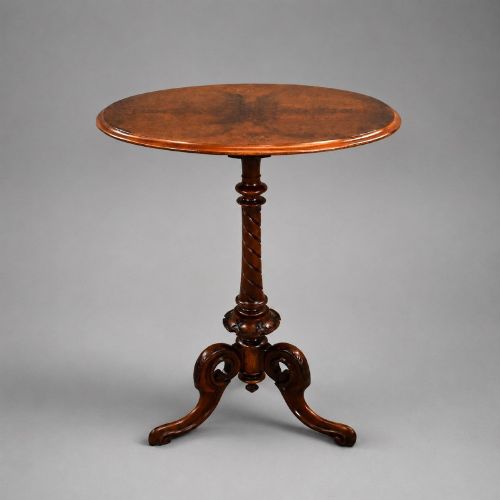
Makers utilised solid walnut and decorative veneers, particularly burr walnut and figured walnut, applied to secondary structural timbers like mahogany. Brass fittings, galleries, and chrome details appear alongside marquetry inlay work.
Joinery methods reflect the period of origin, from Victorian turned legs and cabriole supports to the geometric lines of the 1920s and 1930s. Tables often integrate multi-tiered structures or nesting capabilities through precise carpentry.
Vintage Walnut Accent Table Retail Price Guide 2026
Typical asking prices for vintage walnut accent table among the pieces listed under this phrase on Sellingantiques today, from the lower quarter to the upper quarter. They describe what is for sale here now, not the wider market.
Materials recorded across the inventory include solid walnut, burr walnut veneer, brass, chrome, and marquetry inlay.
Assessing quality in walnut tables
Quality rests primarily in the selection of the timber grain, with highly figured burr walnut and intricate marquetry inlay sitting at the upper end of the scale. The crispness of carved details and the harmony of proportion between legs and top distinguish finer examples.
Construction integrity, such as the stability of drop-leaves on Sutherland tables or the precise alignment of nesting sets, marks the difference between standard production and superior craftsmanship.
Liberty of London
The Vintage Walnut Accent Table Glossary
- Burr walnut
- A veneer taken from the wart-like growth on a walnut tree, yielding a swirling, highly decorative grain pattern. It appears frequently on tabletops from the Victorian era onwards.
- Marquetry
- The art of applying pieces of veneer to a structure to form decorative patterns and pictures. Floral and geometric motifs are common on these tables.
- Sutherland table
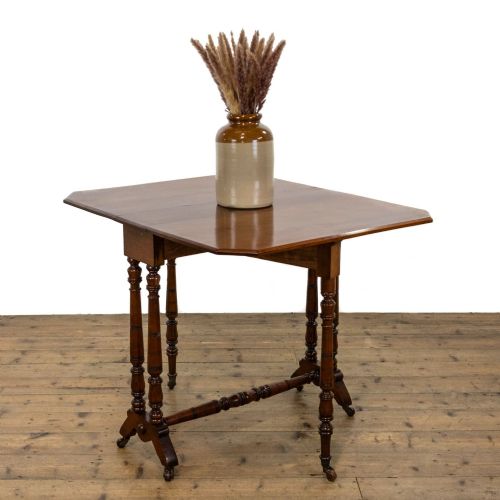
- A narrow drop-leaf table with hinged flaps that fold down steeply on either side. The legs typically swing out to support the leaves when raised.
- Lowboy
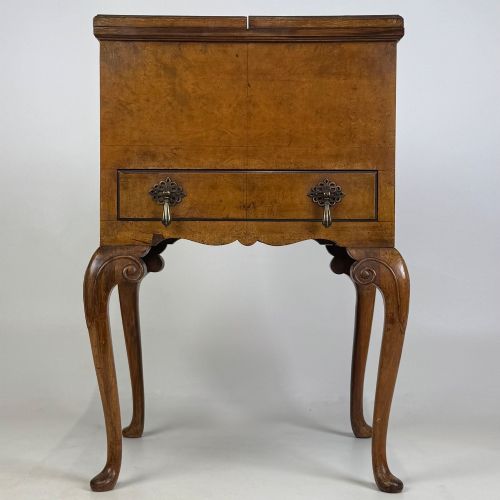
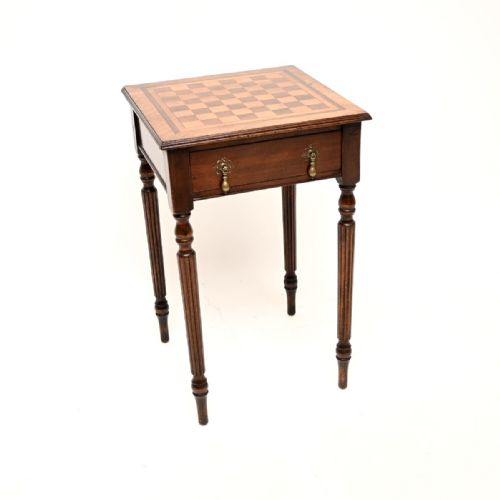
- A small occasional table with drawers, standing on relatively tall legs. These pieces date across the eighteenth and early twentieth centuries.
- Quartetto nest
- A set of four graduating tables designed to fit neatly beneath one another. They gained popularity during the Edwardian period.
Vintage Walnut Accent Table: Frequently Asked Questions
What is a vintage walnut accent table?
A vintage walnut accent table is a small secondary piece of furniture made from walnut timber, designed to hold lamps, drinks, or decorative objects. These tables include occasional, side, and coffee tables produced from the Victorian era through the Art Deco period.
They function practically while introducing rich wood tones and historic styles into modern interiors, ranging from simple circular tops to elaborate marquetry-inlaid surfaces.
How do I date a walnut side table?
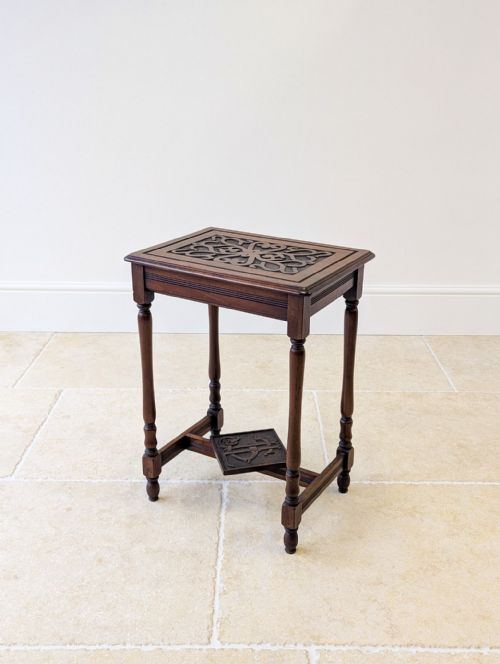
Dating relies on examining the leg style, timber treatment, and overall silhouette of the piece. Victorian examples often feature carved details and turned legs, whilst Edwardian pieces frequently include nesting sets and subtle inlay.
Art Deco tables from the 1930s display geometric forms, contrasting veneers, and stepped profiles. Hardware like brass galleries or modern chrome accents also provides clues to the manufacturing decade.
Where should I place an occasional table?
An occasional table suits placement beside a sofa, armchair, or in an empty corner needing a surface for a lamp or books. Smaller nests of tables allow for flexible arrangements when entertaining guests.
Because these tables feature finished wood surfaces and decorative grain patterns like burr walnut, they work well where natural light can highlight the timber.