

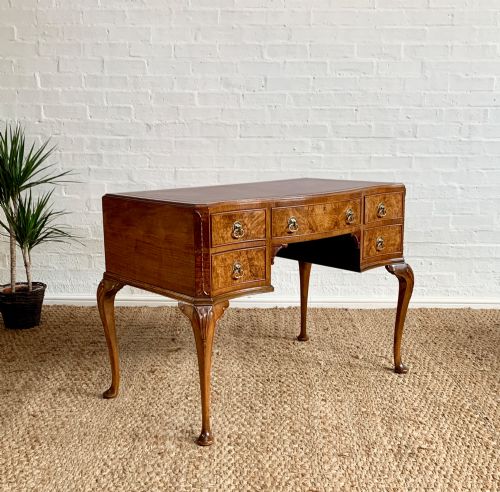
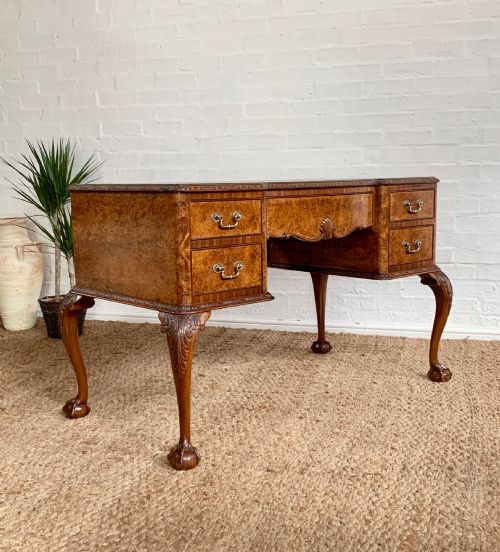
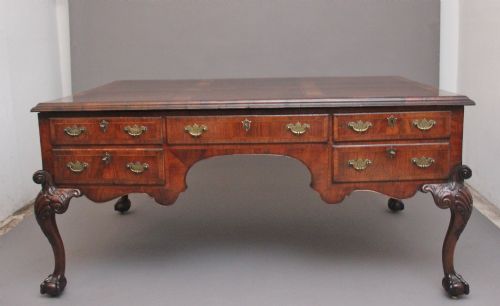
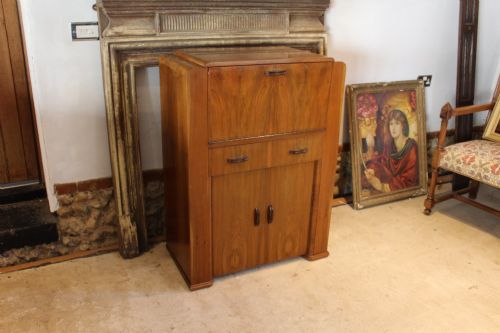
Walnut Home Office Desk
A walnut home office desk brings rich timber grain and period character to your workspace, offering a practical surface with historical presence.
What these pieces are
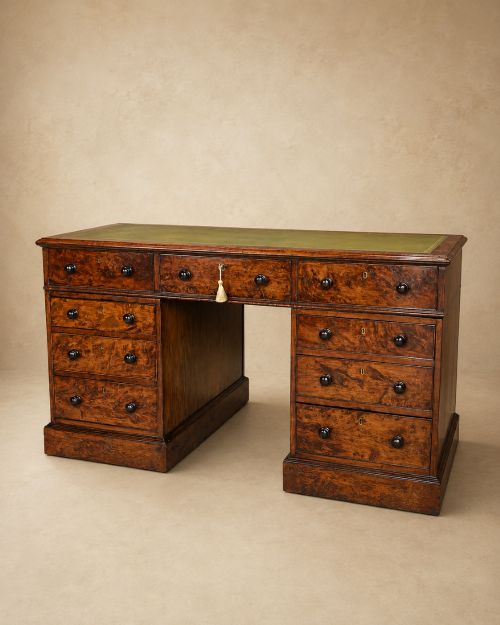
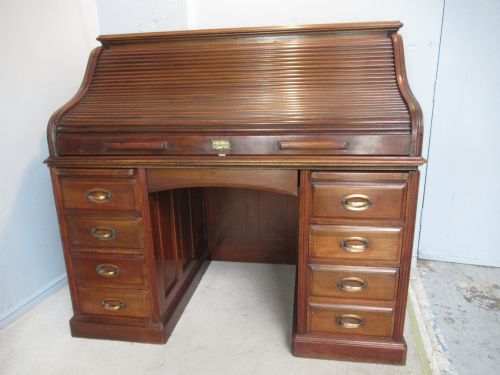
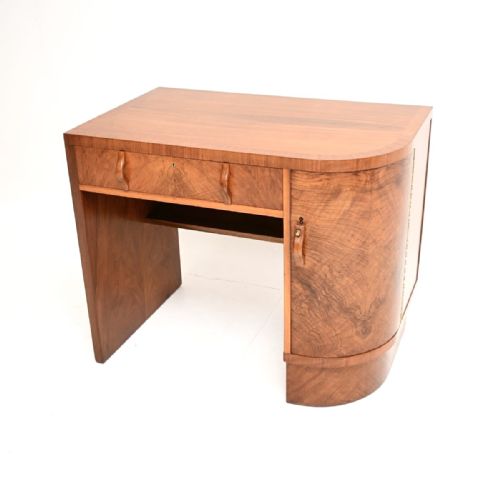
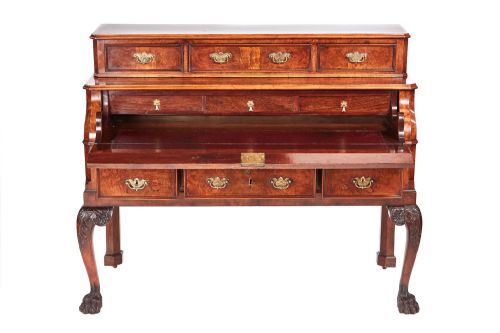
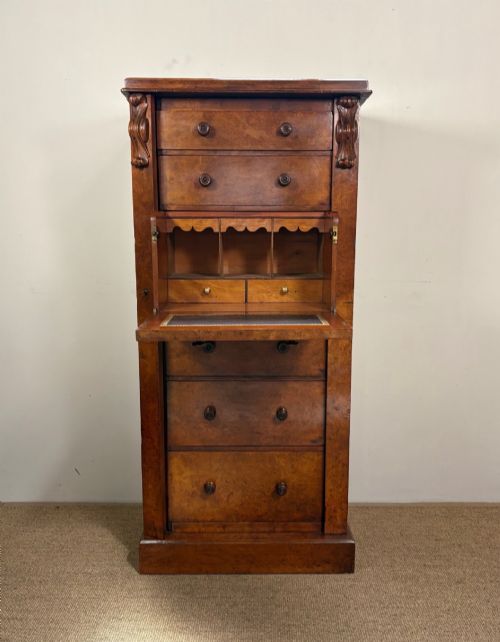
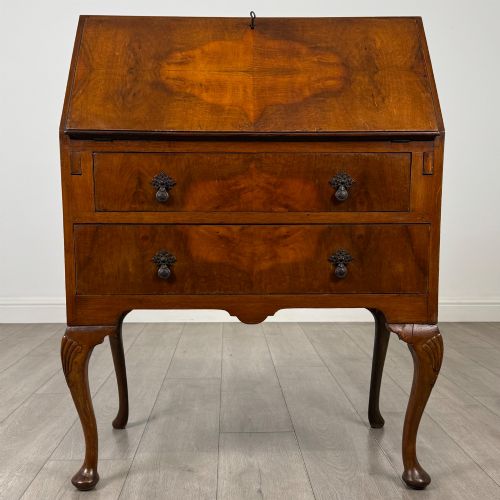
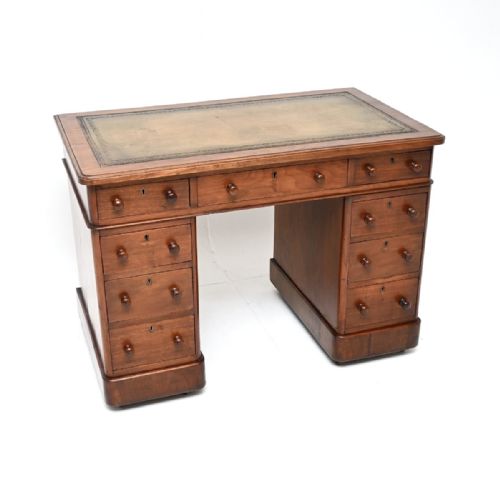
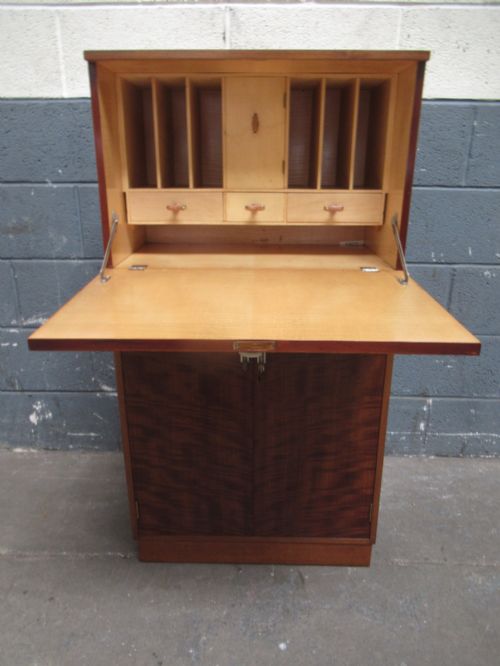
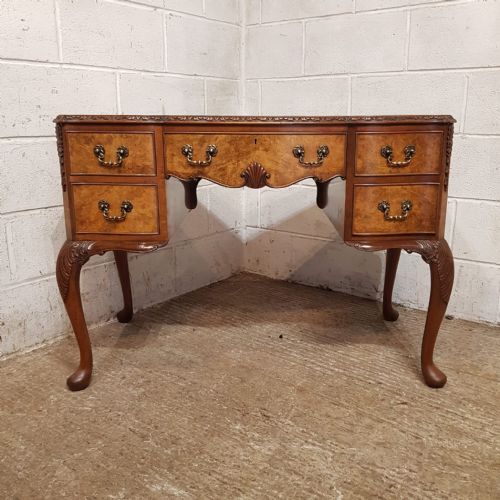
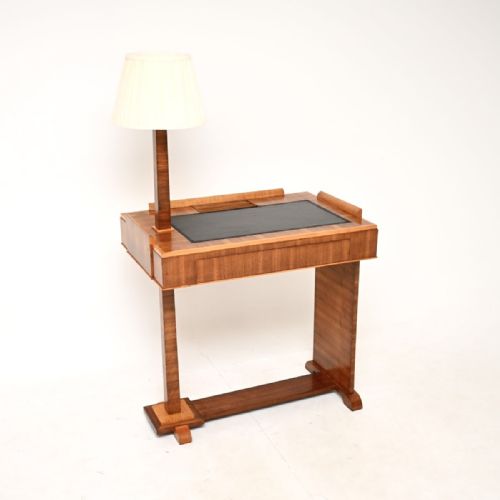
A walnut home office desk encompasses writing tables, Davenport desks, serpentine fronted desks, and Art Deco writing surfaces made from walnut and burr walnut. These pieces span the nineteenth century, eighteen-eighty, nineteen-twenty, and nineteen-thirty, reflecting styles such as Queen Anne Revival, Art Deco, Victorian, and Louis XV Revival.
Buyers encountering this selection will most frequently meet nineteenth-century examples and nineteen-twenty pieces. These forms bridge historical cabinet-making traditions with functional workspace requirements.
How they were made
Cabinet makers utilised solid walnut and burr walnut veneers to construct these desks, often highlighting the natural figure of the timber. Secondary materials include leather for writing surfaces, alongside brass, metal, and ormolu for mounts, handles, and structural detailing.
Construction techniques combined traditional joinery with decorative styling appropriate to each period. Makers shaped timber into serpentine fronts and compact Davenport forms, applying metallic accents to complement the dark wood tones.
Retail Price Guide 2026
Typical UK retail prices for walnut home office desk, calculated from the Sellingantiques database of over a million retail prices indexed since 2003. This retail price guide relies exclusively on Sellingantiques data; no external sources or auction records are used, so the figures do not describe the wider market.
This site's listings feature walnut desks spanning the nineteenth century through nineteen-thirty, incorporating burr walnut, leather, and ormolu.
What varies in quality
Quality in these desks is defined by the selection of Burr walnut veneer and the sophistication of the timber's figuring. Superior examples exhibit precise serpentine shaping and harmonious proportions across the writing surface and drawers.
The refinement of brass, metal, or ormolu mounts and the integration of fitted leather writing inserts further distinguish higher-grade pieces. Execution of period revival styles demonstrates the cabinet maker's skill and attention to detail.
The Walnut Home Office Desk Glossary
- Burr walnut
- A prized timber veneer taken from the growth excrescences of walnut trees, displaying complex and swirling grain patterns. It was frequently utilised on the primary surfaces of high-status nineteenth and twentieth-century desks.
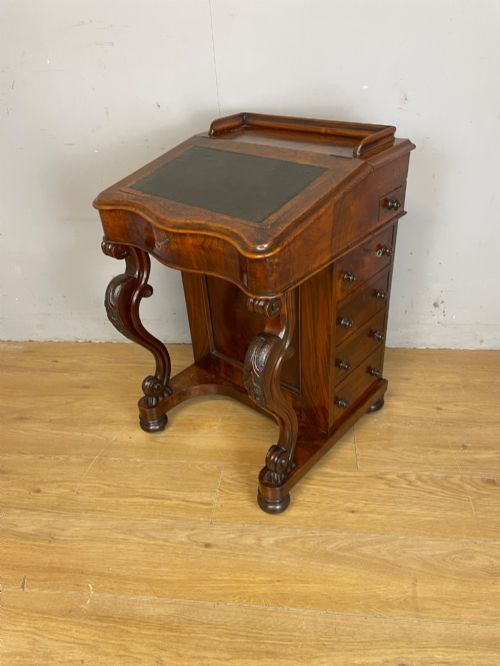
- Davenport desk
- A compact Victorian form of writing desk featuring a sloping top and drawers accessed from the side. This clever design maximises storage within a small footprint.
- Serpentine front
- A furniture front comprising three vertical sections where the central section curves outward and the outer sections curve inward. This undulating shape requires advanced woodworking skill.
- Ormolu
- Gilded bronze detailing applied as mounts and hardware on decorative furniture. It adds metallic contrast to walnut surfaces, particularly in revival styles.
- Writing table
- A freestanding table designed primarily for correspondence rather than storage. These pieces typically feature slender legs and shallow drawers beneath the top.
Frequently Asked Questions
How do I date a walnut desk?
Dating relies on examining construction methods, hardware, and stylistic indicators such as Queen Anne Revival or Art Deco motifs. Timber selection and overall form also provide clues to whether a piece originates from the nineteenth century or the nineteen-twenties.
Comparing the secondary woods and joinery details against known period examples helps narrow down the decade of manufacture.
Are walnut desks suitable for daily work?
These antique and vintage desks provide sturdy writing surfaces suited for contemporary laptops and paperwork. Their historical drawers and compartments offer practical organisation for home offices.
Care should be taken to protect leather writing inserts and polished timber surfaces from daily wear and moisture.
What is a Davenport desk used for?
A Davenport desk serves as a compact writing and storage station, featuring a sloping desktop designed for comfortable correspondence. The internal compartments and side drawers store stationery and documents.
Its smaller scale makes it ideal for placement in residential study rooms or corners where space is limited.
How should I care for burr walnut?
Burr walnut veneer requires protection from direct sunlight and excessive humidity changes to prevent timber movement or fading. Regular dusting with a soft cloth maintains the natural lustre of the polished finish.
Avoiding harsh chemical cleaners ensures the antique polish and timber grain remain preserved over time.