


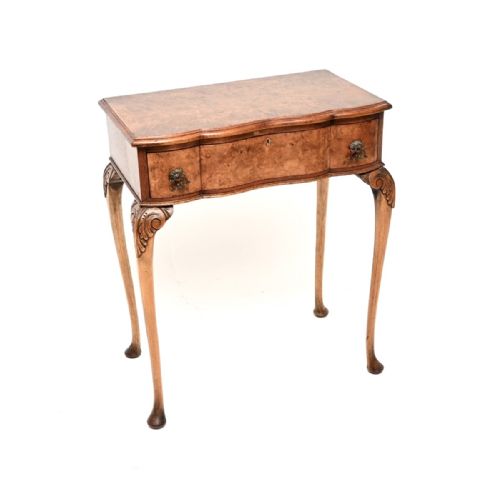

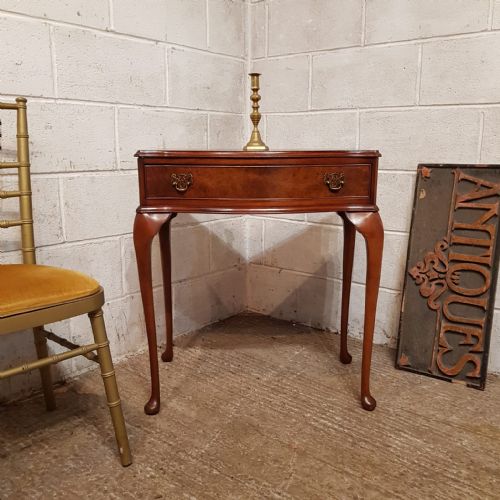


Serpentine Front Writing Desk
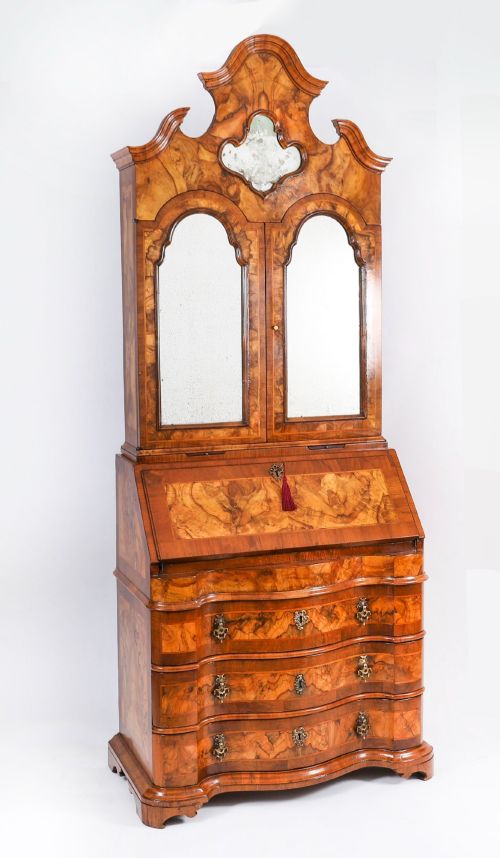
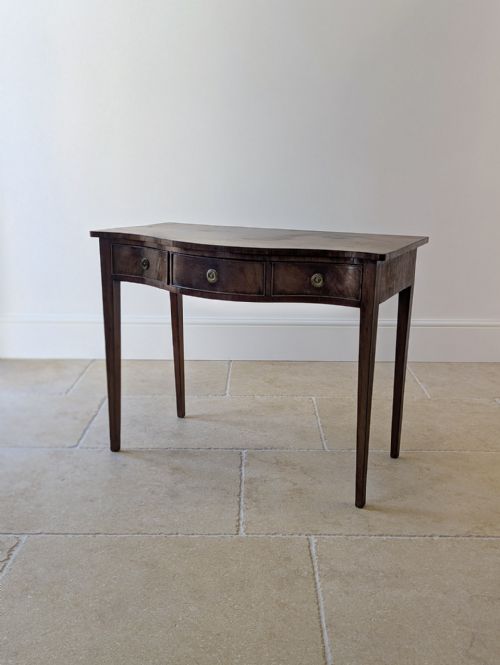
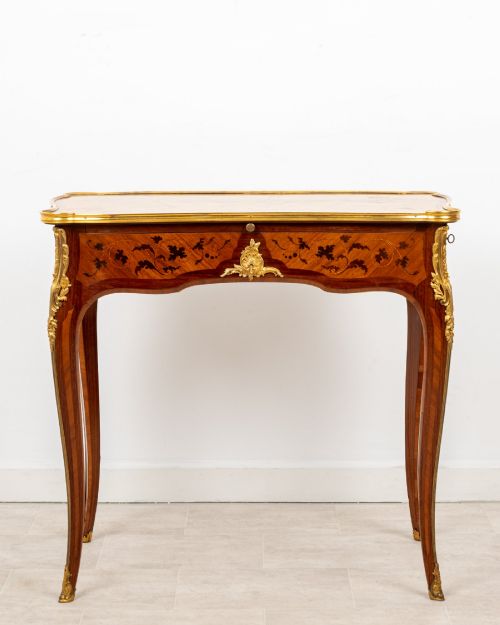
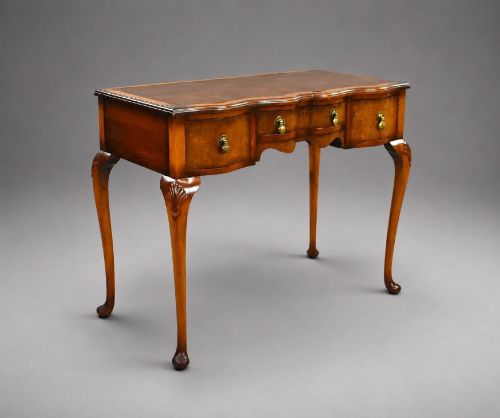
A serpentine front writing desk brings a fluid, undulating profile into a room, combining practical writing space with refined cabinetwork.
Serpentine Front Writing Desk
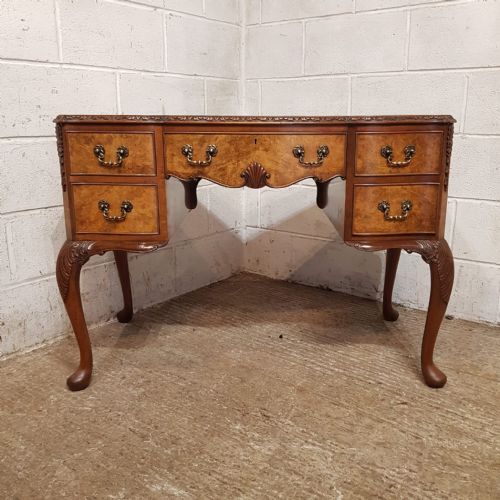
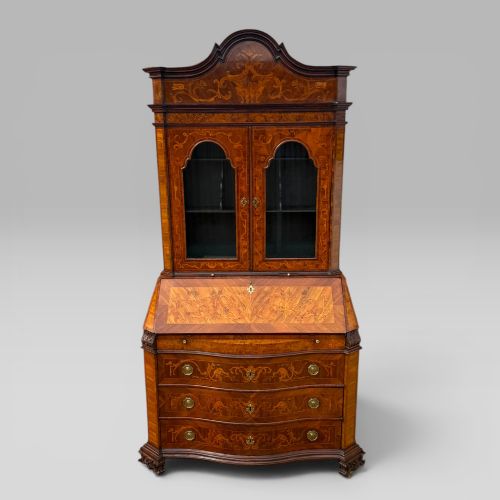
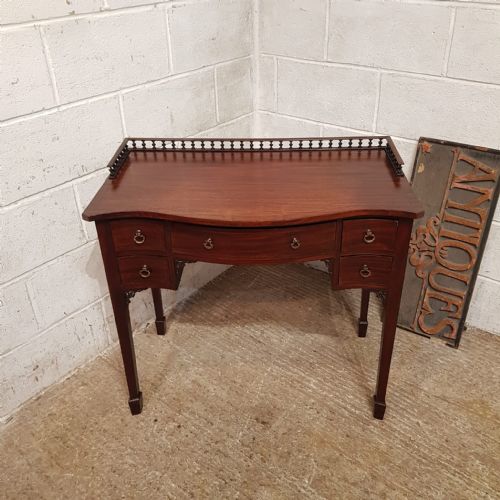
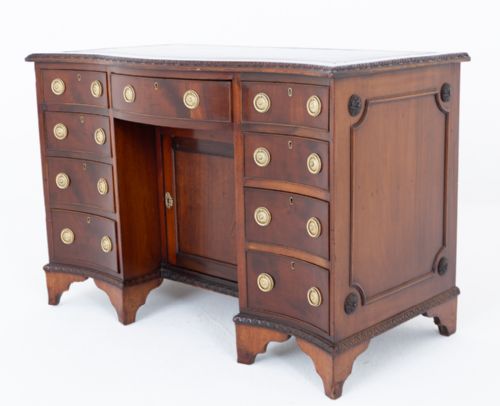
A serpentine front writing desk presents a distinctive curved outline, swelling outward at the centre and curving inward at the sides. These pieces range from compact writing tables and kneehole desks to substantial bureau bookcases spanning multiple periods.
The selections encountered here originate primarily from Georgian and Victorian eras, alongside Edwardian revivals and early twentieth-century interpretations. Mahogany and burr walnut dominate the forms, frequently paired with fitted writing surfaces and brass hardware.
Buyers often meet pedestal formats or smaller side tables adapted for writing, reflecting the diverse domestic needs of past centuries. Each example demonstrates how cabinetmakers applied curved profiles to functional workspace furniture.
How they were made
Cabinetmakers constructed these pieces using solid timbers and carefully selected veneers over supportive secondary woods. Mahogany and walnut provided the structural foundation, while burr walnut and satinwood veneers added decorative grain patterns across curved surfaces.
Shaping the signature undulating front required specialist woodworking techniques, including steam bending or sawing thick timber blocks to follow the continuous curve. Brass fittings, leather inserts, and intricate marquetry completed the construction.
Some nineteenth-century writing desks include hidden compartments designed for secret correspondence.
What varies in quality
The standard of a serpentine front writing desk rests upon the precision of its curved joinery and the integrity of the timber. Superior pieces exhibit seamless transitions along the undulating drawer fronts and consistent grain alignment across the panels.
Internal arrangement and secondary woods also distinguish finer examples from simpler workshops. Thoughtfully fitted stationery compartments, original brass hardware, and carefully executed marquetry indicate higher craftsmanship.
Maple And Co·Durand
The Serpentine Front Writing Desk Glossary
- Serpentine
- A curved architectural and furniture line that sweeps outward at the centre and recesses toward the ends. This contour requires advanced woodworking skill to maintain symmetry.
- Kneehole
- A recessed space beneath the central drawer of a desk or dressing table designed to accommodate the user's legs. Smaller desks often feature a single central cupboard in this recess.
- Marquetry
- Decorative veneer work arranged in pictorial or geometric patterns using various coloured woods. Craftsmen applied these contrasting veneers to drawer fronts and tabletops.
- Bureau bookcase
- A writing cabinet featuring a sloping or fall-front desk compartment positioned beneath glazed shelving doors. These dual-purpose units provide both workspace and display storage.
Serpentine Front Writing Desk: Frequently Asked Questions
How do I identify a Georgian serpentine desk?
Georgian examples typically display dense mahogany construction, hand-cut dovetails, and understated brass drop handles. The timber patination shows deep oxidation acquired over centuries.
Inspect the secondary woods inside the drawers, as oak and pine usage often corresponds to eighteenth-century workshop practices.
Where should I place a serpentine desk?
Because the undulating front creates visual interest from multiple angles, these desks work well freestanding or positioned near natural light sources. Ensure adequate clearance for chairs near the recessed kneehole.
Keep wooden surfaces away from direct heat sources to protect delicate veneers and leather inserts.
How do I care for walnut veneer?
Maintain walnut surfaces by dusting with a soft, dry cloth and avoiding silicone-based polishes. Consistent indoor humidity prevents veneer lifting and timber splitting.
Treat leather writing surfaces with appropriate conservation balms to keep the material supple over time.