


Walnut Bureau Plat
A walnut bureau plat is a freestanding writing table designed to sit proudly in the centre of a room.
Walnut Bureau Plat
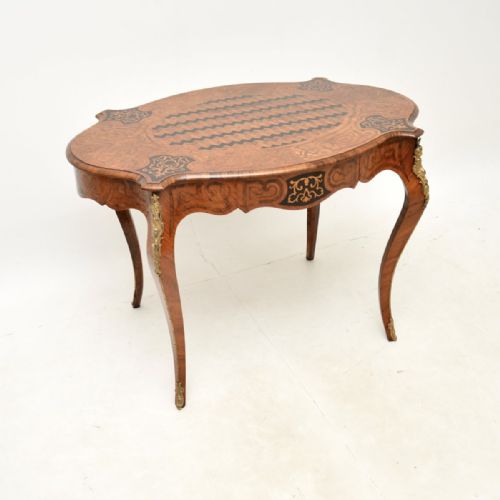
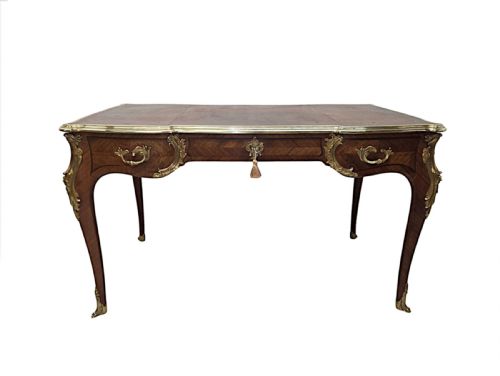
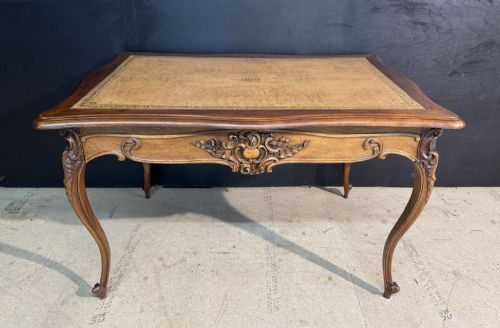
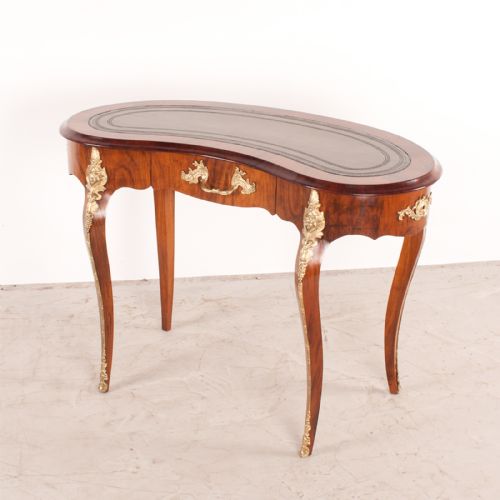
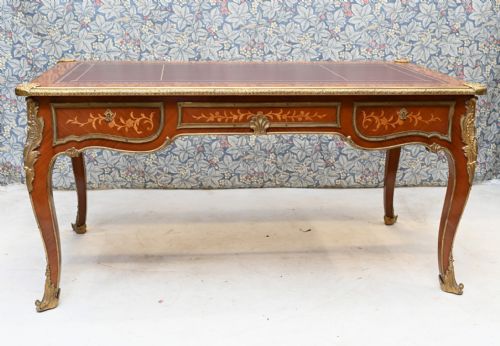
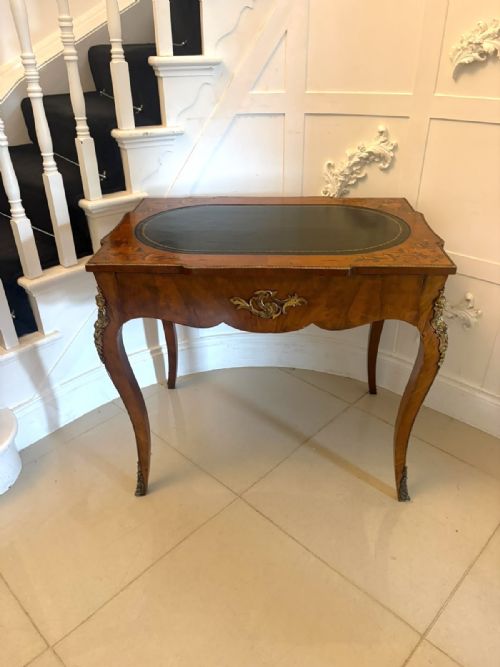
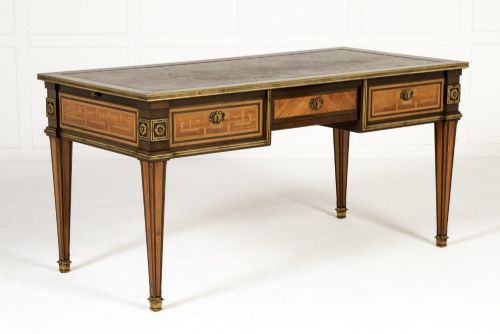
When you search for a walnut bureau plat, you encounter freestanding writing tables primarily originating from the nineteenth century, including Victorian examples and French Louis XV revival pieces. These desks serve as functional writing surfaces while operating visually as centre tables, finished on all sides so they do not need to rest against a wall.
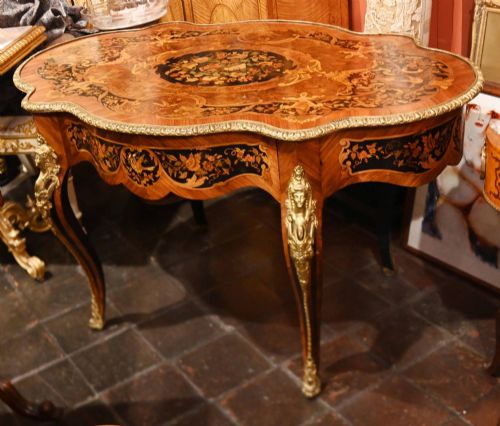
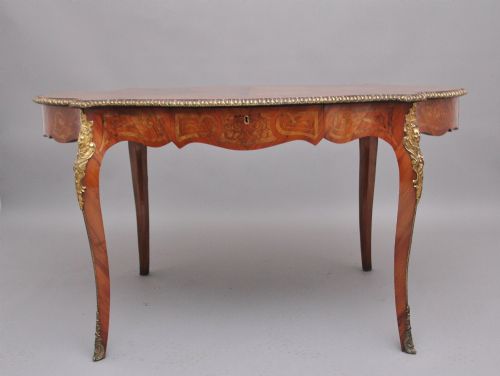
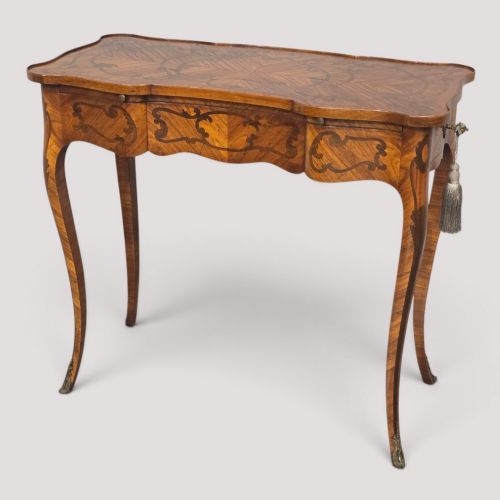
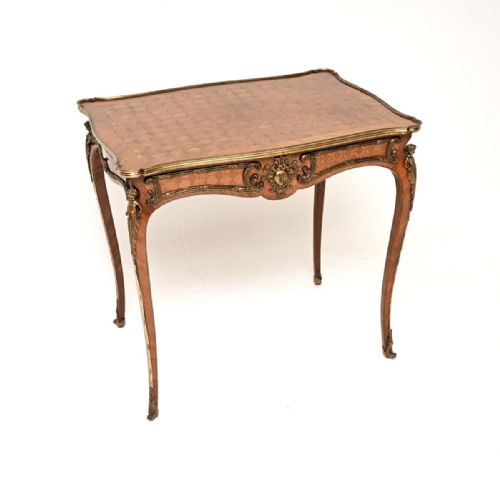
The pieces appearing on this page range from small kidney-shaped ladies tables to larger desks fitted with drawers and inset leather writing surfaces. Many adopt the sweeping lines of French rococo design, showing cabriole legs and decorative mounts that echo eighteenth-century models while utilising nineteenth-century manufacturing methods.
Makers and workshops from London and Paris produced these writing desks using rich veneers, combining walnut with exotic timbers and intricate floral marquetry. Whether styled as a compact ladies writing desk or a grander library table, the form remains defined by its finished reverse and central placement within a room.
Factors of quality
Quality rests upon the choice of veneer and the precision of the marquetry, where select cuts of burr walnut display deep, natural figuring matched symmetrically across the desk top. Inferior versions rely on plain timber or repetitive stamped patterns rather than hand-cut wood inlay.
The refinement of the cast ormolu mounts distinguishes finer examples, as crisp chasing and heavy gilding separate detailed metalwork from softer, more mechanically produced fittings. Structural integrity also dictates value, seen in the smooth operation of drawers and the seamless integration of freestanding backs.
Listings feature walnut bureau plat desks predominantly from the nineteenth century, spanning Victorian interpretations and French revival forms.
JAS Shoolbred·Edwards & Roberts·Mercier Frères
The Walnut Bureau Plat Glossary
- Bureau plat
- A flat-topped writing table designed to stand away from the wall in the middle of a room. These desks typically feature one or more drawers in the frieze.
- Ormolu
- Gilded bronze mounts applied to furniture for decoration and edge protection. This technique was widely utilised on French and English revival pieces.
- Marquetry
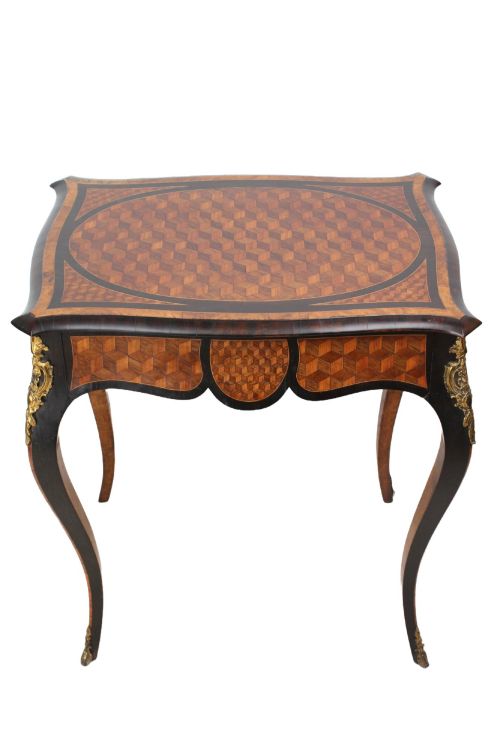
- Decorative patterns formed by fitting together small pieces of coloured veneers into wood panels. Floral and geometric designs appear frequently on nineteenth-century surfaces.
- Parquetry
- Geometric wood inlay forming mosaic patterns such as cubes or chequers. This technique decorates the top and sides of many writing tables.
- Sabot
- A metal shoe fitted to the foot of a cabriole leg. These mounts protect the base of the leg and echo the styling of earlier French furniture.
- Cabriole leg
- A furniture leg curving outward at the knee and inward at the ankle, ending in a foot. This shape defines the Louis XV revival style seen across many desks.
Walnut Bureau Plat: Frequently Asked Questions
What is a bureau plat?
A bureau plat is a flat-topped writing table finished on all sides so it can stand in the middle of a room rather than against a wall.
Unlike traditional desks that require a wall for backing, these tables display decorative veneers and mounts across the rear as well as the front.
Where should I place a bureau plat?
These tables find their natural home in the centre of a study, library, or drawing room where their finished back can be seen.
They also function effectively as dressing tables or console writing desks when positioned to allow all-round access.
How do I care for the leather top?
The leather writing surface benefits from occasional cleaning with a damp cloth followed by a neutral leather cream to maintain suppleness.
Avoid using harsh chemical polishes or excessive water, which can damage the surrounding wood veneer and gold tooling.
How do I distinguish revival styles?
Louis XV revival pieces typically display asymmetrical floral marquetry, sweeping cabriole legs, and prominent ormolu mounts.
Later Victorian interpretations often blend these French influences with sturdier English cabinet-making proportions and darker walnut timbers.