
Inlaid Parquetry Table
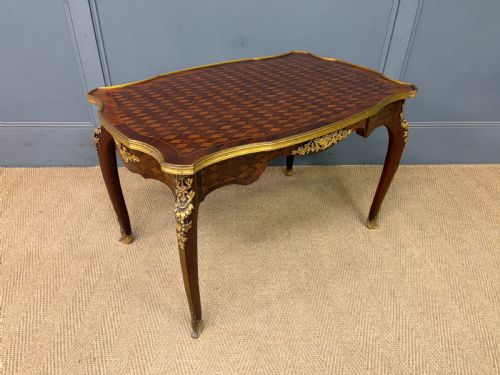
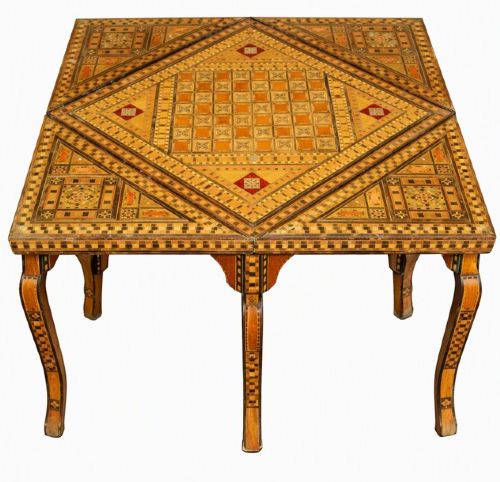
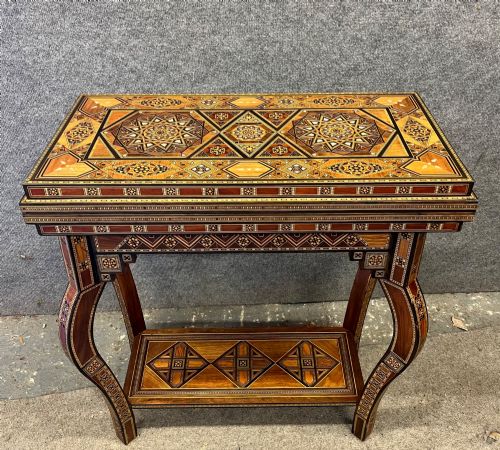
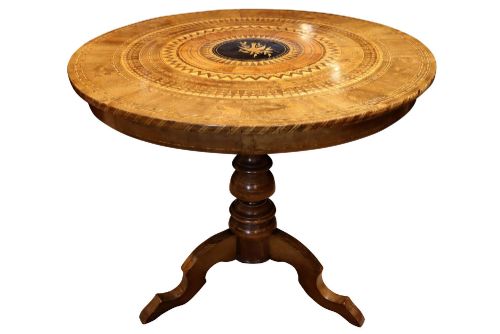
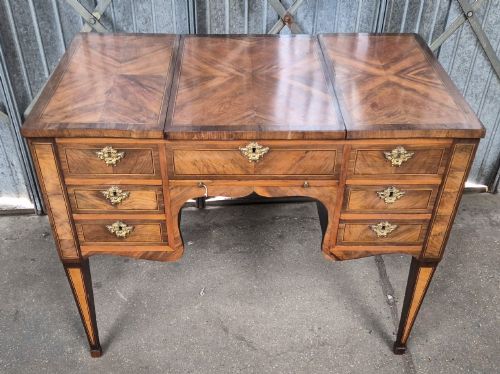
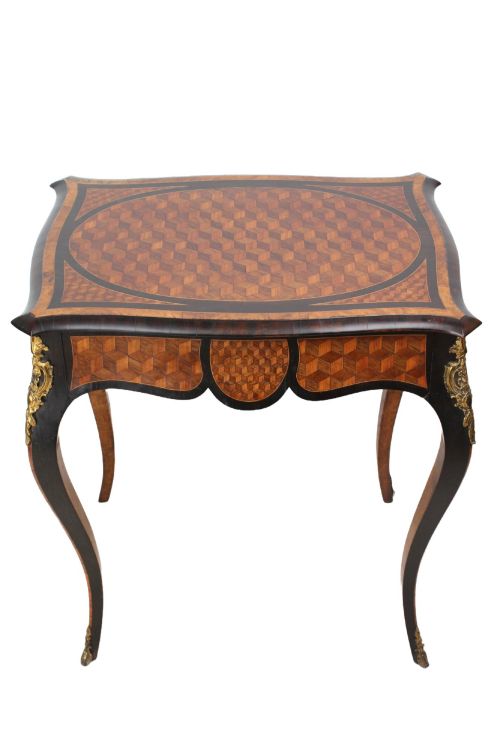
An inlaid parquetry table displays geometric wood veneers arranged to catch the light across occasional, games and writing forms.
Inlaid Parquetry Table
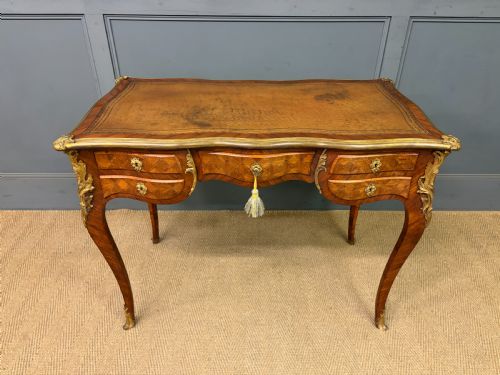
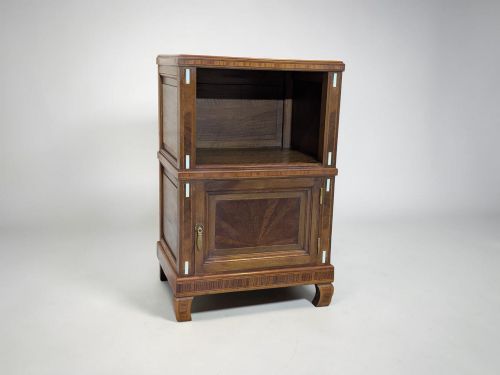
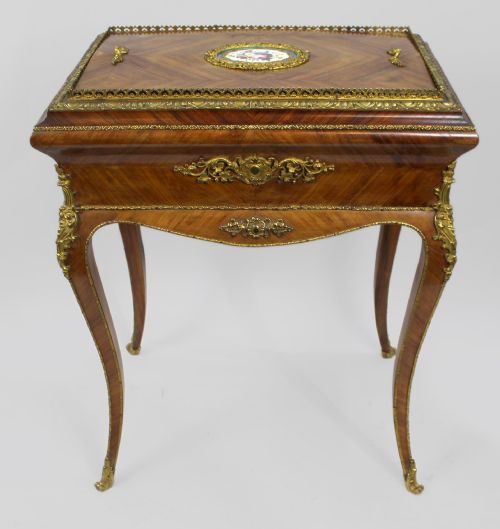
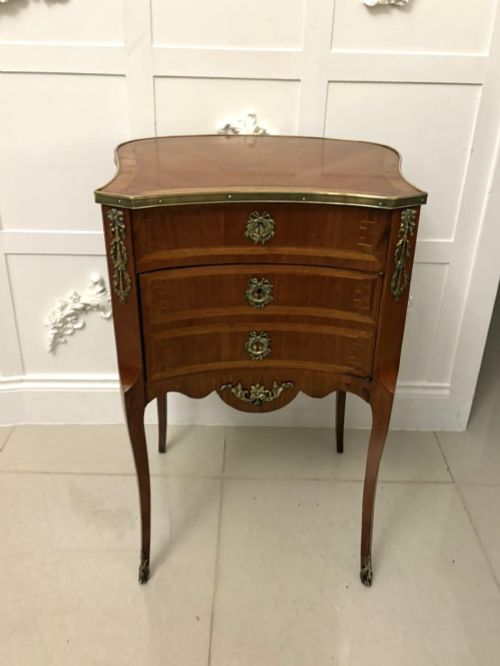
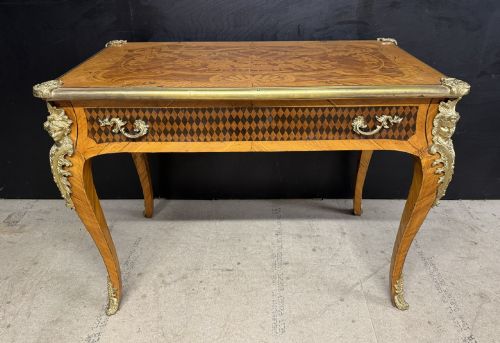
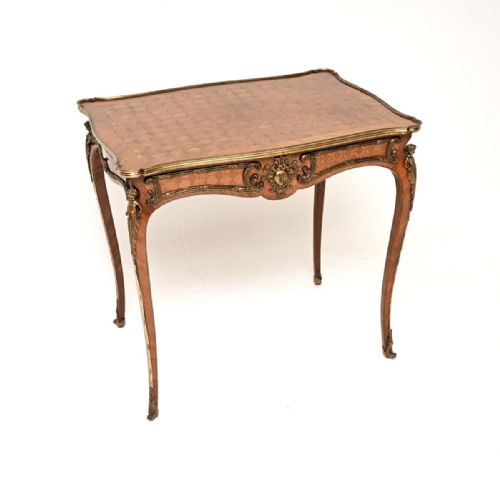
When browsing an inlaid parquetry table, collectors encounter functional furniture pieces from the nineteenth and early twentieth centuries designed primarily for salons, drawing rooms and studies. The selection spans distinct forms including card and chess tables, compact bedside cabinets, writing desks and occasional lamp tables. French workshop influences dominate, particularly in Louis XV and XVI revival styles featuring curved legs and bronze mounts, alongside British Victorian walnut and rosewood iterations.
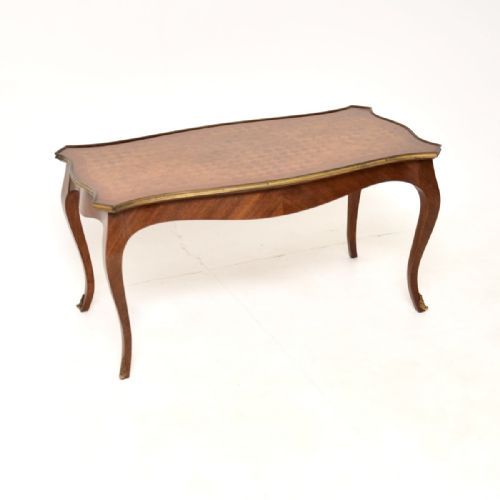
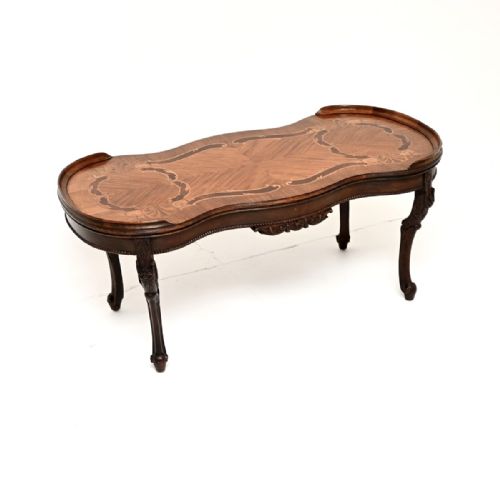
Occasional and coffee tables represent the most frequent formats encountered on the market today. These utilitarian surfaces adapt easily to contemporary interior spaces while retaining period character through contrasting wood geometries. Smaller writing desks and games tables also appear regularly, offering folding tops or fitted compartments beneath their patterned surfaces.
Materials and construction
Cabinet makers constructed these pieces using dense structural timbers like mahogany, walnut and oak as a supportive carcase. Finer exotic woods such as kingwood, rosewood, satinwood and boxwood were sliced into thin veneers to form the geometric surface patterns. Carpenters applied these contrasting elements meticulously onto the core structure to prevent warping while displaying natural grain variations.
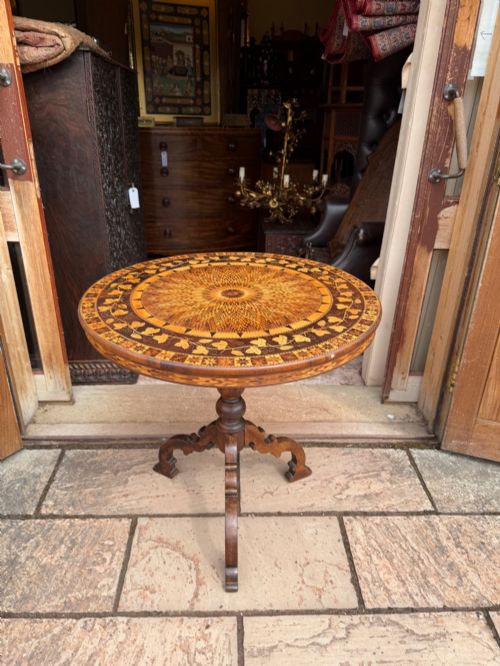
Metal mounts in ormuolu and brass frequently complemented the woodwork on revival pieces, framing corners and edges. Specialised techniques including marquetry and Tunbridge Ware occasionally accompanied the core parquetry, introducing floral motifs or microscopic wood mosaics alongside the geometric cubes and zigzags.
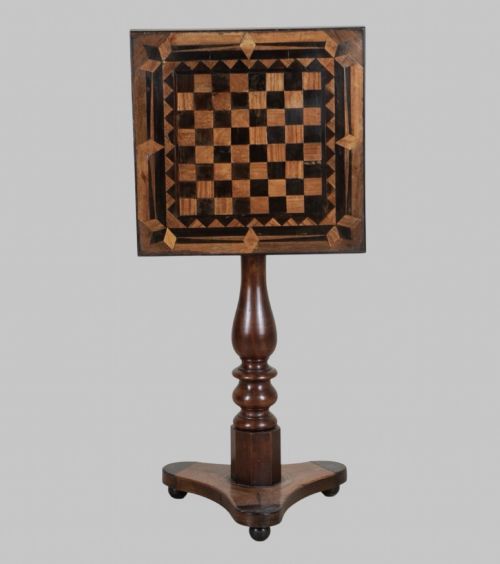
Some nineteenth-century tables cleverly hide entire backgammon boards and chess squares beneath unassuming folding lids built for tea.
Indicators of quality
Quality rests upon the precision of the veneer work and the harmonious selection of timber tones. Superior examples exhibit seamless joints within the geometric patterns where individual wood blocks meet without visible filler or gaps. The underlying timber choice also dictates grade, with dense exotic species and heavy native burrs marking higher tiers of production.
Structural integrity and hardware refinement separate standard items from exhibition pieces. Original fire-gilt ormolu mounts, well-figured secondary timbers inside drawers, and stable, balanced frames denote skilled workshop execution. Attribution to notable makers adds further distinction to surviving pieces.
JAS Shoolbred·Gillows·Ralph Turnbull·Anton Seuffert·Sormani·Collingson & Lock
The Inlaid Parquetry Table Glossary
- Parquetry
- Geometric mosaic woodwork formed by fitting small pieces of veneer together to create repeating patterns like cubes, hexagons or triangles.
- Marquetry
- The art of applying decorative veneer pieces to a structure to form pictorial or floral designs rather than strict geometric arrangements.
- Ormolu
- Gilded bronze mounts and decorative trimmings applied to furniture surfaces during the eighteenth and nineteenth centuries.
- Bureau Plat
- A formal freestanding writing desk featuring a rectangular top and one or more drawers along the frieze.
- Kingwood
- A dense, richly figured Brazilian timber displaying dark violet and brown tones, frequently utilised in high-end French cabinet making.
Inlaid Parquetry Table: Frequently Asked Questions
What is an inlaid parquetry table?
An inlaid parquetry table is a decorative item of furniture featuring geometric patterns created by assembling small pieces of various coloured wood veneers onto a solid carcase.
These surfaces often appear on nineteenth-century occasional, games, and writing furniture designed for formal reception rooms.
How were games tables used historically?
Games tables served as versatile furniture for card playing, chess, and backgammon during evening gatherings in Victorian and Edwardian drawing rooms.
Their folding or swivel tops concealed specialised playing surfaces and storage compartments for gaming pieces when not in use.
How do I care for a wood parquetry table?
Maintaining these tables requires keeping them away from direct sunlight and extreme humidity fluctuations to prevent the delicate veneer from lifting.
Gentle dusting with a dry cloth and occasional application of appropriate furniture wax preserve the polished finish without harming the historic wood.
How can I tell the period of a table?
Dating relies on examining the construction methods, secondary interior timbers, and stylistic traits like revival mounts or specific veneer combinations.
Nineteenth-century examples often exhibit hand-cut dovetails and distinct French or British cabinet-making characteristics associated with documented periods.