




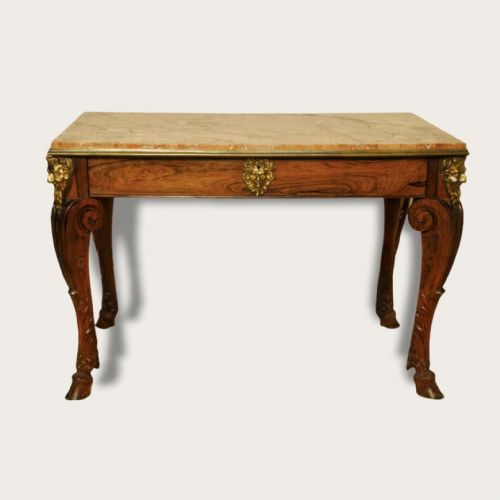


Carved Lion Leg Table
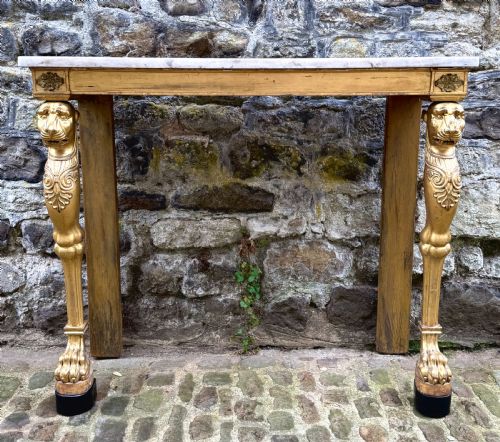
A carved lion leg table brings formidable classical presence to a room, uniting robust timber framing with sculptural animalistic supports.
Carved Lion Leg Table
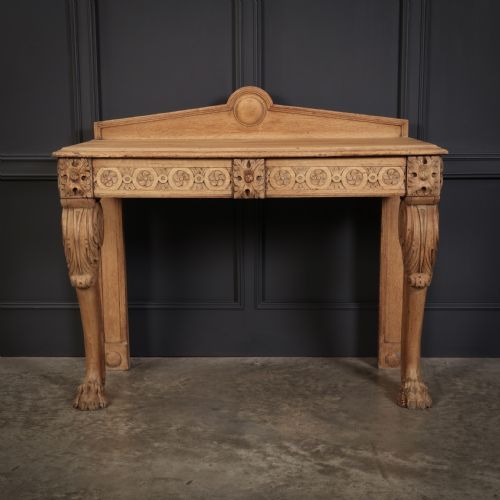
A carved lion leg table stands as a commanding item of period furniture, typically encountered in forms such as console tables, centre tables, and sideboards. These pieces draw upon Georgian, Regency, and Victorian design traditions, incorporating fierce leonine supports that anchor the overall composition.
The selections available span multiple centuries, reaching from the eighteenth century through the nineteenth century and into the early twentieth century. Mahogany and oak dominate the material palette, often accompanied by marble tops or giltwood highlights to enhance the visual weight.
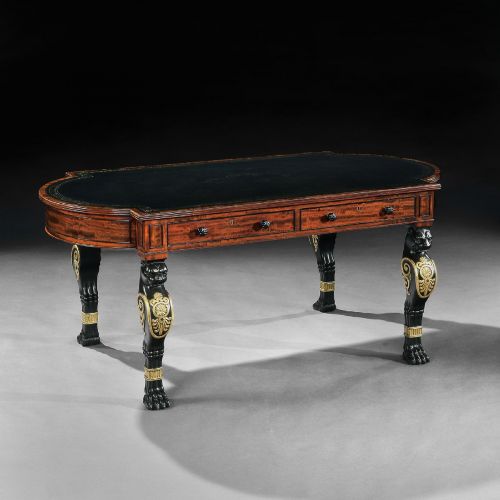
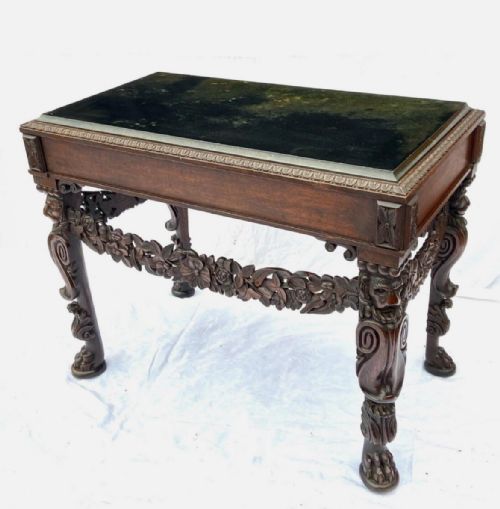
Console tables and serving tables appear frequently alongside library tables and writing desks. Buyers encounter diverse stylistic influences, including Irish Regency and Victorian Gothic Revival, each interpreting the iconic lion paw foot with distinct regional flair.
How they were made
Cabinetmakers constructed these tables using dense timbers like mahogany, oak, and padouk, selecting mature woods capable of supporting intricate hand-carved details. Structural stability relied on traditional joinery, ensuring that heavy console and centre tables could bear the weight of marble slabs and decorative objects.
Carvers applied chisel and gouge directly to the solid wood to shape the muscular contours of the lion legs and paw feet. Gilding, ormolu mounts, and brass detailing frequently accented the primary timber framework, while specialised finishes such as ebonising provided stark visual contrast.
The listings here span the Georgian, Regency, Victorian, and Edwardian periods, utilising primary materials such as mahogany, oak, and padouk.
What varies in quality
Depth and crispness in the carving separate ordinary examples from exceptional ones, particularly around the fur texture and the articulation of the claws on the lion paws. The selection of timber grain also dictates the visual appeal, with well-figured mahogany and richly patinated oak commanding greater presence.
Proportion and structural integrity define the higher tiers of craftsmanship, ensuring the heavy sculptural legs balance harmoniously with the table top. Integration of secondary materials, such as finely chased brass mounts or intact marble slabs, further distinguishes superior pieces.
George Smith·Mack Williams And Gibton
The Carved Lion Leg Table Glossary
- Console table
- A table designed to stand against a wall, traditionally fixed with brackets and supported at the front by two ornamental legs. These pieces frequently feature prominent carved lion legs and marble tops.
- Paw foot
- A furniture foot carved to resemble the paw of a beast, most commonly a lion in classical and neoclassical design. This motif provides a dramatic termination to heavily carved vertical supports.
- Giltwood
- Timber that has been coated with a thin layer of gold leaf or gold paint to simulate solid gold. It appears frequently on Regency and neoclassical frames to catch the candlelight.
- Ormolu
- Gilded bronze used for decorative mounts and accents on nineteenth-century furniture. The technique involves applying a mercury and gold amalgam to shaped bronze.
- Padouk
- A heavy tropical hardwood valued for its durability and deep reddish-brown colour. Cabinetmakers utilised this timber for robust side tables and console forms.
Carved Lion Leg Table: Frequently Asked Questions
Where should I place a console table?
A console table naturally suits an entrance hall, a dining room, or the rear of a sofa where its decorative profile remains visible. Because these tables often feature finished backs or rely on wall support, positioning them against a primary wall highlights the carved lion legs.
In living spaces, they serve as display surfaces for lamps, ceramics, or books. Their narrow footprint allows them to occupy circulation areas without obstructing movement.
How do I care for antique timber?
Maintaining antique mahogany and oak requires stable indoor humidity and protection from direct sunlight to prevent the timber from drying or cracking. Regular dusting with a soft, dry cloth preserves the finish without abrasive buildup.
Avoid placing these tables directly against heating sources or in damp environments. Professional wax polishing applied sparingly every few years helps nourish the grain and maintain the natural lustre of the wood.
What defines the Regency style?
Regency design draws heavily on classical antiquity, incorporating motifs from ancient Greece, Rome, and Egypt into British interiors. Furniture from this era emphasises architectural clarity, balanced proportions, and dramatic decorative accents.
Tables from this period frequently showcase giltwood, ormolu mounts, and confident animalistic supports like lion paw feet. The overall aesthetic balances structural severity with lavish surface ornamentation.