

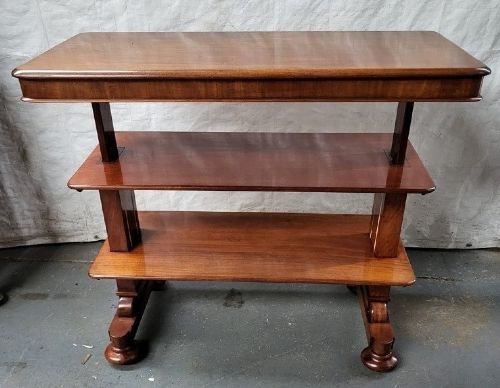

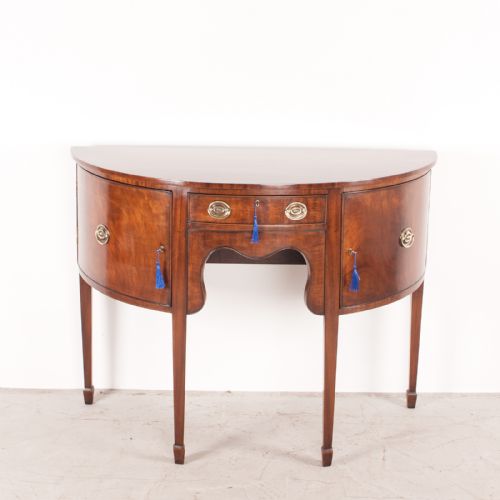
Regency Sideboard Table
A regency sideboard table brings architectural balance and rich timber into a dining room or hall.

What a regency sideboard table is
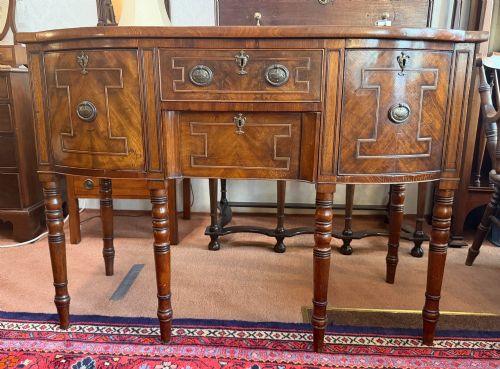
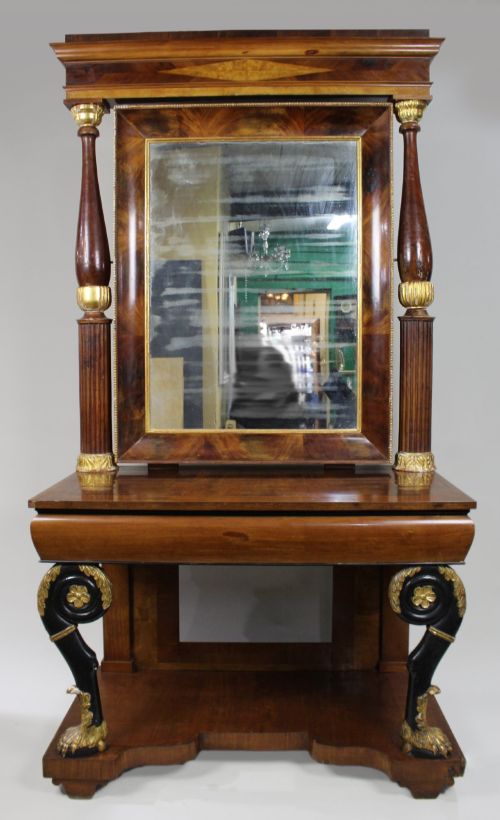
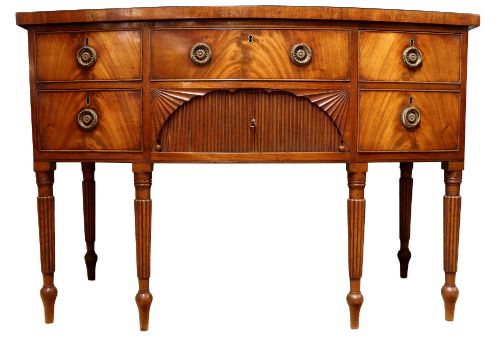
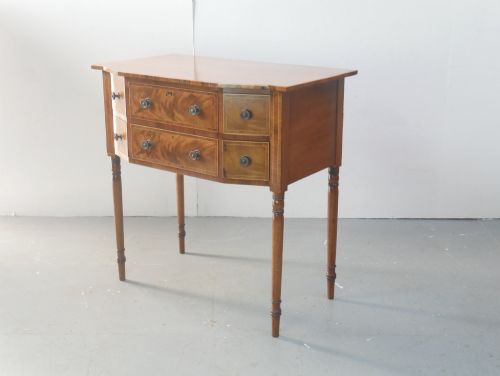
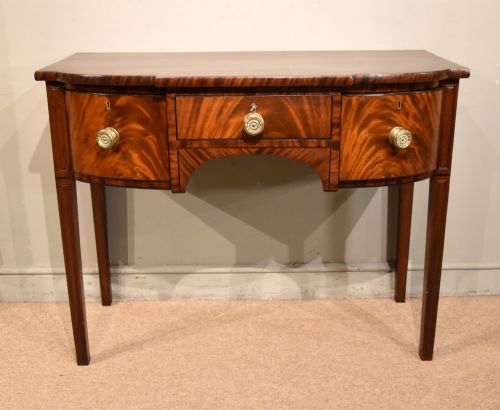
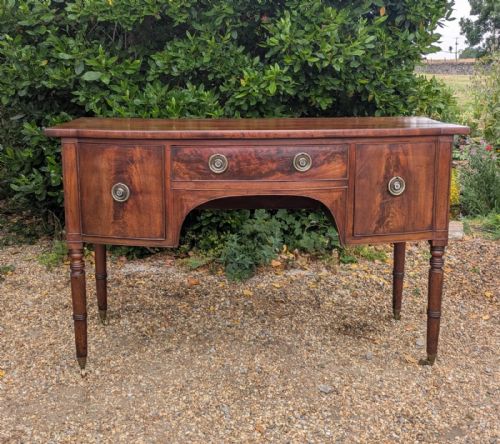
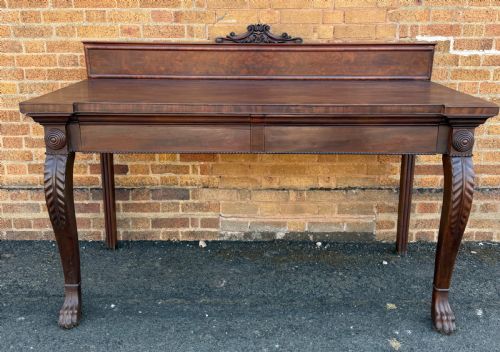
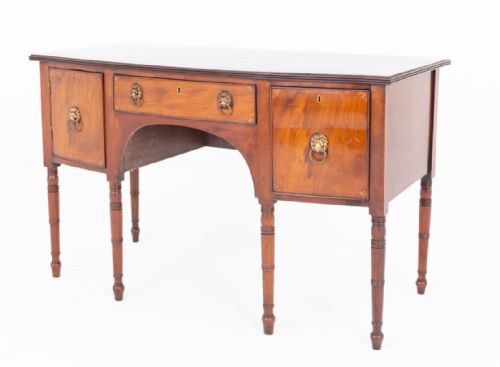
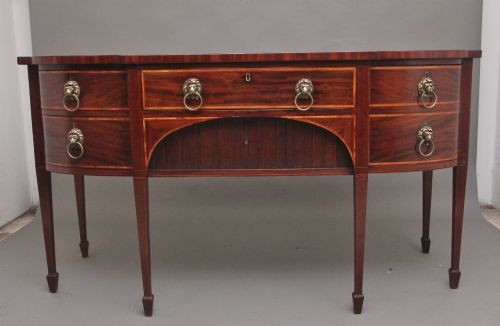
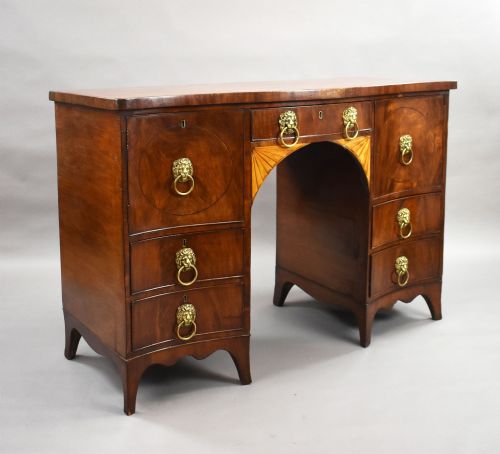
When you search for a regency sideboard table, you are looking at substantial dining room and hall furniture designed to hold plate and serve meals. The pieces listed here span the Regency, 19th Century and Victorian periods, taking forms such as serving tables, console tables, sideboards and buffets.
The most common form on this page is the mahogany serving table, often built with a long rectangular or breakfront top. You will also encounter Irish Regency examples, metamorphic buffets and pieces with flame mahogany veneers.
Origins range from English workshops to Irish makers, reflecting the classical tastes of the early nineteenth century. These tables served both practical dining functions and display purposes in formal interiors.
How they were made
Cabinet makers utilised solid mahogany and applied flame mahogany veneer to large flat surfaces to create striking grain patterns. Fine brass mounts, handles and inlay work in ebony added decorative contrast to the dark timber.
Construction techniques relied on heavy framing to support long serving surfaces without sagging. Carved details appeared on legs and borders, using hand tools to shape classical motifs.
Retail Price Guide 2026
Typical UK retail prices for regency sideboard table, calculated from the Sellingantiques database of over a million retail prices indexed since 2003. This retail price guide relies exclusively on Sellingantiques data; no external sources or auction records are used, so the figures do not describe the wider market.
Recorded periods span the Regency, 19th Century and Victorian eras, with styles covering Irish Regency and neoclassical designs.
What varies in quality
The distinction between ordinary and superior examples lies in the selection of the timber and the crispness of the carving. Flame mahogany veneers chosen for symmetry and depth elevate a piece significantly above plain stock.
Proportion and architectural restraint define the better tables. Pieces attributed to notable makers show superior joinery and more refined brass detailing.
Mack Williams and Gibton·George Smith·Wilkinson London·George Oakley
The Regency Sideboard Table Glossary
- Flame mahogany
- A veneer cut from timber where the branch meets the trunk, producing a rippled, flame-like grain pattern. This timber was prized for principal display surfaces on high-end furniture.
- Breakfront
- A piece of furniture where the central section projects forward from the flanking wings. This architectural layout creates depth and shadow on serving tables.
- Serving table
- A long table designed for dining rooms to hold dishes before service. Unlike sideboards with enclosed cupboards, traditional serving tables are usually open beneath the top.
- Metamorphic
- Furniture engineered to transform from one form or use into another. In this category, buffets adapt to serve multiple functions within a room.
- Console table
- A table fixed against a wall, often supported by brackets or ornate legs. These pieces functioned as decorative surfaces in formal hallways and reception rooms.
Frequently Asked Questions
What is the difference between a sideboard and a serving table?
A serving table is typically an open-frame table designed for presenting food and plate during dining. Sideboards frequently incorporate enclosed cupboards, drawers and cellarets for storage.
In practice, makers and historic descriptions often used the terms interchangeably, particularly for larger Regency pieces.
How do I identify a genuine Regency piece?
Look for timber selection, construction methods and classical design proportions characteristic of the early nineteenth century. Genuine pieces utilise solid mahogany framing, often with flame veneers and subtle brass details.
Attributions or maker stamps can confirm origin, though many fine tables remain anonymous.
Where should I place a serving table in a modern home?
These long tables suit dining rooms for their original purpose of holding serving dishes and glassware. They also function well in wide hallways or living rooms as console surfaces.
Ensure the room has sufficient length to accommodate the proportions of a breakfront or large serving table without crowding.
What woods were used in these tables?
Mahogany is the dominant timber across these listings, valued for its stability and deep reddish-brown colour. Cabinet makers enhanced the appearance by applying flame mahogany veneers to drawer fronts and tabletops.
Ebony inlay and brass fittings provided contrast against the dark mahogany background.