


Regency Monopodium Table
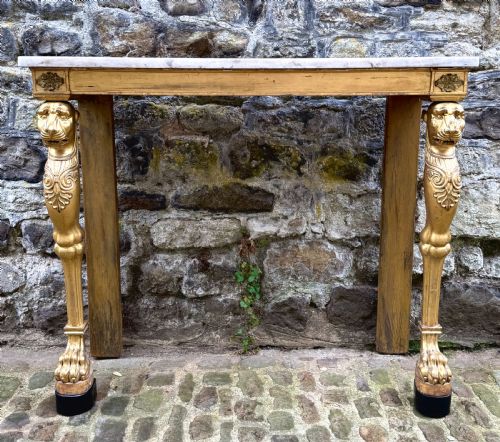
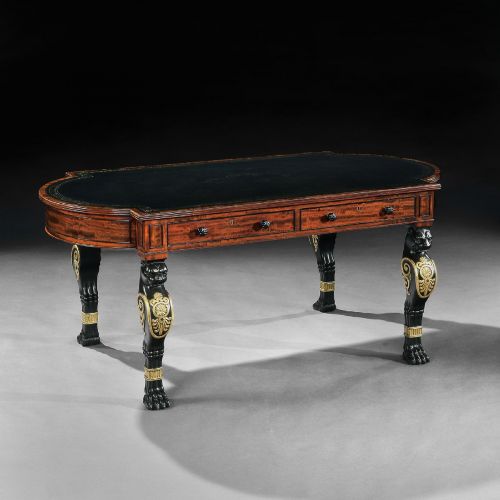
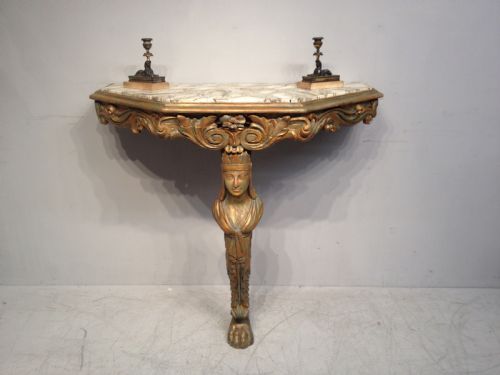
These regency monopodium table listings bring together grand neoclassical console tables, serving tables and desks supported by single animal legs.
Regency Monopodium Table
When you search for a regency monopodium table, you are looking at nineteenth-century console tables, serving tables and writing desks that draw heavily on classical antiquity. These pieces are defined by their heavy architectural presence and their distinctive single-pillar or single-leg supports, echoing ancient Roman and Greek furnishings. The examples you are most likely to encounter here date from the Regency and nineteenth-century periods, often finished in mahogany, painted wood or rich giltwood.
The forms vary across dining and drawing room furniture, taking shape as serving tables, partners desks, chiffoniers and console tables. Neoclassical and French Empire influences dominate the styles, frequently incorporating Irish Regency variations alongside standard English cabinet-making. Many of these tables rely on marble tops or elaborate carved timber frames to achieve their characteristic formal weight.
Materials and construction
Cabinet-makers of the period relied on dense hardwoods like mahogany and rosewood, alongside burr oak and ebonised wood for striking visual contrast. These timbers were often paired with marble tops, giltwood details and painted finishes to capture the opulent interior aesthetic of the early nineteenth century.
Structural elements frequently incorporated carved brass mounts and bronze or silvered metalwork to accent the primary timber forms. Joinery techniques supported heavy breakfront designs and robust console bases without relying on visible mechanical fasteners.
Judging quality in these tables
Quality rests in the crispness of the carving on the giltwood and the depth of figure in the mahogany or burr oak timber. Finer pieces demonstrate superior proportion in their architectural elements, where the scale of the base supports the weight of the marble or timber top with absolute harmony.
Attribution to prominent workshops or known cabinet-makers elevates certain examples above standard production pieces. The integration of bronze mounts, silvered metalwork or painted details also separates ordinary utilitarian tables from works designed for grand reception rooms.
Mack Williams And Gibton
The Regency Monopodium Table Glossary
- Monopodium
- A single-pillar table support or pedestal, usually terminating in an animal paw or claw foot. This form derives directly from ancient Roman stone and bronze tables.
- Console table
- A table designed to stand against a wall, frequently secured to it rather than standing entirely free. These pieces often feature elaborate front legs while relying on wall brackets for balance.
- Chiffonier
- A low cabinet or sideboard introduced in the early nineteenth century, typically featuring shelves or enclosed storage beneath a rectangular top. They served practical functions in dining rooms and libraries.
- Tazza
- A shallow saucer-shaped vessel or ornamental cup mounted on a stem and foot. These decorative items appear in bronze and silvered finishes alongside larger furniture forms.
- Breakfront
- A piece of furniture whose central section projects forward from the flanking wings. This architectural arrangement creates dynamic shadow and depth across large serving tables and chiffoniers.
Regency Monopodium Table: Frequently Asked Questions
Where were console tables placed?
Console tables were traditionally positioned against drawing room or hallway walls, frequently beneath large mirrors or window piers.
They served as display surfaces for decorative objects and lighting rather than active workspace tables.
How do I identify Regency style?
Regency style is marked by strict classical symmetry, clean architectural lines and decorative motifs borrowed from ancient Greece and Rome.
Cabinet-makers utilised dark hardwoods, giltwood accents and animal-form supports to achieve this formal aesthetic.
What is a partners desk?
A partners desk is a large double-sided writing table designed for two people to work opposite one another.
These pieces feature drawers and cupboards accessible from both long sides, making them suited for central placement in a library.