
Antique Hall Centre Table
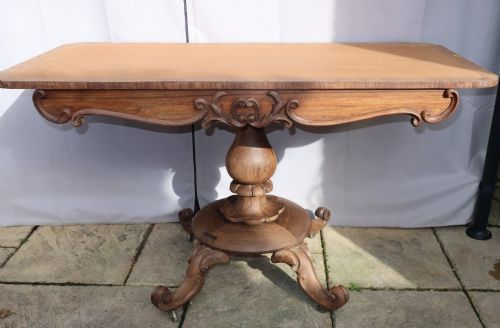
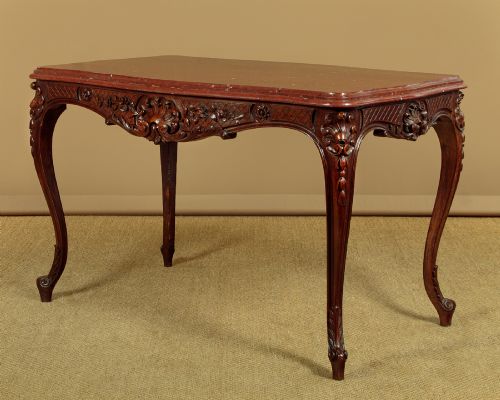
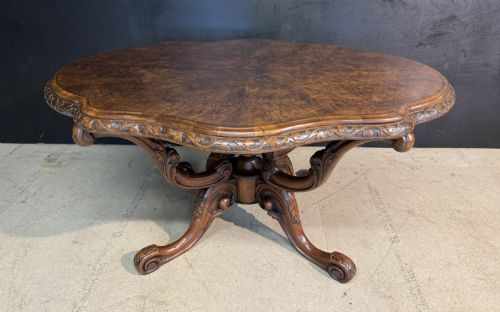
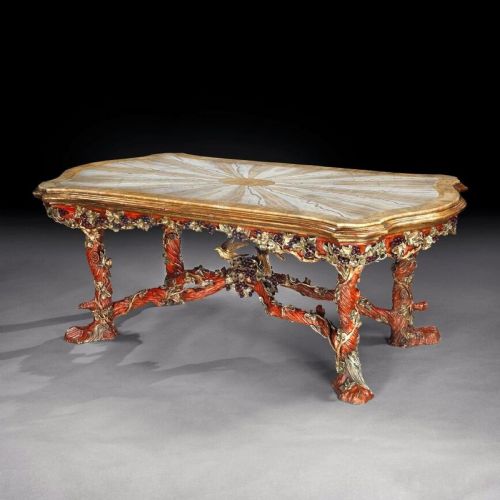
An antique hall centre table sits freely in a room, designed to be seen from every angle.
Antique Hall Centre Table
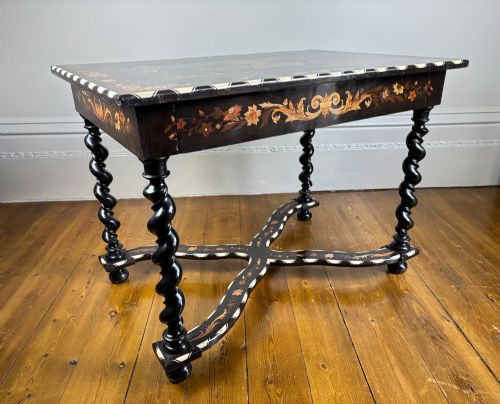
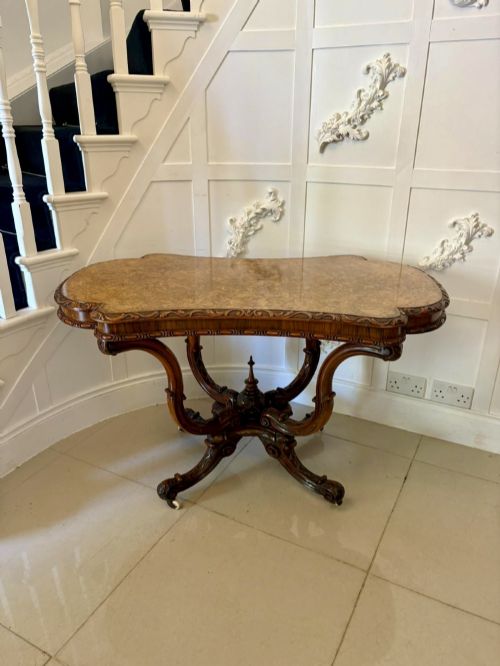
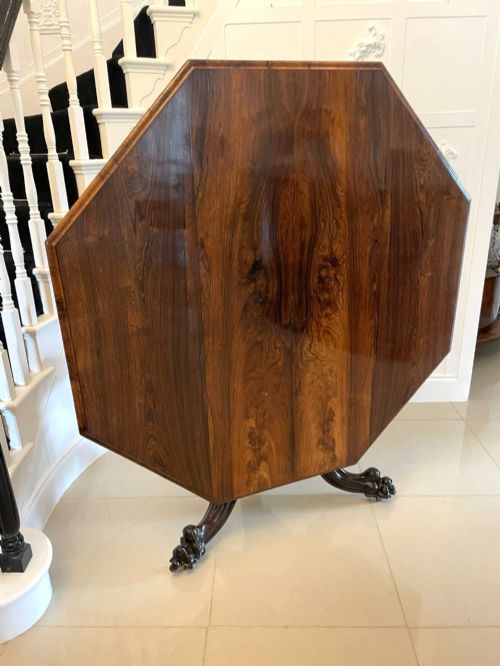
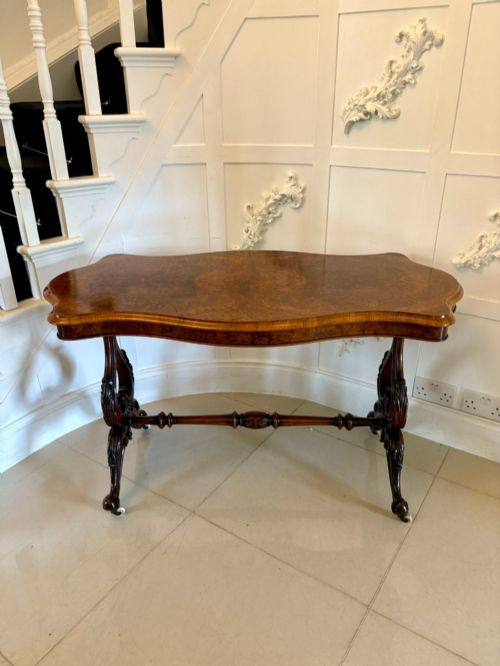
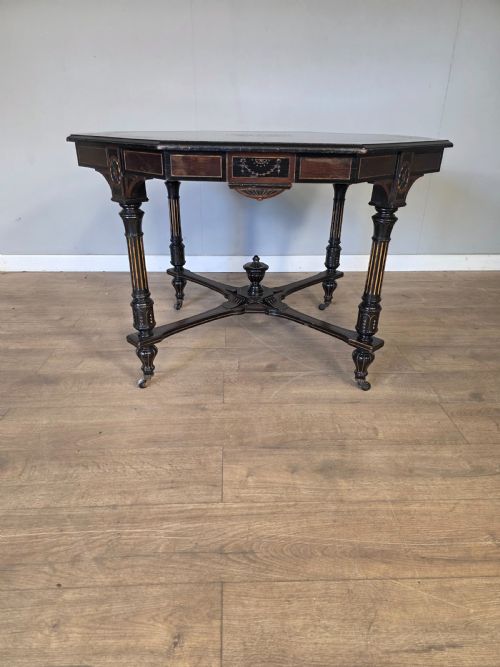
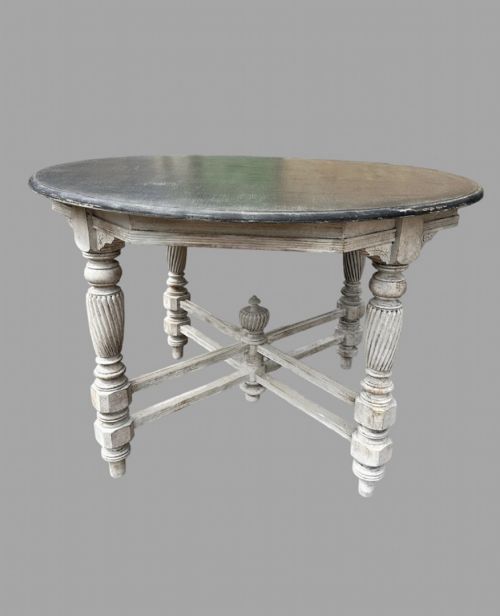
An antique hall centre table is designed to stand independently in the middle of a room or entrance hall rather than against a wall. The pieces you encounter most frequently on this page date from the nineteenth century, particularly the Victorian and Regency eras, though examples range from the eighteenth century to the Edwardian period.
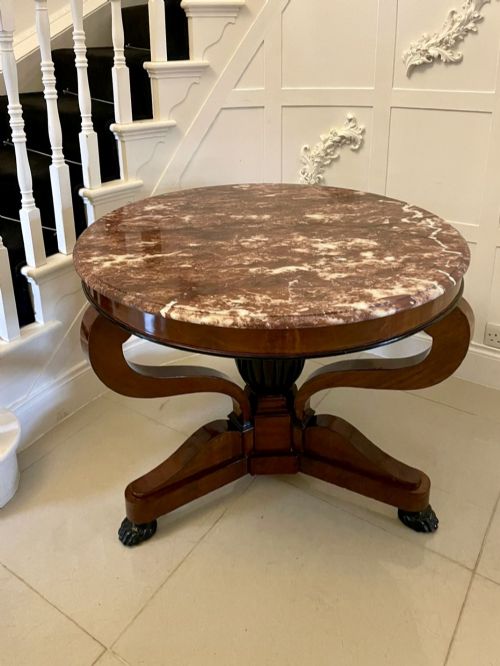
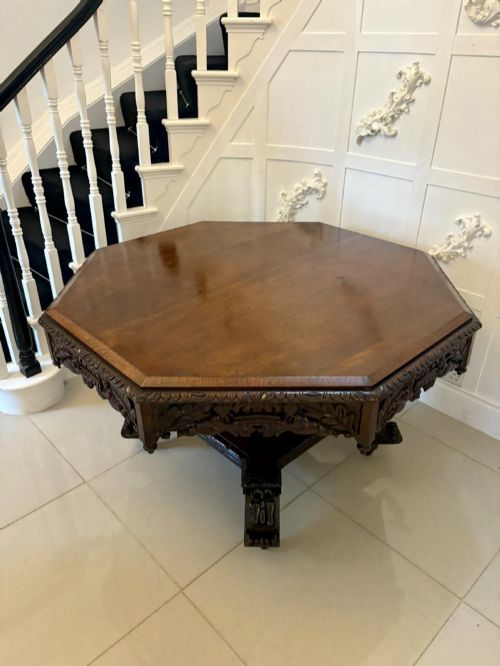
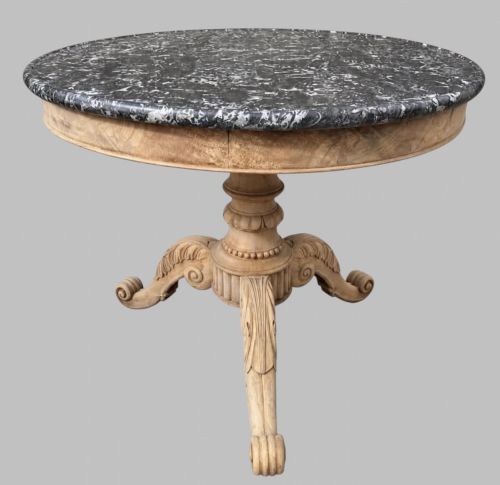
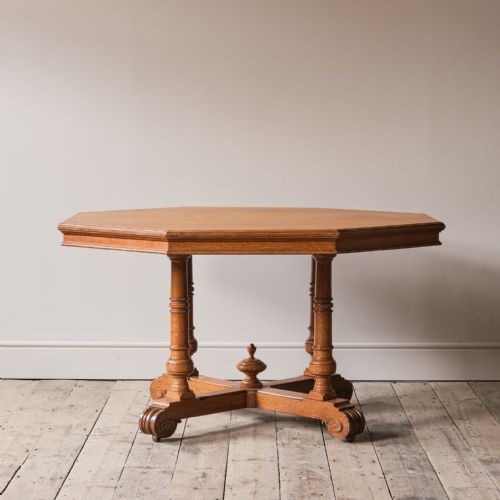
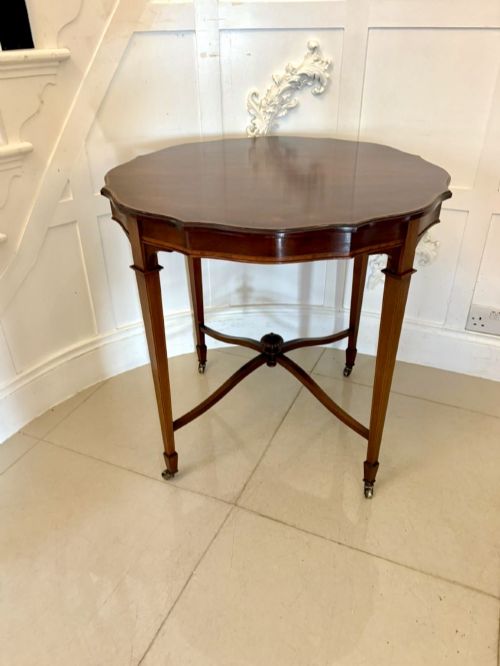
These tables take various structural forms, including circular pedestal gueridons, octagonal shapes, and larger rectangular library or dining formats. Woods such as mahogany, walnut, rosewood, and oak dominate, often finished with marquetry inlay or marble tops.
Originating from English, French, Irish, and Ceylonese workshops, they served practical functions as writing desks, display surfaces, and focal points for grand entrance halls.
How They Were Made
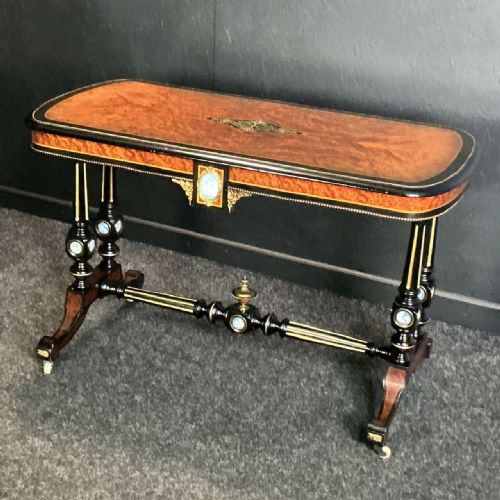
Cabinetmakers utilised dense hardwoods like mahogany, rosewood, and walnut, frequently applying burr veneers or satinwood inlays to create striking geometric and floral patterns on the top surfaces. Carved details, from scrolling foliage to dolphin supports, required skilled hand-chiselling on solid timbers.
Alternative materials introduce contrasting textures, such as white and rouge marble tops, polished brass mounts, and giltwood accents found on French and Regency pieces. Construction relied on robust joinery methods to support heavy stone inserts and central pedestals without wobbling.
Origin locations among the records include English, French, Irish, Swedish, Spanish, and Ceylonese workshops.
What Varies in Quality
The distinction between ordinary and exceptional pieces lies in the crispness of the hand-carving and the selection of timber veneers. Superior examples display meticulously matched burr walnut or intricate marquetry that flows seamlessly across the entire tabletop.
Structural stability and the clever integration of secondary timbers also separate fine workshop output from standard production. Tables bearing attribution to notable makers or featuring unusual native woods like Ceylonese calamander command greater attention for their sophisticated execution.
Gillows·Hindley And Sons·Holmes Baldock·Egan Workshop
The Antique Hall Centre Table Glossary
- Gueridon
- A small French round table, typically supported by a central pillar or three legs, often featuring a marble top.
- Marquetry
- Decorative veneer work forming intricate patterns using various woods, shells, or ivory inlaid into the surface.
- Pedestal
- A single central column supporting a table top, frequently resting on a triangular plinth with scrolled feet.
- Satinwood
- A durable, yellowish timber native to India and Ceylon, prized for its lustrous sheen and use in fine stringing.
- Sofa Table
- A rectangular piece fitted with drop leaves and parallel drawers, originally designed to stand before a sofa.
Antique Hall Centre Table: Frequently Asked Questions
Where should I place a centre table?
These tables are designed to occupy the middle of a spacious hallway, reception room, or drawing room. Because they are finished on all sides, they allow for a 360-degree view and act as a natural focal point.
Positioning one away from walls ensures lamps, floral arrangements, or decorative objects placed upon the surface can be admired from any direction.
How do I distinguish a Regency table?
Regency examples typically date from the early nineteenth century and feature classical architectural influences. Look for rosewood or mahogany timbers, brass inlay, and robust pedestal bases with carved paw feet.
Many incorporate architectural motifs drawn from ancient Greece and Rome, reflecting the aesthetic tastes of the period between eighteen-ten and eighteen-thirty.
What is the difference between a hall table and a centre table?
While standard hall tables are traditionally built with a flat back to sit flush against a wall, a centre table is fully finished on all four sides. It is constructed to stand unanchored in open floor spaces.
Many pieces listed as hall tables in archives share this freestanding architecture, allowing them to function effectively in both entryways and central rooms.
How do I care for a marble top table?
Marble surfaces require gentle cleaning with a damp cloth and neutral soap to avoid scratching the polished finish. Acidic liquids like wine or citrus juice can etch the stone if left unattended.
Applying a specialist stone wax periodically helps protect the porous surface while maintaining the soft sheen characteristic of nineteenth-century examples.