


French Restoration Centre Table
A french restoration centre table anchors a room with undeniable presence, offering a surface of marble or fine wood atop a sturdy pedestal.
French Restoration Centre Table
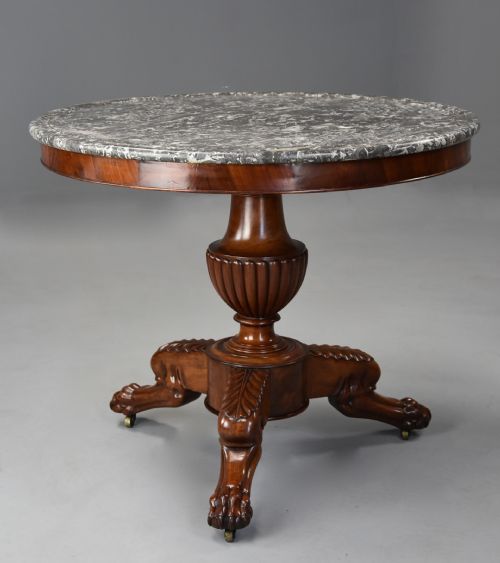
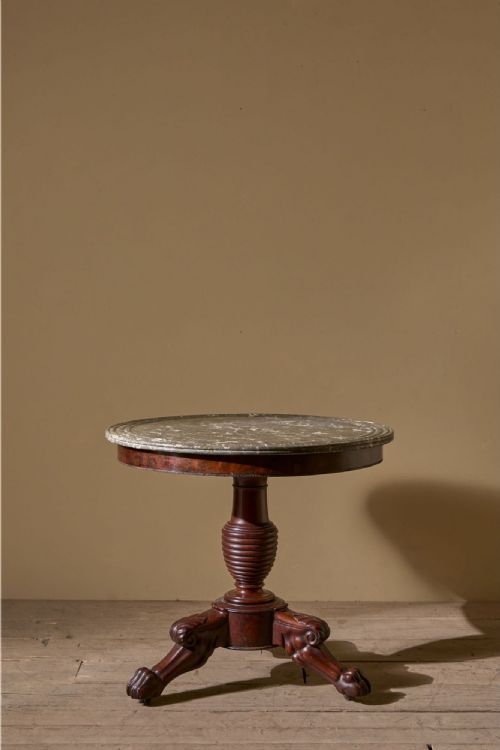
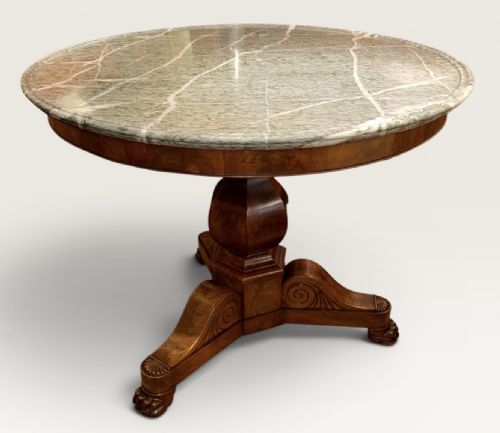
When you search for a french restoration centre table, you are looking at nineteenth-century freestanding pieces designed to sit in the middle of a room rather than against a wall. The examples on this page primarily take the form of the gueridon, a round table supported by a central pillar.
The periods and styles represented span the nineteenth century, including French Empire, French Restauration, Charles X, and Victorian eras. Alongside traditional centre tables and occasional tables, you will find side tables designed for versatile placement.
Makers and craftsmen of this era favoured domestic and imported timbers, frequently pairing rich veneers with cool stone tops. These pieces served both practical and decorative functions in period interiors, offering a generous display surface for lamps, books, or decorative objects.
How they were made
Cabinetmakers constructed these tables using a core of solid timber overlaid with decorative veneers such as flame mahogany, burr elm, and standard mahogany. Walnut and cherrywood also appear, alongside painted finishes that alter the visual weight of the furniture.
The upper surfaces rely heavily on inset slabs of marble or grey marble, providing a durable and cool counterpoint to the warm wood tones below. Brass accents and giltwood details frequently adorn the frames and mounts, catching the light and defining the structural lines.
Construction techniques prioritise stability, uniting heavy stone tops with sturdy central pedestals and substantial feet. The timber is chosen for its grain pattern, utilising the natural figures of flame mahogany and burr elm to decorative effect.
Listings feature nineteenth-century pieces spanning the French Empire, Charles X, and Victorian periods, constructed from mahogany, burr elm, marble, and brass.
What varies in quality
The grade of the timber veneer dictates much of the initial visual appeal, with highly figured flame mahogany and burr elm sitting at a different level than plain painted surfaces. Selection of the marble top also plays a part, particularly where veining is crisp and well-integrated.
Proportion and the handling of brass or giltwood mounts separate standard examples from finer pieces. A well-balanced pedestal and solid joinery ensure that the heavy stone tops remain supported without strain over decades of use.
The French Restoration Centre Table Glossary
- Gueridon
- A round freestanding table supported by a single central pillar, commonly found in nineteenth-century French interiors. These tables frequently feature marble inserts and were designed to stand in the middle of a room.
- Veneer
- A thin slice of decorative wood applied to a secondary timber core to create a figured surface. Flame mahogany and burr elm are typical examples seen on these tables.
- Giltwood
- Wood that has been treated with gold leaf or a gold-coloured finish to simulate solid gold. It appears on mounts and frames to highlight structural details.
- Marble
- A hard crystalline metamorphic rock used for the inset tops of these tables. Grey marble and veined varieties provide a smooth, cool surface resistant to everyday wear.
French Restoration Centre Table: Frequently Asked Questions
What is a gueridon table?
A gueridon is a round table with a single central pedestal support, typically designed to stand freely in the middle of a room rather than against a wall.
These pieces date across the nineteenth century and often feature decorative marble tops paired with mahogany, walnut, or burr elm veneers.
How do I style a centre table?
Because these pieces are finished on all sides for central placement, they work best when allowed space to breathe in the middle of a room or a large hallway.
A marble-topped version provides a durable surface for lamps or ceramics, while timber tops benefit from thoughtful placement away from direct heat sources.
What woods were used?
Cabinetmakers utilised a variety of timbers including mahogany, flame mahogany veneer, burr elm, walnut, and cherrywood. Painted finishes also appear on certain nineteenth-century examples.
These woods were frequently selected for their natural grain patterns and paired with brass mounts or marble inserts.
How do I identify the period?
Dating relies on stylistic cues from the French Empire, Charles X, and Victorian periods, alongside specific material choices like grey marble or giltwood.
Construction methods and the specific grain of veneers such as burr elm help differentiate the various nineteenth-century eras represented in the listings.