





Flame Mahogany Wine Table
Flame mahogany wine table examples combine striking veneers with compact tripod bases, offering a practical surface for a glass or lamp in any room.
Flame Mahogany Wine Table
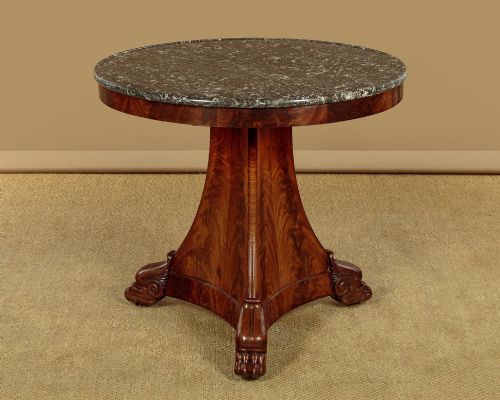
A flame mahogany wine table brings a rich, figured timber surface into a compact footprint, usually supported by a turned pillar and tripod legs. These occasional pieces served originally to hold glasses and decanters near seating areas, functioning today as versatile lamp or side tables.
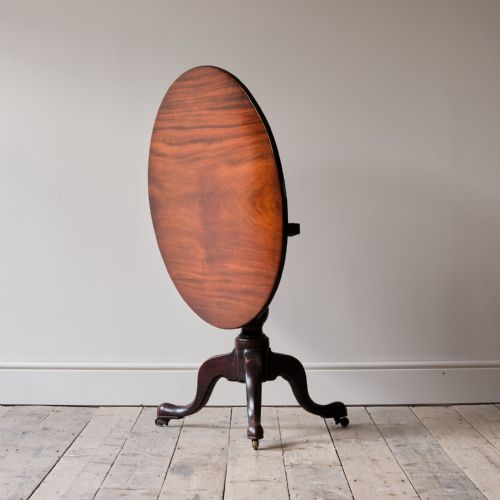
Most examples found here date from the Georgian, Regency, and Victorian periods, alongside later twentieth century revivals such as Edwardian and nineteen-thirty pieces. You will frequently encounter tilt-top mechanisms designed to tip the timber surface upright when not in use, saving floor space in smaller rooms.
Forms vary from round tops to octagonal and oval shapes, sometimes incorporating satinwood or boxwood stringing alongside the central flame grain. They bridge the gap between utilitarian furniture and decorative focal points, relying on the timber's natural figured patterns for visual impact.
Materials and construction methods
Cabinetmakers constructed these tables using solid mahogany for structural components like pillars and legs, while applying thin flame mahogany veneer to the top surfaces to showcase swirling grain patterns. Secondary timbers often included pine or oak beneath the veneers and drawer linings.
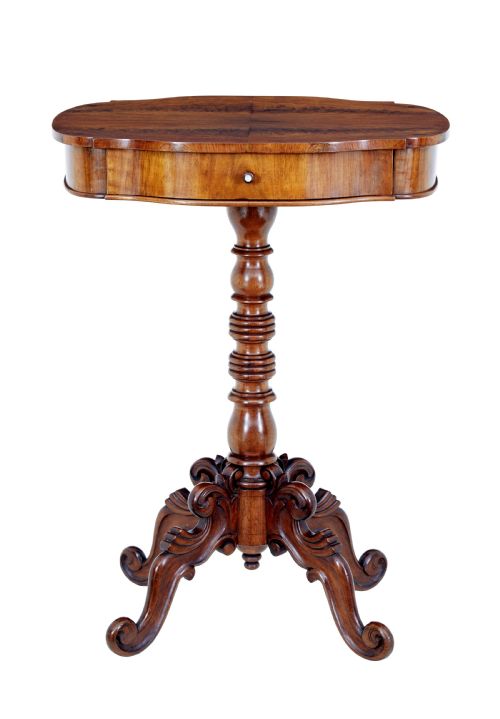
Tripod bases were shaped with precision to ensure stability on uneven floors, frequently featuring carved details, reeded columns, or barley twist turnings. Tilt-top mechanisms utilised sturdy brass catches and wooden blocks to allow the tabletop to pivot smoothly.
Inlays of satinwood and boxwood occasionally border the primary veneer panels, requiring careful hand-cutting and fitting into recessed channels within the mahogany field.
Flame Mahogany Wine Table Retail Price Guide 2026
Typical asking prices for flame mahogany wine table among the pieces listed under this phrase on Sellingantiques today, from the lower quarter to the upper quarter. They describe what is for sale here now, not the wider market.
Some nineteenth-century tables feature clever birdcage mechanisms beneath the top, allowing the surface to both tilt and rotate simultaneously for dizzying convenience.
What separates the finest examples
Quality rests primarily on the depth and symmetry of the flame veneer figure across the tabletop, where book-matched sections create a coherent, mirror-like pattern. Poorer examples utilise plain timber or veneer with patches and mismatched grains that disrupt the visual flow.
The sophistication of the turning and carving on the pillar and tripod legs distinguishes superior workshops from standard production. Crisp detailing in the acanthus leaves, reeding, or barley twist columns indicates a higher standard of craftsmanship than soft, rounded edges.
Structural integrity of the tilt-top mechanism and the tightness of the joints where the legs meet the central column determine long-term durability and stability.
The Flame Mahogany Wine Table Glossary
- Flame mahogany
- A decorative veneer cut from the fork of the mahogany tree where branch meets trunk, producing a rippling, flame-like grain pattern. It requires skilled application to prevent splitting over time.
- Tilt top
- A tabletop mounted on a hinged block that allows the surface to pivot into a vertical position. This clever mechanism enabled tables to be stored flat against a wall when not in use.
- Tripod base
- A furniture support consisting of three curved legs radiating from a central pillar. This design provides maximum stability on uneven floorboards.
- Barley twist
- A type of turning that resembles a spiralling rope or barley sugar stick. Cabinetmakers carved or shaped this motif into table columns during the nineteenth century.
- Stringing
- Thin inlay lines of contrasting timber, such as boxwood or satinwood, set into the surface of the mahogany. It creates delicate geometric borders around table edges.
Flame Mahogany Wine Table: Frequently Asked Questions
What is a flame mahogany wine table?
A flame mahogany wine table is a small, portable antique table featuring a tripod base and a decorative top veneered in figured mahogany. They were originally designed to hold glasses and bottles near seating areas.
Today, these versatile pieces function well as lamp tables or side tables in living rooms and hallways, adding warmth and historical character to a corner.
How do tilt-top mechanisms work?
Tilt-top mechanisms use a wooden catch or a brass hook beneath the tabletop that locks the surface flat against the central pillar. Releasing the catch allows the top to pivot vertically on its hinges.
This ingenious historical design enabled servants to tuck the tables away against the walls of grand rooms when the evening's entertaining concluded.
Where should I place a wine table?
These compact tables fit effortlessly beside armchairs, sofas, or in narrow dead spaces like dark hallway corners. Their small footprint makes them ideal for resting a book or a drink without crowding the room.
Keep them away from direct heat sources and strong sunlight to protect the fragile mahogany veneers and polished finishes from drying out.
How do I tell Regency from Victorian examples?
Regency tables, dating from the early nineteenth century, typically favour clean classical lines, reeded columns, and brass paw feet. They reflect a refined restraint inspired by classical antiquity.
Victorian pieces from the mid-nineteenth century often introduce bolder forms, heavier proportions, and decorative details like barley twist turnings or elaborate carving on the tripod legs.