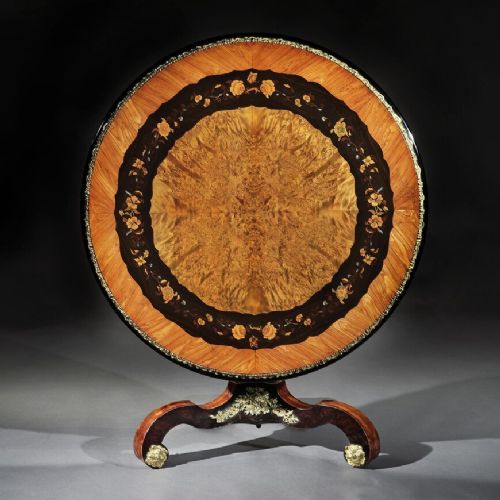
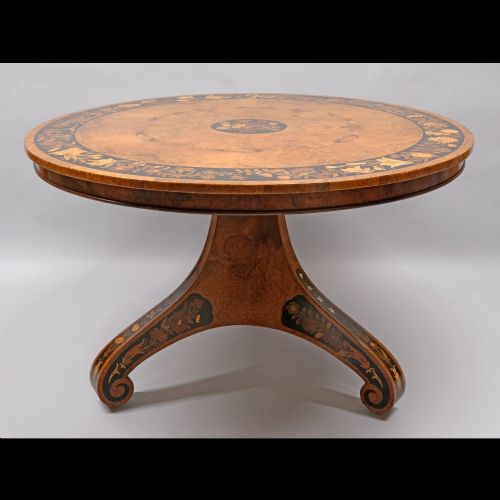
10,442  PAGES BROWSED TODAY PAGES TODAY • 16 ANTIQUES UPLOADED TODAYNEW ARRIVALS
GIFTS
16 ITEMS ADDED TODAY
Sort Order
Items Per Page
Browse Categories
Sort order
Relevant Links
Items per page
ID #SA1244266
FOR SALE
£18,000
Email Phone
Save
Fine C19th Marquetry Inlaid Centre Table, Attributed to Collinson + Lock
For sale by Patrick Moorhead Antiques
for sale €21,060     $22,860
£18,000
Patrick Moorhead Antiques

Patrick Moorhead Antiques

Sellingantiques Verified Since Feb 2018
Browse dealers 713 items
  • About Us
    Patrick moorhead has been one of the uk's finest trade-only antique furniture and art dealers for over 30 years.
  • Trade Associations
    Patrick Moorhead Antiques is a registered member of LAPADA 
Id #SA1244266
PDF SHARE
SAVE

Fine C19th Marquetry Inlaid Centre Table, Attributed to Collinson + Lock

19th century
Description

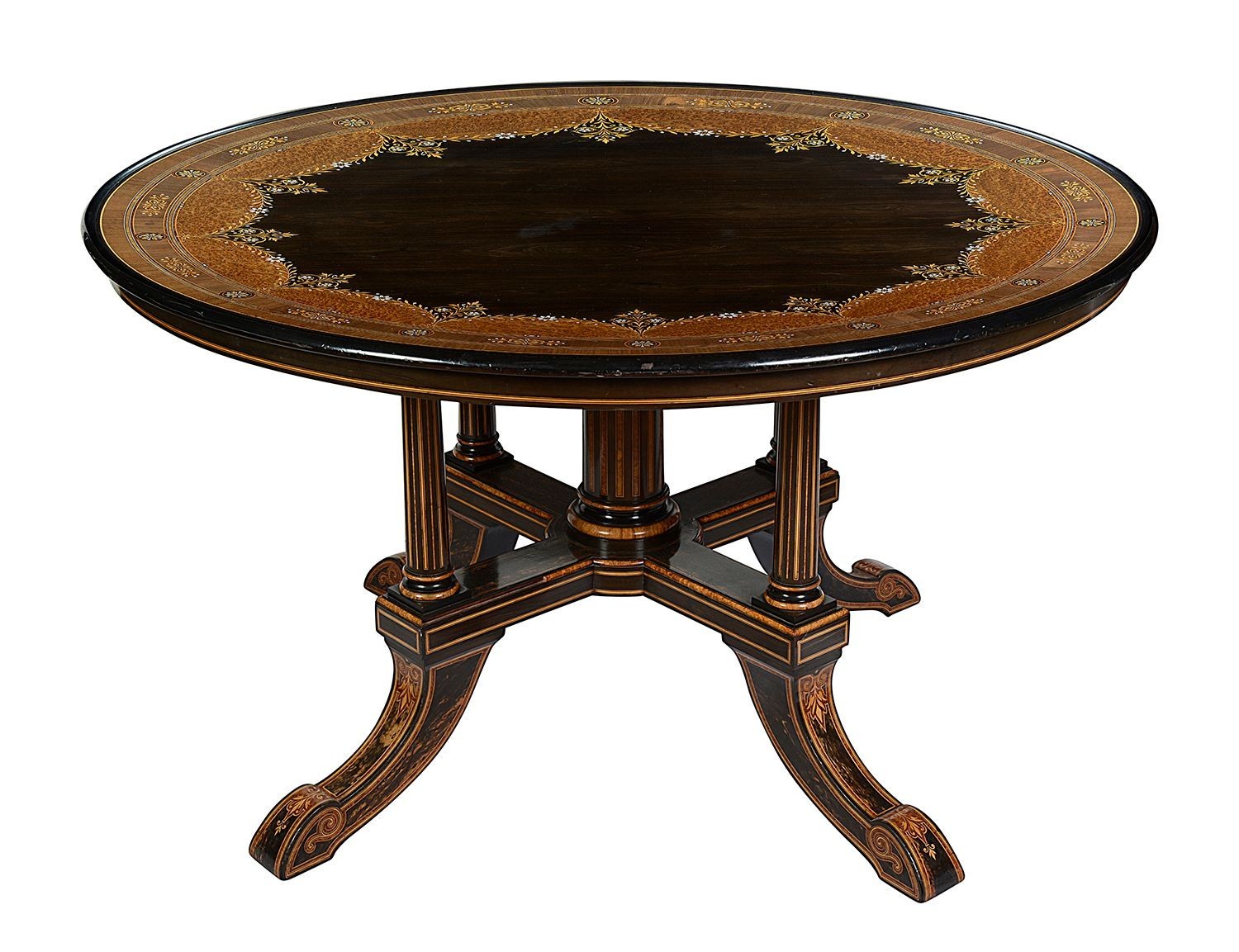
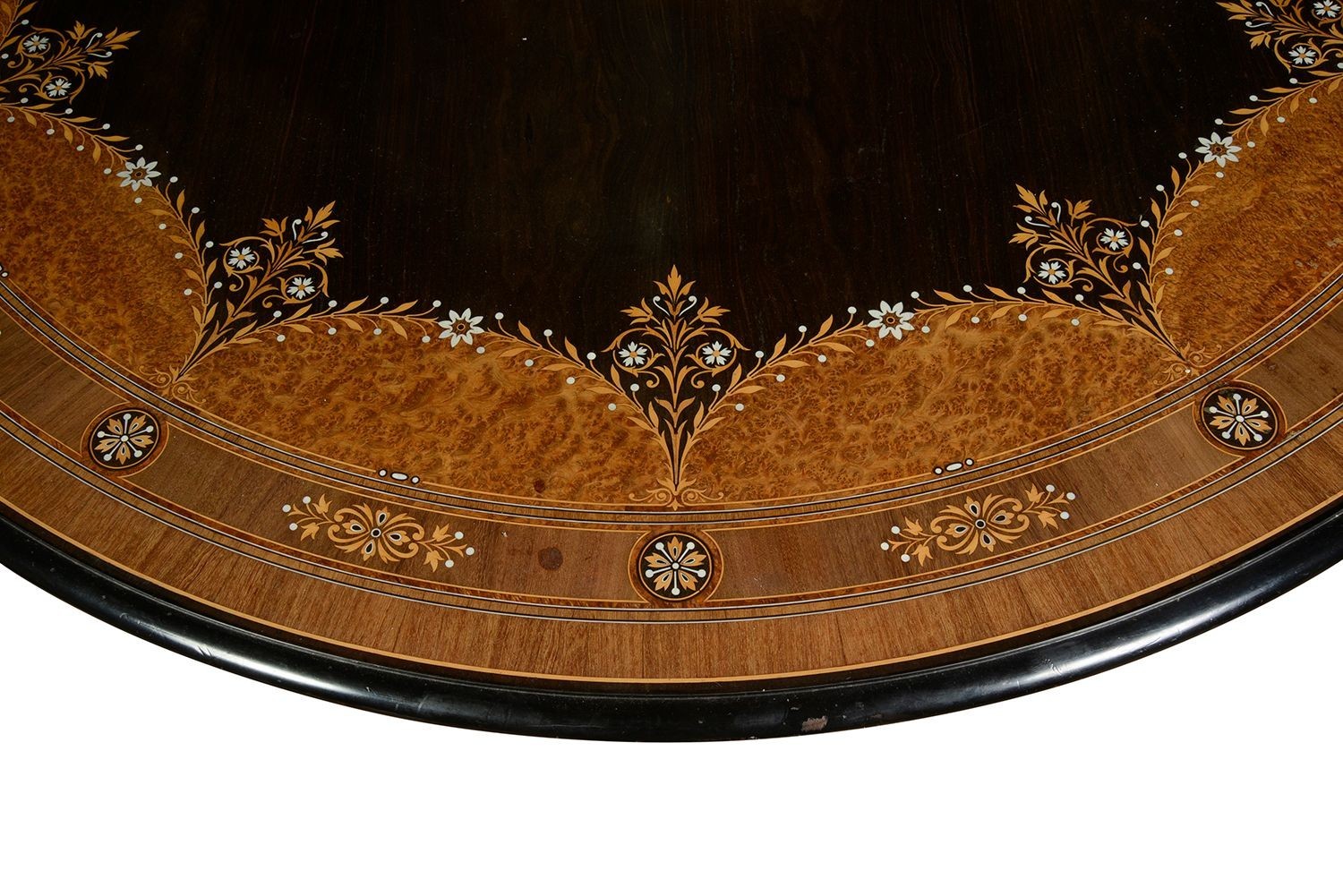
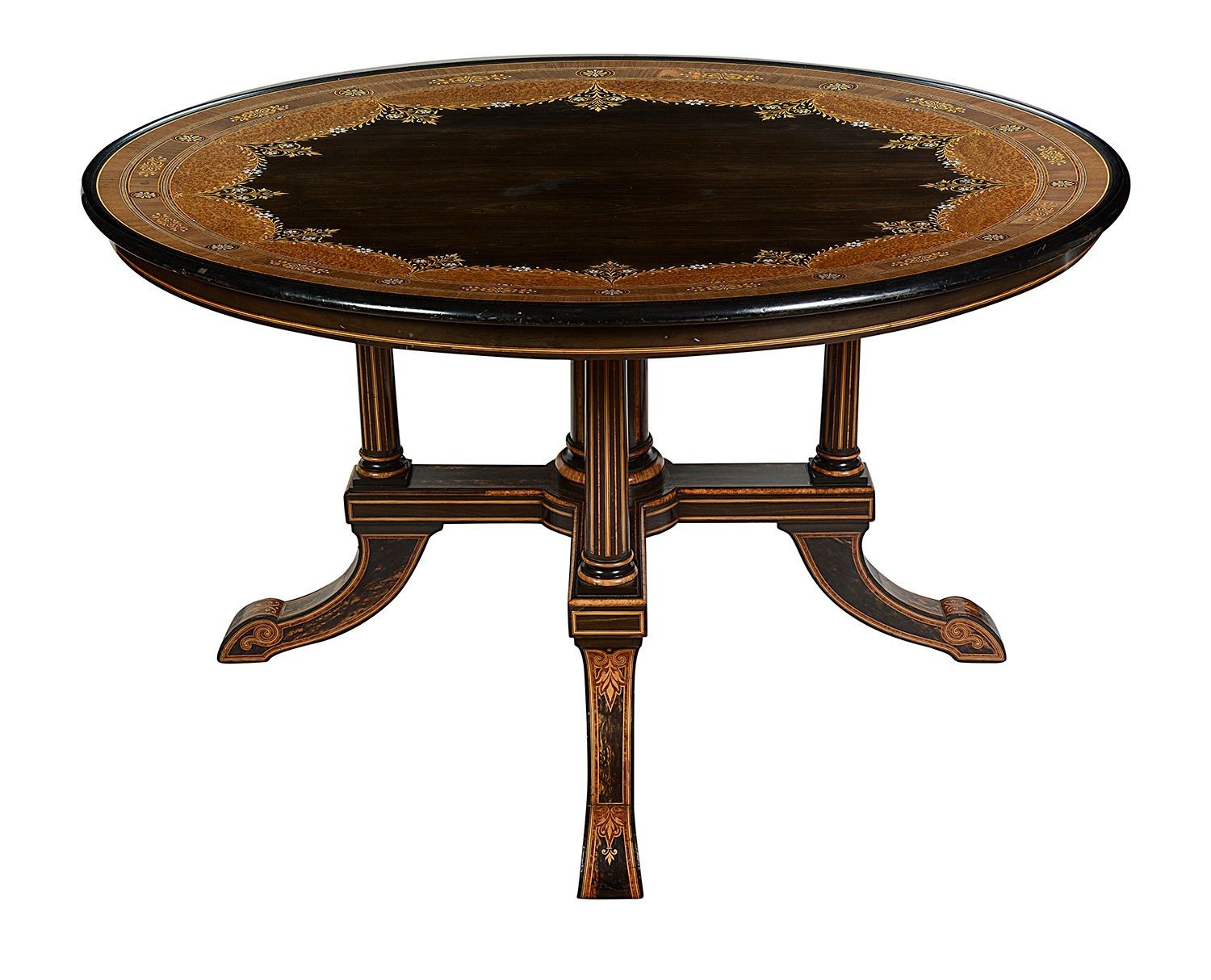
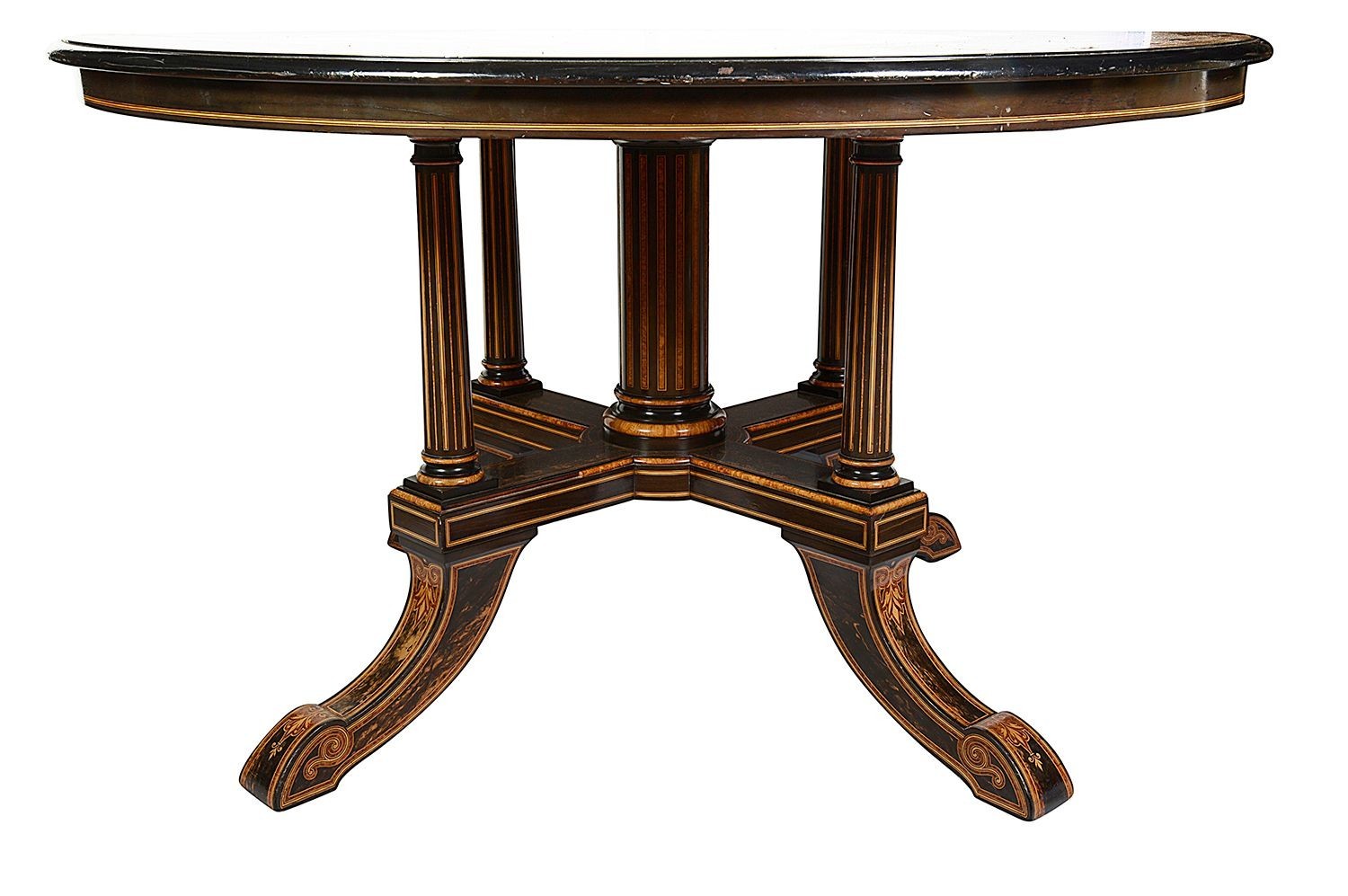
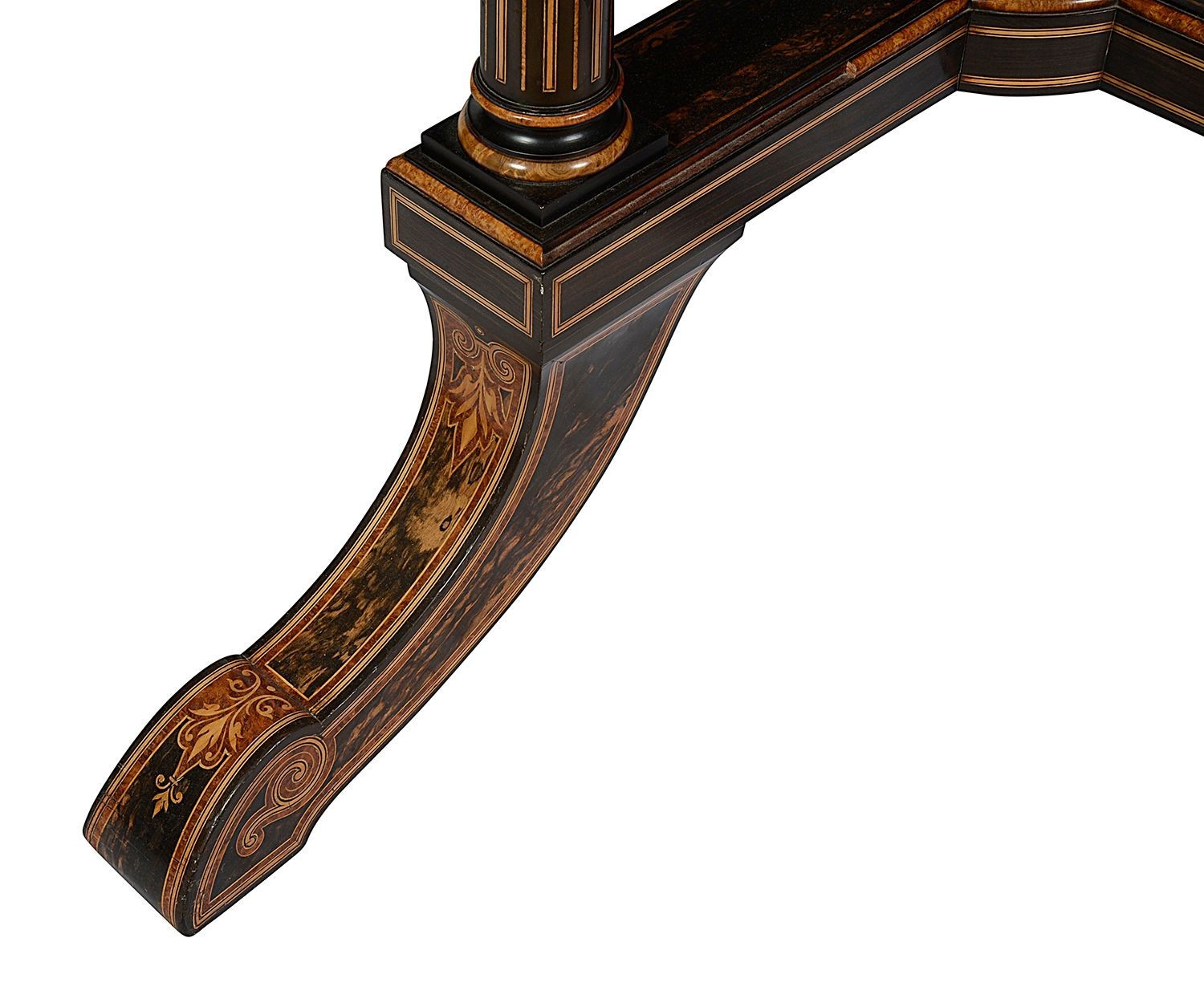
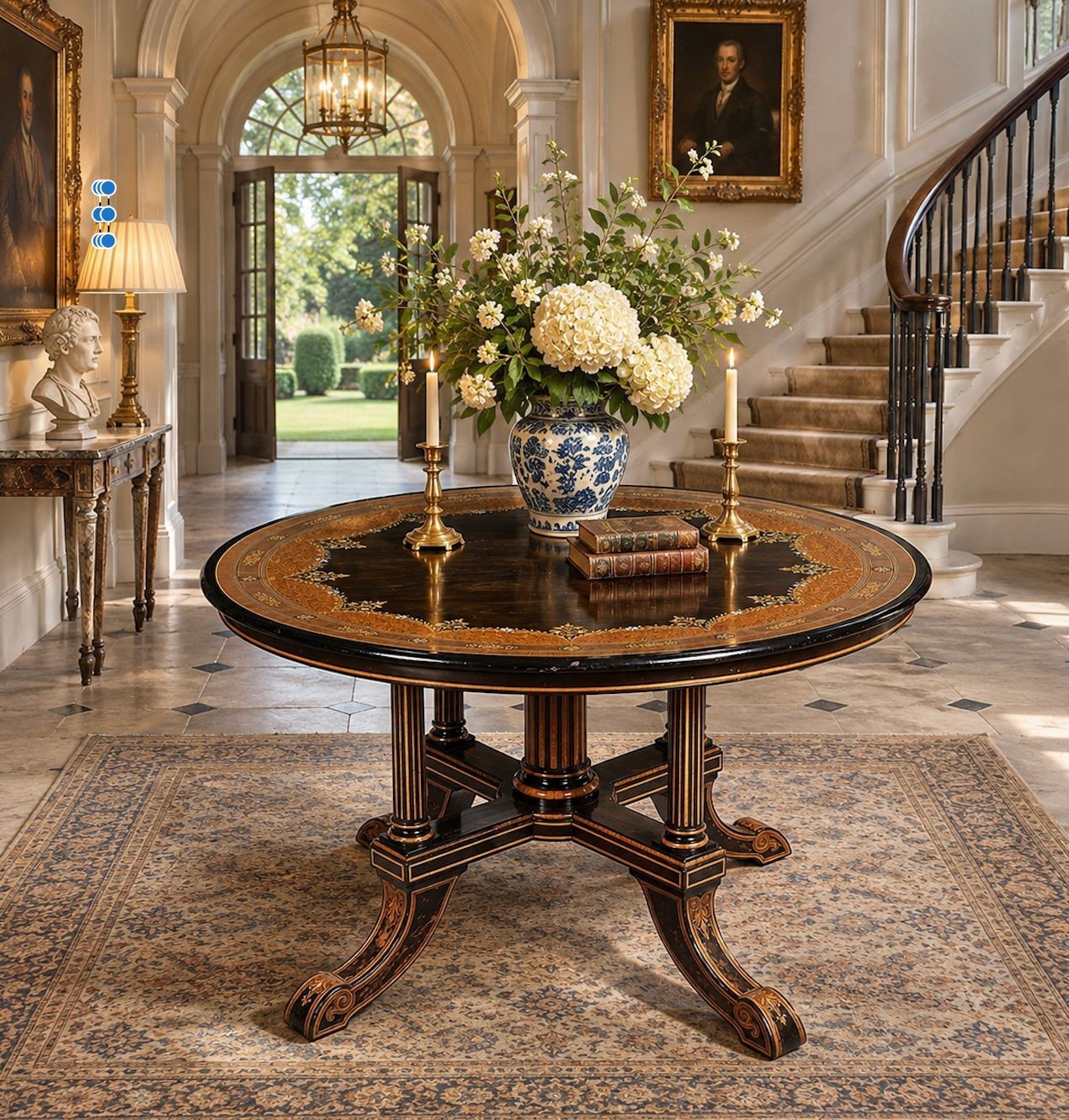
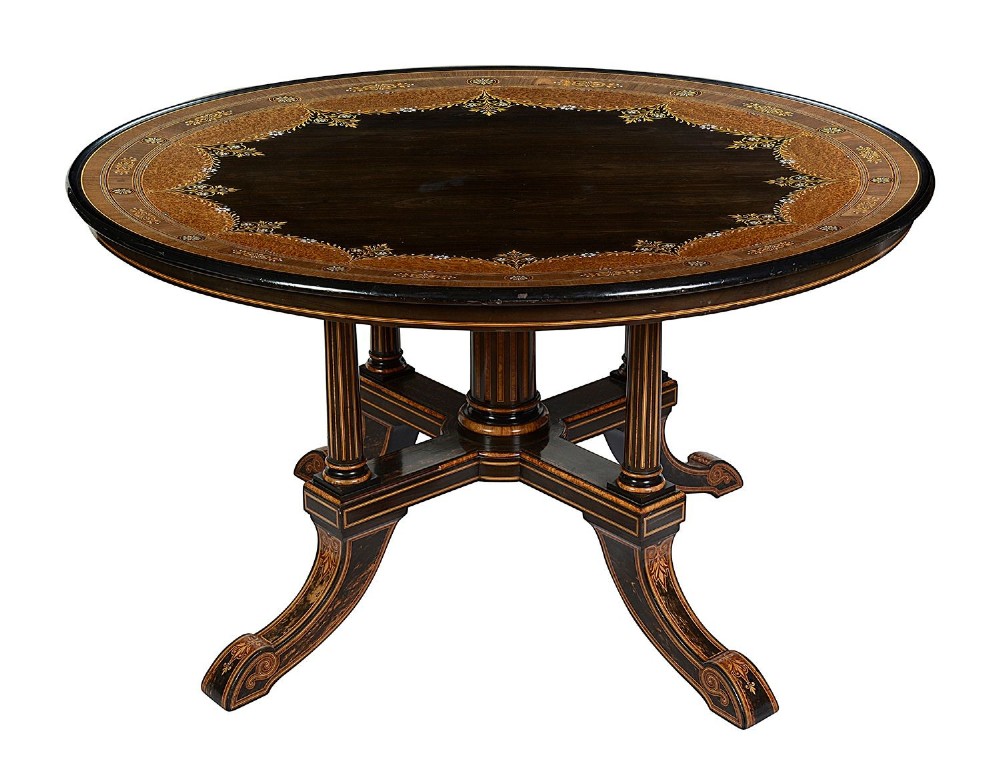
A fine-quality 19th-century centre table, attributed to Collinson & Lock, with a circular top richly inlaid in ebony, amboyna, boxwood and walnut. The dark central field is framed by a striking amboyna band, delicately decorated with scrolling floral sprays, small blossoms and geometric roundels in contrasting woods. Fine lines of stringing define the concentric borders and emphasise the top’s elegant symmetry. The table is raised on a central fluted column and four smaller, similarly fluted supports, all enhanced with inlay and set on a cross-shaped platform. Four boldly out-swept, shaped legs extend from the base, their surfaces ornamented with further foliate marquetry and terminating in scrolling feet. The richly figured veneers, meticulous detailing and architectural support combine to create a confident, decorative piece characteristic of Victorian taste. Its balanced design makes it a handsome focal point for a drawing room or reception interior.
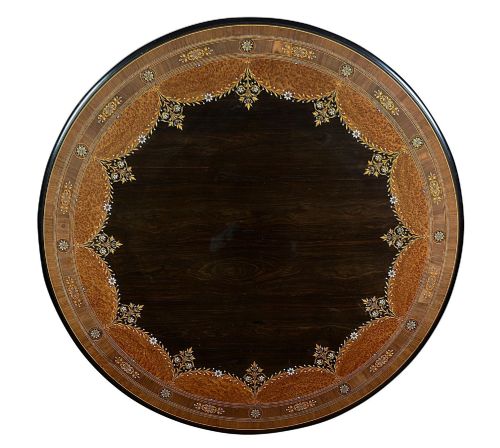
Collinson & Lock was a prominent London cabinet-making and interior-furnishing firm founded in 1870 by Francis Collinson and George Lock, who had previously worked for Jackson & Graham. They took over the established Fleet Street business of Herring & Company, then expanded to premises on Oxford Street.
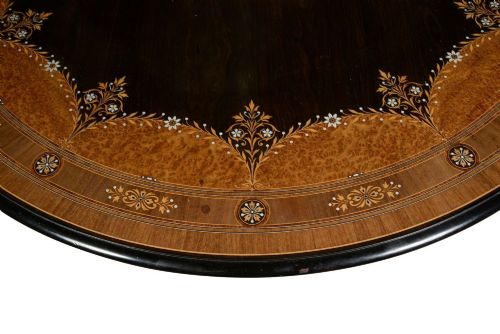
The firm became known for “art furniture,” combining skilled craftsmanship with historic styles and contemporary design. Its early work drew on English and Renaissance precedents; later pieces often embraced the richly decorated, sometimes French-influenced aesthetic fashionable in the Victorian period. In 1871, the partners published Sketches of Artistic Furniture, promoting their designs. They also worked with notable designers, including E. W. Godwin and Stephen Webb, and supplied furniture and interior fittings for wealthy private clients and public buildings.
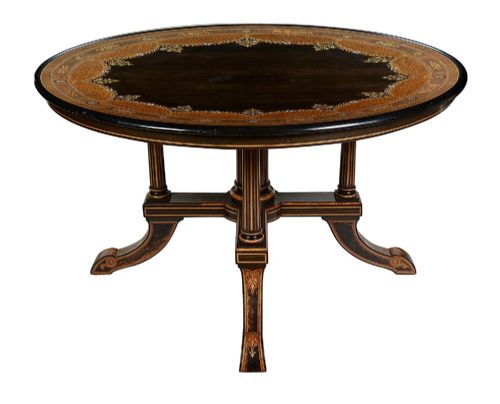
Collinson & Lock took over Jackson & Graham in 1885. The business ended in 1897, when it was absorbed into the newly formed Waring & Gillow. A table attributed to the firm reflects its reputation for elaborate marquetry and finely finished “art furniture.” (bifmo.furniturehistorysociety.org)

Batch 90 UDZZE 65811

Date of Manufacture

Patrick Moorhead Antiques has dated this Marquetry Inlaid Centre Table to the Victorian era.

Physical Dimensions
Height
72cm (28.35")
Width
120cm (47.24")
Depth
120cm (47.24")
Reference Numbers
Sellingantiques Reference
SA1244266
Dealers Internal Reference
SKU00002836
Dealers Notes

We are happy to provide free transport within the UK.

We also help provide and advise on shipping prices for international destinations.

Description
A fine-quality 19th-century centre table, attributed to Collinson & Lock, with a circular top richly inlaid in ebony, amboyna, boxwood and walnut.
“
The dark central field is framed by a striking amboyna band, delicately decorated with scrolling floral sprays, small blossoms and geometric roundels in contrasting woods.
Patrick Moorhead Antiques

Fine lines of stringing define the concentric borders and emphasise the top’s elegant symmetry. The table is raised on a central fluted column and four smaller, similarly fluted supports, all enhanced with inlay and set on a cross-shaped platform. Four boldly out-swept, shaped legs extend from the base, their surfaces ornamented with further foliate marquetry and terminating in scrolling feet. The richly figured veneers, meticulous detailing and architectural support combine to create a confident, decorative piece characteristic of Victorian taste. Its balanced design makes it a handsome focal point for a drawing room or reception interior.

fig 1. A nineteenth-century circular ebonised centre table featuring elaborate marquetry inlays around the tabletop border, supported by four fluted columns on a quadruped pedestal base.
fig 1. Fine C19th Marquetry Inlaid Centre Table, Attributed to Collinson + Lock

Collinson & Lock was a prominent London cabinet-making and interior-furnishing firm founded in 1870 by Francis Collinson and George Lock, who had previously worked for Jackson & Graham. They took over the established Fleet Street business of Herring & Company, then expanded to premises on Oxford Street.

fig 2. A nineteenth-century circular ebonised centre table featuring elaborate marquetry inlays around the tabletop border, supported by four fluted columns on a quadruped pedestal base.
fig 2. Fine C19th Marquetry Inlaid Centre Table, Attributed to Collinson + Lock

The firm became known for “art furniture,” combining skilled craftsmanship with historic styles and contemporary design. Its early work drew on English and Renaissance precedents; later pieces often embraced the richly decorated, sometimes French-influenced aesthetic fashionable in the Victorian period. In 1871, the partners published Sketches of Artistic Furniture, promoting their designs. They also worked with notable designers, including E. W. Godwin and Stephen Webb, and supplied furniture and interior fittings for wealthy private clients and public buildings.

fig 3. A nineteenth-century circular ebonised centre table featuring elaborate marquetry inlays around the tabletop border, supported by four fluted columns on a quadruped pedestal base.
fig 3. Fine C19th Marquetry Inlaid Centre Table, Attributed to Collinson + Lock

Collinson & Lock took over Jackson & Graham in 1885. The business ended in 1897, when it was absorbed into the newly formed Waring & Gillow. A table attributed to the firm reflects its reputation for elaborate marquetry and finely finished “art furniture.” (bifmo.furniturehistorysociety.org)

Batch 90 UDZZE 65811

Date of Manufacture

Patrick Moorhead Antiques has dated this Marquetry Inlaid Centre Table to the Victorian era.

Height
72cm (28.35")
Width
120cm (47.24")
Depth
120cm (47.24")
Reference Numbers
Sellingantiques Ref
SA1244266
Dealers Internal Ref
SKU00002836
Patrick Moorhead Antiques
Sellingantiques verified Since Feb 2018

Patrick moorhead has been one of the uk's finest trade-only antique furniture and art dealers for over 30 years.

Dealer Profile

You can view the stock and full dealer information on the Patrick Moorhead Antiques Profile Page

Trade Associations

Patrick Moorhead Antiques is a registered member of LAPADA 
PDF SHARE
SAVE
A nineteenth-century circular ebonised centre table featuring elaborate marquetry inlays around the tabletop border, supported by four fluted columns on a quadruped pedestal base.
1 / 7
Archive I A nineteenth-century circular ebonised centre table featuring elaborate marquetry inlays around the tabletop border, supported by four fluted columns on a quadruped pedestal base.

Fine C19th Marquetry Inlaid Centre Table, Attributed to Collinson + Lock
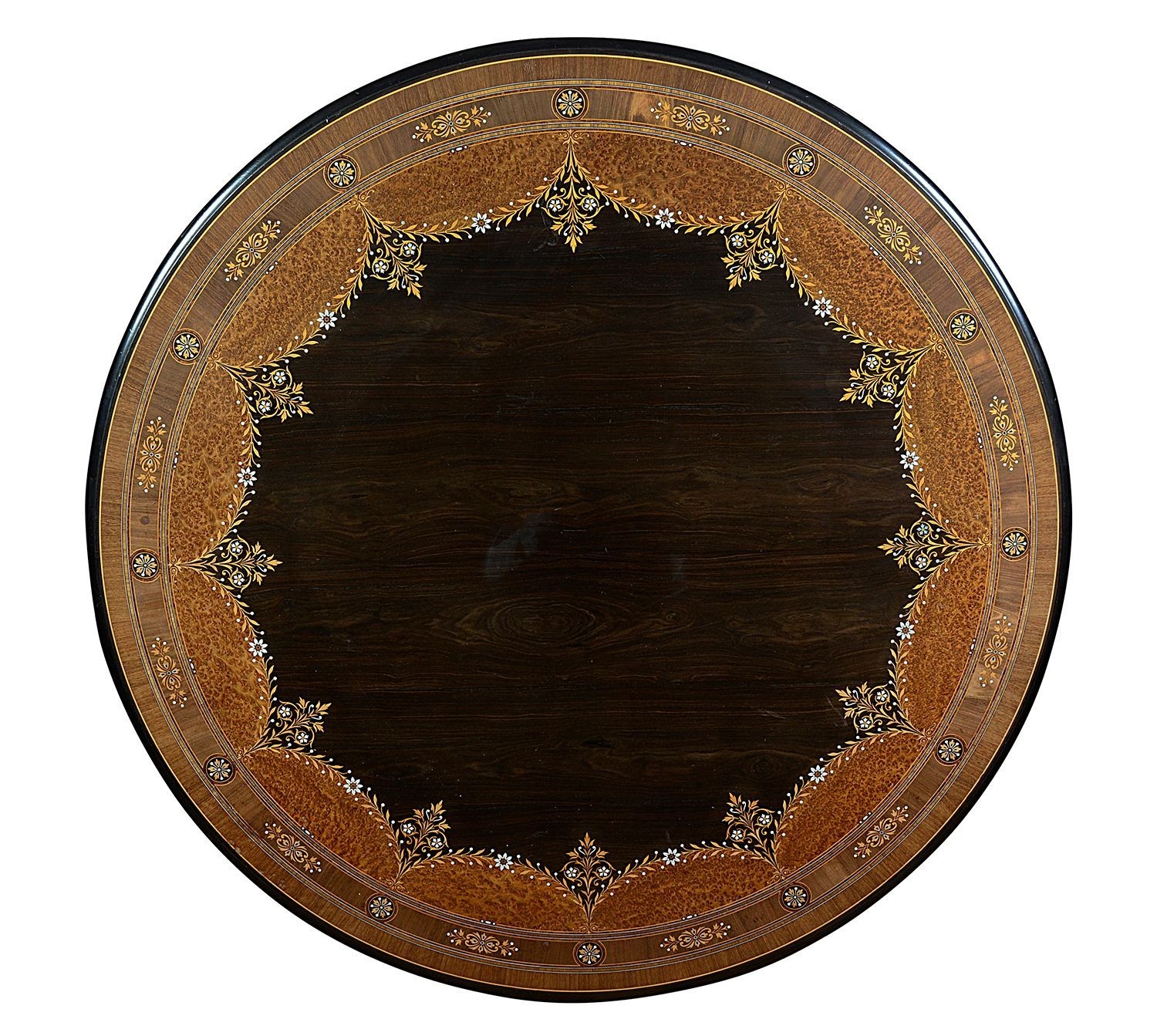
Archive II A nineteenth-century circular ebonised centre table featuring elaborate marquetry inlays around the tabletop border, supported by four fluted columns on a quadruped pedestal base. View II
Archive III A nineteenth-century circular ebonised centre table featuring elaborate marquetry inlays around the tabletop border, supported by four fluted columns on a quadruped pedestal base. View III
Archive IV A nineteenth-century circular ebonised centre table featuring elaborate marquetry inlays around the tabletop border, supported by four fluted columns on a quadruped pedestal base. View IV
Archive V A nineteenth-century circular ebonised centre table featuring elaborate marquetry inlays around the tabletop border, supported by four fluted columns on a quadruped pedestal base. View V
Archive VI A nineteenth-century circular ebonised centre table featuring elaborate marquetry inlays around the tabletop border, supported by four fluted columns on a quadruped pedestal base. View VI
Archive VII A nineteenth-century circular ebonised centre table featuring elaborate marquetry inlays around the tabletop border, supported by four fluted columns on a quadruped pedestal base. View VII
FURTHER BROWSING

Visitors also looked at these ⇣

Enlarged Archival View
Telephone 077 1010 7505
Location
Spring Gardens
76 Church Street
Brighton
East Sussex
BN1 1RL
United Kingdom
Verified Since Feb 2018
Items For Sale 713
Items Sold 32
Patrick Moorhead Antiques
Verified Since Feb 2018
View Dealer Info
Location: Spring Gardens, 76 Church Street, Brighton, East Sussex, BN1 1RL, United Kingdom
Verified
Feb 2018
For Sale
713
Sold
32
A nineteenth-century circular ebonised centre table featuring elaborate marquetry inlays around the tabletop border, supported by four fluted columns on a quadruped pedestal base.
Fine C19th marquetry inlaid centre table, attributed to Collinson + Lock
Ref: SA1244266
A nineteenth-century circular ebonised centre table featuring elaborate marquetry inlays around the tabletop border, supported by four fluted columns on a quadruped pedestal base.
Detail View 1
Detail View 2
Detail View 3
Detail View 4
Detail View 5
Detail View 6
Archival Detail
Every single antique dealer on our platform is individually approved by our internal team. We verify their professional trade history, ethical standards, and photographic quality to ensure a secure, high-standard buying environment. Upon joining, every dealer agrees to a strict 9-point code of conduct. While issues can occasionally arise, our dealers typically resolve them swiftly and directly with the buyer. In fact, since our founding in 2002, Sellingantiques has only had to step in to help resolve an issue on roughly five occasions—a true testament to the quality of our dealers and their dedication to your happiness.
Our dealers are highly experienced in packing and shipping fragile, high-value antiques. Because you are in direct contact with the dealer, you will be able to easily go through all available shipping and insurance options together to ensure your item arrives safely.
Antiques are the ultimate green purchase. By choosing historical pieces over newly manufactured goods, you completely eliminate the carbon footprint of modern mass production while preserving exceptional, timeless craftsmanship.
Written by Sellingantiques from the dealer’s photographs and listing
  • ObjectCentre Tables
  • Period19th century
  • StyleVictorian / Aesthetic Movement
  • MaterialEbonised Wood, Amboyna, Satinwood
  • ColourEbonised Black
  • MotifsFloral marquetry inlay, Fluted columns, Quadruped splayed legs, Ebonised border
  • SizeH 72 cm (28 in) x W 120 cm (47 in) x D 120 cm (47 in)

This Victorian centre table belongs to the Aesthetic Movement and is attributed to Collinson and Lock. Executed in ebonised wood, amboyna, boxwood and walnut, the piece presents a striking black finish offset by warm amber and pale honey tones, with fine lines of stringing defining the concentric borders. The circular tabletop features a dark central field framed by an elaborate amboyna band decorated with scrolling floral sprays, small blossoms and geometric roundels in contrasting woods. A central fluted column and four smaller fluted supports rise from a cross-shaped platform, while four boldly out-swept, shaped legs terminate in scrolling feet adorned with further foliate marquetry. The table stands 72 cm high, 120 cm wide and 120 cm deep. Positioned as a freestanding focal point, the table is well suited for placement in the middle of a spacious drawing room or a grand reception interior. The surface provides a generous display area for decorative objects, lamps or books, while the substantial pedestal base ensures stability. The dark ebonised timber combined with intricate marquetry allows the piece to harmonise naturally with traditional period rooms or serve as a dramatic contrast within a contemporary interior scheme.

A nineteenth-century marquetry centre table is characterised by its circular or octagonal tabletop designed to sit centrally in a room. It features decorative wood veneers inlaid to create complex geometric or floral patterns, often supported by a central pedestal with splayed legs.

These tables typically feature solid hardwood bases finished with black ebonising stain to imitate ebony wood. The marquetry tops incorporate exotic contrasting veneers such as amboyna, satinwood, walnut, and rosewood.

Authentic Aesthetic Movement pieces display stylized botanical motifs, geometric inlay borders, turned or fluted columns, and refined Japanese or classical influences. Construction details such as hand-cut joinery and original hand-applied finishes further distinguish period originals.

Position the table in an entrance hall or open-plan living space as a focal point. Combine it with contemporary minimal lighting or neutral decorative ceramics to contrast against the intricate woodwork.

Keep the furniture away from direct sunlight and radiators to prevent veneer lifting or wood movement. Dust regularly with a soft dry microfiber cloth and apply high-grade beeswax sparingly to preserve the original patina.
items
Add keywords to the filter
Price
£100
£250000
Era
Period
Style
Material
Origin
Stock Location
Recently Added
Online Payments
Categories