






Aesthetic Movement Centre Table
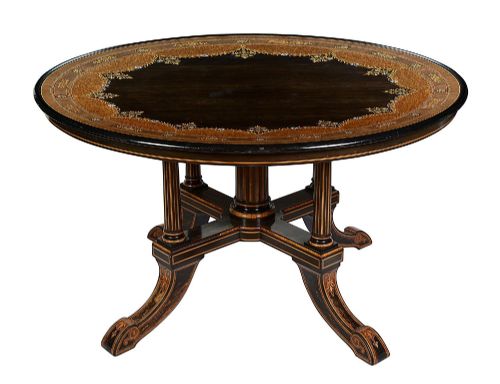
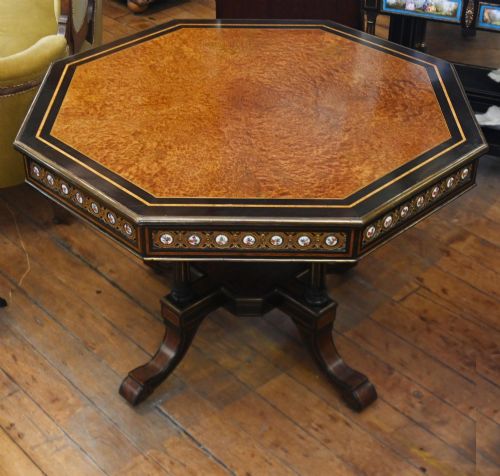
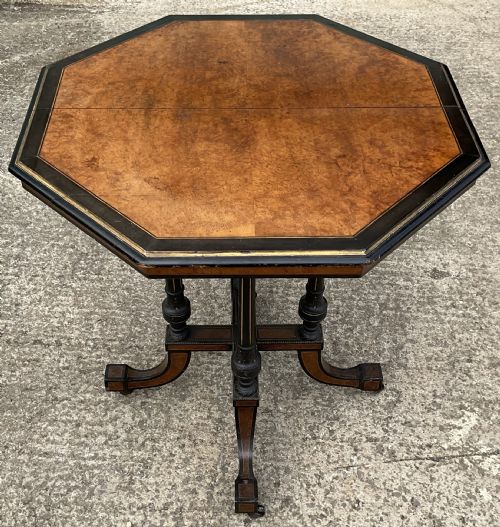
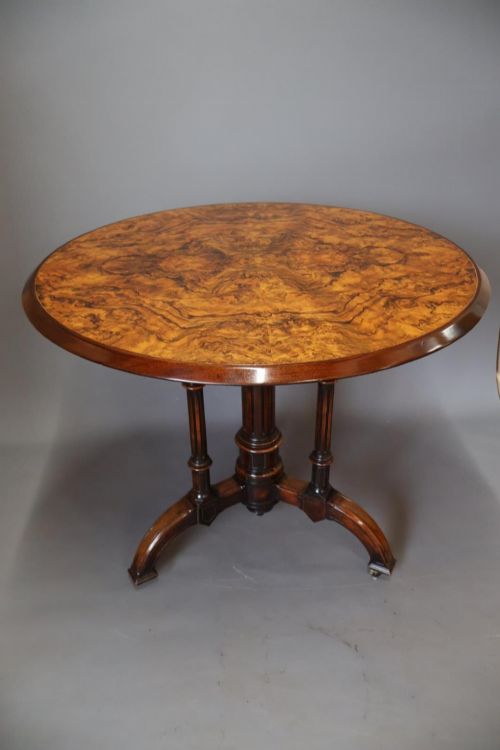
An aesthetic movement centre table brings distinct late-nineteenth-century reform design to a room, valued for its architectural geometry and rich timber surfaces.
Aesthetic Movement Centre Table
An aesthetic movement centre table stands as a key piece of Victorian interior furnishing, designed to sit independently in the middle of a room rather than against a wall. The examples appearing in these listings span the period from eighteen seventy to nineteen hundred, capturing the height of the reform design style.
The primary forms take octagonal and round shapes, frequently featuring tiered lower shelves or pedestal bases. Occasional variations include library tables and decorative centrepieces, though the core of the selection comprises striking tables built for prominent placement.
Makers and designers of the period embraced eclectic influences, ranging from reformed Gothicism to Anglo-Japanese motifs. Buyers encountering these pieces will find robust construction paired with refined surface detail, typical of late Victorian craftsmanship.
How they were made
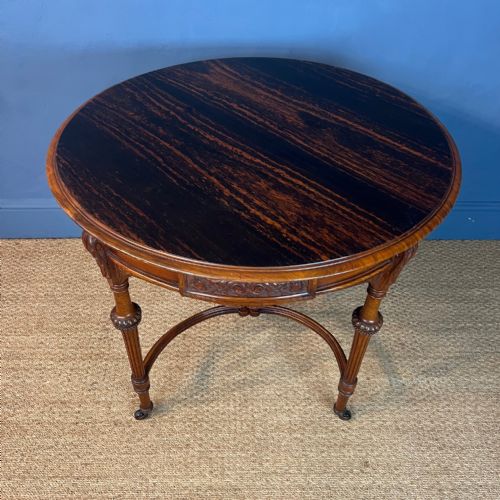
Makers utilised a deliberate palette of timbers, relying heavily on ebonised wood and hardwood alongside walnut, burr walnut, oak, coromandel, and stained birch. Surfaces often incorporated boxwood inlay or Derbyshire fossil marble tops, demonstrating a commitment to varied material textures.
Structural embellishments included cast solid brass sabots on legs and intricate gilt work on decorative elements. Joinery was executed to support substantial octagonal and pedestal formats, ensuring stability for freestanding placement.
Aesthetic Movement Centre Table Retail Price Guide 2026
Typical asking prices for aesthetic movement centre table among the pieces listed under this phrase on Sellingantiques today, from the lower quarter to the upper quarter. They describe what is for sale here now, not the wider market.
Listings feature pieces spanning from eighteen seventy to nineteen hundred, predominantly employing ebonised wood, walnut, oak, and brass.
What varies in quality
The distinction between standard production and exceptional work rests in the choice of primary timbers and secondary veneers. Tables utilising burr walnut, coromandel, or incorporating specialised elements such as fossil marble tops and intricate boxwood inlay represent the upper tier of the range.
Refinement in structural hardware and decorative accents also divides the pieces. Solid brass sabots and crisp ebonised finishes show a higher degree of workshop investment than simpler stained counterparts.
Daniel Cottier·Cottier and Co·Gillows·Lamb Manchester
The Aesthetic Movement Centre Table Glossary
- Ebonised
- Wood treated with a chemical stain or finish to imitate ebony. This dark, uniform surface was a favoured technique in late-nineteenth-century design to emphasise clean lines and contrast with inlay.
- Sabot
- A metal sleeve or mount fitted to the foot of a table leg. These fittings protected the timber base and frequently added a decorative brass accent.
- Coromandel
- A dense, heavily figured exotic hardwood imported from Asia. Its rich brown colouring and dark grain made it a choice material for high-end Victorian furniture.
- Tazza
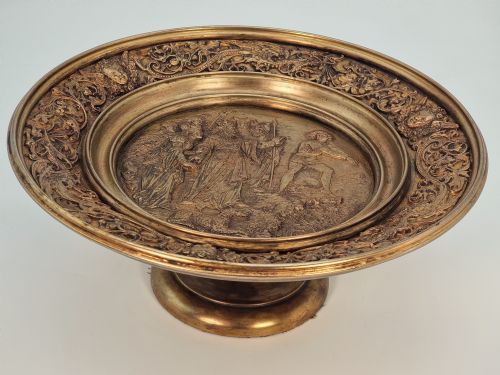
- A shallow ornamental bowl or pedestal dish. In the context of metalwork or decorative arts, it functions as a centrepiece rather than a functional piece of furniture.
- Pedestal base
- A central supporting column rising from a weighted foot or plinth. This form allowed for greater legroom around the perimeter of the table.
Aesthetic Movement Centre Table: Frequently Asked Questions
Where should I place a centre table?
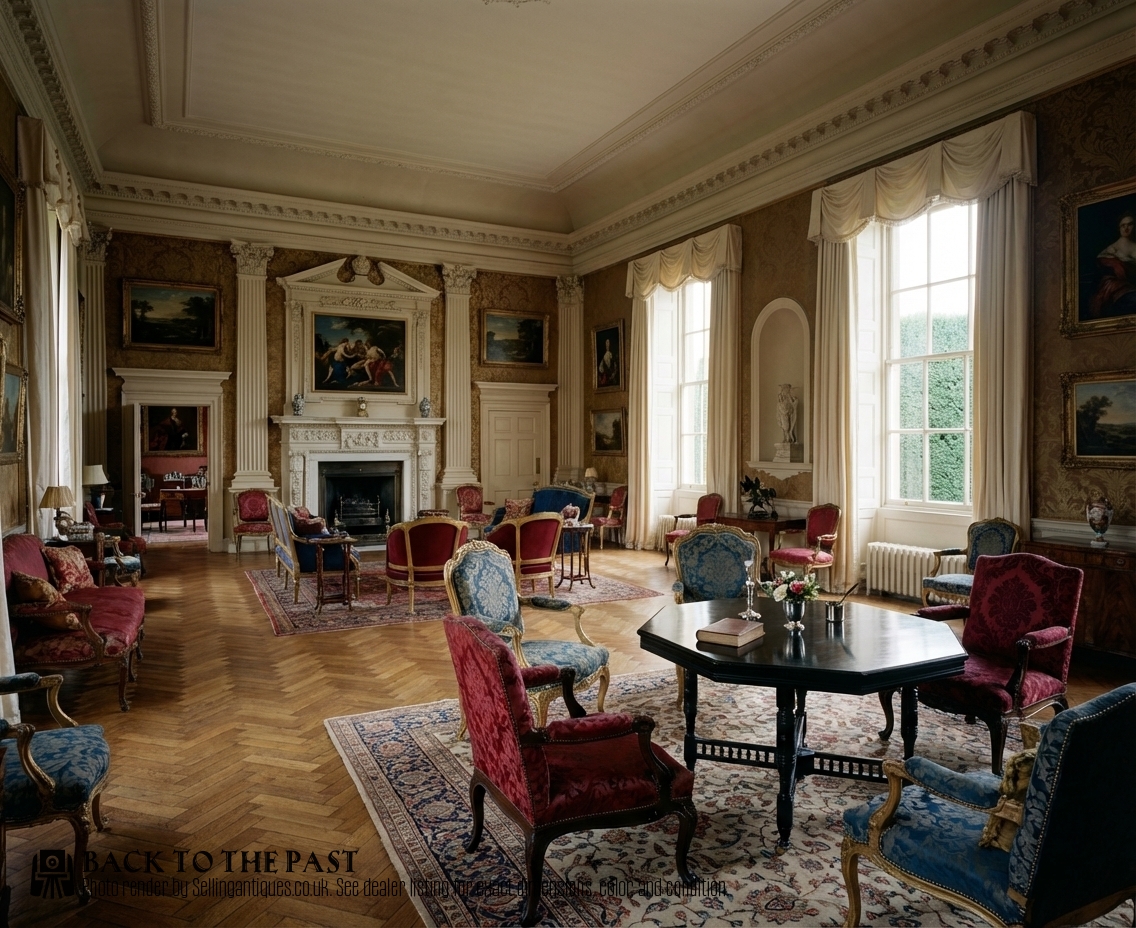
A centre table is designed to stand free in the middle of a room rather than pushed against a wall. This allows the octagonal or round geometry to be appreciated from all sides.
In period settings, they often anchored a principal reception room or library, serving as a surface for lamps, books, or decorative objects.
Are these tables suitable for daily use?
These tables were constructed from durable hardwoods like oak, walnut, and ebonised timber, making them structurally sound for contemporary living. Their robust pedestals and framed lower tiers provide solid support.
Care should be taken with delicate surfaces such as fossil marble tops or fine boxwood inlay, using coasters and placemats to prevent everyday wear.
What is the difference between a centre table and an occasional table?
A centre table is traditionally built to command the middle of a room, featuring finished detailing on all sides and a substantial presence. An occasional table is generally smaller and lighter, intended to be moved about as needed.
In practice, nineteenth-century makers and modern listings sometimes use the terms interchangeably based on size and format.