

Victorian Aesthetic Movement Furniture
Victorian aesthetic movement furniture brings together ebonised wood, bamboo and japanned lacquer to create distinctively modern nineteenth-century interiors.
Victorian Aesthetic Movement Furniture
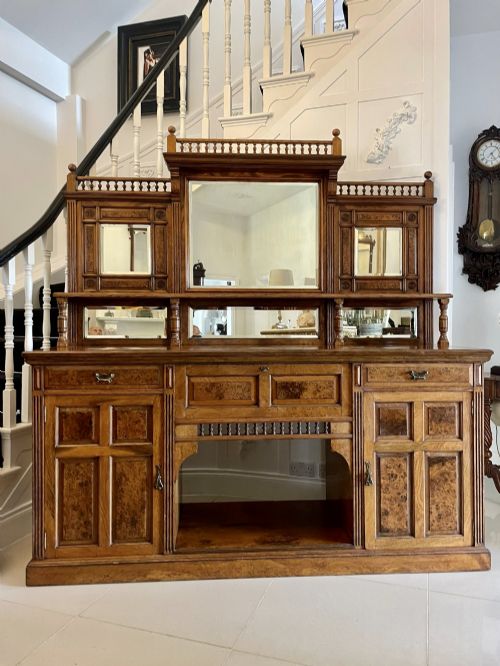
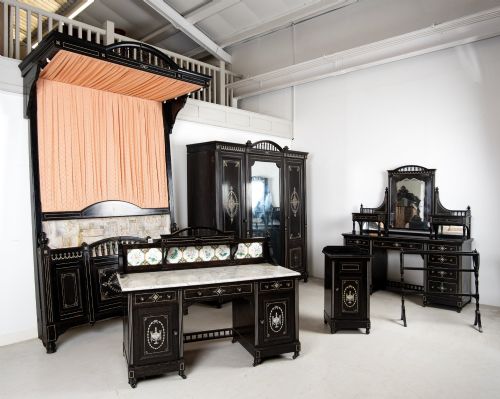
Victorian aesthetic movement furniture spans diverse household forms created during the late nineteenth century, reflecting a deliberate shift away from heavy Gothic revival designs toward lighter, art-focused interiors. You will frequently encounter occasional tables, hall stands, and bedroom suites rather than massive singular cupboards, as makers prioritized versatile, decorative items for contemporary homes.
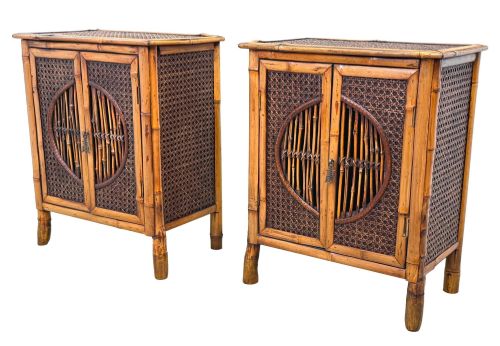
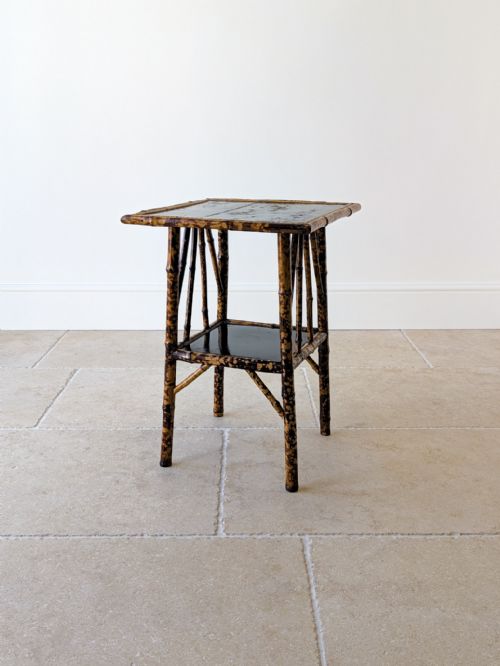
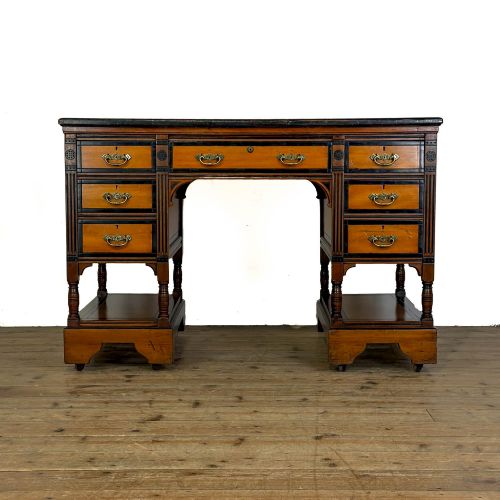
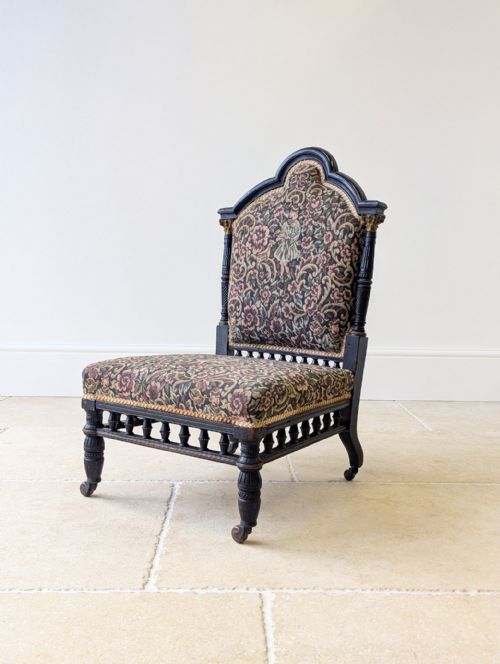
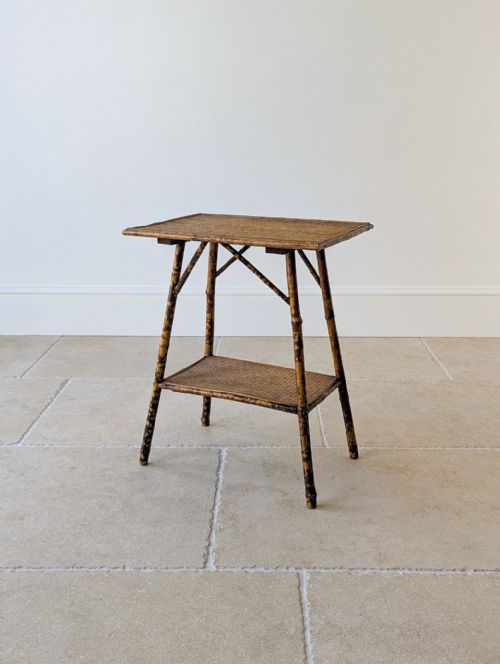
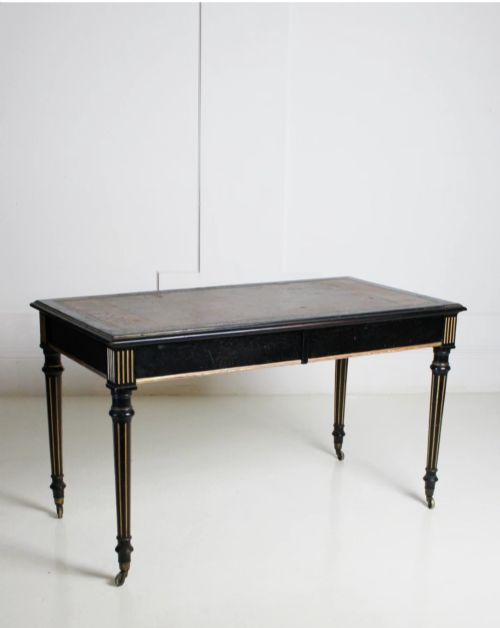
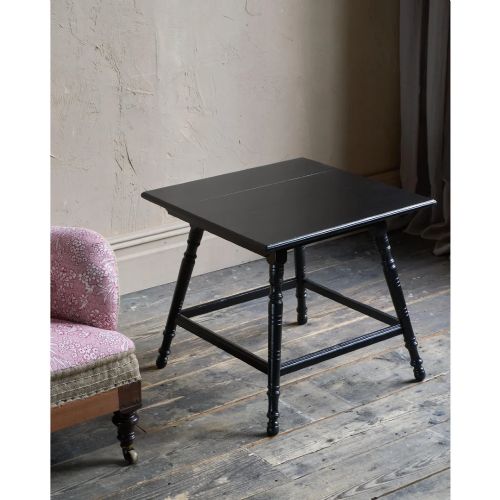
The objects on this page range from ebonised wood salon chairs and partner desks to bamboo side tables and folding rocking chairs. Influenced by Japanese and Moorish aesthetics, these pieces often feature contrasting materials like parcel gilding and exotic veneers to catch the eye in a domestic setting.
How they were made
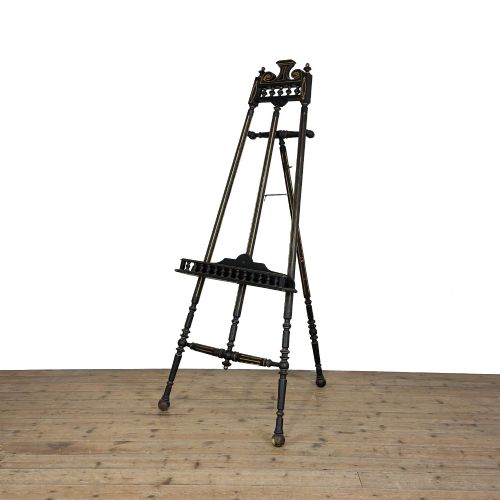
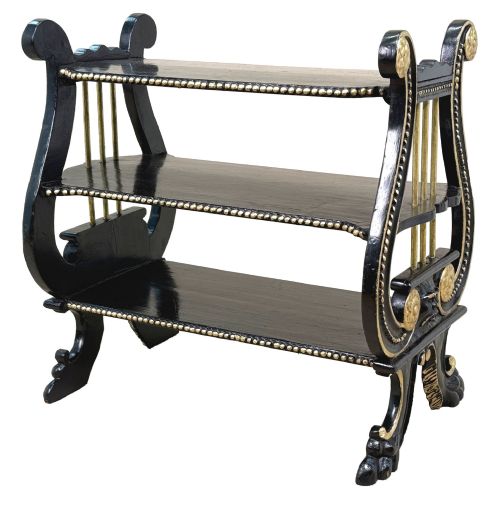
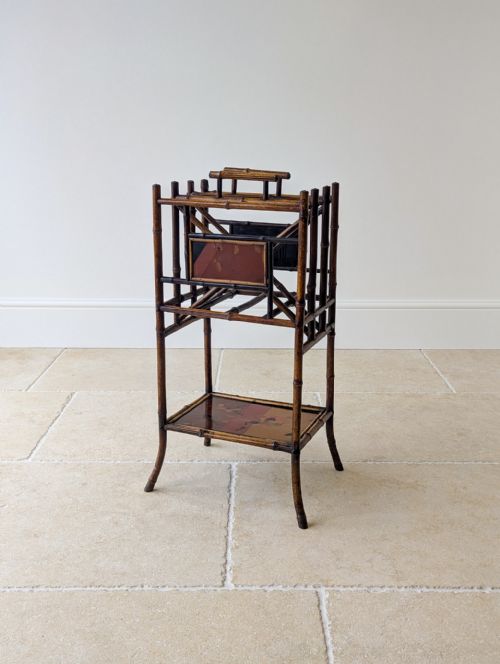
Cabinet makers utilised ebonised wood, walnut, oak, and amboyna as primary structural timbers, frequently applying black finishes to imitate costly Japanese lacquer. Parcel gilding highlights carved details, while bamboo and faux bamboo form lightweight yet sturdy frames for tables, étagères, and Canterbury magazine racks.
Surface decoration relies heavily on contrasting inlays, brass hardware, and bird's-eye maple panels. Structural joinery incorporates turned elements, faux bamboo joints, and occasionally Moorish geometric inlay work to achieve the characteristic stylistic synthesis.
Materials appearing across the inventory include bamboo, ebonised wood, walnut, oak, brass, glass, lacquer, and pine.
What varies in quality
The standard of execution depends heavily on the ambition of the maker, distinguishing simpler mass-market bamboo items from intricately carved walnut buffets and documented cabinet maker suites. Superior examples display refined proportions, thoughtful timber selection such as pollard oak, and precise joinery that holds firm over generations.
Decorative application also sets pieces apart, as seen in the crispness of ebonised finishes, the subtlety of parcel gilding, and the integration of specialised elements like marble tops or mirror backs. Pieces bearing attribution to established makers generally reflect more complex design work than anonymous workshop equivalents.
Hindley and Sons·Druce and Co London·Lamb of Manchester·Liberty and Co·James Shoolbred and Co
The Victorian Aesthetic Movement Furniture Glossary
- Ebonised
- Wood treated with a dark stain or finish to simulate expensive ebony. This dark surface provided a high-contrast background for gilt detailing and Japanese-inspired motifs.
- Bamboo
- A hollow, jointed grass stem utilised structurally for light furniture frames. It gained widespread popularity due to trade expansion with East Asia during the late nineteenth century.
- Étagère
- A piece of furniture consisting of open shelves for displaying small ornaments. These tiered stands were common in fashionable Victorian drawing rooms.
- Canterbury
- A low stand fitted with partitions for holding music sheets, books, or magazines. Aesthetic movement versions frequently employed bamboo or ebonised timber.
- Parcel gilded
- Partially covered or highlighted with gold leaf or gilt paint. This technique accented carved mouldings and turned legs against dark ebonised surfaces.
Victorian Aesthetic Movement Furniture: Frequently Asked Questions
How do I identify aesthetic movement furniture?
Look for clean structural lines, dark ebonised finishes, or structural bamboo frames influenced by Japanese design principles. These pieces often feature contrasting gilding or inlaid panels rather than heavy Victorian upholstery.
Items typically include occasional tables, hall stands, and salon chairs produced during the late nineteenth century.
Where should I place an ebonised table?
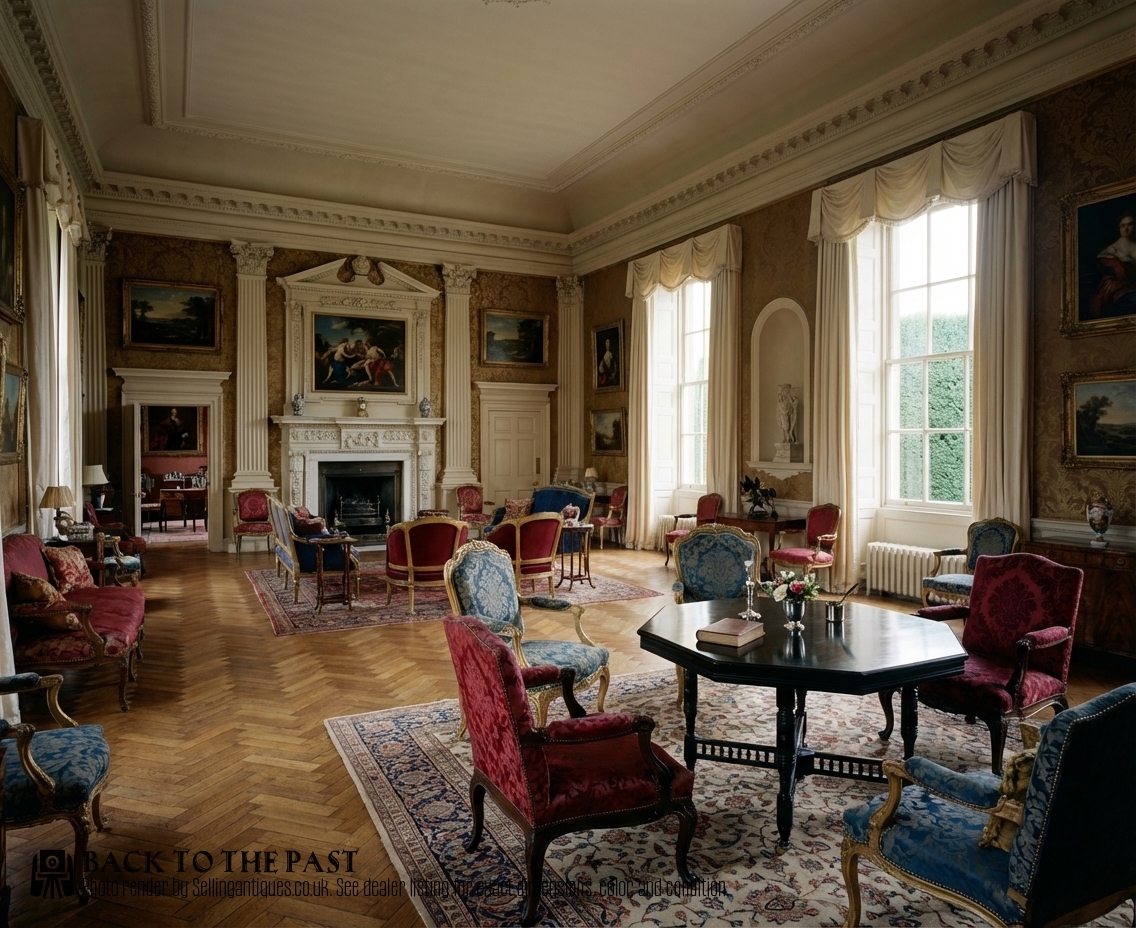
An ebonised occasional table or centre table suits a drawing room or study where its dark finish can contrast against lighter walls. Their compact proportions make them versatile for corners or beside seating.
Ensure the surface is kept away from direct sunlight to preserve the ebonised finish and any delicate parcel gilding.
How were bamboo items used originally?
Bamboo furniture served as lightweight, portable furnishings for drawing rooms, conservatories, and bedrooms. Items like Canterbury racks, bedside cabinets, and folding rocking chairs provided practical utility without visual heaviness.
Victorian households favoured bamboo for its exotic appearance and durability in casual spaces.
Are hall stands practical for daily use?
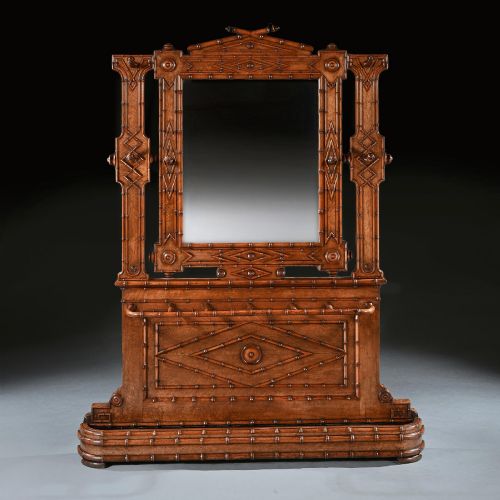
Hall stands featuring mirrors, coat hooks, and umbrella wells remain functional additions to modern entranceways. Their narrow footprints accommodate hats, coats, and walking accessories efficiently.
Inspect the mirror silvering and structural base before regular use to ensure stability.
What is faux bamboo furniture?
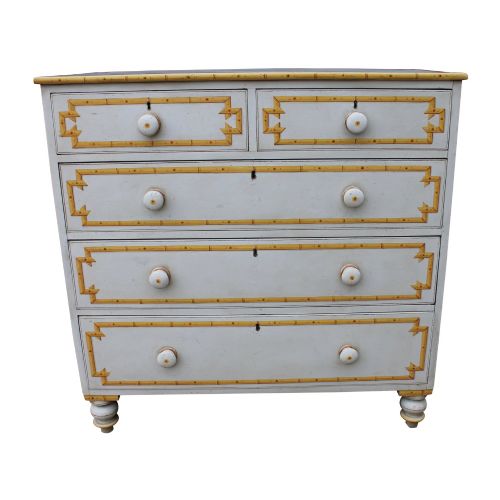
Faux bamboo consists of hardwoods such as beech, maple, or pine carved and painted to replicate real bamboo joints. Cabinet makers utilised this technique when greater structural strength was required than natural bamboo could offer.
These pieces often appear in dressing cabinets, washstands, and bedroom suites from the late nineteenth century.