



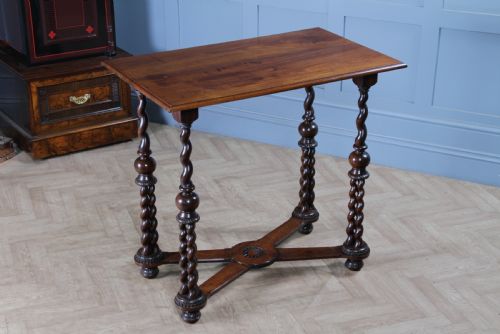


Brown Wood Foyer Table
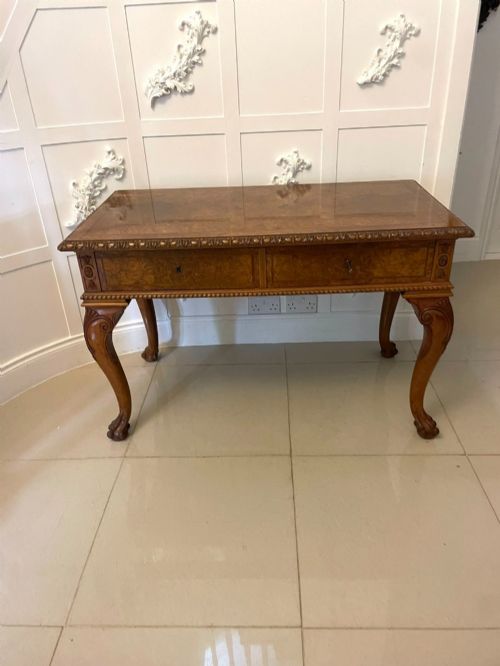
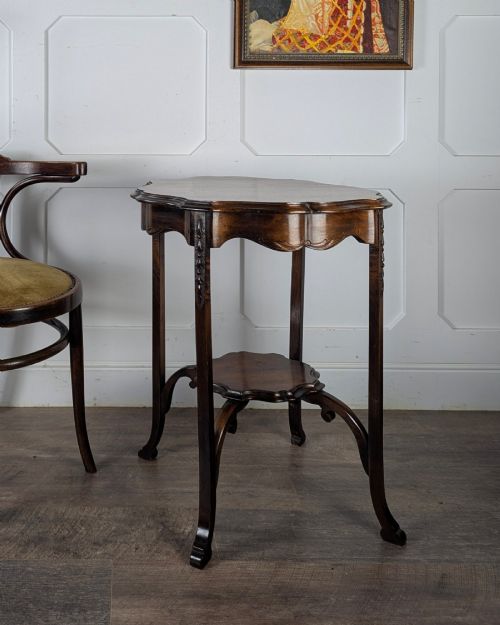
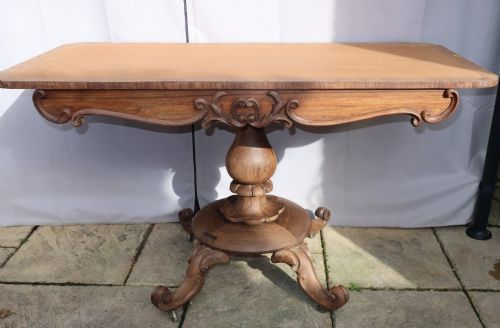
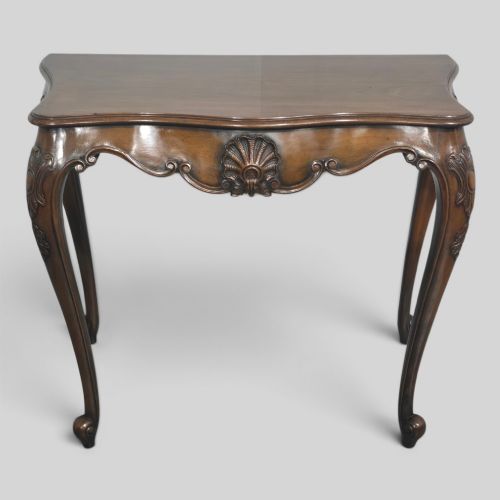
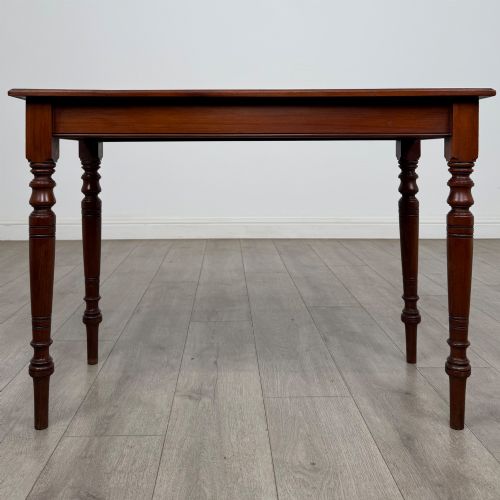
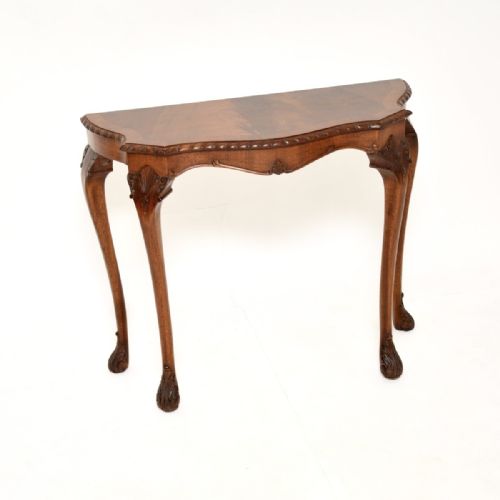
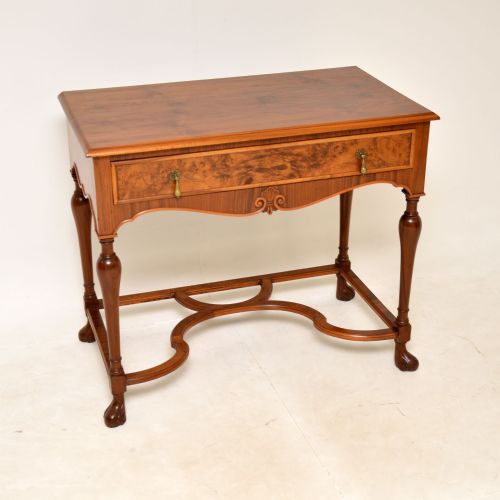
A brown wood foyer table anchors an entrance hall with rich timber grain, offering a practical surface for daily use upon entering the home.
Brown Wood Foyer Table
A brown wood foyer table appears in various forms near the entrance of a home, functioning as a console, hall, or centre table. These pieces emerge from the nineteenth and early twentieth centuries, spanning periods from the Regency era through the Edwardian years.
The inventory on this page most frequently presents walnut, mahogany, and rosewood timbers fashioned into side and occasional tables. Makers from these historical eras constructed them to stand against walls or sit freestanding in large entryways.
How they were made
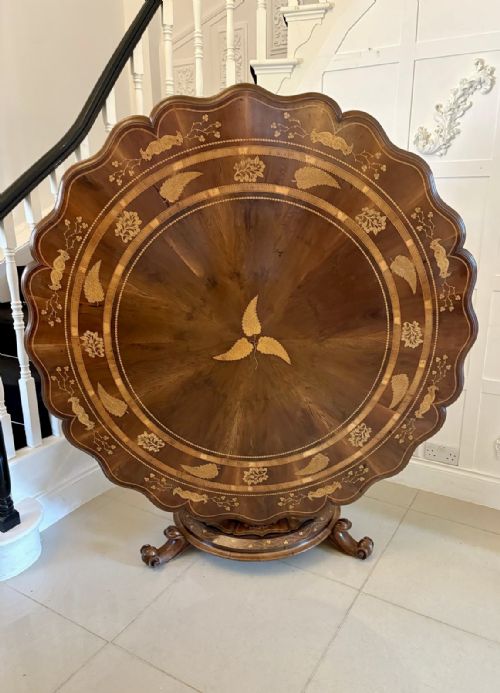
Cabinetmakers utilised dense hardwoods such as mahogany and walnut, frequently selecting burr veneers to create striking patterns across the top surface. Marquetry inlay, parquetry, and brass mounts appear on selected examples from the nineteenth century.
Some pieces feature carved details, pedestal bases, or turned supports like barley twists, while others integrate marble or specimen marble tops. Workshops applied French polish or similar traditional finishes to protect the wood and deepen its natural colour.
Listings feature walnut, mahogany, rosewood, and yew wood, alongside marble-topped console and centre tables spanning the Victorian and Edwardian periods.
What varies in quality
The choice of timber and veneer figure dictates the visual impact of a brown wood foyer table. Pieces featuring matched burr walnut or intricate marquetry inlay reflect a higher standard of craftsmanship than plain timber surfaces.
Construction methods and secondary details also separate examples across the range. Substantial frames, finely carved elements, and attribution to documented workshops distinguish superior items from standard production pieces.
Egan Workshop·Edward and Roberts·James Winter of Wardour Street
The Brown Wood Foyer Table Glossary
- Console table
- A table designed to stand against a wall, often secured to it or supported by front legs. These tables frequently serve a decorative or functional role in hallways and entrance spaces.
- Marquetry inlay
- An art form where small pieces of wood veneer, shell, or ivory are fitted into a timber ground to form decorative patterns. This technique decorates the tops of many nineteenth-century examples.
- Centre table
- A freestanding table designed to be viewed from all sides, placed in the middle of a room or a spacious hall. They often feature finished undersides and symmetrical timber grain.
- Burr walnut
- A prized timber taken from the growth excrescence on a walnut tree, yielding swirling and organic grain patterns. Cabinetmakers used burr walnut veneers to create decorative table surfaces.
- Demilune
- A half-moon shape characteristic of certain console and hall tables designed to sit flush against a wall. This profile saves floor space in narrow entrance areas.
Brown Wood Foyer Table: Frequently Asked Questions
Where should I place a brown wood foyer table?
These tables find their natural home in entrance halls, corridors, or spacious entryways where they provide a surface for post and keys.
Freestanding centre tables require adequate clearance around them to allow movement, while console and demilune shapes sit neatly against flat walls.
How do I care for antique timber surfaces?
Protect the wood from direct sunlight and sudden temperature changes to prevent the timber or veneer from splitting.
Apply traditional wax polish occasionally and buff with a soft cloth to maintain the lustre of the historic finish.
What is the difference between a console and a hall table?
Console tables traditionally anchor against a wall and sometimes require wall fixing for stability.
Hall tables encompass a broader category of freestanding or wall-adjacent furniture designed specifically for passageways and entrance rooms.
How do I identify the period of a wooden table?
Examine the timber species, construction joints, and decorative styles such as Regency curves or Victorian carving.
Secondary woods used in the frame and the style of polish often provide clues to the approximate decade of manufacture.