


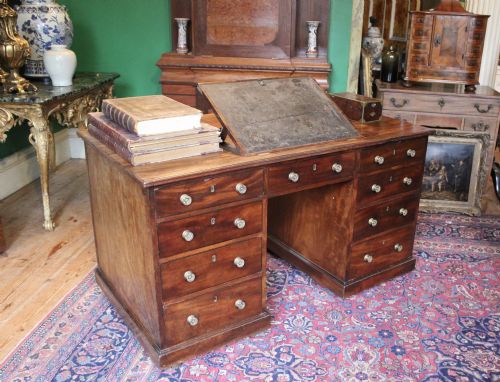


Antique Reading Slope Table
These antique reading slope table pieces offer adjustable surfaces and fitted compartments, designed for practical writing and reading in period interiors.
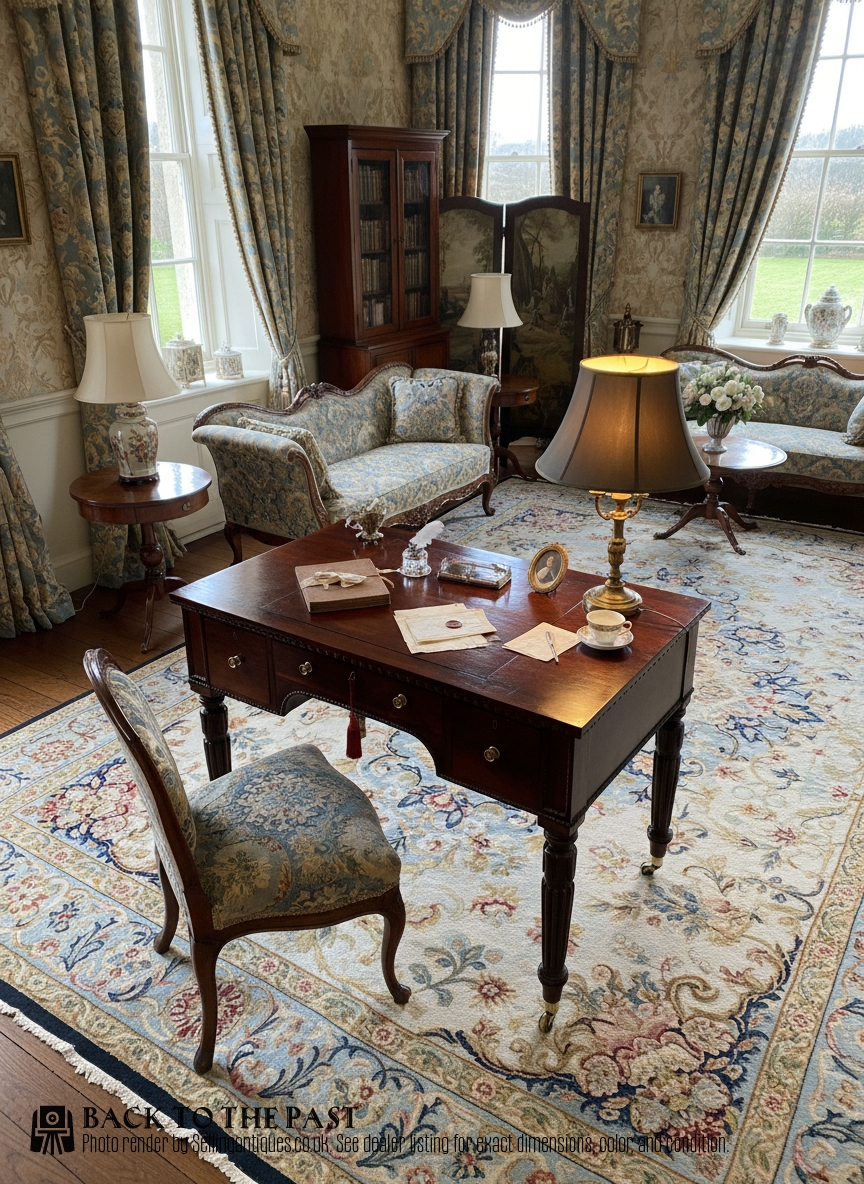
Antique Reading Slope Table
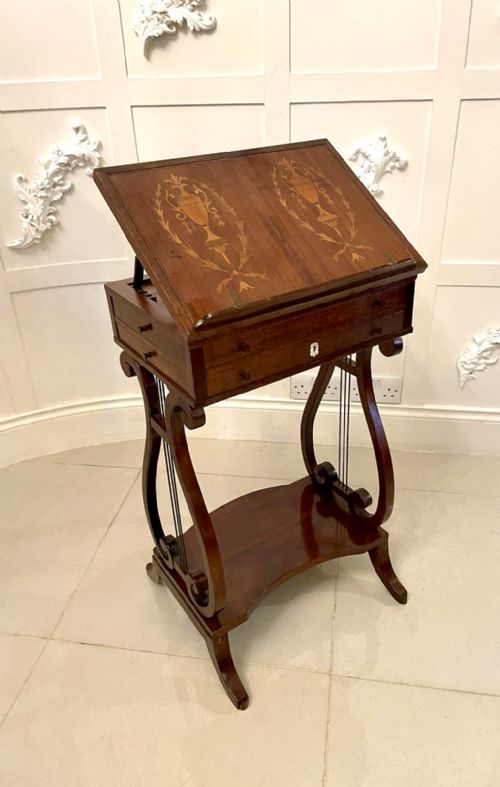
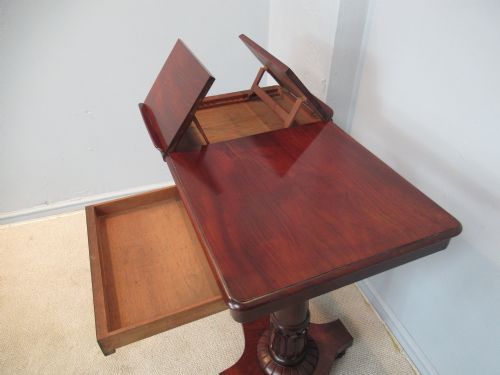
An antique reading slope table combines a writing surface with an adjustable book rest, appearing across the 18th century, Regency, and Victorian periods. You will most frequently encounter mahogany examples designed for libraries, studies, and drawing rooms.
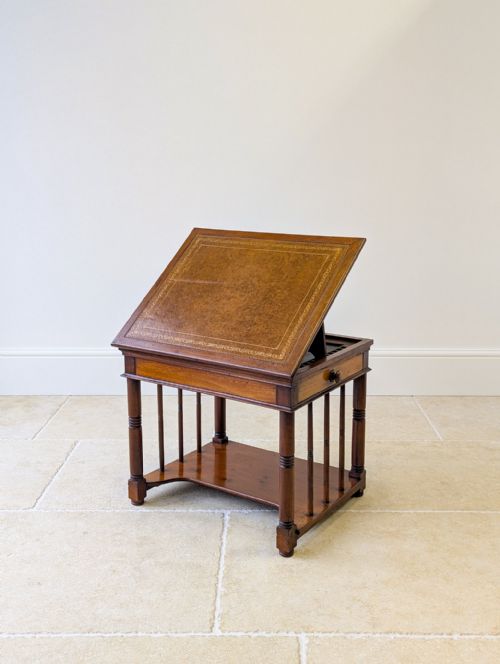
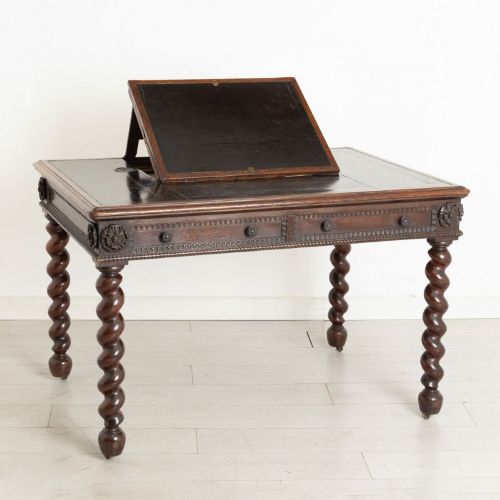
Forms range from compact chairside reading stands and campaign table tops to substantial architects desks and partners desks. Many pieces integrate drawers, screens, or occasional table formats suited to domestic utility.
Origins stretch from Queen Anne walnut estates through George III Sheraton periods to Edwardian inlaid designs. Each form reflects the specific writing and reading habits of its era.
Materials and construction
Cabinetmakers utilised dense timbers such as mahogany, rosewood, satinwood, burr walnut, and oak to construct these pieces. Secondary woods like boxwood provided contrasting stringing and inlay details.
Functional hardware played a primary role, incorporating brass ratchets and pivots for the adjustable reading stands. Leather inserts frequently lined the writing surfaces to provide a smooth plane for ink and quill.
Gentlemen of the 19th century adjusted their brass reading ratchets to hold heavy folios while standing by the fire.
What separates the finest examples
The sophistication of the adjustable mechanism dictates much of the distinction at the upper end of the scale. Smoothly operating brass ratchets and well-fitted reading slopes demonstrate superior cabinetmaking.
Timber selection and secondary detailing elevate certain pieces above standard production. Fine grain mahogany, intricate satinwood or boxwood inlay, and well-executed hardware distinguish master workshops from simpler domestic furniture.
GILLOWS of LANCASTER·Marsh & Tatham
The Antique Reading Slope Table Glossary
- Reading slope
- A hinged desk surface that raises to hold a book or manuscript at an angle for easier reading. This feature is often adjustable via a ratcheted brass support underneath.
- Architects desk
- A specialised form featuring a large lifting top designed for drawing and architectural plans. These frequently incorporate pull-out slides and internal compartment organisation.
- Campaign table
- Portable furniture designed for military officers on active service during the 19th century. Such pieces typically include folding elements and recessed brass carrying handles.
- Partners desk
- A large double-sided pedestal desk intended for two people to work opposite one another. Drawers and cupboards are traditionally duplicated on both elevations.
Antique Reading Slope Table: Frequently Asked Questions
How were these tables used originally?
These tables served multiple functions in period interiors, acting as writing desks, library tables, and book stands. The adjustable reading slope allowed books or documents to be held at a comfortable angle for studying or reference.
Many designs also incorporated drawers for stationery, leather-lined tops for writing, or pivoting surfaces suited to drawing rooms and private offices.
How do I identify a Regency reading table?
Regency reading tables typically date from the early 19th century and often feature dark exotic timbers such as rosewood alongside brass mounts. Their lines draw inspiration from classical antiquity, sometimes displaying sabre legs or columnar supports.
Makers of this period focused on refined proportions and functional brass mechanisms to operate the adjustable elements.
How do I care for a wood reading table?
Maintaining these tables requires keeping them away from direct heat sources and strong sunlight, which can dry out mahogany and rosewood surfaces. Gentle dusting with a dry cloth preserves the polish without harming the timber.
Leather inserts benefit from occasional specialist conditioning to prevent cracking while retaining their original texture.