




Adjustable Writing Slope Desk
These adjustable writing slope desk options combine practical surfaces with rising book rests, offering a clever workspace built for daily study and correspondence.
Adjustable Writing Slope Desk
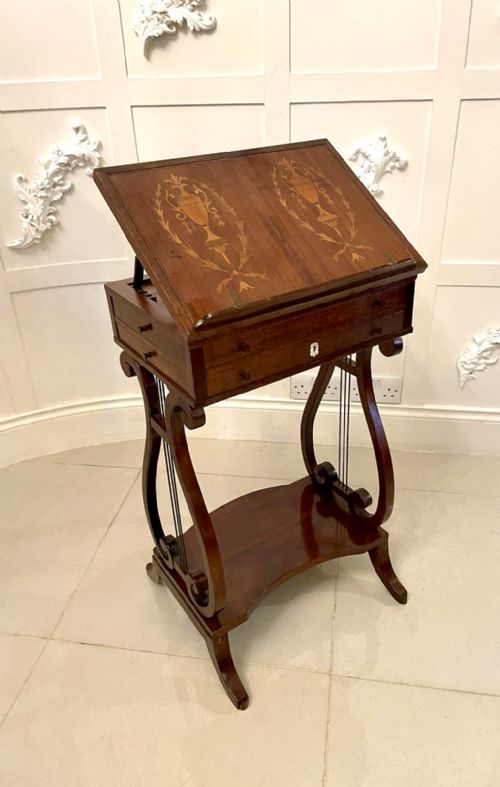
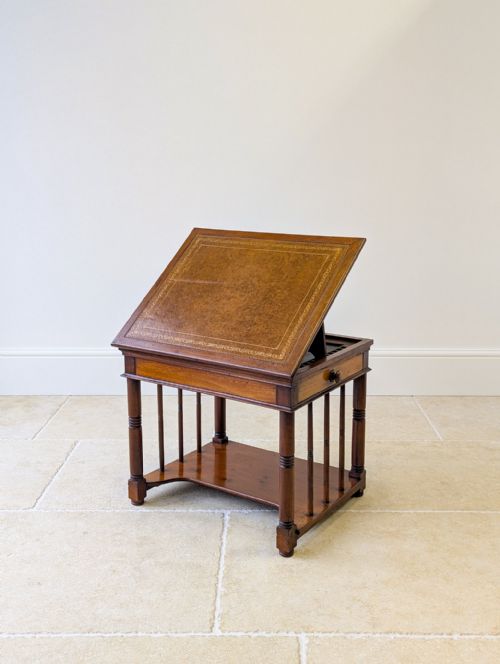
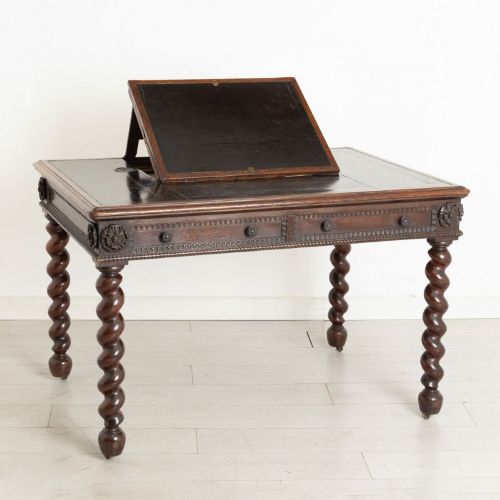
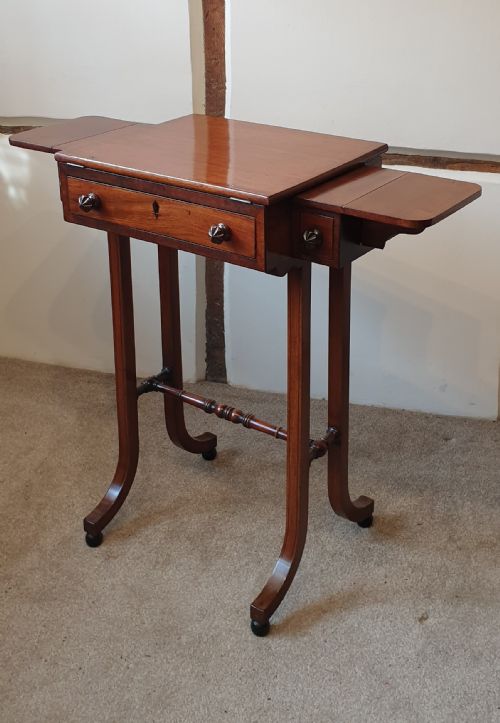
An adjustable writing slope desk provides a versatile surface designed for reading, writing, and architectural drafting. These pieces appear across Georgian, Regency, Victorian, and Edwardian periods, demonstrating how craftsmen adapted furniture for evolving domestic and professional needs.
Buyers frequently encounter tables and stands from the nineteenth century alongside eighteenth-century Georgian variants. Each piece integrates adjustable elements such as brass ratchets or folding supports to alter the reading angle.
How they were made
Cabinet makers utilised dense hardwoods like mahogany and rosewood for structural durability, often incorporating satinwood and boxwood stringing for decorative contrast. Surfaces frequently received leather or velvet inserts to provide a smooth plane for writing.
Metalwork played a crucial functional role, with brass mechanisms securing the adjustable reading stands and ratchets. Joinery techniques varied from campaign adaptations with folding supports to traditional table construction found in architectural desks.
Materials documented across the pieces include solid mahogany, rosewood, oak, satinwood, brass, leather, and velvet.
What varies in quality
Quality rests in the precision of the adjustable mechanism and the selection of timber veneers. Finer pieces display careful grain matching in mahogany or rosewood alongside robust brass ratchets that hold the reading stand firmly at various angles.
Design sophistication also distinguishes the range, where architectural desks and specialised library tables exhibit more complex internal arrangements than standard occasional tables with reading stands.
GILLOWS of LANCASTER
The Adjustable Writing Slope Desk Glossary
- Adjustable reading stand
- A hinged book rest integrated into a table top that rises to various angles for comfortable reading.
- Campaign table
- Portable furniture designed for travel, featuring folding elements and brass mounts.
- Architect's table
- A specialised desk with an elevating top designed for drafting and reading large plans.
- Stringing
- Thin inlaid lines of contrasting wood used to outline panels and borders on cabinet furniture.
Adjustable Writing Slope Desk: Frequently Asked Questions
How do adjustable reading stands operate?
These stands utilise internal ratchets or hinged wooden supports positioned beneath the surface to lock the board at an angle.
Users lift the platform to the desired notch, allowing books or papers to rest securely without sliding.
What woods were commonly used?
Cabinet makers predominantly selected mahogany and rosewood for their strength and rich grain patterns.
Satinwood, oak, and boxwood also appear across different periods for structural framing and decorative inlay.
Are these desks suitable for daily use?
The sturdy hardwood construction and functional adjustable surfaces make these pieces practical for modern workspaces and studies.
Leather and velvet inserts provide a traditional writing texture while accommodating contemporary tasks.
How do I identify the period?
Stylistic details such as Neo-Jacobean carving, Regency proportions, or Edwardian inlay provide clear indicators of age.
Construction methods and the design of the brass hardware also help distinguish eighteenth-century examples from nineteenth-century ones.