


William IV Reading Stand
A william iv reading stand combines mechanical ingenuity with dense rosewood and mahogany, offering an adjustable surface for books or scores.
William IV Reading Stand
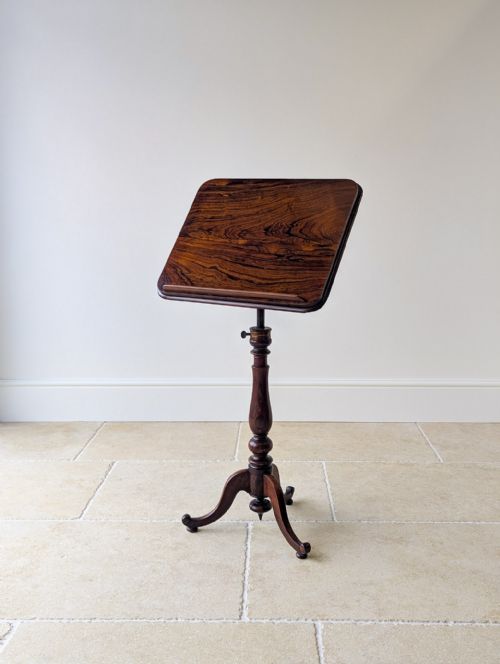
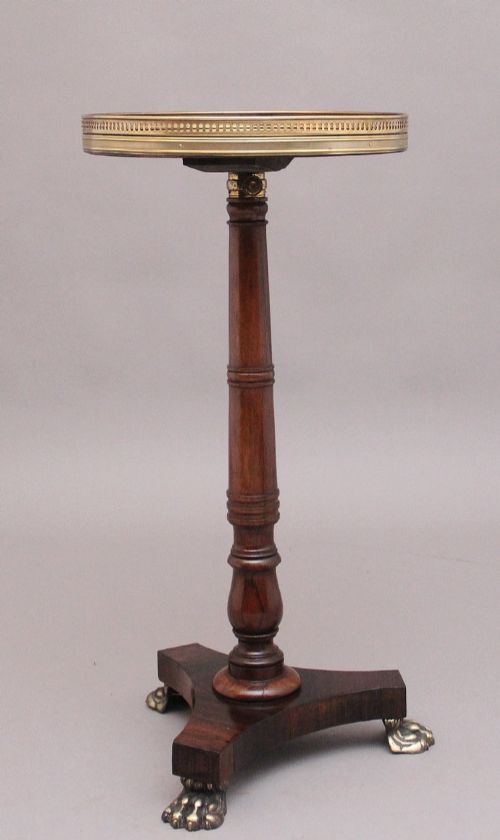
A william iv reading stand is typically encountered from the nineteenth century, reflecting the Regency and Victorian design transition. These pieces serve multiple domestic functions, appearing as reading stands, music stands, and occasional tables.
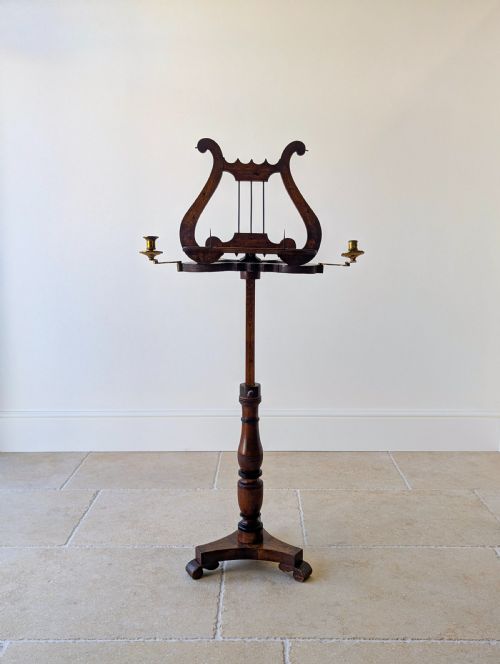
The most common forms on this page pair a telescopic column with a tilting tabletop or book rest. Many examples incorporate tripod bases or lyre forms, often executed in rich rosewood or mahogany.
Materials and construction
Cabinetmakers utilised dense timbers such as rosewood, mahogany, and gonçalo alves for stability and deep colour. These hardwoods were frequently selected for their handsome grain patterns and suitability for turned columns and tripod supports.
Brass fittings and steel mechanisms provide the adjustable height and tilting movement essential for a functional reading stand. Inlay and fabric components, including velvet, occasionally supplement the primary woodwork on reading surfaces and associated whatnots.
Several stands double as music desks, proving that nineteenth-century scholars also doubled as amateur violinists.
Assessing quality in a william iv reading stand
Quality rests upon the precision of the mechanical adjustment and the integration of the brass hardware within the timber column. Finer pieces demonstrate seamless movement in the telescopic action without wobble in the tripod base.
The selection of timber grain and the crispness of turned details differentiate standard workshop production from superior cabinet work. Attribution to esteemed makers like Gillows further elevates the standing of an individual piece.
Gillows
The William IV Reading Stand Glossary
- Telescopic column
- A central shaft designed to adjust in height using internal or external locking mechanisms. This feature allows the reading surface to be raised or lowered.
- Gonçalo alves
- An exotic hardwood known for its striking, variegated brown and blonde figuring. Cabinetmakers utilised this timber for decorative impact on nineteenth-century stands.
- Lyre form
- A stylized harp shape incorporated into the support structure or base of a stand. This classical motif appears frequently in Regency and William IV furniture.
- Tripod base
- A three-legged support providing stable ground contact for slender columns. It often terminates in carved scroll or paw feet.
William IV Reading Stand: Frequently Asked Questions
How do I adjust the height?
Most stands use a brass screw key or a sliding telescopic mechanism concealed within the central column.
Turning or releasing this fastener allows the upper shaft to move freely before securing it at the desired level.
Were these used for music or books?
These versatile stands served both purposes in the nineteenth-century drawing room.
Adjustable ledges and tilting surfaces accommodated heavy folios, reading materials, and sheet music alike.
How do I identify William IV style?
William IV pieces sit between the Regency and early Victorian periods, showing robust classical proportions.
Look for heavy rosewood or mahogany timbers, turned columns, and restrained carved details rather than ornate floral excess.
Can I use it as a normal table?
Many examples function equally well as occasional tables when the reading slope is flattened.
Their compact tripod or pedestal bases make them suitable for placing beside seating.