


Writing Desk Companion
A writing desk companion brings order to correspondence, offering inkwells, letter racks, and tidy compartments for daily use.
Writing Desk Companion
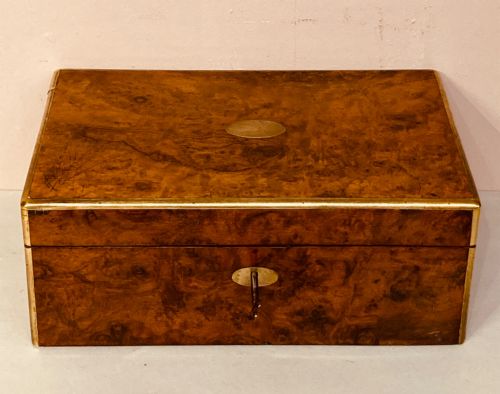
A writing desk companion encompasses portable writing slopes, stationary cabinets, inkstands, and fitted desk sets designed to organise correspondence materials. The selection spans distinct periods including Regency, Victorian, and Edwardian eras, reflecting changing demands for desktop order.
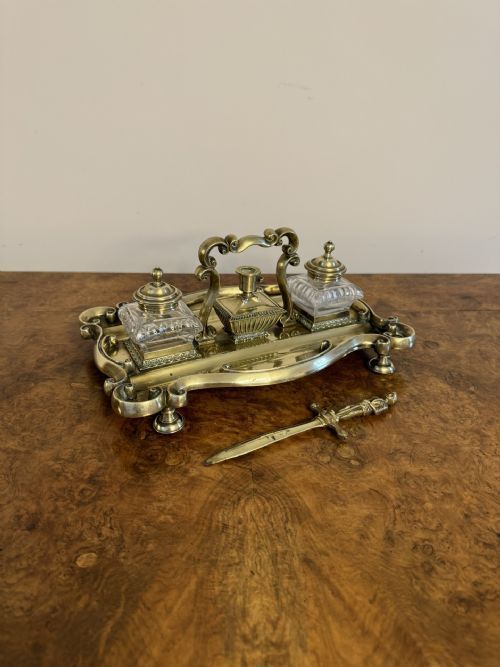
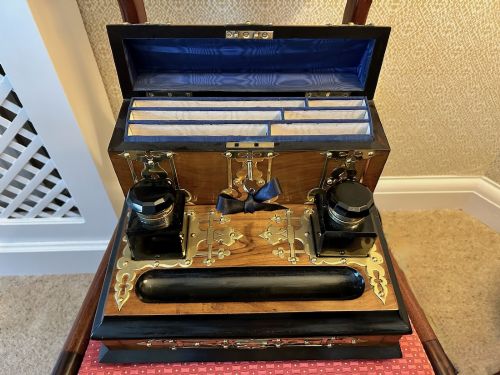
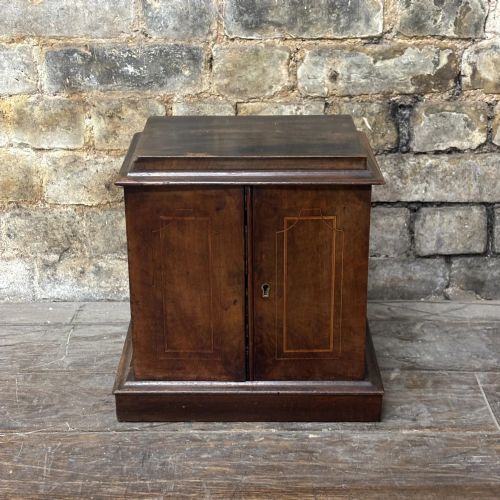
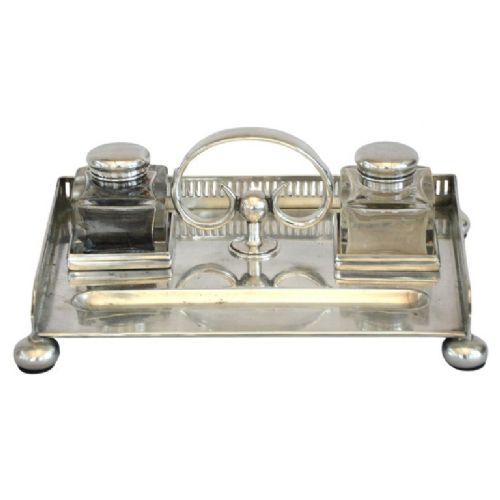
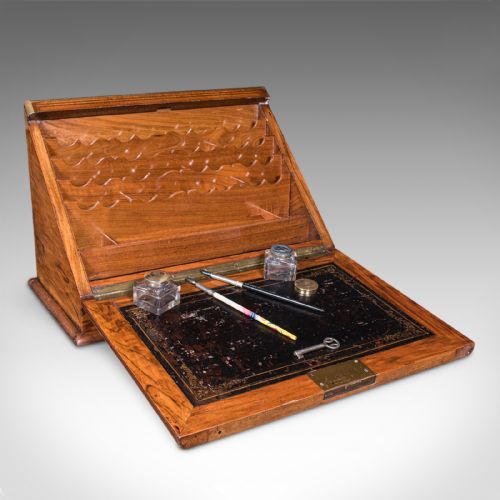
Victorian walnut and oak inkstands dominate the available pieces, frequently incorporating cut glass inkwells and brass mounts. Alongside these stand larger mahogany stationery cabinets and rosewood boxes fitted with drawers and letter slots.
Earlier Regency examples utilise rosewood and inlaid brass, while later Edwardian items rely on silver plating and oak. Each variant serves to keep ink, pens, and paper close at hand on the library or writing table.
Materials and Construction
Cabinetmakers constructed these pieces from dense timbers such as oak, walnut, rosewood, and coromandel, often lining the surfaces with leather. Decorative elements relied on brass mounts, ormolu, mother-of-pearl inlay, and tortoiseshell veneer.
Glassmakers supplied heavy cut glass bottles and inkwells fitted with hinged metal lids, whilst silversmiths provided silver-plated and silver gilt mounts. Joinery techniques included dovetailed drawer construction and secure locking mechanisms for portable writing boxes.
Distinctions in Quality
Quality rests upon the selection of timbers, such as figured burr walnut or rich coromandel, paired with precise brass inlay and sound structural joinery. Finer pieces retain matching sets of original cut glass inkwells and functional locking keys.
The degree of hand-carving, the weight of the metal mounts, and the integration of secondary compartments dictate the standing of a desk companion. Superior examples display crisp detailing in papier-mâché work or intricate carving in ebony.
Walker And Hall·Marson And Jones·Lund of London
The Writing Desk Companion Glossary
- Inkstand
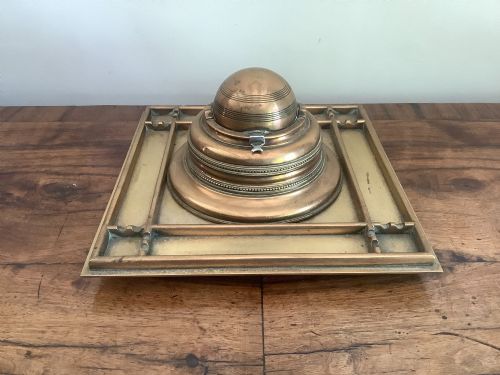
- A tray or stand holding one or more inkwells, pen grooves, and occasionally a sander or wafer box. These portable or stationary units kept writing fluids organised on the desk surface.
- Writing Slope
- A portable desk featuring a slanted writing surface that folds open to reveal compartments for stationery, nibs, and ink bottles. They allowed letter writing away from a permanent library desk.
- Stationery Cabinet
- An upright wooden box with doors or a drop-front, fitted with tiered slots and compartments for paper, envelopes, and letters. They became common on desks during the mid to late nineteenth century.
- Ormolu
- Gilded bronze or brass mounts applied to furniture and desk accessories for decorative effect. The technique involves coating base metal with a mercury and gold amalgam.
- Davenport
- A compact form of writing desk featuring a sloped, hinged writing lid above a pedestal of drawers. They often incorporate hidden side drawers and stationary wells.
Writing Desk Companion: Frequently Asked Questions
What is a writing desk companion?
A writing desk companion is an accessory or fitted box designed to hold inkwells, pens, and stationery on a desk. These items range from portable writing slopes to stationary cabinets and desk stands.
They emerged to keep writing materials orderly and accessible before the widespread use of fountain pens and manufactured paper. Different styles reflect the shifting interior fashions of the nineteenth and early twentieth centuries.
How do I date a wooden desk stand?
Dating relies on timber choices, construction methods, and hardware styles. Regency pieces frequently use rosewood with brass inlay, while Victorian examples lean towards walnut and oak with heavier brass mounts.
Examining the interior linings, screw types, and the design of the cut glass inkwells also helps narrow down the decade of manufacture. Maker's marks or stamps, when present, provide a direct point of reference.
What is the difference between an inkstand and a desk set?
An inkstand specifically refers to a tray base holding one or more inkwells and pen rests. It focuses primarily on the supply of wet ink for daily writing tasks.
A desk set is a broader term that often includes matching accessories such as letter racks, blotters, stationery boxes, and candlesticks alongside the inkwells. Both served to coordinate the appearance of a writing surface.
How should I care for leather on a writing slope?
Leather writing surfaces benefit from gentle cleaning with a slightly damp cloth, avoiding harsh chemical cleaners. Specialist leather balms help maintain suppleness and prevent the material from drying out over time.
Keeping the desk away from direct sunlight and excessive heat sources preserves both the leather and the surrounding wood veneer.