



Glass Inkwell Desk Set
These glass inkwell desk sets bring order to a correspondence table, combining heavy reservoirs with fitted trays of wood, brass, or silver plate.
Glass Inkwell Desk Set
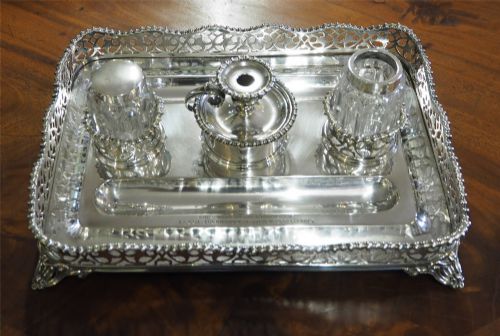
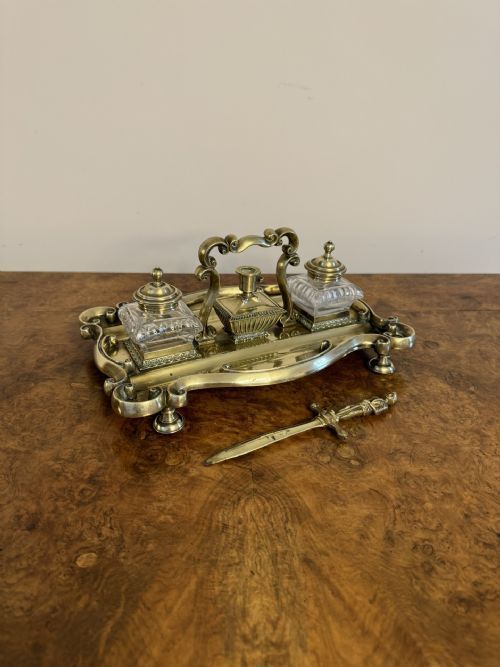
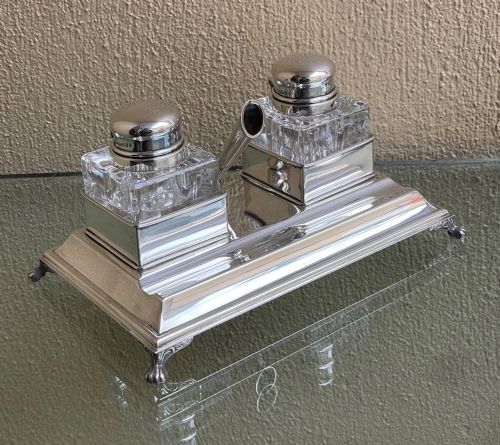
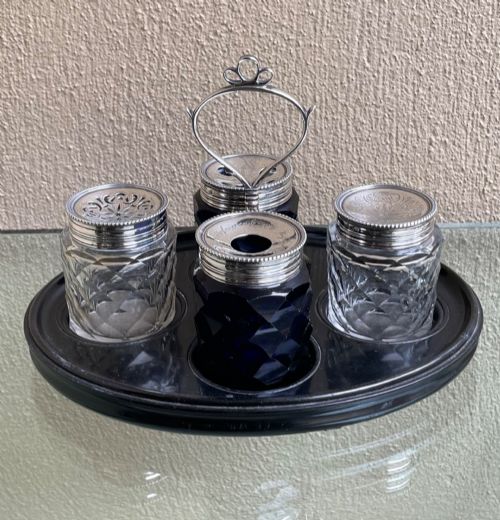
When searching for a glass inkwell desk set, collectors encounter items designed to hold writing materials neatly on a surface, typically featuring a tray fitted with one or more glass bottles alongside spaces for pens. The pieces seen here span the Victorian, Edwardian, and Georgian periods, with various iterations incorporating materials like cut glass, brass, and silver plate.
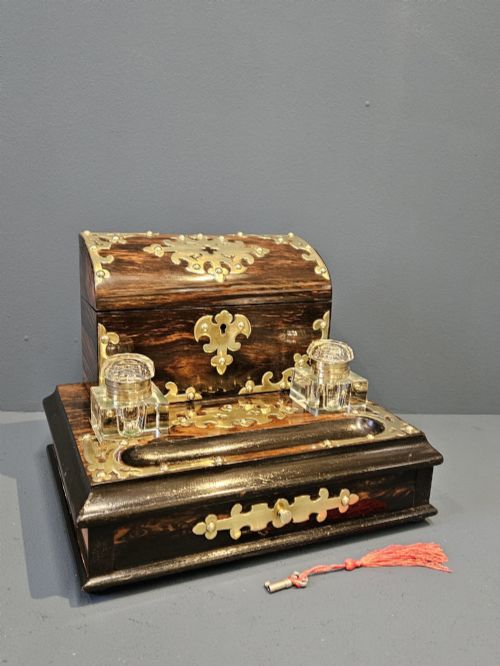
The most common formats on this page include double and single inkstands housed in wooden bases such as coromandel, walnut, or mahogany, often accompanied by brass mounts or silver-plated fittings. Alongside standard rectangular trays, more unusual forms appear, including hand-carved Black Forest animal figures and papier-mâché constructions from the mid-nineteenth century.
Origins range across English, French, and Irish workshops, demonstrating how writing equipment altered in complexity from the early nineteenth century through to the Edwardian era. Whether simple brass-mounted oak or ornate ormolu and boulle work, each object served the daily writing habits of past generations.
Materials and construction
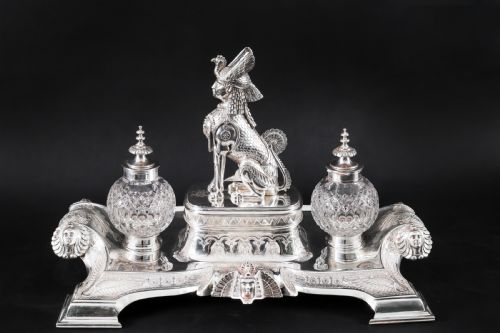
The glass reservoirs themselves were often heavy-cut or moulded to catch the light, fitted with hinged metal lids made from brass, silver, or plated white metal. Carved items utilise solid timber such as oak, ebony, or lime, shaped by hand into figural forms like owls or bears before receiving their glass inserts.
Some Victorian writers apparently preferred dipping their pens near hand-carved Black Forest bears rather than standard mahogany trays.
Evaluating the standard of execution
Quality rests primarily on the crispness of the casting in metal mounts and the depth of hand-cut facets on the glass inkwells. Superior examples display tightly fitted joinery in the wooden bases, precise brass inlay, and original glass inserts that match the scale of the tray.
Heavier gauges of silver plate, substantial solid timber carcasses, and retained maker marks elevate an item above mass-produced counterparts. The inclusion of matching accessories, such as tapersticks or pen trays, indicates a higher level of original commissioning.
Wilkinson and Co·Walker And Hall·Elkington·Rupert Favell·James Cartland and Sons·W M F·Moser
The Glass Inkwell Desk Set Glossary
- Standish
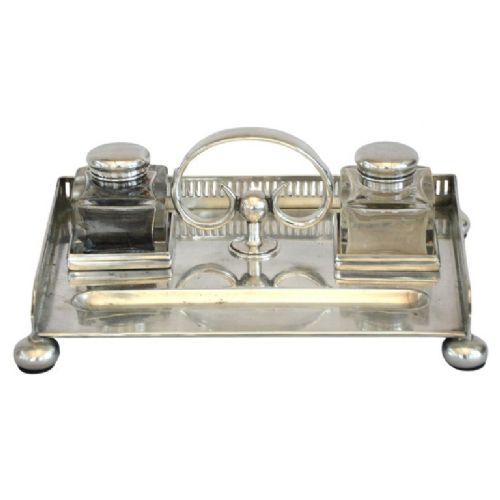
- A portable desk stand holding inkwells, pen holders, and sometimes sanders or tapersticks. It typically incorporates a handle or a raised tray rim for carrying.
- Boulle work
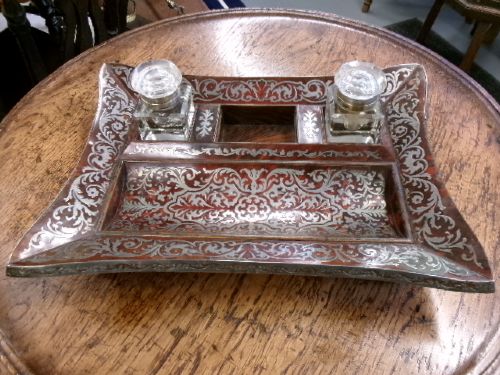
- A form of marquetry utilising brass and tortoiseshell inlaid in ornate patterns, popular in French-influenced nineteenth-century desk furniture.
- Sheffield plate
- An early form of composite metal made by fusing a thin sheet of silver to a thicker copper base, common on Georgian and early Victorian desk wares.
- Coromandel
- A dense, heavily figured tropical hardwood from Asia, prized for its dark grain and utilised extensively for luxury Victorian writing boxes and inkstands.
- Ormolu
- Gilt bronze mounted onto decorative objects, providing a bright metallic trim to nineteenth-century French and English desk sets.
Glass Inkwell Desk Set: Frequently Asked Questions
What is the difference between an inkstand and a desk set?
An inkstand generally refers to a portable tray specifically designed to hold inkwells and writing implements, often featuring feet or a central handle for moving across a table.
Desk sets can encompass broader desk accessories, including blotters, letter racks, and stationary boxes alongside the core ink reservoirs.
Are the glass inkwells usually original to the stands?
Many pieces retain their original heavy cut or moulded glass bottles, which fit snugly into the dedicated apertures of the wooden or metal bases.
Due to the fragile nature of glass, replacements do occur, so collectors look for matching wear patterns between the glass base and the interior of the tray.
How do I care for antique wood and brass on a desk stand?
Wooden surfaces finished in polish or French polish require gentle dusting with a dry lint-free cloth and occasional treatment with suitable wax to prevent drying.
Brass mounts and silver-plated fittings should be cleaned sparingly with non-abrasive cloths to preserve the patination accumulated over the centuries.
What periods are most common for these desk accessories?
The majority of pieces date from the Victorian and Edwardian eras, reflecting a high point in personal correspondence and desk organisation.
Earlier examples from the Georgian and Regency periods appear less frequently and tend to feature solid silver or heavier Sheffield plate constructions.