
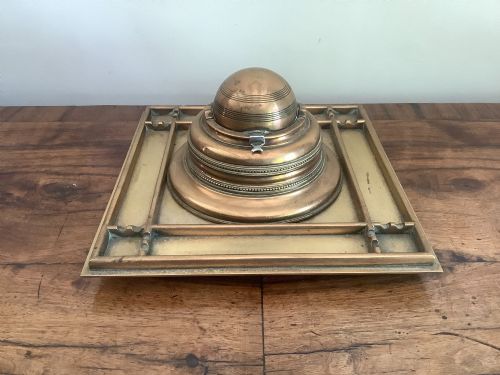


Antique Pen Tray Inkstand
An antique pen tray inkstand organises the writer's desk, combining a shallow trough for quills with fitted inkwells in brass, silver, or carved wood.
Antique Pen Tray Inkstand
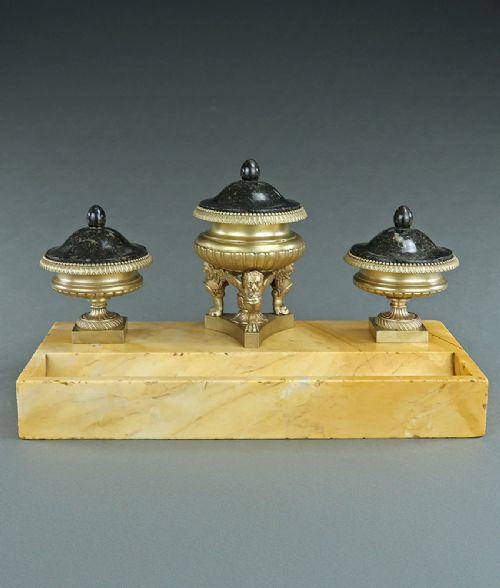
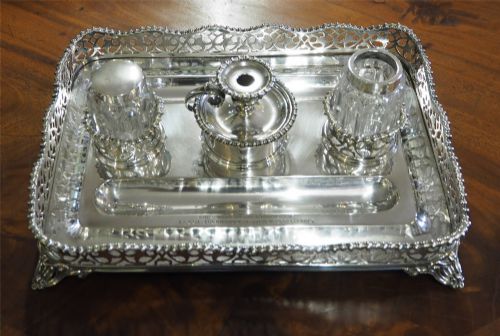
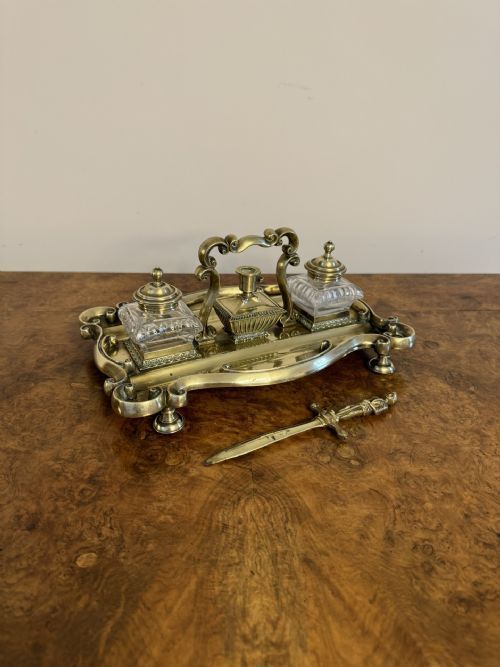
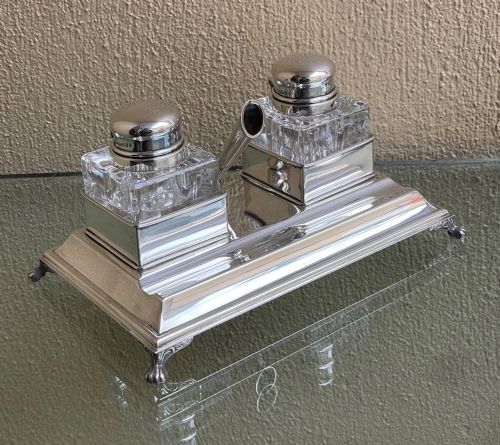
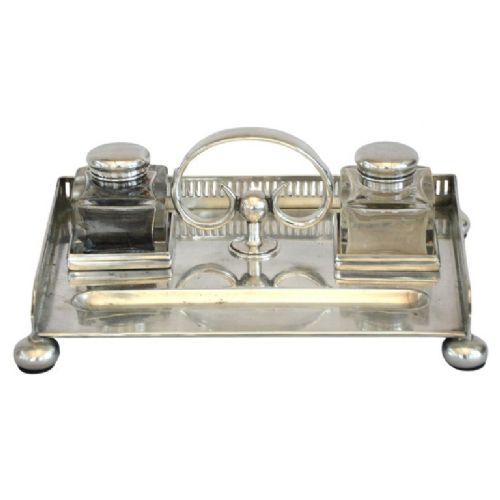
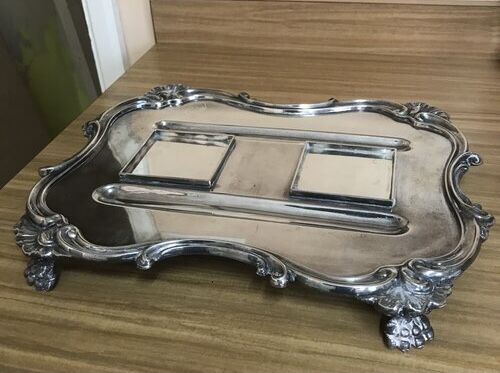
An antique pen tray inkstand serves as the central writing accessory of a desk, holding inkwells alongside a dedicated groove for dipping pens. The pieces seen here span the nineteenth century, including Regency designs, Victorian brass models, and Edwardian silver pieces.
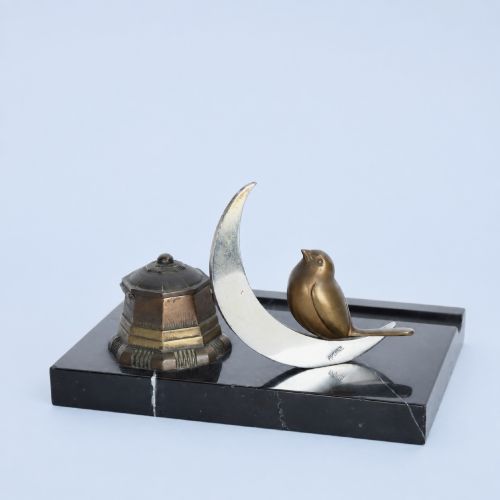
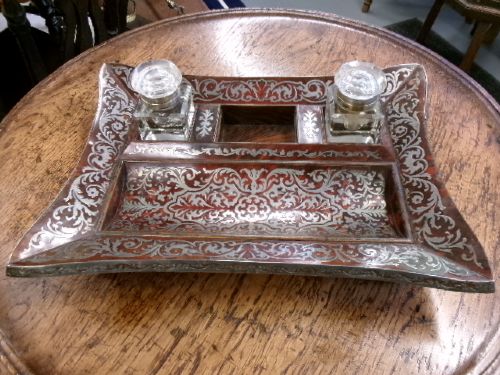
Most examples combine a flat base tray with one or two lidded inkwells and often an integrated pen rest or chamberstick. Materials range from solid silver and plated metals to exotic timbers like coromandel, walnut, and papier-mâché.
Materials and Construction
Foundations rely on cast metals such as brass, bronze, and silver alongside dense hardwoods including coromandel, mahogany, and walnut. Decorative treatments incorporate inlaid brass work, mother-of-pearl, tortoiseshell, and hand-painted ceramic elements.
Metal components undergo casting and chasing, while wooden trays utilise fine cabinetmaking techniques with fitted silver mounts, glass liners, and hinged lids for the ink receptacles.
A carved Black Forest wooden inkwell takes the watchful form of a domestic cat.
Evaluating Quality and Execution
Superior execution shows in the precision of metal chasing, the weight of cast bronze or silver, and the complexity of timber inlays like Boulle work or mother-of-pearl. Maker attribution to established silversmiths or metalworkers elevates the standing of a piece.
The completeness of the set dictates functional value, particularly retaining matching glass inserts within the inkwells and original hinged lids without replacement parts.
Elkington·Walker And Hall·Harrods·WMF·Robert Garrard·Minton·Rupert Favell·Lefebvre·James Cartland And Sons
The Antique Pen Tray Inkstand Glossary
- Inkstand
- A desktop stand incorporating one or more inkwells and a tray or trough for holding pens. These fixtures formed an essential part of nineteenth-century correspondence.
- Desk Tidy
- A compartmented tray or stand designed to hold writing instruments, blotters, and ink supplies. They keep the writing surface organised.
- Boulle Work
- Marquetry technique utilising brass and tortoiseshell inlaid into furniture and decorative objects. It originates from seventeenth-century French workshops.
- Sheffield Plate
- Material produced by fusing a layer of silver onto a copper base before rolling into sheets. This technique preceded modern electroplating.
- Ormolu
- Gilded bronze ornamentation applied to decorative objects and desk accessories. The finish results from an amalgam of mercury and gold applied to cast bronze.
Antique Pen Tray Inkstand: Frequently Asked Questions
How do I date an antique inkstand?
Dating relies on stylistic clues, assay marks on silver components, and the choice of materials such as coromandel or papier-mâché. Victorian and Georgian examples often display distinct design revivals like Rococo or Neoclassical.
Examining construction methods, hinge types, and glass liners helps confirm the period of manufacture.
What is the difference between an inkstand and an inkwell?
An inkstand is a larger desk set that includes a tray or base holding one or more inkwells alongside pen rests and sometimes a taperstick. An inkwell is simply the individual vessel that holds the ink.
Many listings on this page combine the tray and inkwells into a single integrated desk accessory.
Are these inkstands still usable today?
Most antique inkstands function well for modern desk use provided the glass or ceramic ink inserts remain intact and undamaged. Fountain pen users often utilise them for daily writing.
Care must be taken with delicate materials like tortoiseshell or papier-mâché when cleaning or storing.
How should I clean a brass and marble inkstand?
Cleaning requires a soft dry cloth to remove dust from marble and carved stone surfaces without scratching. Metal components benefit from gentle wiping rather than harsh chemical polishes that strip original patination.
Preserving the aged surface maintains the historical character of the piece.